The Bitcoin market could be facing another crucial event that would bolster its long-term integrity. This is highlighted in a recent evaluation of Japan’s Financial Instruments and Exchange Act (FIEA) reforms, which suggests a major impact on Bitcoin may come not from an increase in investor count, but from how its participant base evolves.
Regulatory Shift May Determine Who Bitcoin Market Participants Are
In a QuickTake post on CryptoQuant, the education group XWIN Research Japan explains why Japan’s FIEA reforms could push Bitcoin towards a more mature, stable market environment. The market experts begin by highlighting Japan’s significant presence in the crypto world, with about 13 million extant accounts holding assets worth ¥5 trillion ($34.4 billion).
However, Japan’s total digital asset portfolio is considered relatively small compared to even the Bitcoin market cap of $1.3-$1.4 trillion. Hence, the education group notes that the most important variable in this dynamic is not the number of participants, but the amount of money they bring into the market. In this case, the institute highlights that as Japan’s regulations improve, institutions, corporations, and other high-net-worth investors may increasingly enter, in turn increasing each account’s allocation.
Interestingly, a key part of this reform involves classifying cryptocurrencies more like traditional financial products. This would introduce stricter standards around transparency, disclosure, and intermediary responsibilities. While this might sound restrictive, it actually also lowers barriers for large institutions that require regulatory clarity before entering new markets.
Capital Inflows Could Be The Real Catalyst
XWIN Research Japan points out that the bigger opportunity lies in the potential inflow of external capital. According to the group, Japan’s total financial assets are estimated at around ¥2,100 trillion. Hence, if just 0.1% of that capital were reallocated into Bitcoin, it could result in inflows of roughly ¥2 trillion (about $13 billion). In comparison, a 0.5% allocation would push that figure to around $65 billion – comparable to the scale of inflows seen during the first year of US spot Bitcoin ETFs.
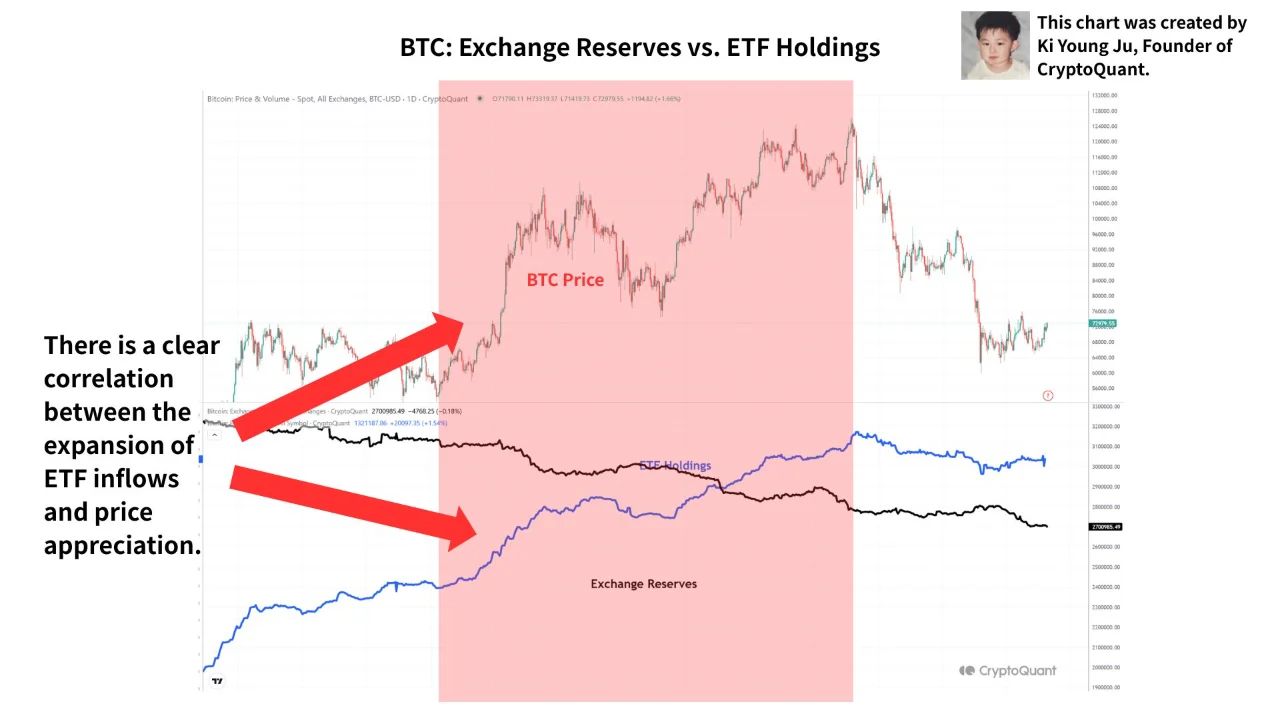
Historically, inflows of this magnitude have been strong drivers of the flagship cryptocurrency, often leading to price gains of 10–30%. Thus, it becomes apparent that Bitcoin’s price action is becoming less about speculation and more about sustained capital flows. An example of this shift is seen in the aftermath of ETF adoption.
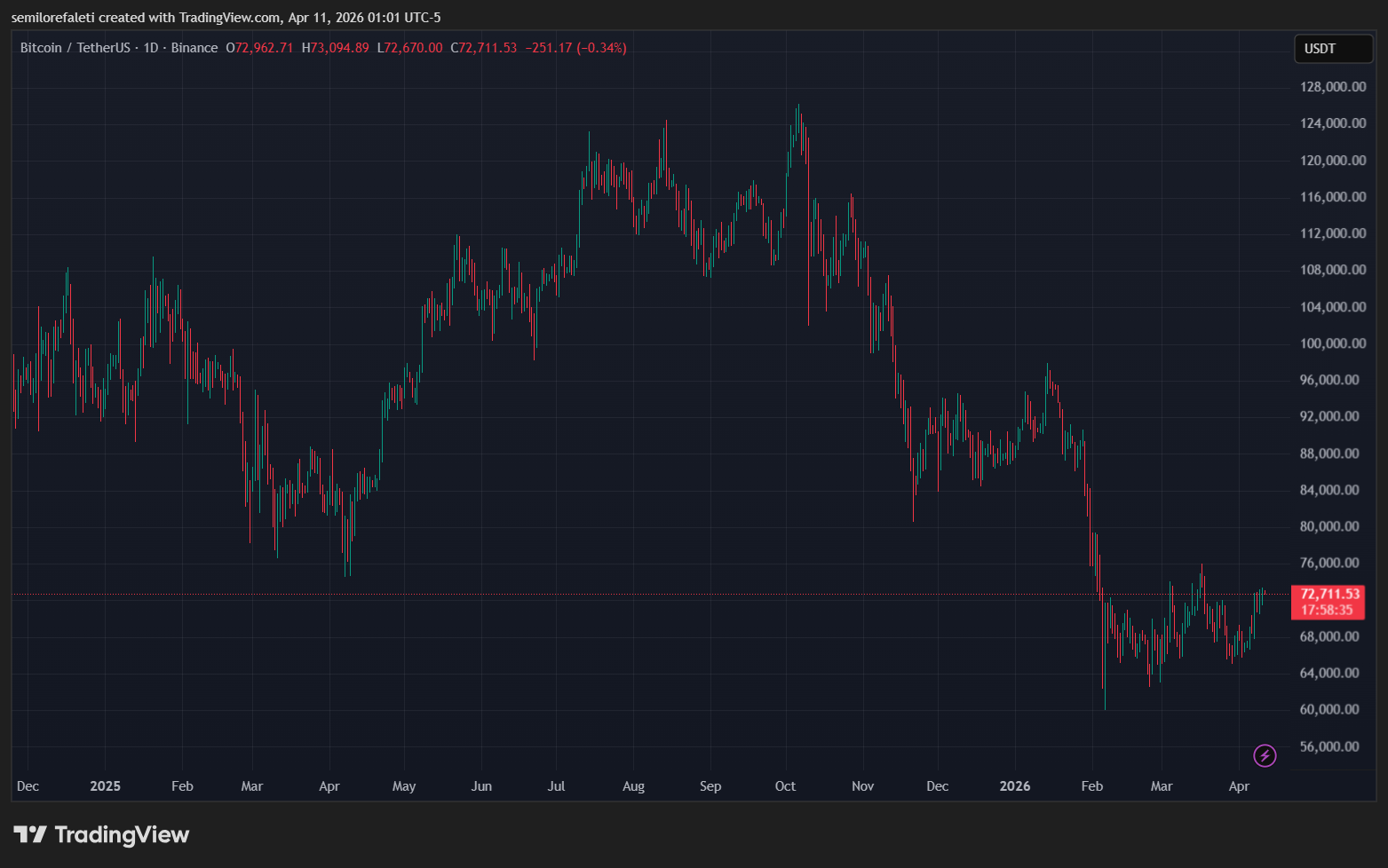
For Japan, the impact of this reform will ultimately depend on whether similar investment channels – such as ETFs and regulated funds – are introduced. As of this writing, Bitcoin is trading at about $72,861, up 1.36% from yesterday.