

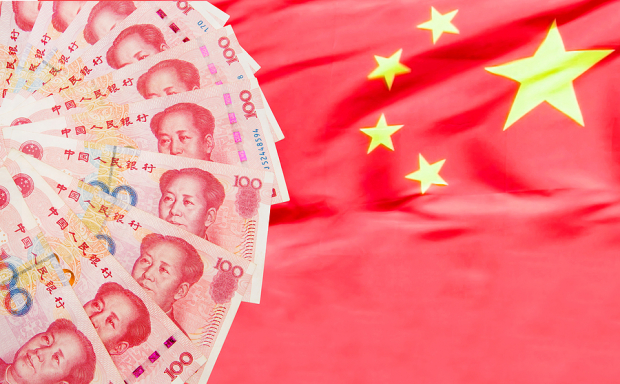
China’s economic engine stumbled badly at the start of the second quarter, as the National Bureau of Statistics reported on May 18, 2026, that the country’s retail sales fell to a 40-month low in April. Although retail sales rose 0.2% year over year, the figure marked the weakest growth since December 2022 and came in well below economists’ expectations of 2% (as cited in CNBC).
Simultaneously, the nation’s industrial output cooled to 4.1%, decelerating from the prior month’s 5.7% growth, and missed expectations of a 5.9% rise (as per a Reuters poll).
This weak consumer data, combined with the broader backdrop of slowing GDP growth in the world’s second-largest economy, which recently lowered its annual GDP growth target, places increased pressure on Chinese companies and the exchange-traded funds (ETFs) that hold them.
For investors, this development represents a critical crossroads: Is it time to cut exposure, or could this be an opportunity to buy the dip in Chinese assets? Answering that question requires a closer look at the structural pressures behind April’s weak data and an assessment of the near-term outlook for Chinese equities and thematic exchange-traded funds (ETFs).
What Caused the Sudden Retail Slowdown?
The primary weight pulling down China's retail sales is a profound lack of consumer confidence. Slow wage growth and localized spikes in unemployment created a cautious domestic consumer landscape, with households prioritizing savings over discretionary spending, thereby weakening demand. China continues to grapple with the prolonged fallout from its property-sector slowdown, which has further dampened household confidence and consumer spending.
The nation’s urban fixed asset investment, including real estate and infrastructure, contracted 1.6% in the first four months of 2026 compared to last year, while that during the January to March period expanded 1.7%.
In addition to the domestic catalysts, external geopolitical shocks also rattled the economy, with the ongoing Iran conflict driving up commodity and energy costs, squeezing factory margins and weakening discretionary consumer spending.
China’s consumer prices ticked up 1.2% in April from a year earlier, accelerating from a 1% rise in March, while its producer price index jumped 2.8% from a year ago, marking the highest reading since July 2022. This inflation, along with slow wage growth, further put pressure on consumers’ pockets, squeezing their real purchasing power, contributing to softer retail sales.
Outlook for China
In the near term, the Chinese equity market is likely to experience choppy, sentiment-driven volatility. However, the dismal economic data paradoxically opens a window for policy-driven optimism over the next few months to a year.
Since domestic consumption remains weak, Beijing is under growing pressure to introduce more aggressive fiscal stimulus and targeted support for the property market to revive consumer demand, although additional rate cuts are becoming more complicated amid rising inflation.
For ETF investors, this environment favors a highly selective strategy. While broad-market funds may continue to face pressure from banking and real estate exposure, specialized ETFs focused on high-tech manufacturing, green energy, and policy-supported technology companies could benefit as government stimulus increasingly flows into these strategically backed sectors.
Chinese ETFs Under the Radar
Considering the aforementioned discussion, investors monitoring the Chinese equity market for potential entry opportunities through a diversified approach may consider keeping the following China-focused exchange-traded funds (ETFs) on their radar:
iShares MSCI China ETF MCHI
This fund, with net assets worth $6.60 billion, offers exposure to 578 Chinese equities that are available to international investors. From an industrial look, consumer discretionary takes the first spot in this fund at 26.1%, followed by financials (18.9%) and communication (18.4%).
MCHI has rallied 3.4% over the past year. The fund charges 59 basis points (bps) as fees.
Invesco China Technology ETF CQQQ
This fund, with a market value worth $3.2 billion, offers exposure to 172 companies that are open to foreign ownership and derive most of their revenues from the technology sector in China, Hong Kong and Macau.
CQQQ has surged 27% over the past year. The fund charges 65 bps as fees.
KraneShares MSCI China Clean Technology Index ETF KGRN
This fund, with a market value worth $60.2 million, offers exposure to securities that derive at least 50% of their revenues from renewable energy and clean technology products and services
KGRN has gained 1.6% over the past year. The fund charges 65 bps as fees.
Boost Your Portfolio with Our Top ETF Insights
Zacks' exclusive Fund Newsletter delivers actionable information, top news and analysis, as well as top-performing ETFs, straight to your inbox every week.
Don’t miss out on this valuable resource. It’s free!
Get it now >>Want the latest recommendations from Zacks Investment Research? Today, you can download 7 Best Stocks for the Next 30 Days. Click to get this free report
Invesco China Technology ETF (CQQQ): ETF Research Reports
iShares MSCI China ETF (MCHI): ETF Research Reports
KraneShares MSCI China Clean Technology Index ETF (KGRN): ETF Research Reports
This article originally published on Zacks Investment Research (zacks.com).