


Markets remain fixated on earnings season. But I see a much more consequential threat quietly developing in the fixed-income market.
The 10-year U.S. Treasury bond (ZNU26) is currently staging a massive breakout, Wednesday’s bounce aside. That benchmark rate surged from 3.6% in September 2024 to over 4.6% as ofTuesday’s close. Crucially, this move is not being driven by Federal Reserve rate hikes, but by the bond market itself, relentlessly selling bonds, forcing yields higher, and imposing its will on equities.
Join 200K+ Subscribers: Find out why the midday Barchart Brief newsletter is a must-read for thousands daily.
I think this is a classic case of slowly, then all at once. As in the stock market’s reaction to this major structural change.
This represents the potential last straw for the equity bull market. Higher long-term rates create severe headwinds across three critical areas of the economy.
In particular, rising rates could mortally wound approximately 40% of the companies within the Russell 2000 Index, tracked by the iShares Russell 2000 ETF (IWM). These are effectively “zombie” corporations that survived the pandemic by financing their growth with cheap debt. Refinancing that 3% debt at 8% today will decimate margins and trigger a wave of distress.
Elevated long-term yields also immediately injure speculative traders by driving up margin debt rates, increasing the cost of leverage and cooling market enthusiasm. And, high guaranteed yields present severe, direct competition for traditional stock investing, specifically drawing capital away from high-yielding dividend sectors.
This yield surge serves as a clear signal that inflation is bound to be significantly stickier than the consensus expects. The 30-year Treasury rate has pushed to its highest levels since 2007, effectively returning the macro landscape to a rate regime not seen since the dot-com bubble.
Investors banking on a frictionless equity melt-up are ignoring a multi-decade fixed-income breakout that is rapidly shifting the rules of the game.
 www.barchart.com
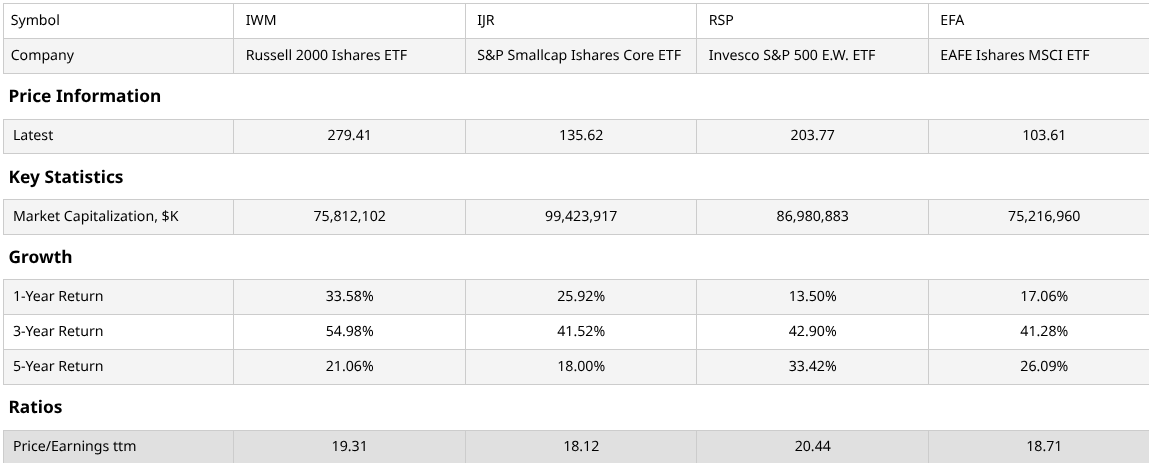
 I created that table above to show how on the surface, small-cap stocks seem to be positioned as well as, or better than, the average S&P 500 Index stock, as tracked by the Invesco S&P 500 Equal Weight ETF (RSP) and the broad, developed international markets, as tracked by the iShares MSCI EAFE ETF (EFA). Returns over three- and five-year periods are similar. And valuation in terms of trailing price-earnings ratios are clustered tightly too.
So, what’s my concern with small-caps? I think the answer comes from looking at a segment of the small-cap universe, at least as much as this space allows.
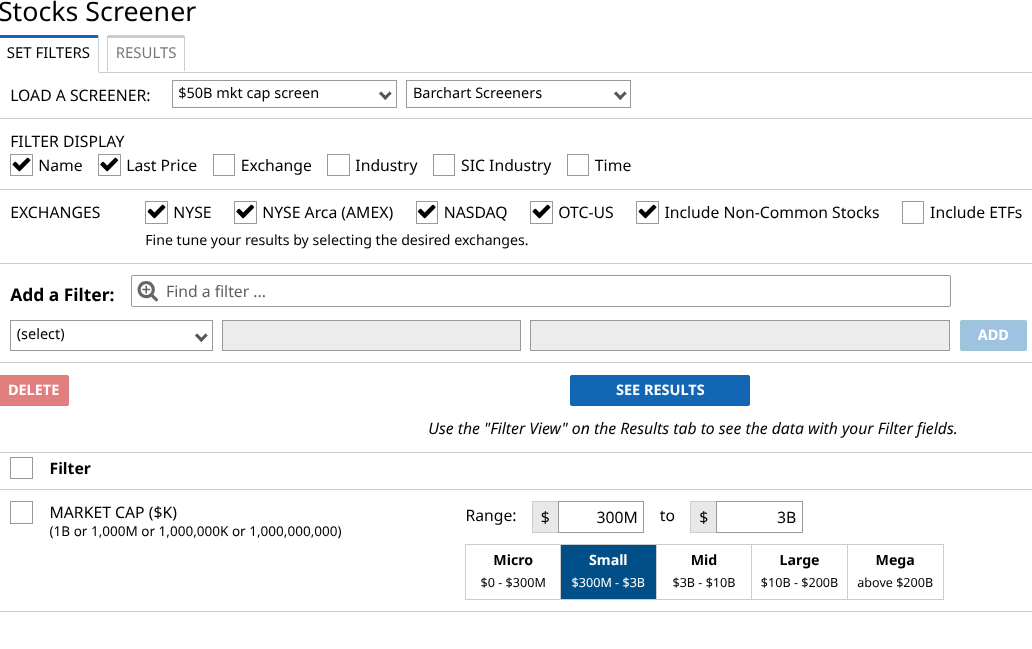
I took my standard large-cap screen (see below) and flipped it on its head. That is, I ran the same fundamentally based screen, but for stocks with market caps classified by Barchart as “small” – under $3 billion and above $300 million.
 www.barchart.com
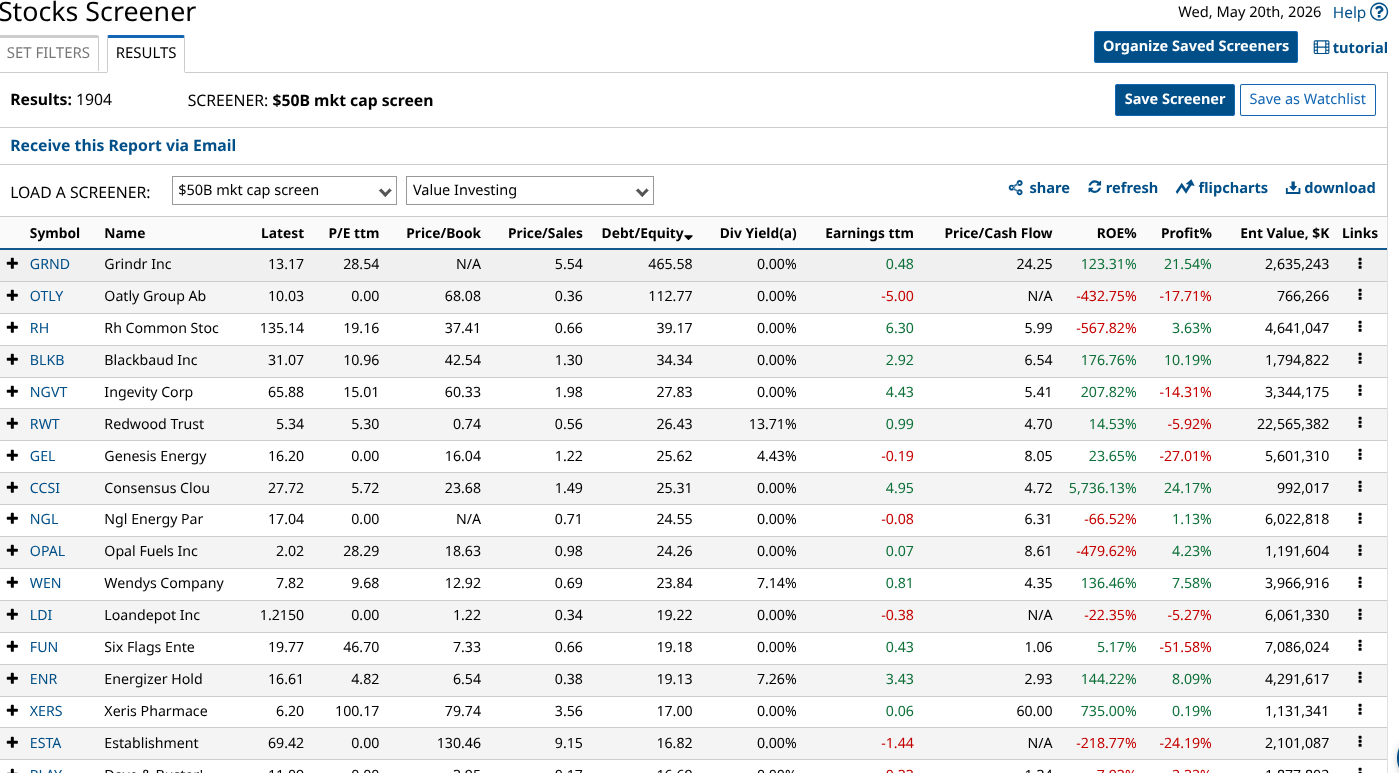
 That produced about 1,900 stocks, of which a few hundred appear to be pink sheets or penny stocks, so I dropped them. What remained? You see the top of that list here.
 www.barchart.com
 A shortcut summary: Many stocks with high debt-equity ratios and many with negative profit margins. While I’m a technician first, I recall from my MBA classes that those are not great appendages to a winning stock story. Especially when rates are climbing. And especially when we know that a lot of these firms are only here because of the last rate crash, about six years ago.
I continue to see a link between elevated rates and overvalued small-cap stocks. Even if the mainstream doesn’t see it just yet.
Rob Isbitts created the ROAR Score, based on his 40+ years of technical analysis experience. ROAR helps DIY investors manage risk and create their own portfolios. For Rob’s written research, check out ETFYourself.com.
On the date of publication, Rob Isbitts did not have (either directly or indirectly) positions in any of the securities mentioned in this article. All information and data in this article is solely for informational purposes. For more information please view the Barchart Disclosure Policy here.
More news from Barchart
Rising Rates Are Threatening to Kill the Zombies and Send Small-Cap Stocks Plunging S&P Futures Gain as Bond Yields Fall, U.S.-Iran Updates Awaited Stocks Slip Before the Open as Oil Rises on U.S.-Iran Peace Deal Uncertainty, PMI Data in Focus Your Morning Coffee, on Uber: Investors Counting on an UBER Stock Turnaround Are Hoping That ‘Eats for the Way’ Pays Off