


Artificial intelligence (AI) has been the dominant investment theme for more than three years, dividing markets into two halves: AI winners and AI losers. One number that investors have been fixated on is burgeoning AI capex. Lately, markets have been getting increasingly apprehensive about that ever-rising number, which has drained Big Tech companies’ otherwise fat operating free cash flows, pushing them to capital markets to shore up their balance sheets.
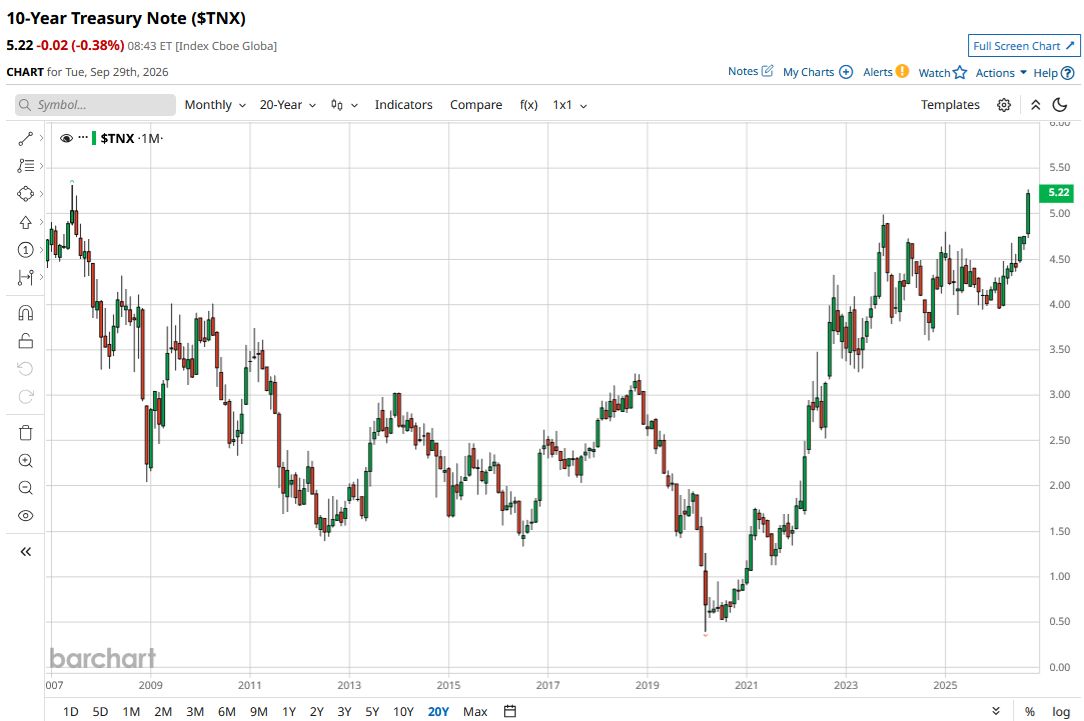
While that number is still important — particularly for Nvidia (NVDA) investors, as much of the AI spending is landing in its coffers — there are two new data points that investors are now watching closely. The first is crude oil (CLX26) rising above $100 per barrel, while the second is the 10-year U.S. Treasury yield rising over 5%.
More Yield, Less Trap: Sign up free to get Barchart’s daily Dividend Investor newsletter straight to your inbox.
Oil at $100 and 10-Year Over 5% Are Spooking Markets
The yield rose to a new multiyear high of 5.2% last week, although it briefly fell below that psychological level. The U.S. Treasury Department’s intervention hasn't helped. As someone who has been following markets for nearly two decades, I don’t think government intervention — even if it becomes "the House,” to quote Treasury Secretary Scott Bessent — has a lasting impact on bond and currency markets.
Meanwhile, it is fashionable these days to talk about that 5% number while discussing dividend stocks. In a world where sleep can be Netflix’s (NFLX) biggest competitor, per former CEO Reed Hastings, dividend stocks also compete with debt instruments like corporate bonds, Treasuries, and even certificates of deposit (CDs).
 www.barchart.com
 What to Make of Treasury Yield Over 5%
That said, we also need to understand how this 5% Treasury yield would play out. Investors would make the publicized return only if they hold the paper till maturity. The returns can be different if someone sells their holdings before maturity. Returns would be higher than 5% if yields fall but would be lower if yields rise further. That is interest rate risk in technical parlance.
Theoretically, there is no credit risk in U.S. Treasuries, particularly given the money-printing propensity we have seen since the Covid-19 pandemic. If anything, if things get to the point where we have to worry about the government’s ability to repay its debt, I would be much more worried about a lot of other things in life.
What Does a Higher Bond Yield Mean for Dividend Stocks?
The yields on shorter-duration Treasuries have also risen, with the two-year now yielding closer to 5%, while investment-grade corporate bonds are yielding around 5.2%. That, for me, is a tough competitor for dividend stocks, as the holding period is quite short versus the 10-year Treasury. Moreover, given how higher oil prices and yields are battering stocks, conservative investors would find solace in that 5% yield over two years.
Still, it's not a total lost cause for dividend stocks, and investors can still scout for quality companies with businesses that are not being especially impacted by the ongoing turmoil. Banks tend to benefit from higher interest rates, as this boosts their net interest margin. But higher interest rates are not the only variable out there, and there are concerns about higher delinquencies amid the deteriorating macro environment. No wonder bank stocks have been weak in recent months.
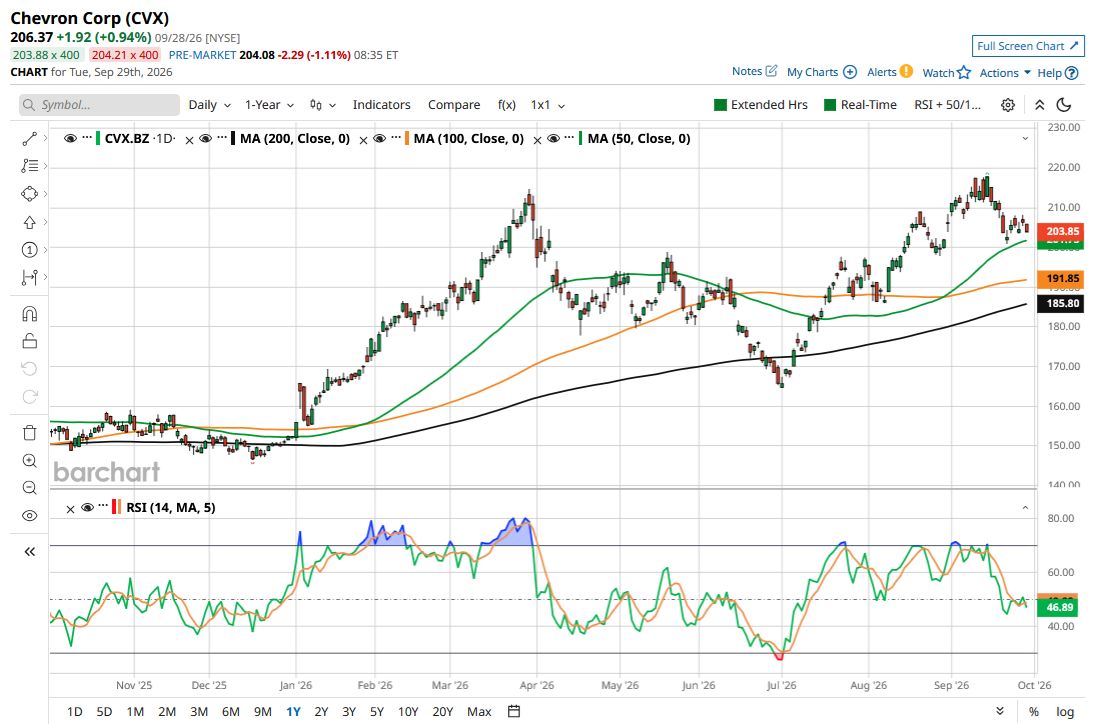
Buying energy stocks could be another option, as their cash registers are ringing amid high oil prices. Most energy companies have a healthy dividend yield. For example, Chevron (CVX) stock yields almost 3.5%, and is sitting on a year-to-date (YTD) gain of more than 35%. If you expect oil prices to stay around these levels for an extended period, dividend-paying energy stocks could be a good way to play the theme.
 www.barchart.com
 Midstream energy companies may be another solid bet. The war in the Middle East and the closure of the Strait of Hormuz could prompt energy-importing countries to diversify their purchases. There has been more than a nudge from President Donald Trump's administration, which sees fossil-fuel exports as a novel way to bridge the country's massive trade deficit. On a related note, India — a leading energy importer — has gradually increased sourcing from the United States. Higher U.S. energy exports are positive for the midstream sector. The sector is also known for fat dividend yields, with both Energy Transfer (ET) and Enterprise Products (EPD) yielding over that magical 5% number.
On the date of publication, Mohit Oberoi had a position in: NVDA , NFLX . All information and data in this article is solely for informational purposes. For more information please view the Barchart Disclosure Policy here.
More news from Barchart
Netflix Stock Just Got a Stunning Upgrade After a Brutal 2026 Selloff Dividend Stocks Are Not a Lost Cause Even as Treasury Yields Rise Over 5% Robinhood’s New AI Agents Are Helping Turn Everyday Investors Into Mini Quant Fund Operators United Therapeutics Just Sent Liquidia Stock Lower After Patent Battle