


The long feud between Elon Musk and Sam Altman has moved from the courtroom to the products themselves. After SpaceX (SPCX) recently acquired Cursor parent company Anysphere for $60 billion, OpenAI decided to end its partnership with Cursor. The cutoff is set for Nov. 12.
OpenAI framed the decision around trust. The company said it could not be sure Musk’s companies would stick to their terms, pointing to past contract disputes. Musk’s reply on X was blunt. “I couldn’t care less,” he wrote, before again accusing Altman of stealing a nonprofit.
More Top Stocks Daily: Go behind Wall Street’s hottest headlines with Barchart’s Active Investor newsletter.
The bad blood goes back years. Musk helped co-found OpenAI as a nonprofit in 2015, then left the board in 2018. He launched rival xAI in 2023 and sued OpenAI, Altman, and Greg Brockman in 2024. Musk claimed that they had abandoned the original mission for profit, and sought $150 billion in damages. In May, a federal jury ruled against Musk on the grounds that he had filed too late. So, the question of whether OpenAI broke its founding promise was not even addressed. Musk has said he will appeal.
Why Musk 'Couldn’t Care Less’
For SpaceX, losing OpenAI removes only a small slice from a platform that has plenty of other options. According to Cursor CEO Michael Truell, OpenAI’s models make up only about 5% of Cursor’s traffic.
Cursor’s largest supplier, Anthropic, has signaled it wants to deepen the relationship after the SpaceX deal rather than step back. Moreover, Cursor now sits inside SpaceX alongside xAI’s Grok and the company’s huge computing power. The move arguably hurts the developers who like using OpenAI’s models in Cursor more than it hurts Musk. Meanwhile, SpaceX has gained a fast-growing business worth around $4 billion in annual revenue.
At the end of the day, this is a small loss for SpaceX. On the business itself, Musk holds the stronger hand.
About SpaceX Stock
SpaceX operates and owns well-known services like Starlink, X.com, and SpaceXAI. The company is led by CEO Elon Musk, whose rivalry with OpenAI’s Sam Altman is not a secret to anyone. Despite the Cursor setback, Musk is unlikely to be fazed, as has been evident from his track record running Tesla (TSLA), which has also had many detractors. SpaceX is headquartered in Starbase, Texas.
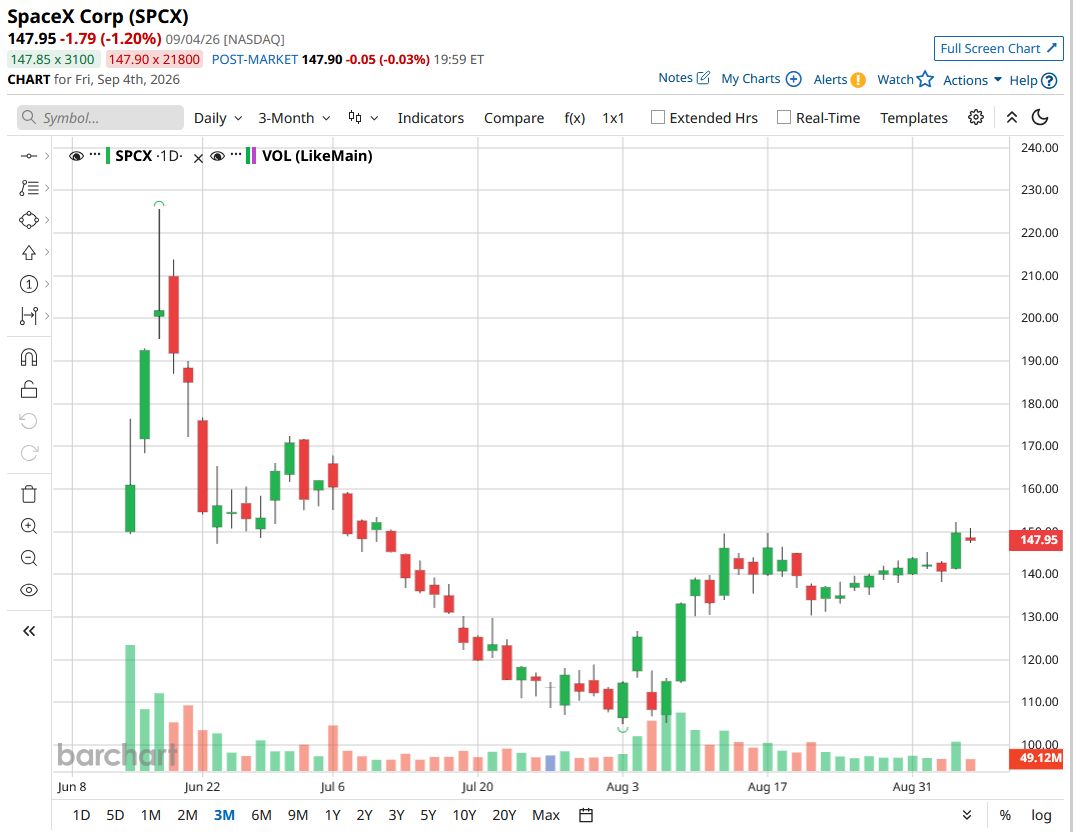
SpaceX’s initial public offering (IPO) came at $135 per share, and SPCX stock currently trades about 12% above that price, making the IPO quite successful. However, SPCX stock is down 33% from its 52-week high registered a few days after the IPO. This has been the trend across most space names, which have calmed down since the SpaceX offering. For instance, the Roundhill Space and Technology ETF (MARS), which witnessed a peak price of $45.92 just before the IPO, has since lost about 45% of its value and is trading just above the $25 mark.
 www.barchart.com
 SpaceX Comfortably Beats Earnings Expectations
SpaceX announced its second-quarter 2026 earnings on Aug. 4, beating Wall Street expectations comfortably on both the revenue and net profit front. The company reported revenue of $7.81 billion, much higher than the consensus estimate of $6.93 billion. Loss per share of $0.09 was similarly much better than the Wall Street's expectation of a $0.25 loss.
The Connectivity segment was responsible for more than half of revenue, bringing in $4.29 billion during the quarter. The AI segment was not far behind at $2.56 billion. All segments comfortably beat analyst expectations. It must be noted, however, that SPCX stock crashed the next day, though shares have since recovered those losses and raced past the IPO price in just one month.
On the Q2 earnings call, management pointed to $100 billion in annualized revenue run rate (ARR) for Cursor by the end of the year. The OpenAI setback will be an obstacle to overcome for the company in achieving this target. However, regulatory hurdles were successfully crossed on Aug. 14 with the closure of the acquisition. Overall, in my view, the revenue hit from OpenAI is not a major setback in the grand scheme of things.
What Are Analysts Saying About SpaceX Stock?
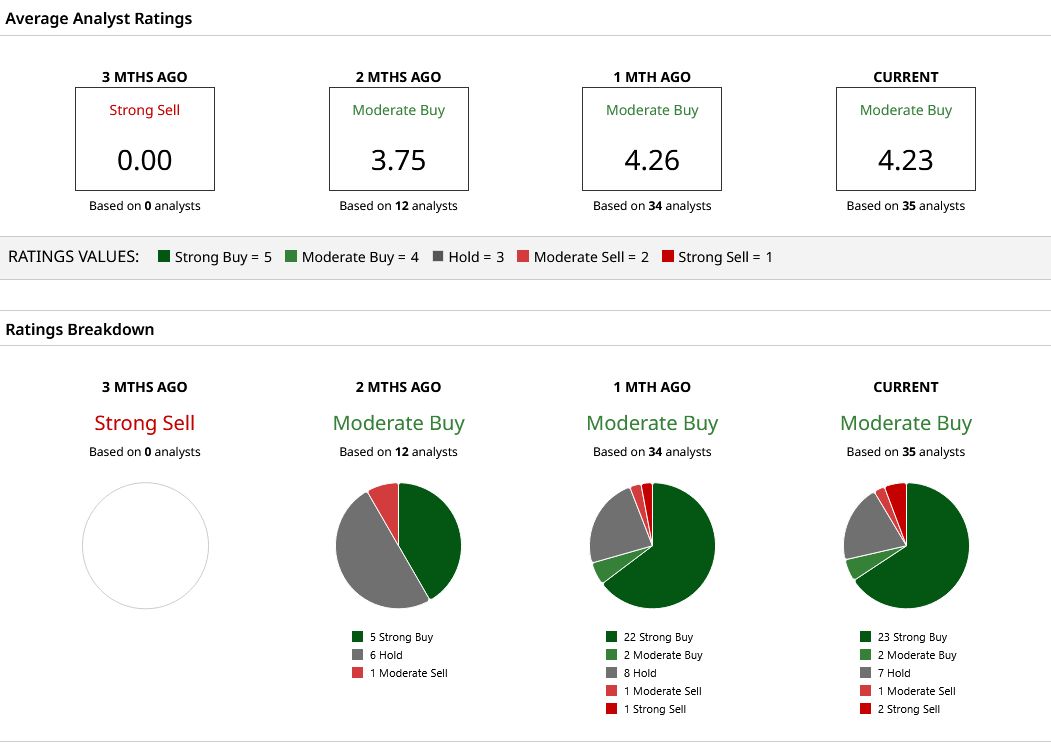
The bullish sentiment around SpaceX hasn’t fallen despite SPCX stock being 33% down from its peak. Earlier this month, Oppenheimer revised its SpaceX target price upward from $250 to $280 per share. Similarly, Bernstein recently boosted its price target from $239 to $248.
Other analysts aren’t far behind, with SpaceX stock enjoying a consensus “Moderate Buy” rating on Wall Street. The mean target price of $219.71 implies potential upside of 46% from current levels. Despite the setback from OpenAI, SPCX stock is responding strongly and offers considerable upside potential for investors.
 www.barchart.com
 On the date of publication, Jabran Kundi did not have (either directly or indirectly) positions in any of the securities mentioned in this article. All information and data in this article is solely for informational purposes. For more information please view the Barchart Disclosure Policy here.
More news from Barchart
Sam Altman Doesn’t Trust Elon Musk’s Cursor, Musk Says He Couldn’t Care Less. Here’s Why He Is Right. How to Play ChargePoint Stock After Its Massive 75% Post-Earnings Surge Crude Oil at $100 Gets All the Attention. Watch These 5 Charts to Track the Energy Market Mechanics Behind the Headlines. Meta Buys Stilla.ai: What the Swedish AI Acquisition Means for META Stock