


From centuries-old battles to modern geopolitical tensions, countries have always found reasons to strengthen their defenses. And while the way that wars are fought has changed, the need for military equipment hasn't.
That is what makes Lockheed Martin (LMT) and RTX Corp (RTX) interesting. Both are major defense players with established dividend histories, but they approach their businesses differently. But which one offers the better mix of value, growth, and income today?
More Yield, Less Trap: Sign up free to get Barchart’s daily Dividend Investor newsletter straight to your inbox.
Lockheed Martin Stock: Defense Expansion and F-35 Fighter Jets
 Screenshot courtesy of www.barchart.com
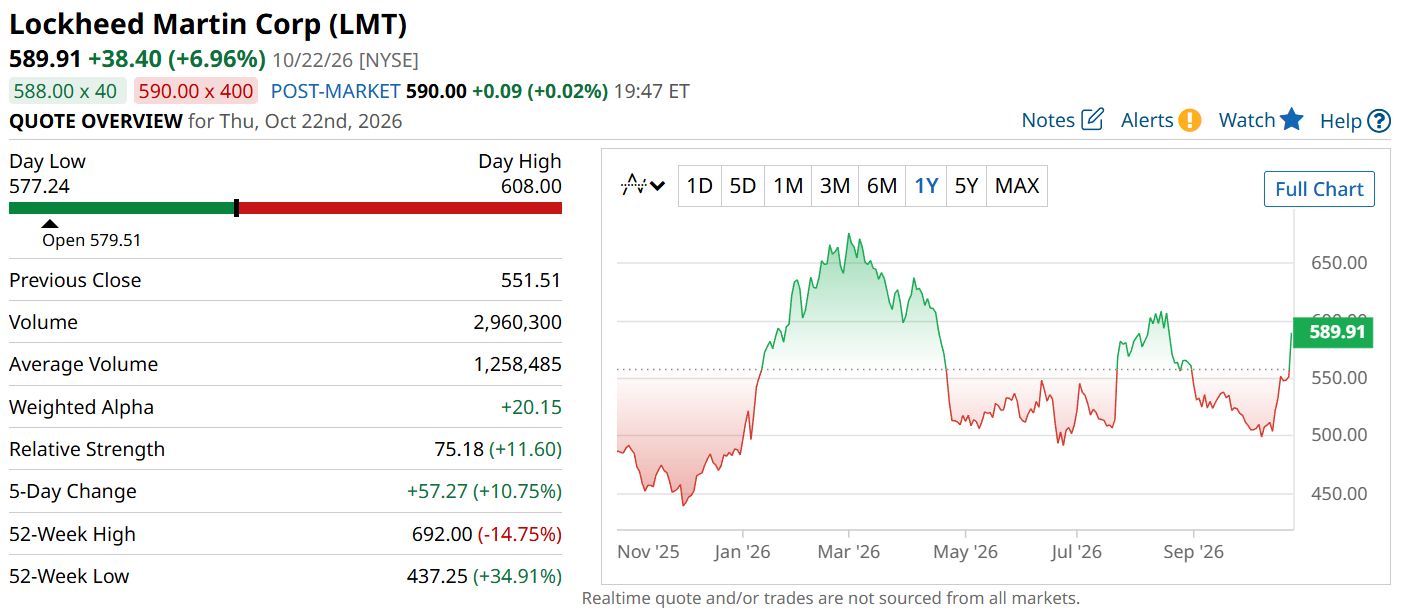
Lockheed Martin helps protect countries from military threats by building advanced defense systems, including the F-35 fighter jet and missiles. As governments place greater emphasis on national security, the company has announced a $300 million investment to expand munitions manufacturing in Texas, positioning it to meet growing defense demand. Operating in a specialized market, Lockheed sits at a market cap of about $127 billion.
RTX Stock: Defense Contracts Meet Commercial Aviation
 Screenshot courtesy of www.barchart.com
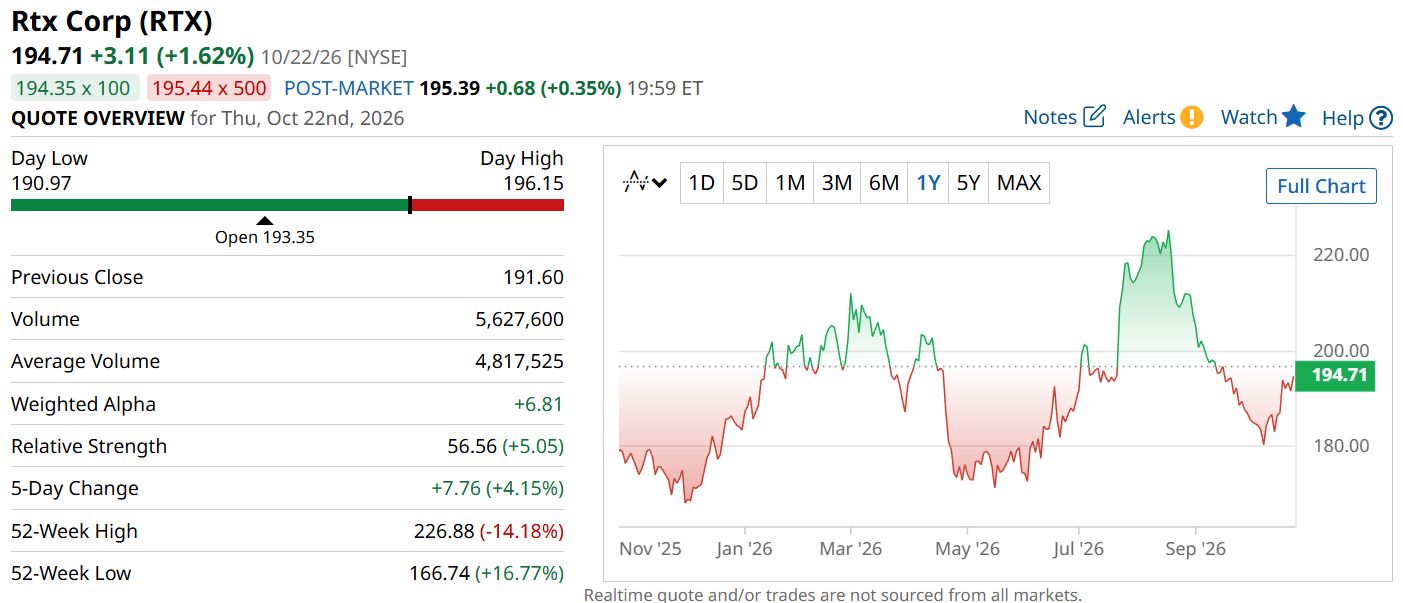
RTX, on the other hand, helps keep airplanes flying, but its business goes well beyond commercial aviation. Through Raytheon, it also helps protect against military threats. It recently secured a contract worth about $24.4 billion for SM-6 missile interceptors, underscoring its growing presence in aerospace.
With both commercial aviation and defense under its wing, RTX is roughly twice Lockheed's size, with a market cap of $258 billion.
But size isn’t the only indicator of a better business. What matters more is how these companies stack up financially.
LMT vs. RTX: Financial Performance
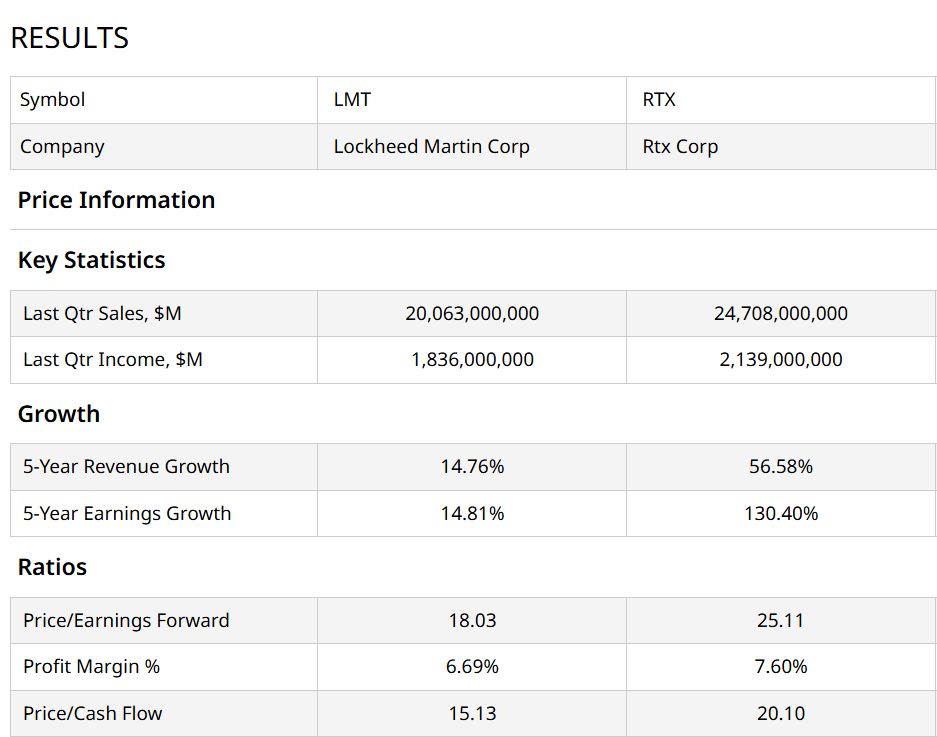
I used Barchart's Stock Comparison Tool to get these data:
 Screenshot courtesy of www.barchart.com
RTX leads in quarterly sales, up 14% year over year to $24.7 billion, compared with Lockheed, which rose 11% to $20.1 billion.
Net income, however, is where the story gets a little more spicy.
RTX's earnings increased 29% year over year to $2.14 billion. That is larger in absolute terms, but growth was far slower than Lockheed’s, whose earnings surged 437% to $1.84 billion.
And RTX’s lead extends to profitability, with an 8% profit margin versus Lockheed’s 7%. But, Lockheed starts to pull ahead on valuation. It trades at 18x forward earnings, compared with 25x for RTX. For reference, the broader Industrials sector trades at 27x P/E, so both companies are “cheap,” but Lockheed Martin is more attractive on an earnings basis.
The gap also shows up in price-to-cash flow. Lockheed trades at 15x versus RTX's 20x, meaning investors pay less for every dollar of cash flow Lockheed generates.
These figures suggest the matchup is closer than it first appears, but could dividends turn the tables?
Dividend Story between LMT and RTX
For the tiebreaker, here’s how these two companies reward investors.
Lockheed pays a forward annual dividend of $13.80, for a yield of about 2.5%. Its dividend payout ratio is 47%, suggesting a balance between rewarding shareholders and retaining earnings for reinvestment.
Meanwhile, RTX pays $2.92 per share annually, yielding about 1.5% and a lower dividend payout ratio of 39%.
Lockheed’s higher yield, with a payout ratio not far above RTX’s, gives it the income edge. But is that enough to convince Wall Street?
Analysts' Opinion on LMT and RTX
This is what the scorecard says:
 Screenshot courtesy of www.barchart.com
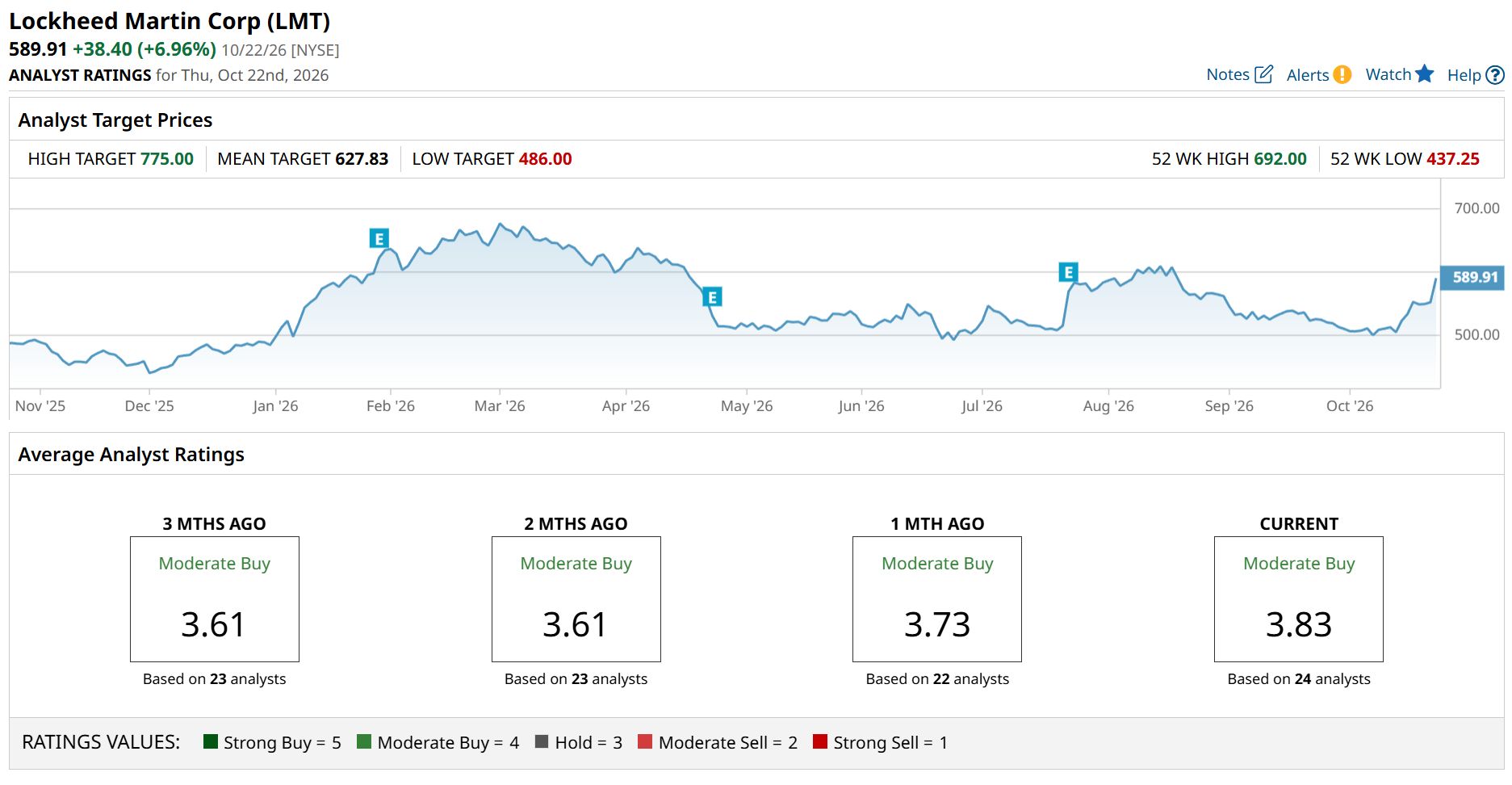
A consensus among 24 analysts rates LMT stock a “Moderate Buy”. Its high target prices suggest 31% upside over the next year.
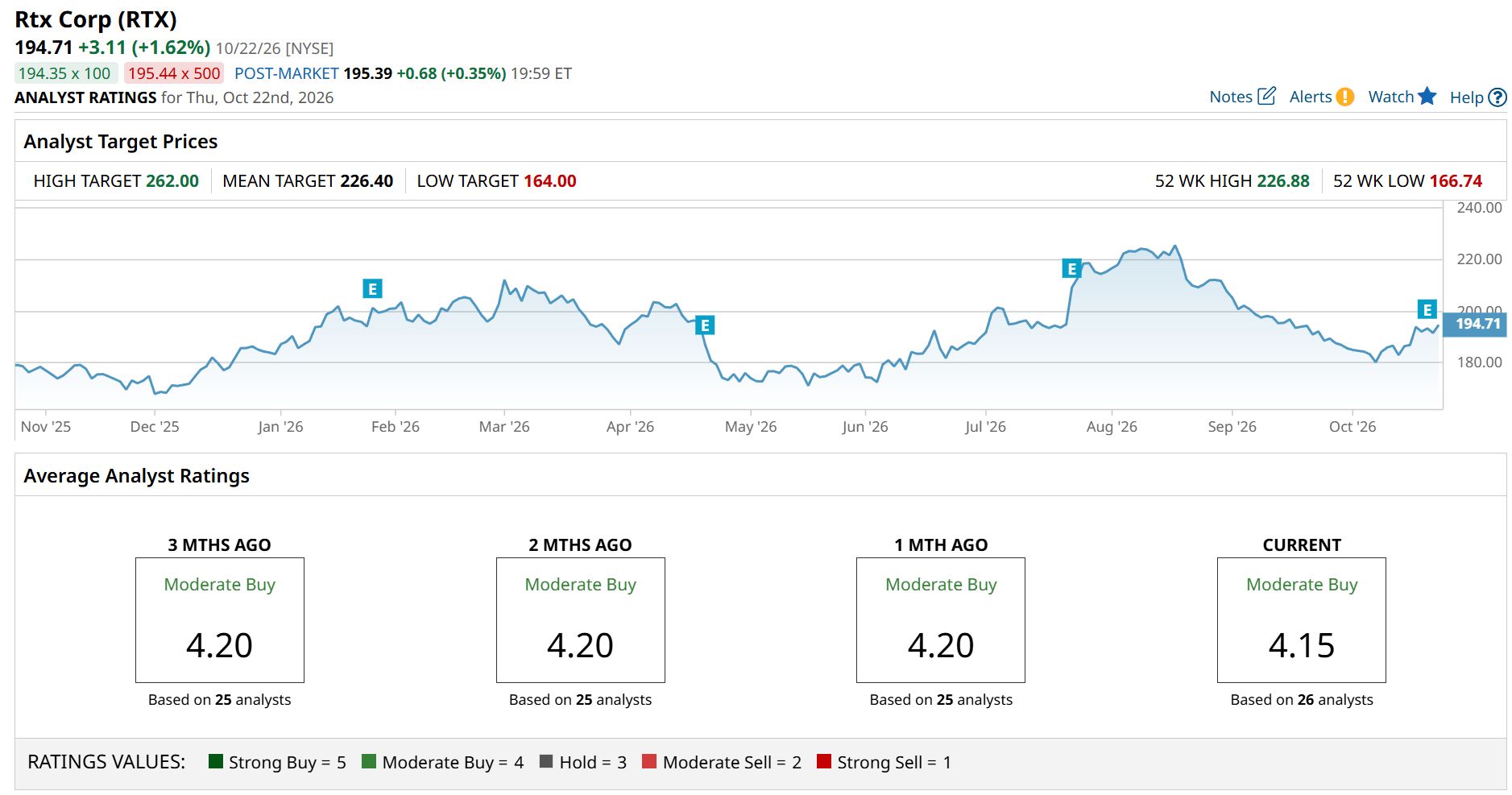 Screenshot courtesy of www.barchart.com
A similar rating was given to RTX stock, with 26 analysts rating it a “Moderate Buy”. The upside potential isn’t far behind, with potential gains of about 35% if it hits its high target price.
So, according to Wall Street, RTX slightly pulls ahead on analyst score and upside potential.
Verdict
The results aren’t as clear-cut as many would want, but I still think Lockheed Martin is the better choice here. RTX is the bigger name, but Lockheed is the one priced like the underdog: cheaper on earnings and cash flow, a higher yield, and stronger recent earnings growth. I’d rather own the cheaper stock.
On the date of publication, Rick Orford did not have (either directly or indirectly) positions in any of the securities mentioned in this article. All information and data in this article is solely for informational purposes. For more information please view the Barchart Disclosure Policy here.
More news from Barchart
Lockheed Vs. RTX: The Cheaper Defense Giant Is The Clear Value Win 3 Defensive Stocks to Buy as the AI Selloff Rattles Wall Street FMC Slashed Its Dividend Last Year. Why I Think Another Cut Is Coming in 2026. Dear American Express Stock Fans, Mark Your Calendars for October 23