

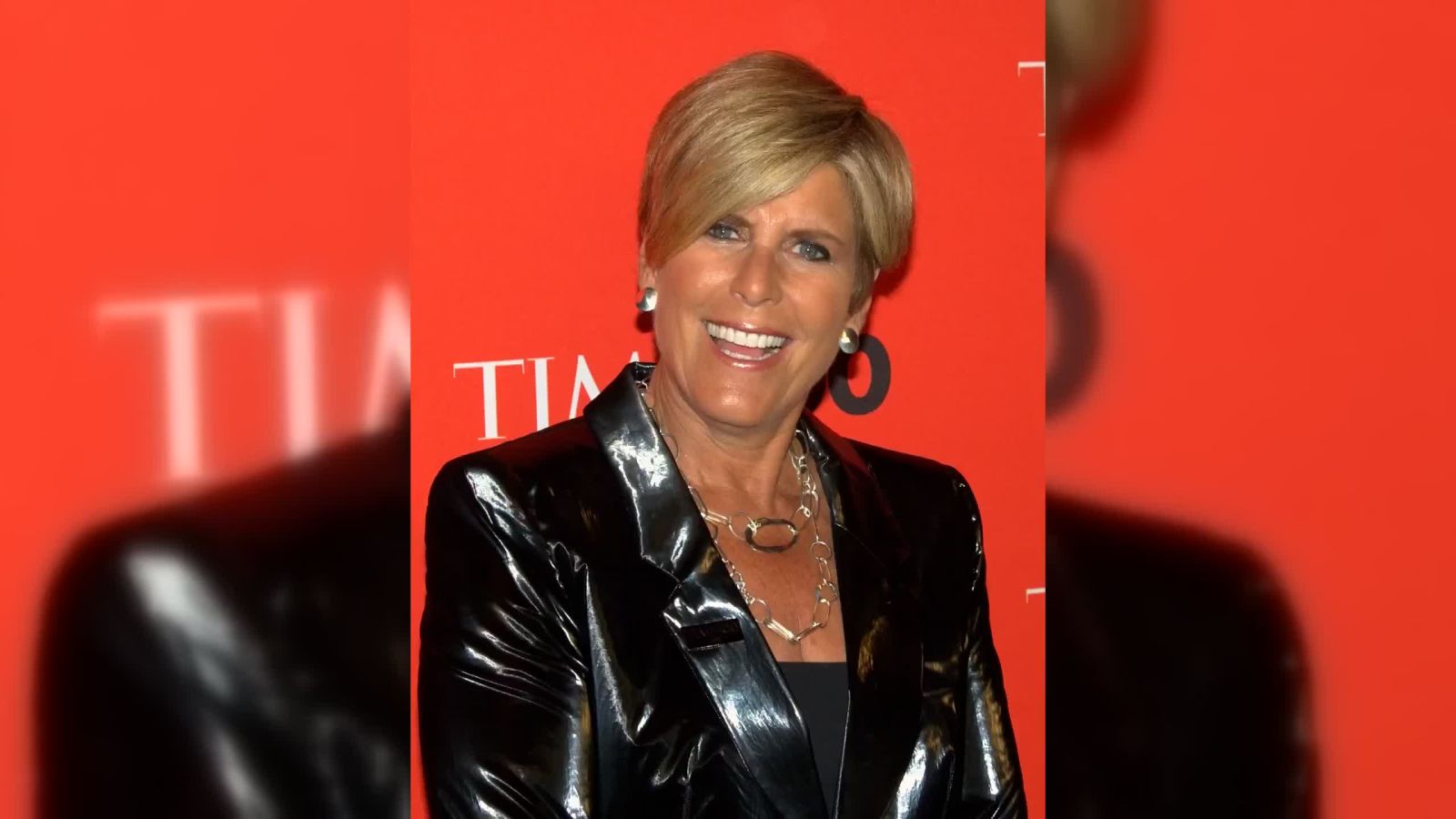
Suze Orman has a two-part rule for the children's investment accounts the federal government has now opened for nearly 70 million kids, and the second half is the part parents will not expect. “You should never turn down free money,” she wrote in an Aug. 27 post on her website, referring to the $1,000 the government deposits for an eligible child, and up to $2,500 a year that an employer is allowed to add. Then stop. "In other words: until your financial life is in great shape, I don't want you to contribute to a Trump Account for a child. Period."
The post, titled "Who Should and Shouldn't Open a Trump Account," is written in Orman's first-person voice. Of the government's $1,000 seed, she wrote, "That's free money no one should pass up." Orman, the personal finance author who told listeners that a Social Security agent was "100 million percent wrong" about a divorce benefit, has no quarrel with the account itself. Her objection is to what parents do after the free money lands.
More Top Stocks Daily: Go behind Wall Street’s hottest headlines with Barchart’s Active Investor newsletter.
Sponsored Content: The company behind the first FDA-cleared AI skin cancer device of its kind is now open to everyday investors. See How to Own a Stake.
She sets five conditions. Orman does not want any parent or grandparent adding their own money "beyond any free contributions from the government or their employer" if any of the following applies: "Your emergency savings fund isn't large enough to cover at least eight months of living expenses. You have credit card debt. You have student loan debt. You have car loans. Your own retirement savings is not on track." By that test, anyone with a car payment or a revolving card balance isn't yet a candidate.
Her reason is the tax treatment. "Contributions to a Trump Account are made with after-tax money, so they will not be taxed again when withdrawn," she wrote, "but 100% of earnings withdrawn will be taxed as ordinary income." That matches the structure the IRS laid out in Notice 2025-68: Contributions get no deduction, nothing can be withdrawn during the growth period that ends in the year the child turns 18, and after that the account generally follows traditional IRA rules, under which anything above the after-tax basis is taxable when it comes out.
Let's test that in dollars, as a Barchart illustration rather than a forecast. Put in the law's full $5,000 a year, which Orman notes is the annual cap, for 18 years at a 7% annual return, and the account reaches roughly $170,000. About $90,000 of that is the contributions, which come back untaxed. The other $80,000 or so is earnings. In a Trump Account, that $80,000 is taxed as ordinary income on the way out — roughly $17,600 at a 22% rate or about $19,200 at 24%. In a Roth IRA, a qualified withdrawal of the same $80,000 is tax-free. The accounts invest in low-cost index funds, so the return assumption stands in for something like the S&P 500 ($SPX) over a long horizon, and a Barchart contributor argued in July that the structure amounts to a bet on a stock-market bubble.
Orman's preferred vehicle for a child's own money is the Roth, with one catch that she states plainly: "A Roth IRA requires that your teen have earned income, so it only is an option for a child who has a paying job." For a baby, the Roth is off the table, and her advice narrows to sequencing. The $1,000 goes in because it is free. The employer's $2,500 goes in because it is free. The parent's own dollars wait until the parent's own debts are gone.
The program has changed since she wrote the blog post. On Oct. 7, President Donald Trump and U.S. Treasury Secretary Scott Bessent announced automatic enrollment for more than 60 million children, bringing the total to nearly 70 million, according to Financial Planning's Oct. 8 report. About 7 million children had been opted in by their parents before then. Parents can now open accounts for children under 18 with a Social Security number without opening one themselves, though a parent still has to claim the account to manage it or contribute, and the $1,000 seed still applies only to children born from 2025 through 2028. On Sept. 30, the Treasury and IRS also proposed rules letting donors give individual stocks to groups of at least 5,000 children. Barchart reported in April that Robinhood (HOOD) will help run Trump Accounts for families who claim them. None of that touches Orman's rule, which is about a parent's money, not the account's existence.
The condition is the part that will get lost as the line travels. Suze Orman is not telling anyone to refuse the $1,000, and she repeats the point twice: "Again, you should never turn down free money." She is saying the account is a fine place for money that costs you nothing and a poor place, on the tax math, for money you still owe someone else.
On the date of publication, Caleb Naysmith did not have (either directly or indirectly) positions in any of the securities mentioned in this article. All information and data in this article is solely for informational purposes. For more information please view the Barchart Disclosure Policy here.
More news from Barchart
Fermi Has a New Plan for Growing Its Data Center Business. What That Means for FRMI Stock. ‘I Don’t Want You to Contribute to a Trump Account for a Child. Period’: Suze Orman Says Take the Free $1,000 and Your Employer’s $2,500, Then Stop. Microsoft May Be the Only Hyperscaler to Stay Cash-Flow Positive. What It Means for MSFT Stock Nvidia vs. Broadcom: One Grew AI Revenue 221% Last Quarter. The Other Grew 117%.