


A Trezor wallet investigation has identified hidden hardware implants in three Safe 5 devices bought from former reseller CryptoBilis, sharpening a warning that software alone cannot undo an already exposed recovery phrase.
In its November 12 investigation update, Trezor said one device had been examined in its lab and two others identified through owners’ photographs. The three purchases took place between August 20 and September 23 through CryptoBilis directly and its Tokopedia and Shopee stores.
The company says none of those owners has lost funds and that it has found no confirmed cases involving another reseller or Trezor model. The finding is consequential, but its scope is specific. It does not establish that Trezor wallets generally contain the implant.
The Trezor wallet warning has moved beyond an initial report
The company’s October 30 notice described a credible allegation that it had not yet verified by examining the reported device. The latest findings move that case forward, while retaining an important distinction between a laboratory examination and identification from photographs.
That is why three identified devices should not become three laboratory-confirmed examinations in retellings of the story. Equally, the absence of reported losses should not be mistaken for proof that an exposed backup is safe.
The investigation remains a supply-chain story: what happened to particular devices before they reached their owners. The evidence does not identify the people responsible, and the fact that a device passed through a reseller is not by itself proof of who altered it.
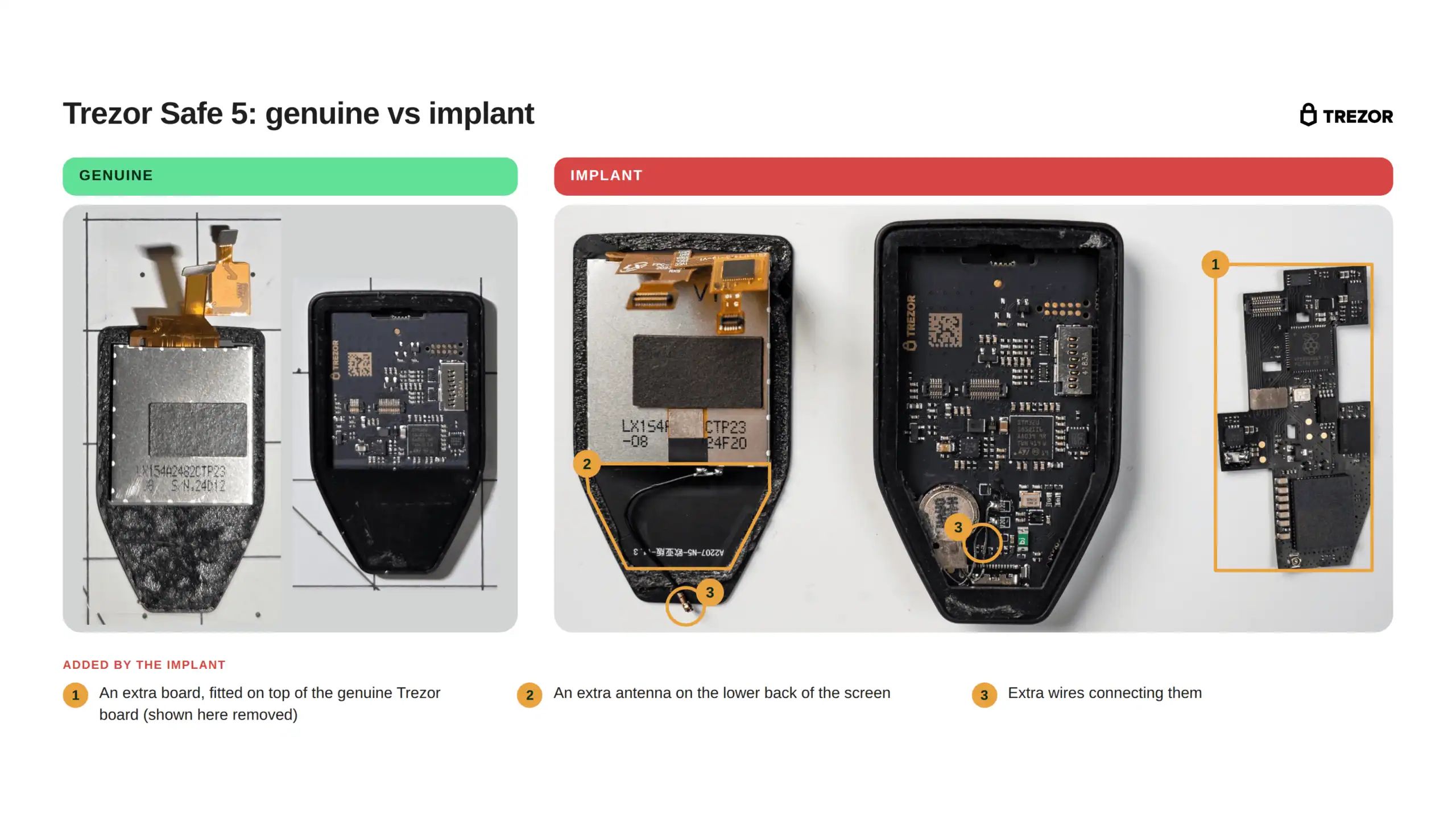 Genuine and tampered Safe 5 hardware, as labelled by Trezor. Image credit: Trezor; reproduced from its November 12 investigation update.
A compromised display can undermine a secure device
Trezor’s original notice described an additional board between the main electronics and the display, with a cellular module and antenna. The concern was that it could capture recovery words shown during setup and transmit them over a mobile network.
The crucial point for users is the role of the backup. A hardware wallet protects signing keys, but its recovery phrase is designed to restore access elsewhere. If an attacker learns that phrase, replacing the physical device while retaining the same backup does not remove that knowledge.
This is a different failure mode from malicious firmware changing what a wallet does. Extra hardware can target information displayed during a legitimate operation. A device can therefore appear to function normally while the secret needed to recreate the wallet is no longer private.
Why the firmware fix does not settle the backup question
Trezor says firmware 2.13.1, released on November 11, blocks the implants it has identified from capturing further information. Its guidance for CryptoBilis buyers nevertheless remains to move funds to “a new wallet with a new seed.”
A patch addresses future behaviour on the updated device. It cannot make an attacker forget a recovery phrase captured earlier. Those are different security tasks, and treating one as a substitute for the other would leave the central exposure unresolved.
For the same reason, a backup restored onto a newly purchased device can preserve the old risk. What needs replacing is the potentially compromised secret as well as the hardware used to manage it.
There is no need to publish that secret to establish whether a purchase came from the affected seller. Purchase records and official support can address provenance without exposing the information that controls the funds.
Who should act, and where should they verify instructions?
The earlier notice applies precautionary guidance to all Trezor models bought through CryptoBilis from March 2026 onwards, including marketplace stores supplied by that reseller. Devices not yet set up should not be initialised or given an existing recovery phrase.
Users unsure about the source of a device should start with receipts and Trezor’s official support channel. The company’s replacement arrangements are described in its investigation update. A suspicious device should be kept and left unused while support advises on the next steps.
The October notice also warns about scammers exploiting the incident through fake messages, letters and phone calls. It states: “Trezor Support will never ask for it,” referring to the wallet backup. A purported rescue request for recovery words is therefore a warning sign, not a verification procedure.
The broader lesson is about custody, not panic
BNC’s coverage of the Binance recovery and social-engineering threats showed how asset security can fail outside a blockchain’s consensus rules. This case adds a physical route: the equipment entrusted with a secret can itself be altered.
For self-custody users, provenance and recovery procedures belong alongside password hygiene and software updates. A sealed-looking package or a familiar marketplace name cannot answer every question about where a device has been.
The useful response is proportionate to the evidence: identify the seller, follow the manufacturer’s instructions for the affected purchases and protect recovery words from anyone offering unsolicited help. Trezor’s narrow findings warrant a precise warning. They do not justify either dismissing the risk or telling every owner their wallet has been compromised.