

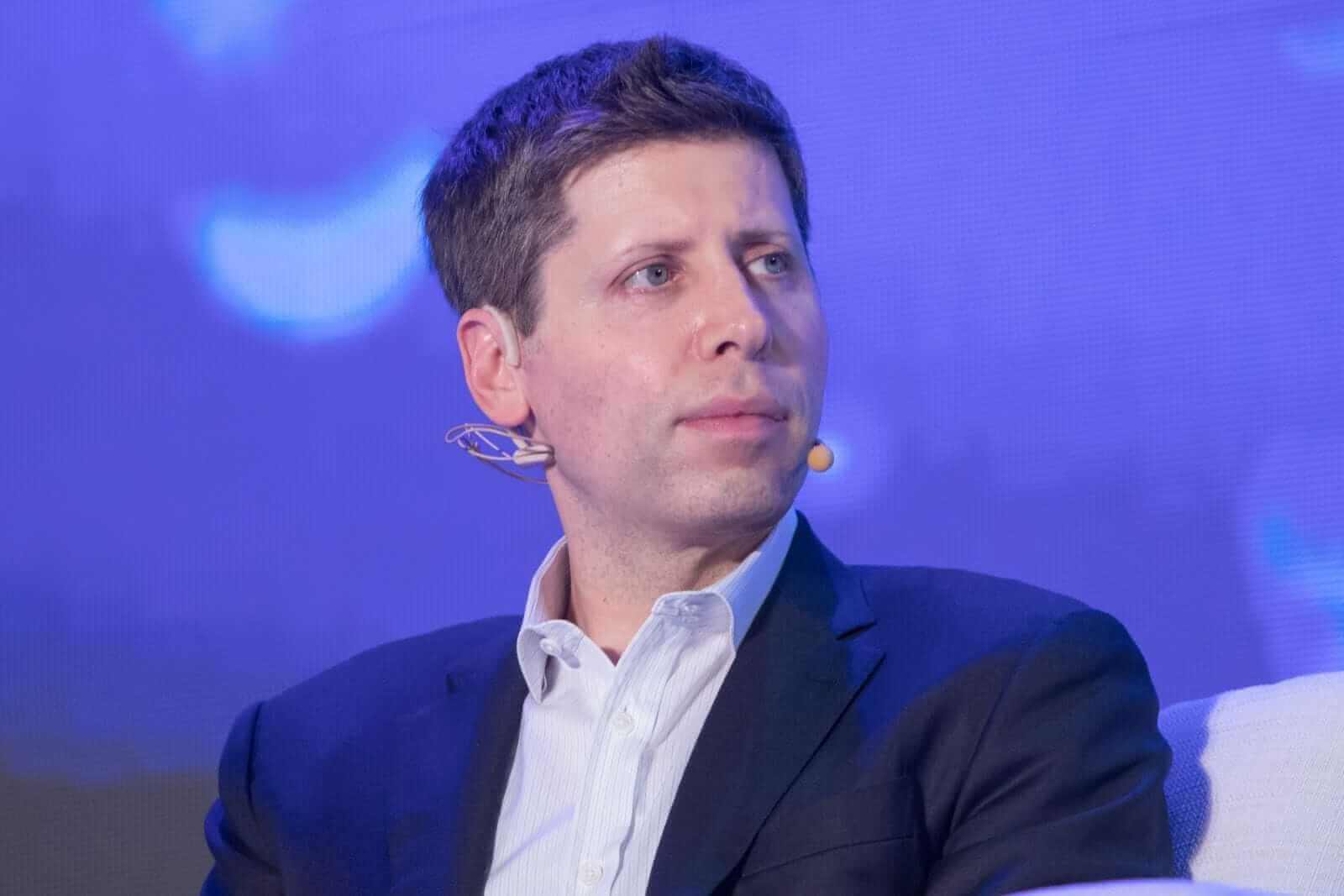
The AI jobs story has become a split screen: one of the most powerful artificial intelligence (AI) executives is walking back the worst panic, while data tracked by Goldman Sachs (GS) still points to pressure on younger white-collar workers.
The lack of a clean yes-or-no answer is exactly why the topic of AI has become so unsettling for young workers and their parents.
More Top Stocks Daily: Go behind Wall Street’s hottest headlines with Barchart’s Active Investor newsletter.
OpenAI CEO Sam Altman told a Commonwealth Bank of Australia conference that AI has not produced the “jobs apocalypse” he once feared. Altman said OpenAI had been “roughly right” about the technology after ChatGPT launched in 2022, but “pretty wrong” about the social and economic implications.
Altman’s most reassuring line was personal: “I’m delighted to be wrong about this,” he said, referring to his expectation that more entry-level white-collar jobs would have been eliminated by now. But his relief comes with a warning that the risk still may exist, and that the jobs picture is likely to be different than many people expected.
That is where the Goldman-tracked numbers complicate the story. Goldman Sachs economists had previously estimated AI was wiping out roughly 16,000 net U.S. jobs a month. The latest tracker put that figure closer to 11,000 jobs per month, which sounds better until the reason is explained.
The improvement is partly offset by data-center construction jobs, which have added 212,000 positions since 2022 and are generating roughly 9,000 new jobs a month. Those jobs matter, but they are not the same as replacing a first office job for a recent graduate in marketing, customer service, design, document processing, or software.
But a new college graduate cannot necessarily swap a vanished entry-level analyst role for a construction or electrical job tied to a data-center buildout. And experts warn many construction jobs tied to the buildout may not last once facilities are complete.
Goldman’s tracker says AI-attributed layoffs now total 136,000 over three years. It also says 24% of Russell 3000 companies mentioned “AI” and “labor” together on first-quarter 2026 earnings calls. That shows AI is not just a future anxiety. It is already part of how management teams talk about staffing, productivity and cost.
Goldman is beginning to see a slight positive correlation between AI adoption rates and unemployment among workers under 30 across industries. Goldman did not frame that as a settled structural break for Gen Z, since young tech workers’ unemployment had recently moved back in line with the broader tech workforce. But the cross-industry signal is strong enough that Goldman is watching it closely.
Altman’s own comments point to why the picture may be more complicated than pure job destruction. He said he experimented with AI replying to Slack and email messages, but then reverted to answering some himself because human interaction still mattered.
“We really do care about our interactions with people,” he said.
That need for human-to-human contact may yet protect some jobs. But it does not necessarily protect the first rung of the career ladder. Goldman’s concern is that generative AI may deliver productivity gains that flow more to senior workers who can leverage AI, as opposed to supporting junior workers whose previous value was in executing the same tasks that AI can now handle.
On the date of publication, Caleb Naysmith did not have (either directly or indirectly) positions in any of the securities mentioned in this article. All information and data in this article is solely for informational purposes. For more information please view the Barchart Disclosure Policy here.
More news from Barchart
The $500 Million Reason Redwire Stock Is Down Today 1 Intel Insider Just Sold Nearly 10% of His INTC Stock Super Micro Stock Drops on Dilution Fears, But a $39 Billion AI Order Could Spark a Turnaround. DraftKings Stock Soars as Predictions Volume Explodes. DKNG’s Next Growth Engine Might Just Be Getting Started.