


Legendary investor Michael Burry, best known for predicting the 2008 financial crisis, recently suggested that now is “a particularly good time” to look for undervalued Hong Kong stocks as investors rotate away from expensive AI hardware names. His comments have renewed interest in China’s internet giants, many of which are trading well below previous highs despite making aggressive investments in artificial intelligence (AI).
Among the most compelling opportunities are JD.com (JD), Alibaba Group Holding Limited (BABA), and Tencent Holdings Limited (TCEHY). Together, these companies rank among the largest technology constituents of the Hang Seng Index ($HSI) and are increasingly positioning themselves as long-term AI leaders rather than simply e-commerce or social media companies.
More Top Stocks Daily: Go behind Wall Street’s hottest headlines with Barchart’s Active Investor newsletter.
He recently increased his stake in JD.com and argues that investors should look to Hong Kong as enthusiasm for markets like South Korea, Japan, and semiconductor stocks begins to fade. However, despite growing optimism from firms like Morgan Stanley (MS), the Hang Seng Index has declined this year, with major Chinese technology companies also posting year-to-date (YTD) losses. Given this backdrop, the above-mentioned stocks could be prominent additions to unlock solid gains in the long term.
Stock #1: JD.com
Based in Beijing, China, JD.com, Inc. is one of the country’s largest supply chain-based technology and e-commerce companies, operating a nationwide logistics network while offering retail, logistics, healthcare, and technology services. The company has a market cap of $38.2 billion.
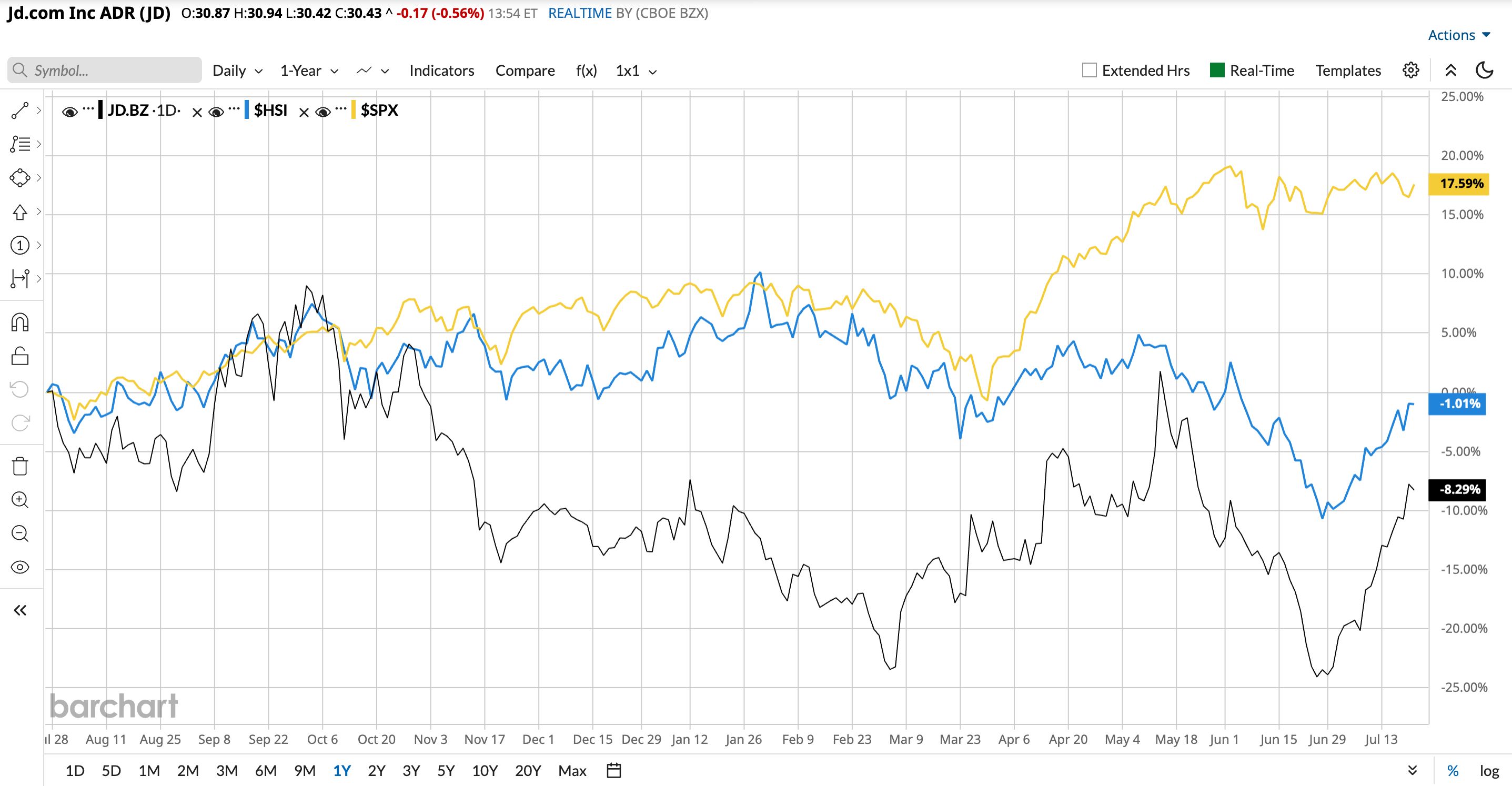
JD shares have declined 8.9% over the past 52 weeks but up 6.1% YTD, compared to the Hang Seng Index, which has increased marginally 0.55% over the past year but is down 1.94% this year. Also, in comparison, the S&P 500 Index ($SPX) delivered 19.1% returns over the past year and 9.7% gains this year.
 www.barchart.com
 The recent weakness has caused the stock to trade at a discount. The stock trades at 10.65 times price-to-earnings, which is below the sector median and its own five-year average.
JD.com reported its first-quarter 2026 results on May 12, with revenue rising 4.9% year-over-year (YOY) to RMB315.7 billion ($45.8 billion). Growth was driven by a 20.6% YOY increase in net service revenue, including a 21.7% rise in logistics and other service revenue and an 18.8% increase in marketplace and marketing revenue, highlighting the continued expansion of JD’s higher-margin businesses. General merchandise revenue climbed 14.9% YOY, while annual active customers reached a record high.
However, net income attributable to shareholders declined, with non-GAAP EPS falling to RMB5.12 per ADS ($0.74) from RMB8.41, reflecting increased spending on new strategic initiatives.
Analysts remain constructive on JD.com’s long-term outlook, supported by its dominant logistics infrastructure, expanding AI-enabled retail capabilities, and continued investment in new growth initiatives, even as near-term profitability is pressured by strategic spending. Its earnings are expected to reach $2.78 per share in 2026, up 30.5% from the prior year and $3.33 per share in 2027, up 19.8% YOY.
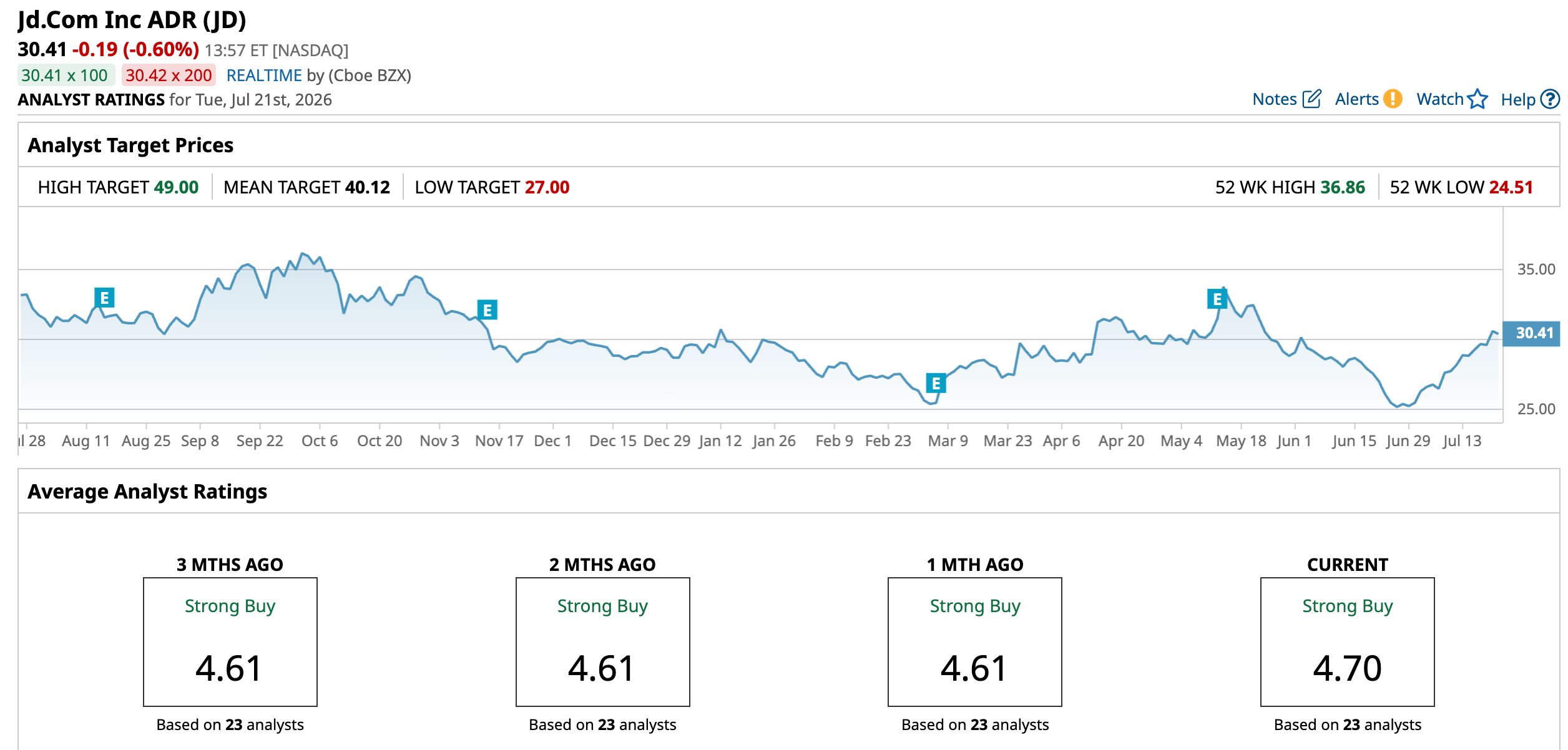
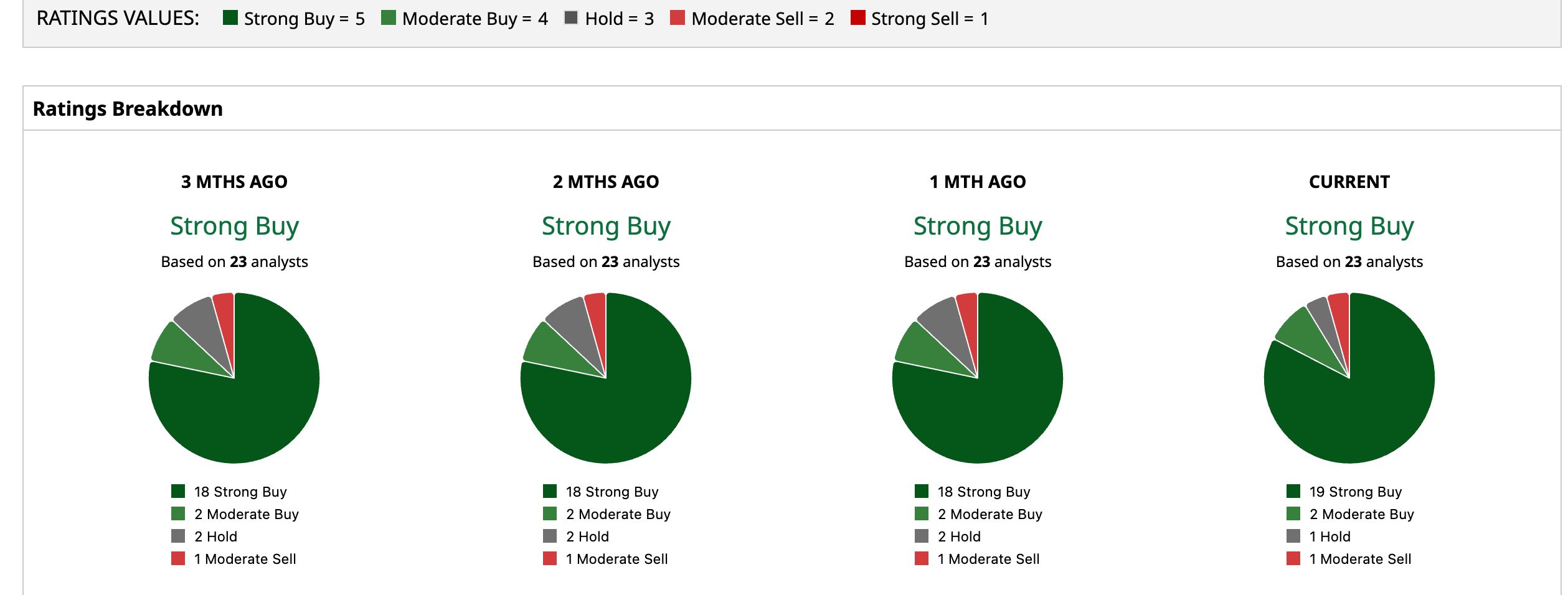
Wall Street’s outlook on the stock is optimistic, with a consensus “Strong Buy” rating overall. Of 23 analysts covering the stock, 19 recommend a “Strong Buy,” two opt for a “Moderate Buy,” one advises a “Hold,” and one suggests a “Moderate Sell.”
The average analyst price target of $40.12 indicates potential upside of 32% from the current price levels. The Street-high price target of $49 suggests that JD could rally as much as 61.1% from here.
 www.barchart.com
  www.barchart.com
 Stock #2: Alibaba
Based in Hangzhou, China, Alibaba Group Holding Limited is one of the world’s largest technology companies, operating leading e-commerce marketplaces, cloud computing services, digital payments, logistics, and artificial intelligence platforms. The company’s market cap stands at $288.46 billion.
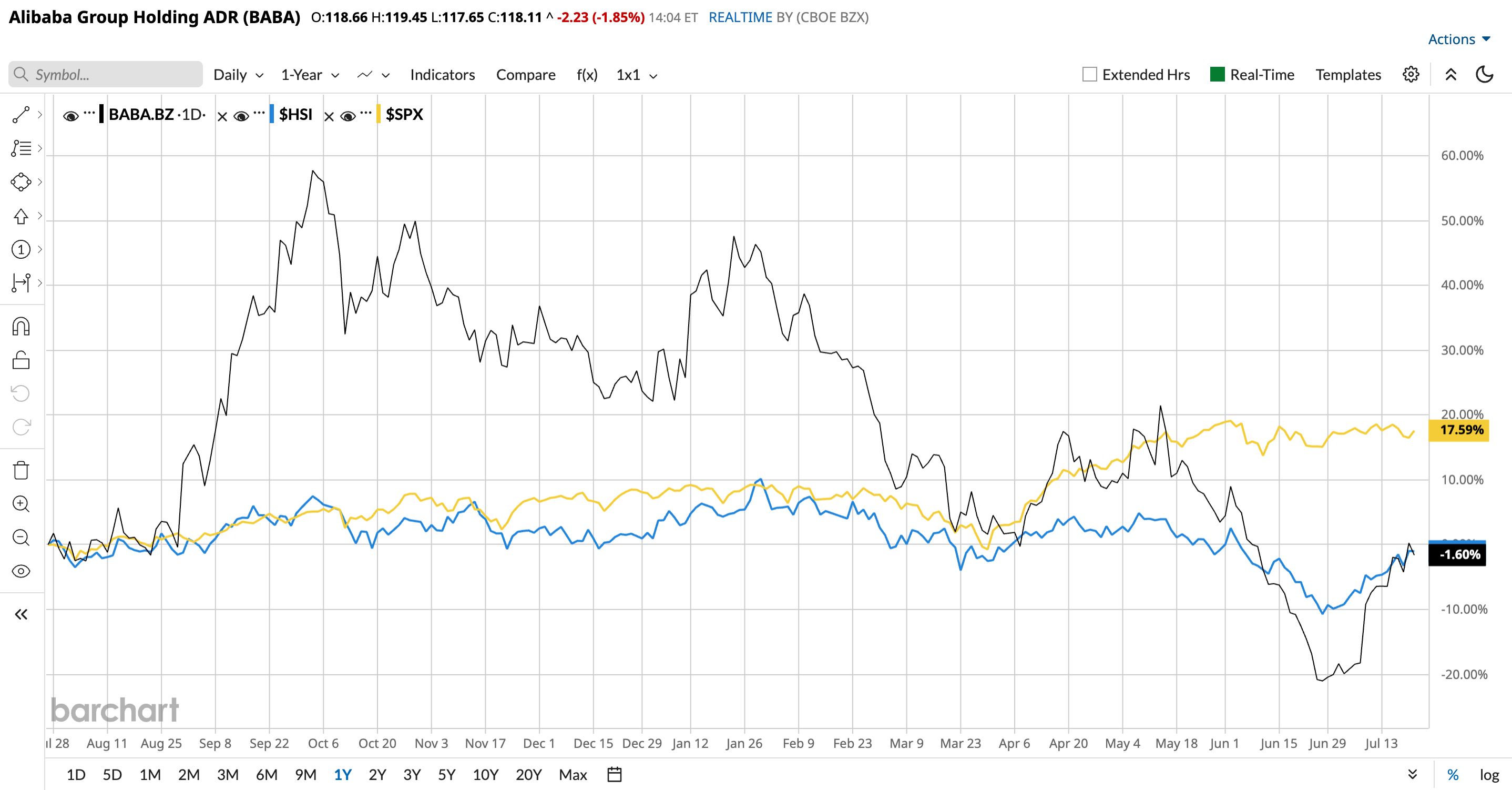
Alibaba shares have lost marginally 1.78% over the past 52 weeks and are down 19.41% YTD, significantly underperforming both the Hang Seng Index and S&P 500 Index this year.
 www.barchart.com
 Despite the pullback, the stock is trading at a higher valuation compared to its industry peers at 18.31 times forward price-to-earnings.
Alibaba Group reported its fiscal fourth-quarter and full-year 2026 financial results on May 13. For the fiscal fourth quarter ended March 31, Alibaba generated revenue of RMB 243.4 billion ($35.3 billion), representing 3% YOY growth. Moreover, Cloud Intelligence revenue surged 38% YOY, with external cloud revenue accelerating 40%, fueled by strong enterprise AI demand. Management said AI-related products now account for roughly 30% of external cloud revenue.
Despite the revenue growth, profitability deteriorated sharply. Quarterly non-GAAP net income plunged significantly to just RMB 86 million ($12 million) from RMB 29.85 billion in the prior-year quarter. Non-GAAP earnings per ADS fell to RMB 0.62, missing analyst expectations by a wide margin.
For full fiscal year 2026, Alibaba reported revenue of RMB 1.02 trillion ($148.4 billion), up 3% YOY, while full-year non-GAAP net income fell 62% to RMB 60.7 billion ($8.8 billion), and non-GAAP earnings per ADS dropped 59% YOY to RMB 26.80. Free cash flow was an outflow of RMB 46.6 billion ($6.8 billion) compared with an inflow of RMB 73.9 billion in fiscal 2025.
Analysts expect the company’s EPS to improve 94.4% YOY to $6.28 in fiscal 2027 and rise 41.7% to $8.90 in fiscal 2028.
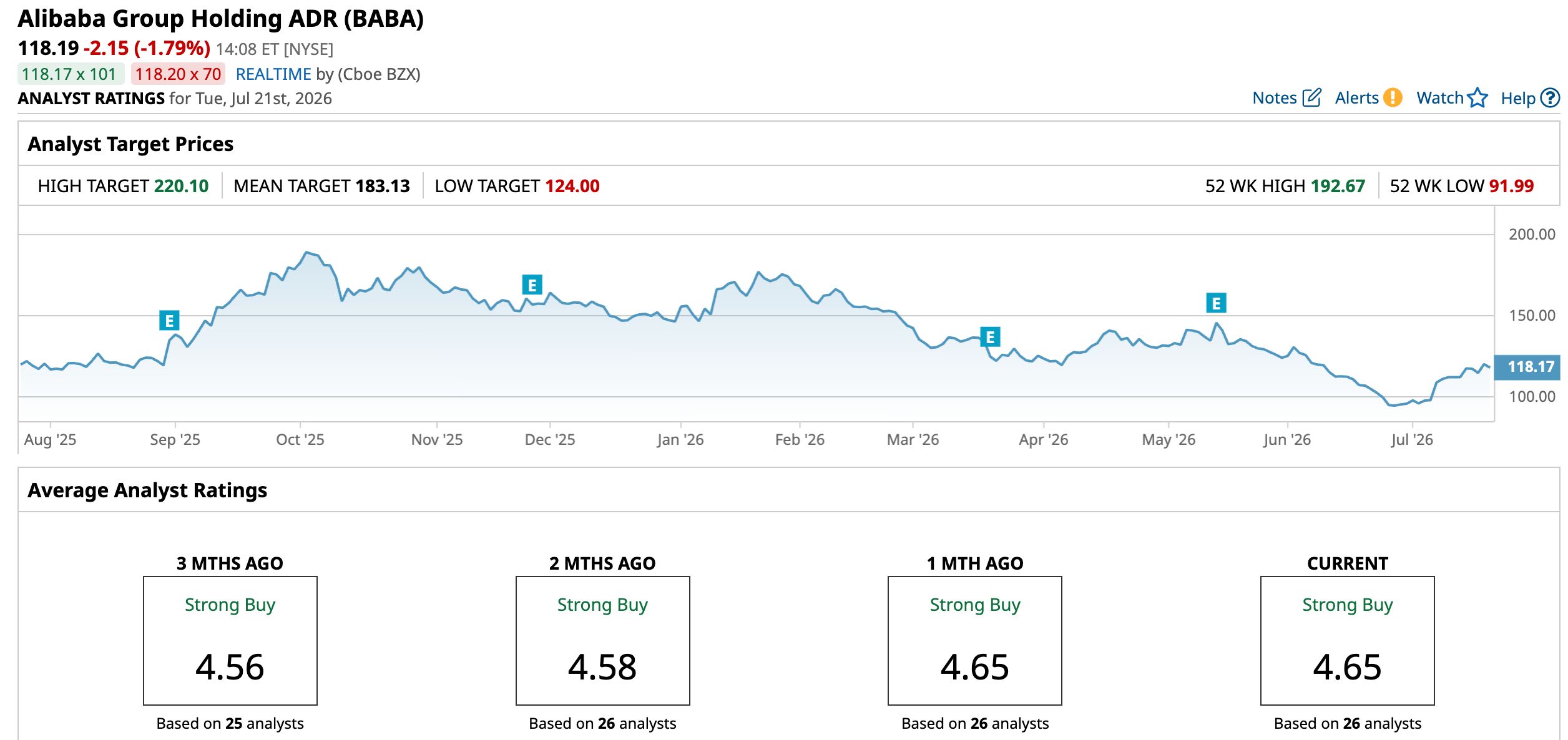
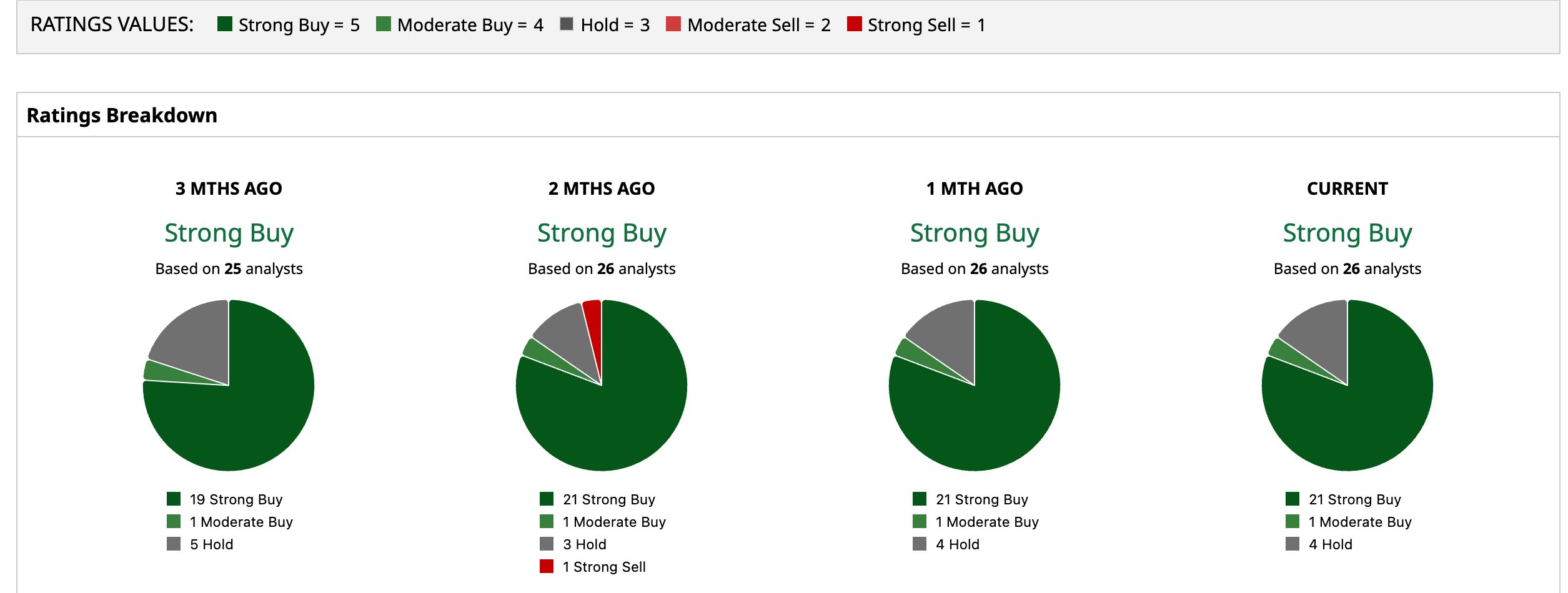
Overall, Alibaba has a consensus “Strong Buy” rating. Of the 26 analysts covering the stock, 21 advise a “Strong Buy,” one suggests a “Moderate Buy,” and the remaining four analysts give a “Hold” rating.
The average analyst price target for BABA is $183.13, indicating a potential upside of 55%, while the Street-high target price of $220.10 suggests that the stock could rally as much as 86.2%.
 www.barchart.com
  www.barchart.com
 Stock #3: Tencent Holdings
Based in Shenzhen, China, Tencent Holdings Limited is one of the world’s largest internet and technology companies, operating the WeChat ecosystem alongside leading gaming, digital advertising, fintech, cloud computing, and artificial intelligence businesses. Tencent has a market cap of around $557.19 billion, making it one of the most valuable technology companies globally.
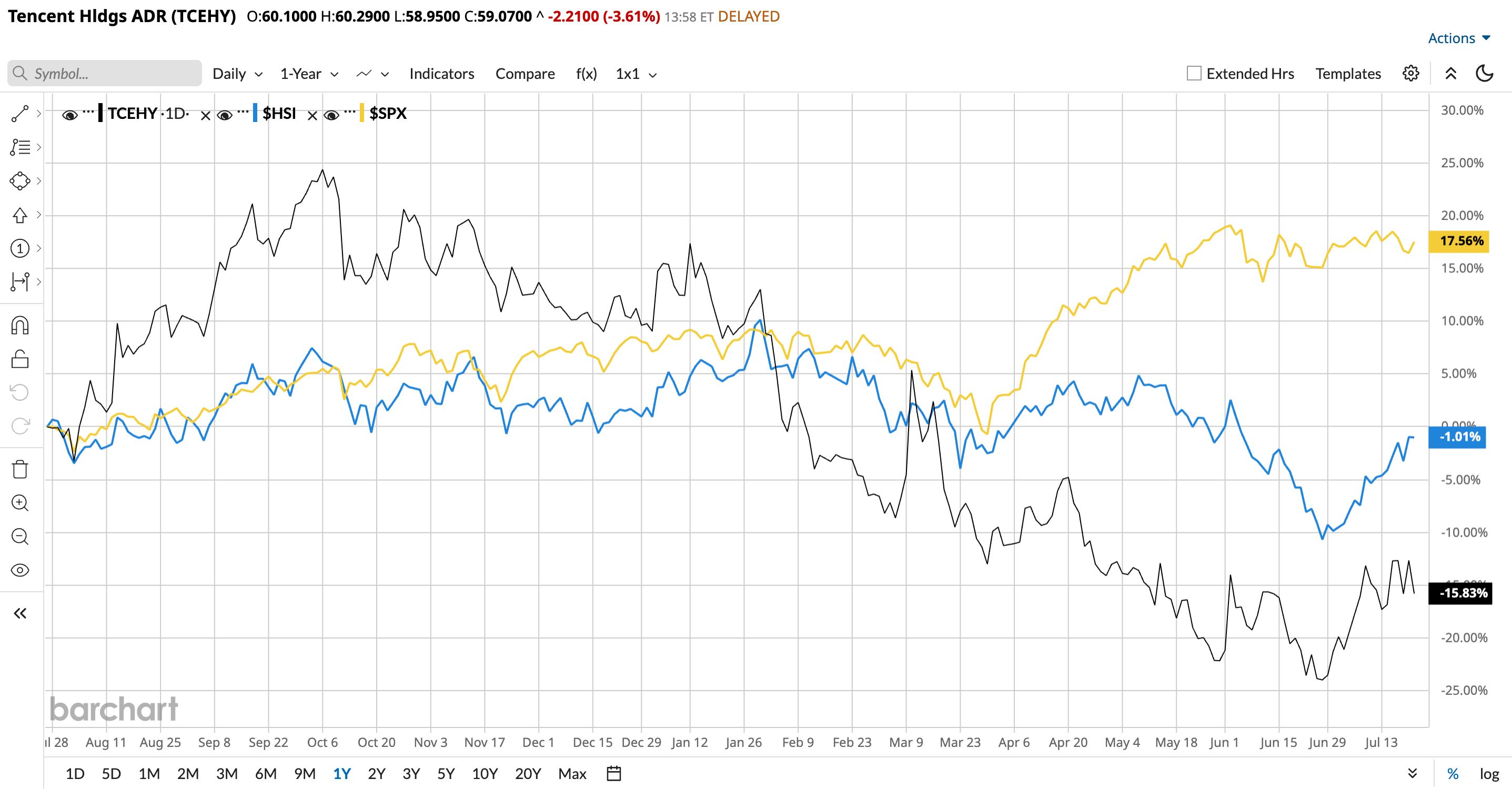
Tencent shares have declined 11.45% over the past 52 weeks and are down 22.9% YTD, significantly underperforming the Hang Seng Index and S&P 500 Index.
 www.barchart.com
 Priced at 14.55 times forward earnings, the stock trades at a modest discount to the sector median.
Tencent Holdings released its first-quarter 2026 results on May 13. For the quarter, revenue increased 9% YOY to RMB 196.5 billion ($29 billion), while gross profit rose 11% to RMB 111.3 billion ($16.4 billion). On an IFRS basis, operating profit climbed 17% to RMB 67.4 billion ($9.9 billion), with the operating margin expanding to 34.3% from 32% a year earlier. Profit attributable to equity holders increased 21% YOY to RMB 58.1 billion ($8.6 billion), while EPS increased to RMB 6.302 from RMB 5.129 in the prior-year quarter.
On a non-IFRS basis, operating profit increased 9% YOY to RMB 75.6 billion ($11.1 billion), with the operating margin remaining stable at 38.5%. Non-IFRS net profit increased 11% YOY to RMB 69.8 billion ($10.3 billion), while non-IFRS EPS was RMB 7.364.
Business performance remained broad-based. Domestic Games revenue grew 6% YOY, International Games revenue increased 13%, Marketing Services revenue surged 20%, benefiting from AI-enhanced advertising tools, while FinTech and Business Services revenue advanced 9% YOY. Tencent also continued investing aggressively in AI, with capital expenditures rising 16% YOY to RMB 31.9 billion ($4.7 billion).
The consensus EPS estimate of $4.06 in fiscal 2026 indicates an increase of 18.4% YOY, followed by another 11.1% growth to $4.51 in fiscal 2027.
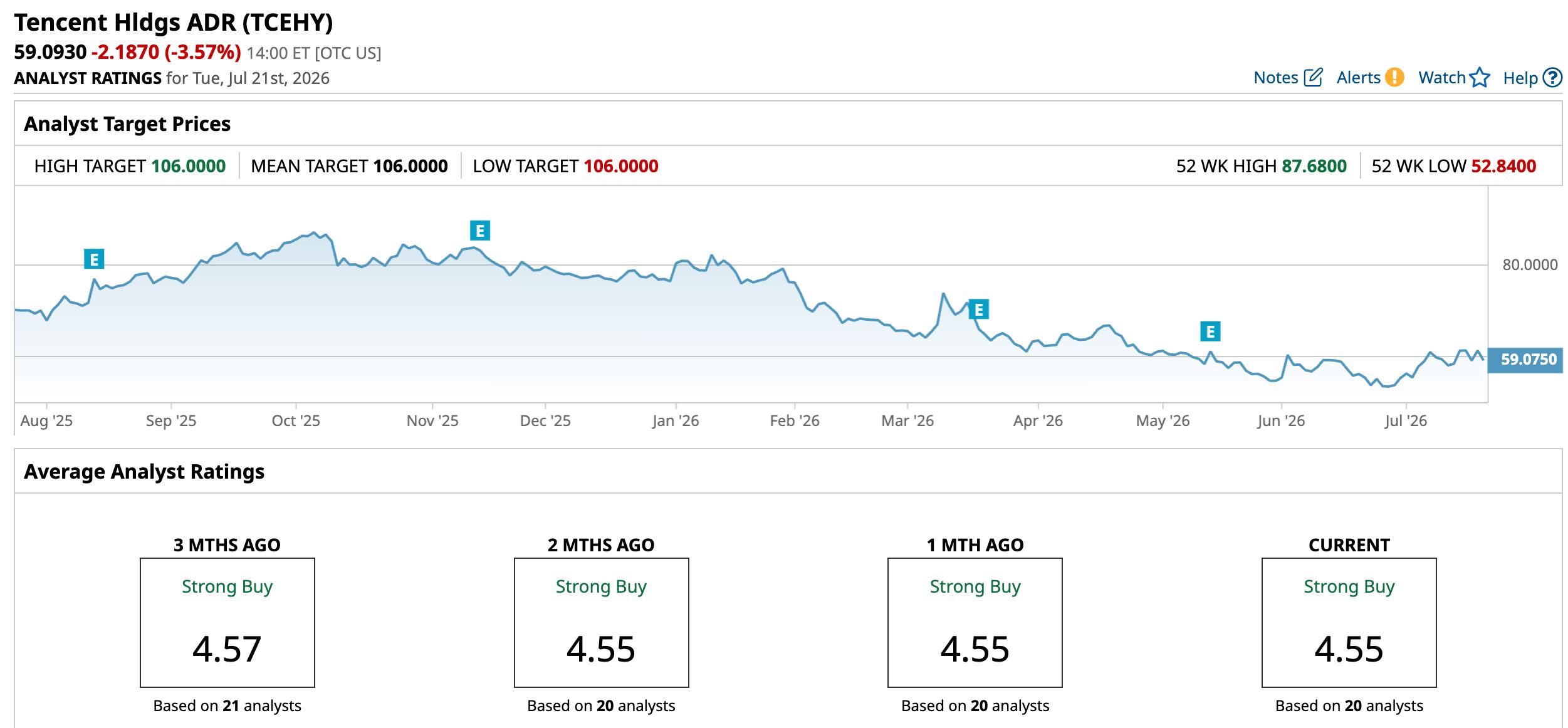
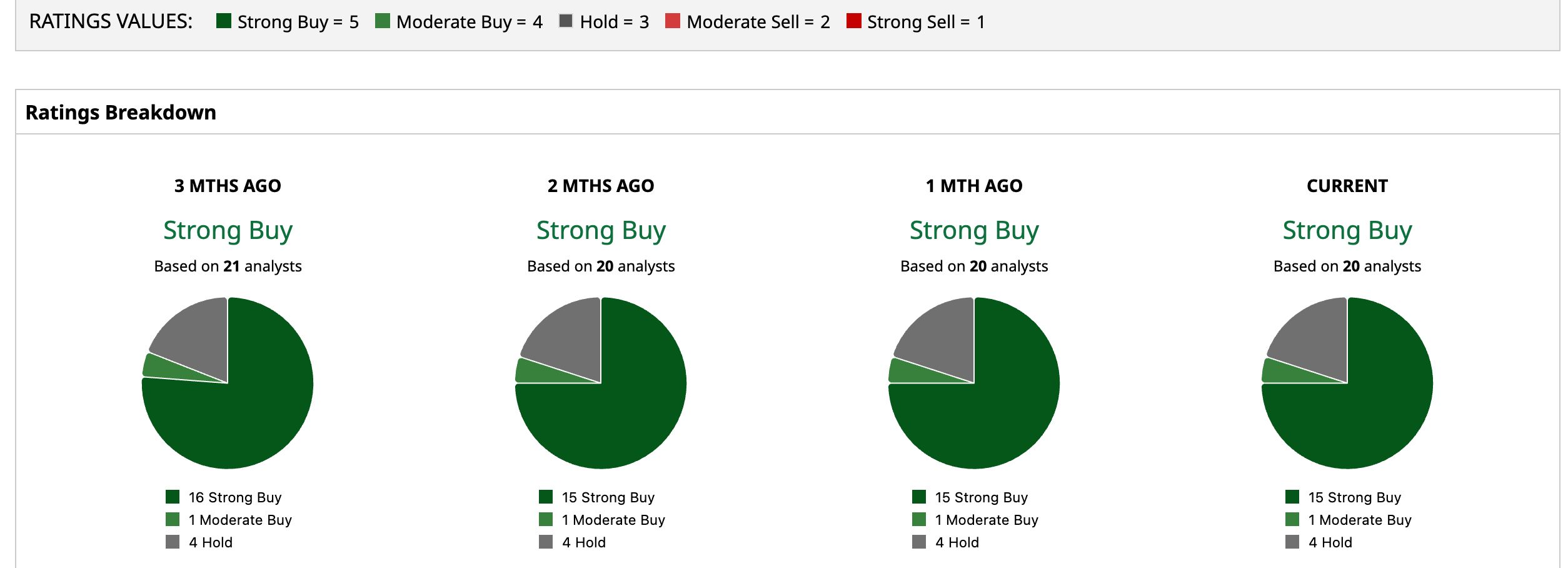
Wall Street’s bullishness is evident in TCEHY having a consensus “Strong Buy” rating. Of the 20 analysts covering the stock, 15 advise a “Strong Buy,” one suggests a “Moderate Buy,” and four analysts give it a “Hold” rating.
The Street-high target price of $106 suggests that the stock could rally as much as 79.4%.
 www.barchart.com
  www.barchart.com
 On the date of publication, Subhasree Kar did not have (either directly or indirectly) positions in any of the securities mentioned in this article. All information and data in this article is solely for informational purposes. For more information please view the Barchart Disclosure Policy here.
More news from Barchart
Google Is Developing a Chip for Its Own AI Models. What This Means for GOOGL Stock. Wedbush Believes Increased Guidance From ASML Bodes Well for SK Hynix. How to Play SKHY Stock Here. 3 Hong Kong AI Stocks to Buy Now If You Want to Invest Like Michael Burry Micron Stock Is Near Bear-Market Territory. Here’s Why ASML’s Guidance Says Buy the Dip.