

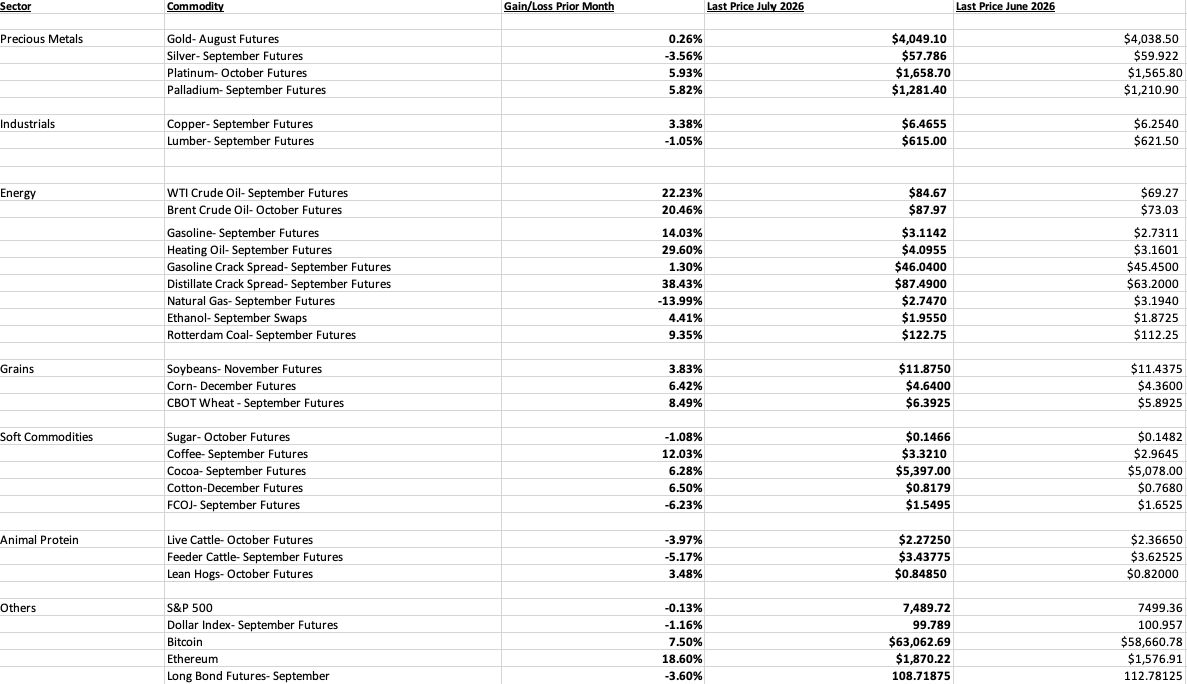
In the commodities asset class in July 2026, Brent and WTI crude oil, gasoline and heating oil, distillate crack spreads, Arabica coffee, and Ethereum posted double-digit percentage gains. NYMEX U.S. natural gas futures were the only commodity to post a double-digit percentage decline. The DJIA was slightly higher, while the S&P 500, NASDAQ Composite, and Russell 2000 indices were lower. The long bond futures declined. The September dollar index futures fell by 1.16%. The long bond futures fell by 3.60%. A lower dollar index and the higher interest rates were a mixed signal for commodity prices. Long-term interest rates moved higher, even though the Fed left the Fed Funds Rate unchanged at the July FOMC meeting.
Crude oil leads on the upside
The hopes of a settlement between Iran and the United States that opens the Strait of Hormuz, a critical logistical chokepoint for crude oil fell apart, and the U.S. resumed attacks after regional attacks by Iran on U.S. military assets in neighboring countries. At the end of July, the hostilities were escalating with the rising odds of an all-out war in the region.
Don’t Miss a Day: From crude oil to coffee, sign up free for Barchart’s best-in-class commodity analysis.
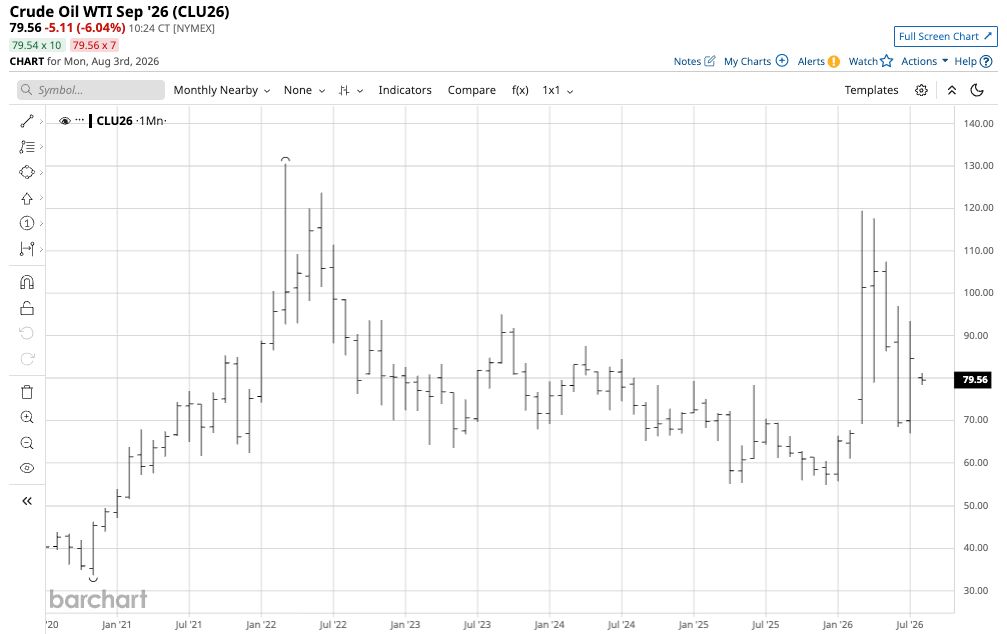
The monthly September NYMEX WTI crude oil futures chart shows that the price rose 22.23% in July. Brent crude oil, the benchmark for Middle Eastern petroleum, kept pace with the WTI, posting a 20.46% monthly gain on the ICE October contract. Crude oil prices were volatile in June, and while they posted an attractive gain, the energy commodity continued to make lower highs on the monthly chart.
Gasoline futures moved 14.03% higher, while heating oil futures, which are a proxy for other distillate fuels, rose 29.60%. The products rose more than crude oil as the lag between refinery stocks and crude oil supplies kept product prices elevated.
Crack spreads reflect the refining margins for processing crude oil into gasoline and distillate products. The gasoline crack spread moved 1.30% higher in July, while the distillate crack spread posted an explosive 38.43% gain. Prices at the pump have a long lag behind crude oil prices. Moreover, elevated crack spreads have caused products to far outperform crude oil prices.
September Chicago ethanol swaps, the biofuel additive to U.S. gasoline, rose 4.41% for the month, while coal for delivery in Rotterdam, the Netherlands, rose 9.35% in July. Meanwhile, September U.S. natural gas futures prices moved 13.99% lower even though natural gas is in the heart of the cooling season. European natural gas futures prices moved substantially higher in July on Middle Eastern supply concerns. U.K. natural gas futures prices for September delivery and natural gas futures prices in the Netherlands rallied in July. The Middle East continued to drive prices higher.
Grain and oilseed prices rally in July
The growing season in the Northern Hemisphere continued in July. The grain and oilseed markets have faced fertilizer shortages due to issues at the Strait of Hormuz; prices rallied in July. New crop November Soybean futures prices moved 3.83% higher, while new crop December corn futures rose 6.42%, and September CBOT soft red winter wheat futures moved 8.49% higher.
Corn is the primary ingredient in ethanol, a gasoline additive, and soybean oil is refined into biodiesel. The rising oil and oil product prices put upward pressure on corn and soybean futures prices.
Meanwhile, escalating fighting in and around the Black Sea Ports drove wheat prices higher as Russia and Ukraine are leading wheat-producing countries.
Metals, animal proteins, and softs were mixed, and lumber was volatile
Precious metal prices soared in 2025 and early 2026, but they ran out of upside steam in late January. In July, silver declined, while gold edged higher and platinum and palladium prices recovered and rallied.
Gold, the leading precious metal, edged 0.26% higher in July. The volatile silver futures market moved 3.56% lower. NYMEX palladium futures rose 5.82%, while NYMEX platinum futures moved 5.93% higher. Precious metals are sitting closer to their lows than the late January highs.
Copper, the leading nonferrous metal, experienced a 3.38% gain in the September futures contract. September COMEX copper rose to a new record high of $6.7160 in mid-May before correcting.
Nonferrous metals on the London Metals Exchange posted across-the-board gains. LME three-month copper forwards moved higher in July. LME aluminum three-month forwards rallied amid turmoil in the Middle East. LME nickel forwards were higher, LME lead forwards edged higher, LME zinc prices rallied, and LME tin forwards rose.
The 2026 peak grilling season began in late May and runs through early September. Cattle prices fell from near-record highs in July as the off-season for demand approaches. The live and feeder cattle futures for October and September delivery fell 3.97% and 5.17%, respectively, in July. Meanwhile, the lean hog futures for October delivery rose 3.48% for the month ending on Friday, July 31.
Soft commodities turned in mixed results in July. September cocoa rose 6.28%, and October world sugar futures fell 1.08%. Cocoa’s price remains elevated amid concerns over West African weather and supply, while sugar has followed developments in the Middle East, as Brazil depends on sugarcane for ethanol production. However, sugar did not follow crude oil and gasoline prices in July. Cotton futures for December delivery rose 6.50% in July. September Arabica coffee futures rose 12.03% on weather-related crop concerns on Brazil. The volatile September FCOJ futures fell 6.23% in July.
The physical lumber futures for September delivery moved 1.05% lower in July.
Spotlight on energy- expect volatility
Markets across all asset classes are watching crude oil prices, which remained volatile in July.
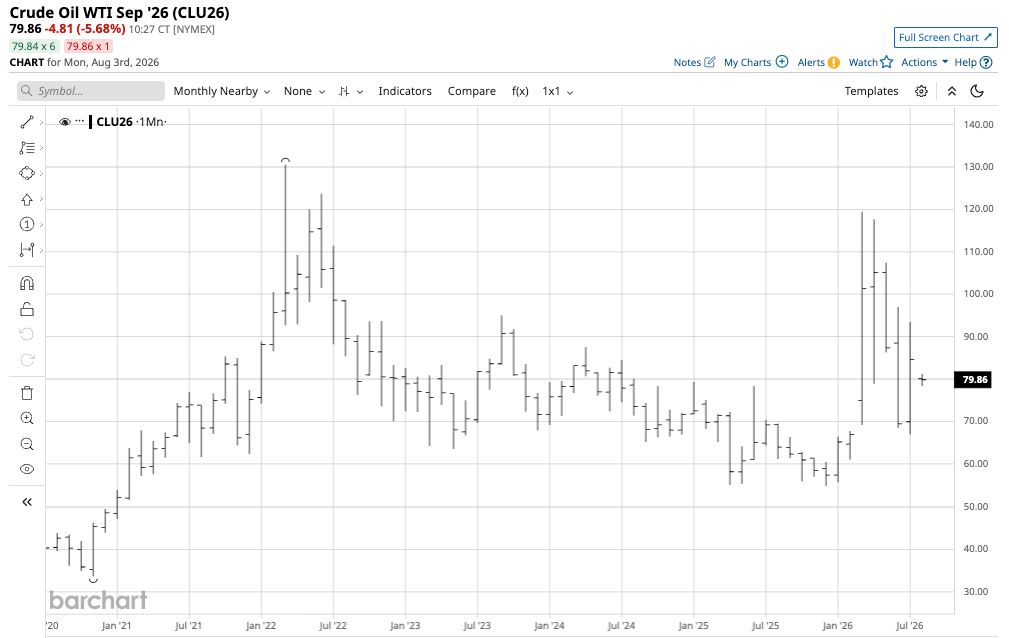
The monthly NYMEX WTI crude oil futures chart shows a range of $26.46 per barrel in July. Crude oil prices plunged on hopes that the MOU between Washington and Tehran would lead to a peaceful solution. When the document turned out to be not worth the paper it was written on, hostilities resumed and threaten to escalate. The Strait of Hormuz remains the focal point for the war, with hostilities spreading to the Red Sea region and as far as Egypt. The bottom line is that crude oil powers the world, and the volatile price action is likely to continue over the coming weeks and months. Expect markets across all asset classes to continue to reflect the daily volatility in crude oil futures.
Factors to watch in August 2026
As commodities move into August, they face continued uncertainty in the economic and geopolitical landscapes, while the final month of the vacation season could cause liquidity to decline, a cocktail for potential volatility. Seasonality could support lower prices for meats and gasoline as the grilling and driving seasons approach their end. Eventually, we could see buying in natural gas as fall and winter approach.
The situation in the Middle East will continue to dictate the path of least resistance for energy and other commodity prices. Crack spreads remain elevated, translating to high oil product prices.
The upcoming midterm elections could begin to impact markets, as the administration’s policy initiatives depend on the outcome. Fractures within the opposition party between middle-of-the-road Democrats and Democratic Socialists could add to uncertainty during the election season as the DSA supports a total ideological remaking of the United States from a capitalist to a socialist country,
Cryptocurrencies are consolidating. The dollar index has drifted lower, and bonds remain in a trading range but have moved to the bottom end at a multi-year low, which is a mixed signal for commodities.
The bull market in stocks continues, but the economic and geopolitical landscapes will determine the path of least resistance for U.S. stocks. Bonds have not broken out of their long-term consolidation pattern, but interest rates remain elevated, and the long bond futures are dangerously close to critical technical support at the October 2023 low of 107-04. Interest rates depend on inflation, and the U.S. debt issues as it moves towards the $40 trillion level.
Summer trading conditions in August tend to reduce liquidity, which can lead to increased volatility.
Expect continued volatility in the commodities asset class in August 2026 and beyond, and you will not be surprised or disappointed. The volatility creates opportunities, but any new trade or investment requires careful attention to risk-reward dynamics to enhance profits and protect capital. Keep an eye on crude oil, which will likely dictate price action in all markets over the coming weeks.
On the date of publication, Andrew Hecht did not have (either directly or indirectly) positions in any of the securities mentioned in this article. All information and data in this article is solely for informational purposes. For more information please view the Barchart Disclosure Policy here.
More news from Barchart
July’s Top Commodity Performers and Underperformers How Did Markets Start the New Month? What Caused Wheat to Spike? Will it Pull Corn and Soybeans Along for the Ride? Is Farm Land a Commodity or Family Heirloom?