

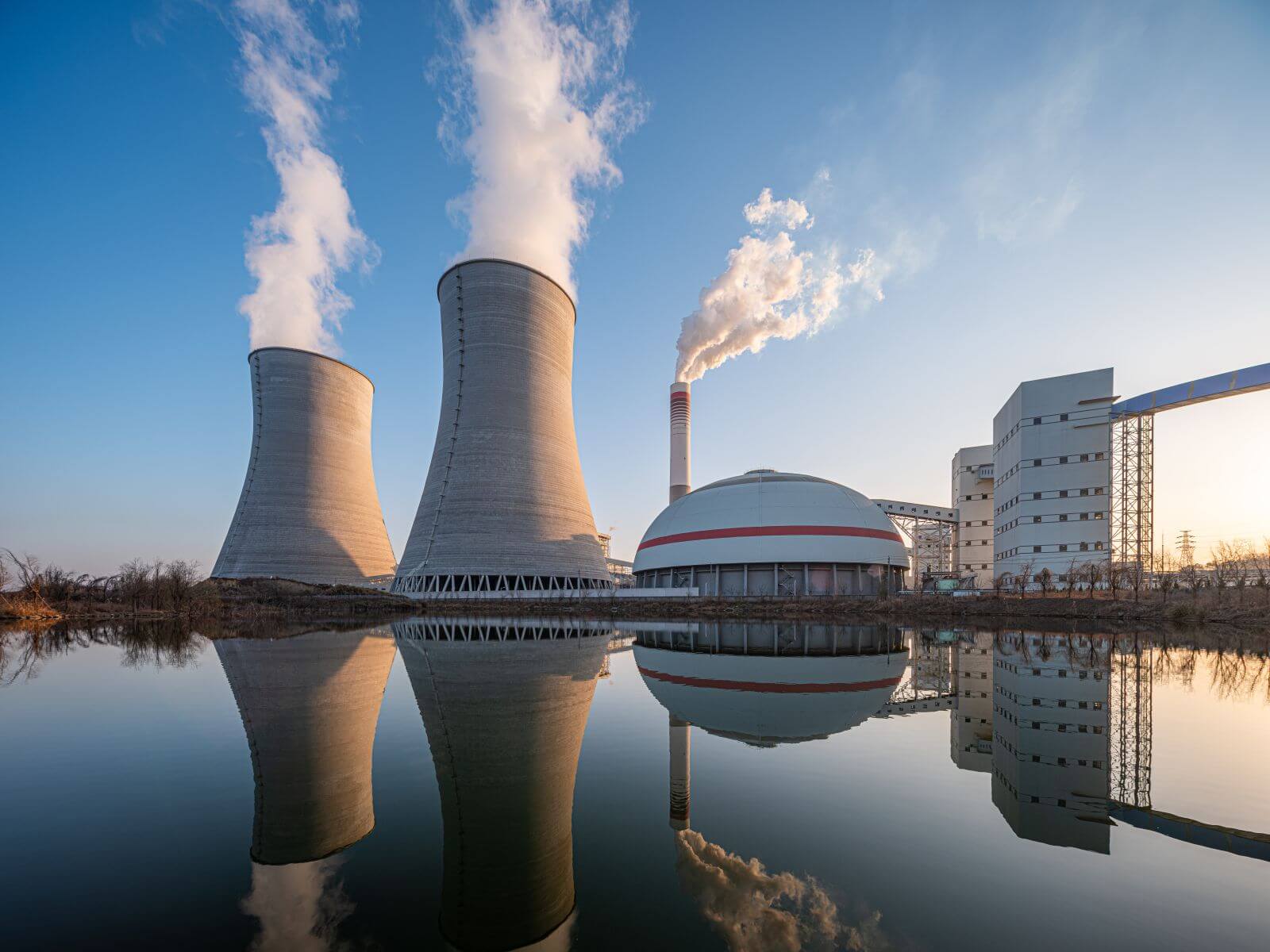
Nuclear is increasingly becoming a preferred source of clean energy for hyperscalers like Microsoft (MSFT), Meta (META), Amazon (AMZN), and Alphabet (GOOGL) (GOOG). Oklo (OKLO), a company backed by OpenAI CEO Sam Altman, is a key pure-play operator in this industry. Known for developing advanced fission power plants and small modular reactors (SMRs), Oklo recently reported its first-ever revenues along with its Texas facility reaching criticality.
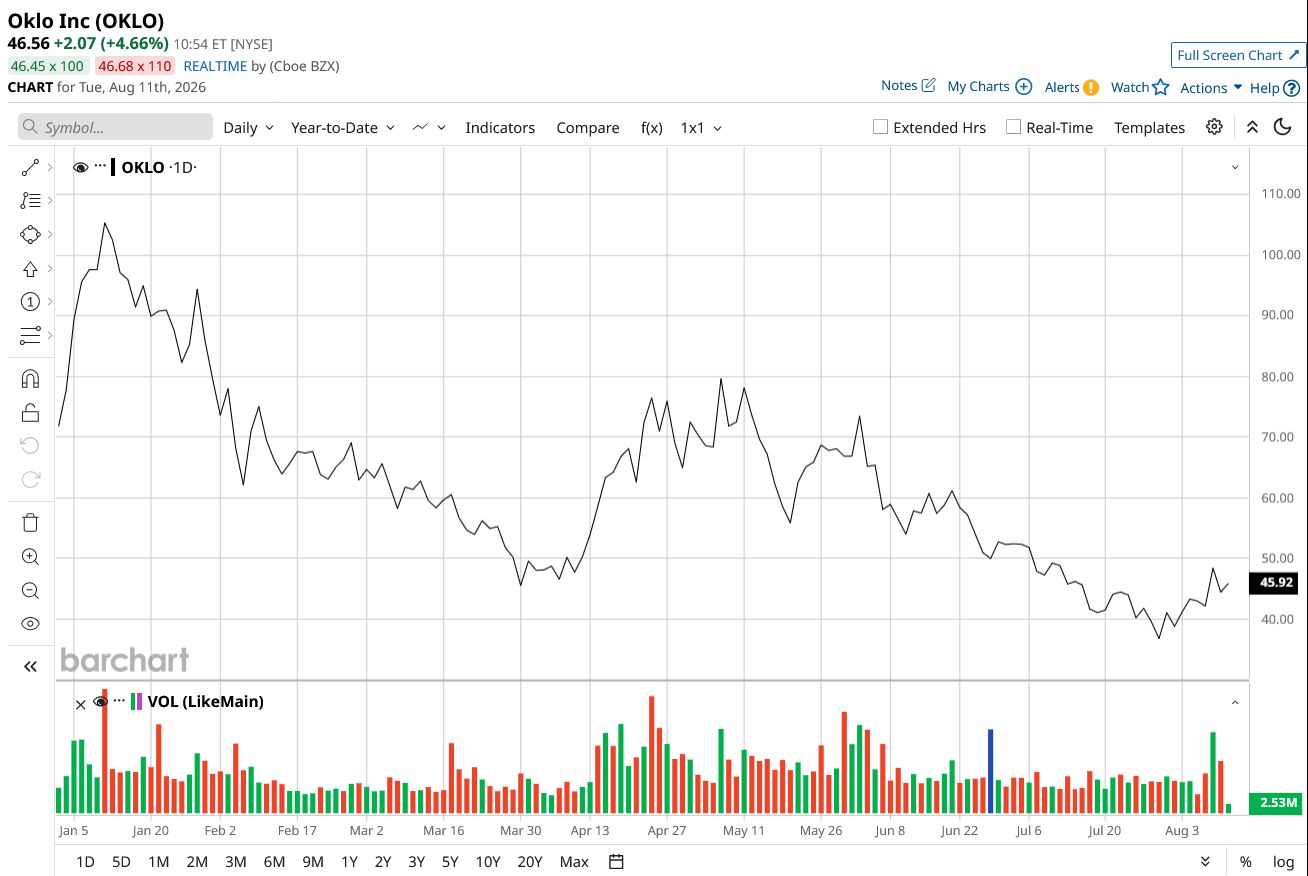
Yet, that was not enough to significantly arrest this year's decline in the company's shares.
Don’t Miss a Day: From crude oil to coffee, sign up free for Barchart’s best-in-class commodity analysis.
About Oklo
Founded in 2013, Oklo is an advanced nuclear energy company that is trying to build a vertically integrated nuclear platform that includes small fast-fission power plants, nuclear-fuel production/recycling, and radioisotope production. Oklo's technology is based on fast-fission reactors, rather than the conventional light-water reactor technology that dominates the existing U.S. nuclear fleet.
Oklo's current market cap is $8.4 billion, while its stock is down 37% year-to-date (YTD).
So, do Oklo's latest financial results have any indications that its current downturn is over and the stock can finally go nuclear? Let's find out.
 www.barchart.com
 Revenue First Fails to Assure Investors Spooked By Losses
Recording its first-ever revenues is a major milestone for any company, and generally it has been observed that the market reacts positively to the same. Not so for Oklo, though.
Shares were down 8% in yesterday's trading session after wider-than-expected losses scared investors away from the stock.
However, Q2 2026 saw the company report revenues for the first time at $1.2 million, blowing past the Street expectations of $70,000. Yet, losses widened to $0.28 per share from $0.18 per share in the previous year. Also, this was much higher than the estimates of a loss of $0.16 per share.
Net cash used in operating activities for the six months ended June 30, 2026, stood at $65.5 million, up from $30.7 million in the prior year. However, Oklo fortified its cash balance from the start of the year to $1.6 billion, with short-term debt of just about a million dollars, reflecting prudent balance sheet management.
Operationally, there was a breakthrough recently too, when the company revealed that its Groves Isotope Test Reactor near Lockhart, Texas, achieved first criticality. This essentially means that the reactor successfully established a controlled, self-sustaining nuclear chain reaction for the first time. Notably, this is Oklo's first reactor to reach criticality. Crucially, it happened in less than a year.
This development also bodes well for Oklo's Atomic Alchemy business, which is focused on producing radioisotopes and primarily geared towards the medical industry. The reactor is intended to provide the operational foundation for commercial-scale radioisotope production, including isotopes used in medicine, industry, and research.
Aurora Anchor
The key piece of Oklo's nuclear ambitions is its Aurora nuclear reactor. It functions as a compact fast reactor capable of producing about 15 megawatts of electrical power. Unlike the enormous gigawatt-scale pressurized water reactors that take decades to permit and build, the Aurora is designed to be manufactured in a factory setting and transported directly to a site.
This modular approach is critical because it addresses the primary barrier to nuclear adoption, which is the astronomical upfront capital expenditure. By 2026, Oklo has solidified its role by leveraging a fuel cycle that utilizes high-assay, low-enriched uranium often derived from recycled nuclear waste. This choice not only appeals to sustainability goals but also provides a higher energy density that allows the powerhouse to operate for two decades without the need for refueling. For customers like data center operators or industrial manufacturers, the value proposition centers on price stability and energy independence. That is what led Meta and Nvidia (NVDA) to ink deals with the company.
Notably, what also attracts customers to Oklo is that they offer a power purchase agreement model where they own and operate the asset while the customer simply pays for the electricity. This removes the operational risk from the client and makes Aurora a plug-and-play solution for high-energy users who cannot afford the intermittency of solar or wind.
However, Oklo remains vulnerable to supply chain issues, wherein the specific risk involves the supply chain for their specialized fuel. If the company cannot secure a steady and affordable stream of this fuel, their projected margins could be severely compressed by rising procurement costs. Furthermore, there is the issue of competition from larger established players like NuScale (SMR) or TerraPower, who possess deeper pockets and more extensive lobbying influence.
Analyst Opinion of OKLO Stock
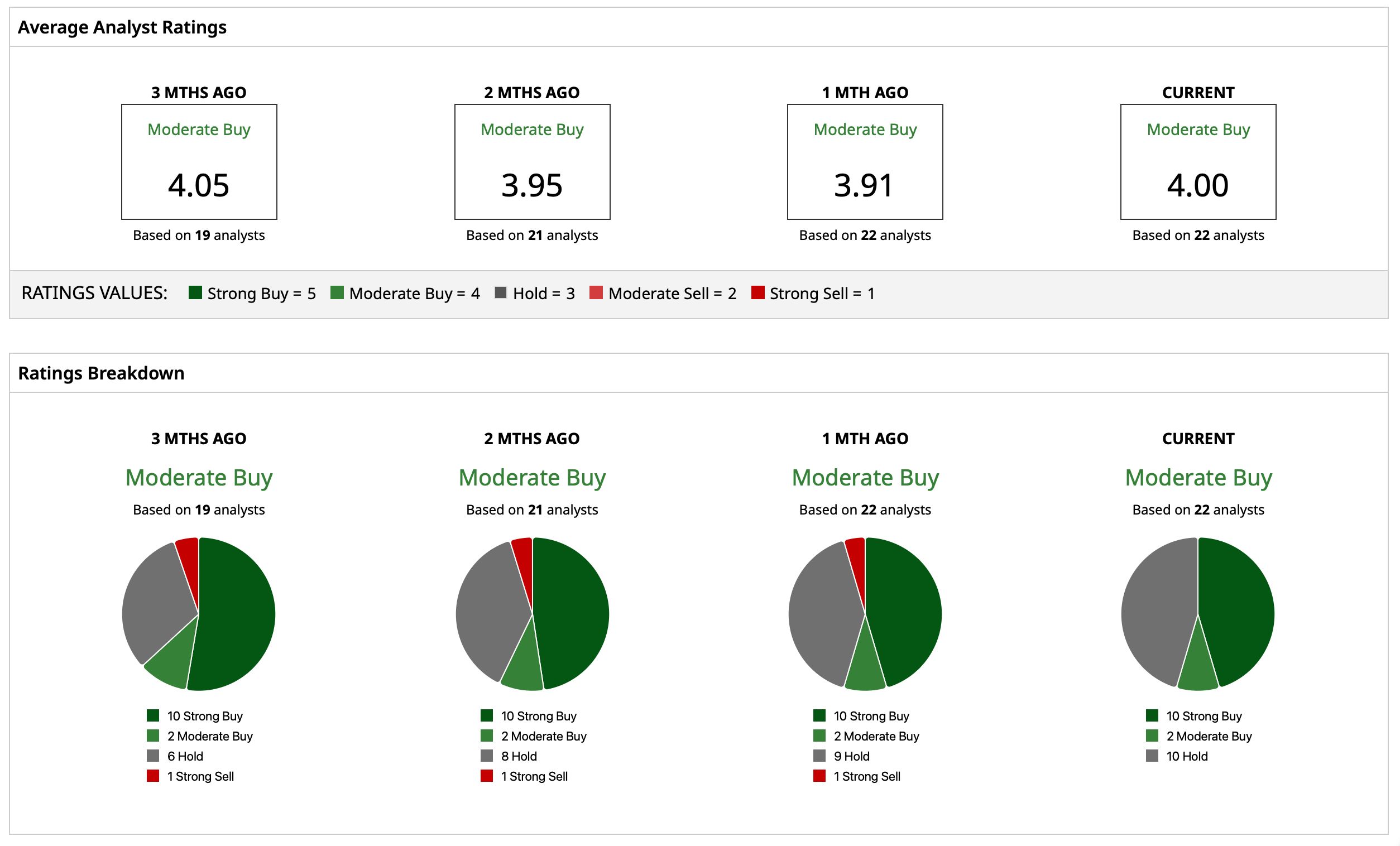
Thus, analysts have deemed OKLO stock a consensus “Moderate Buy” with a mean target price of $82.24. This denotes a potential upside of 75% from current levels. Out of 22 analysts covering the stock, 10 have a “Strong Buy” rating, two have a “Moderate Buy” rating, and 10 have a “Hold” rating.
 www.barchart.com
 On the date of publication, Pathikrit Bose did not have (either directly or indirectly) positions in any of the securities mentioned in this article. All information and data in this article is solely for informational purposes. For more information please view the Barchart Disclosure Policy here.
More news from Barchart
Why Oklo's First-Ever Revenue Is Not Enough to Stop OKLO Stock's Decline What Had Crude Oil Boiling Again Overnight? The Biggest AI Power Opportunity May Be Hiding in Constellation Energy Vistra Corp (VST) Stock’s Underperformance Could Open Up a Contrarian Options Trade