

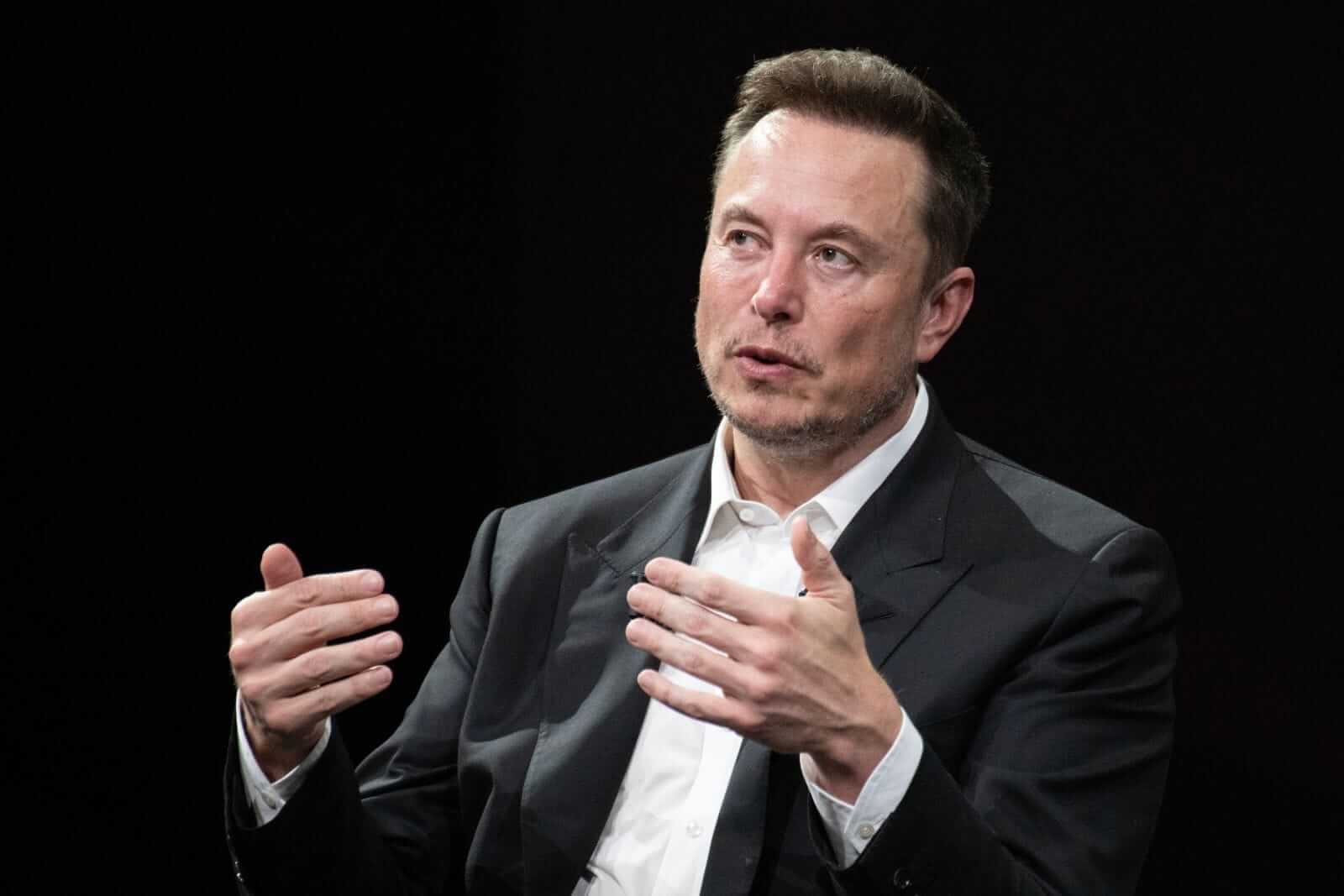
Elon Musk is getting serious about putting artificial intelligence (AI) into orbit. The SpaceX (SPCX) CEO is reportedly confident the company can launch Nvidia (NVDA) powered AI systems into space in 2027. SpaceX and Nvidia are working on a space-optimized version of Nvidia’s Vera Rubin NVL72 platform, and Musk says the system should be lighter, denser, and cheaper than a traditional data-center rack. That matters because SpaceX is trying to turn orbital computing into a major business, while Nvidia could gain another market for its AI hardware.
The opportunity is much bigger than a headline. SpaceX could eventually sell computing capacity from satellites just as it sells broadband through Starlink. Meanwhile, Nvidia could supply the chips behind that infrastructure. Investors should still remember that this is an emerging business, and commercial scale is not expected immediately. Still, the plan gives both companies another way to capitalize on the AI spending boom.
More Top Stocks Daily: Go behind Wall Street’s hottest headlines with Barchart’s Active Investor newsletter.
SpaceX and Nvidia Have Had Very Different Rides
SPCX stock has been extremely volatile since its debut. Shares hit the market at an initial public offering (IPO) price of $135 in June 2026 and quickly climbed above $225 before falling back toward the $150 area. SpaceX stock remains roughly 11% above its IPO price. Shares have been supported by strong Starlink growth, AI contracts, and growing expectations for Starship, but investors have also worried about massive capital spending and execution risk.
Meanwhile, Nvidia has delivered a much stronger fundamental story. NVDA stock is up roughly 15% year-to-date (YTD), with strong AI infrastructure spending having been a key catalyst. Still, Monday’s market selloff showed the downside; Nvidia shares fell on Sept. 14 as investors reacted to fresh warnings about aggressive AI spending and development.
Valuation is where SpaceX looks much more aggressive. Its price-to-sales (P/S) ratio is about 103 times, while its price-to-book (P/B) ratio is about 15.2 times. That is a premium valuation. Investors are already paying for years of future AI, Starlink, and launch growth.
Musk’s Orbital AI Plan Could Open a New Market
The Nvidia partnership could become a meaningful catalyst for SpaceX because it adds another use case for the company’s rockets and satellite network. SpaceX reportedly plans to deploy orbital computing systems in 2027, while recent agreements with Alphabet (GOOGL) and Anthropic show that customers are already looking for access to its computing capacity. The company has also signed a new $1.1 billion-per-month AI computing agreement, pushing its annualized contracted revenue higher.
For Nvidia, the opportunity is smaller initially but strategically important. The company could become the hardware supplier for a new class of space-based AI infrastructure. That would extend its Vera Rubin platform beyond traditional data centers.
The timing also looks interesting. Spacex aims to reach a $100 billion annual revenue run rate by the end of 2026. Strong AI contracts are becoming an increasingly important part of that goal.
The Latest Results Show Why the AI Story Matters
SpaceX delivered a striking second quarter. Revenue jumped 92% year-over-year (YOY) to $7.8 billion for the quarter ended June 30, 2026. The company said growth accelerated across Space, Connectivity, and AI.
Connectivity revenue rose 66% YOY, helped by a doubling of Starlink subscribers. AI revenue surged 247% to $2.6 billion, while Space revenue climbed 29% YOY to $962 million. Net loss narrowed to $541 million from about $1 billion a year earlier, while adjusted EBITDA jumped 191% YOY to $3.5 billion.
Nvidia’s latest quarter was even stronger, however. Revenue reached $96.2 billion, up 106% YOY. Data Center revenue rose 117% YOY to $89 billion. Adjusted net income increased 118% to $54 billion, while adjusted EPS jumped 120% YOY to $2.22. Free cash flow was $21.3 billion while cash and equivalents stood at $22.4 billion.
“AI has reached its inflection point,” said CEO Jensen Huang, adding that demand is accelerating and that the AI infrastructure buildout is at full steam. Nvidia expects $108 billion in Q3 revenue, plus or minus 2%. Analysts also estimate fiscal 2027 adjusted EPS of about $9.12, up roughly 100% YOY.
Wall Street Likes Both Stocks, But Nvidia More So
Analysts remain bullish, especially on SpaceX’s long-term AI opportunity. Morgan Stanley analyst Adam Jonas has a $300 price target on SpaceX stock, suggesting roughly 100% potential upside from recent levels. JPMorgan has a $240 price target, while Deutsche Bank has a $235 target. Pivotal Research also recently initiated coverage of SPCX stock with a $220 target, arguing that Starship could become a major value driver as launch costs fall.
For Nvidia, Morgan Stanley maintains an “Overweight” rating and a $300 target, saying its growth story is accelerating and becoming more diversified. Goldman Sachs also has a $300 target, while JPMorgan sees $320 per share as fair value as AI demand expands.
Overall, NVDA stock has a consensus “Strong Buy” rating on Wall Street from about 50 analysts, with the mean price target of $326.09 pointing to potential upside of 52% from current levels. Nvidia's forward price-to-earnings (P/E) ratio is 23.1 times. Meanwhile, SpaceX stock carries a consensus “Moderate Buy” rating based on 36 analysts with coverage. The average price target of $220.94 implies potential upside of roughly 47% from here.
On the date of publication, Nauman Khan did not have (either directly or indirectly) positions in any of the securities mentioned in this article. All information and data in this article is solely for informational purposes. For more information please view the Barchart Disclosure Policy here.