

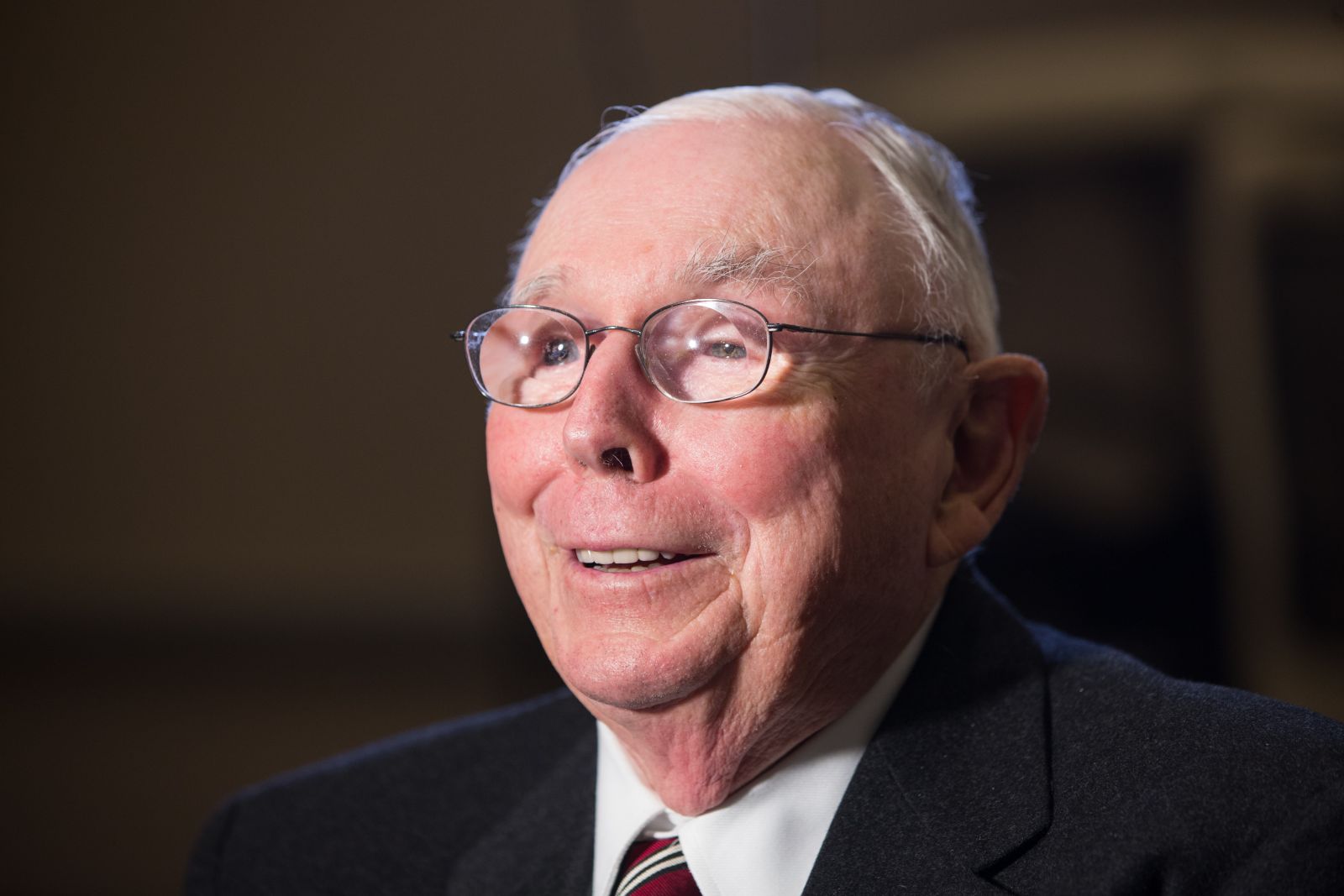
The late Charlie Munger spent most of his life as vice chairman of Berkshire Hathaway (BRK.A) (BRK.B) a company built on insurance. In February 2023, at the annual meeting of Daily Journal Corporation (DJCO), where he was chairman, he was asked about self-insurance and answered in a way that worked against his own company's interests. “With one exception, I've never carried collision insurance on a car, and once I got rich, I stopped carrying fire insurance on houses,” he said. “I just self-insure. That is the right way to do it.”
Becky Quick, moderating, put the obvious point to him: he was the number two at a group stuffed with insurers; why not just tell people to insure everything? “I'd rather tell it the way it is than tell it in a way that helps Berkshire. I'm not going to tell it differently than I think it really is just because it's better for Berkshire. Even though it's bad for Berkshire, I will tell you that if you can afford to self-insure, then self-insure,” Munger said.
More Top Stocks Daily: Go behind Wall Street’s hottest headlines with Barchart’s Active Investor newsletter.
He continued, “You should insure against things that you can't afford to pay for yourself.” He continued, “But if you can afford to take the bumps, some unusual expense coming along doesn't really hurt you that much, why would you want to fool around with some insurance company if your house burned down?” He was describing people who could write a check for a replacement house. For anyone who could not, his own rule points the other way.
Sponsored Content: This Outdoor Hospitality Company Partnered With Hilton and Airstream — Now You Can Invest
This ideology has limitations, however: almost every mortgage lender requires homeowners coverage, and virtually every auto lender requires collision on a financed car, so the choice Munger described is unavailable to most people who have not already paid off the asset. Liability coverage is separate again because the exposure is open-ended rather than capped at the value of the thing insured, and it is not a candidate for self-insurance in a normal household. Further, many states around the U.S. require liability insurance to drive a vehicle on the road.
What he was giving up on Berkshire's behalf was real. Berkshire Hathaway owns GEICO outright and runs one of the largest reinsurance operations in the world. And Berkshire runs on the “float,” or the premium money the group holds before claims are paid. Float stood at about $164 billion at the end of 2022.
Many might think Munger is giving this advice as a matter of saving money, but that's not necessarily the case. In the year he said it, Berkshire's insurance underwriting lost money. The group reported an underwriting loss for 2022, with GEICO deep in the red on rising claim frequency and severity, offset by a profitable reinsurance result. So the advice was bad for Berkshire in the way that matters most, which is volume and float, rather than in the way that shows up as a profit line. He was not criticizing how Berkshire underwrites. He was making a claim about the buyer's side of the deal.
His stated reason was blunt. “You're paying, when you buy insurance, for the other fellow's frauds,” he said, “and there is a lot of fraud in life.” That is an argument about what fraction of a premium dollar comes back to honest policyholders as claims.
Barchart's own pages carry the opposite advice from the money personality it publishes most. Dave Ramsey tells readers to buy coverage and manage the cost through the deductible, with guidance on how large a car insurance deductible should be and on which three types of car insurance are worth paying for. Both positions are on the record. They disagree, and readers are better served seeing the disagreement than being handed a winner.
The price of the decision has moved since February 2023. Insurify projected the average annual U.S. homeowners premium would rise about 4% in 2026 to roughly $3,057, after a 12% jump in 2025, and estimates premiums are up close to 46% since 2021, roughly three times inflation. That cuts both ways: it strengthens the case for dropping coverage you could afford to replace yourself, and it raises the cost of the coverage you cannot drop.
On the date of publication, Caleb Naysmith did not have (either directly or indirectly) positions in any of the securities mentioned in this article. All information and data in this article is solely for informational purposes. For more information please view the Barchart Disclosure Policy here.
More news from Barchart
‘Even Though It’s Bad for Berkshire’ Billionaire Charlie Munger Said to Skip Insurance Because ‘You’re Paying for the Other Fellow’s Frauds’ Inside Ciena’s 2029 Roadmap: Ambitious Targets Meet Bullish Analyst Ratings Domino's Pizza Stock Is Dirt Cheap, With 30% Potential Upside - What's the Best Play? Nebius’s Price Hike Suggests Michael Burry Made a Mistake and Is Shorting the Best Neocloud Stock