


Pinnacle West Capital Corporation (PNW), headquartered in Phoenix, Arizona, provides retail and wholesale electric services. Valued at $11.2 billion by market cap, the company provides retail and wholesale electric service to most of the State of Arizona. PNW is also involved in real estate development activities in the western U.S.
Companies worth $10 billion or more are generally described as “large-cap stocks,” and PNW perfectly fits that description, with its market cap exceeding this mark, underscoring its size, influence, and dominance within the utilities - regulated electric industry. PNW invests heavily in clean energy. Its half of Arizona Public Service's electricity comes from clean energy, positioning PNW favorably in the market and aligning with regulatory requirements and consumer preferences.
Don’t Miss a Day: From crude oil to coffee, sign up free for Barchart’s best-in-class commodity analysis.
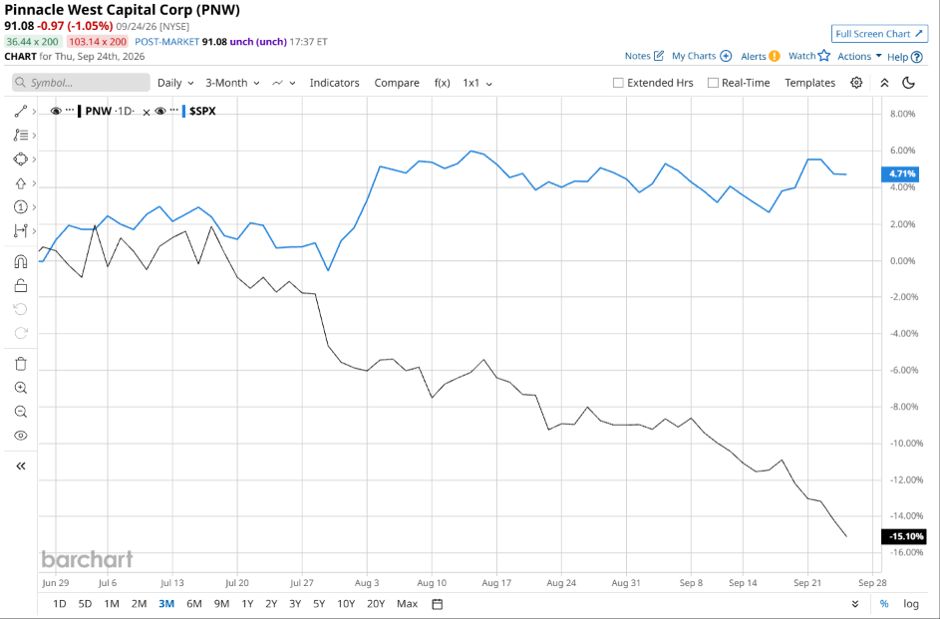
Despite its notable strength, PNW slipped 18.1% from its 52-week high of $111.16, achieved on Jul. 17. Over the past three months, PNW stock declined 13.6%, underperforming the S&P 500 Index’s ($SPX) 4.7% gains during the same time frame.
 www.barchart.com
In the longer term, shares of PNW rose 2.7% on a YTD basis and climbed 4.5% over the past 52 weeks, underperforming SPX’s YTD gains of 12.5% and 16.7% returns over the last year.
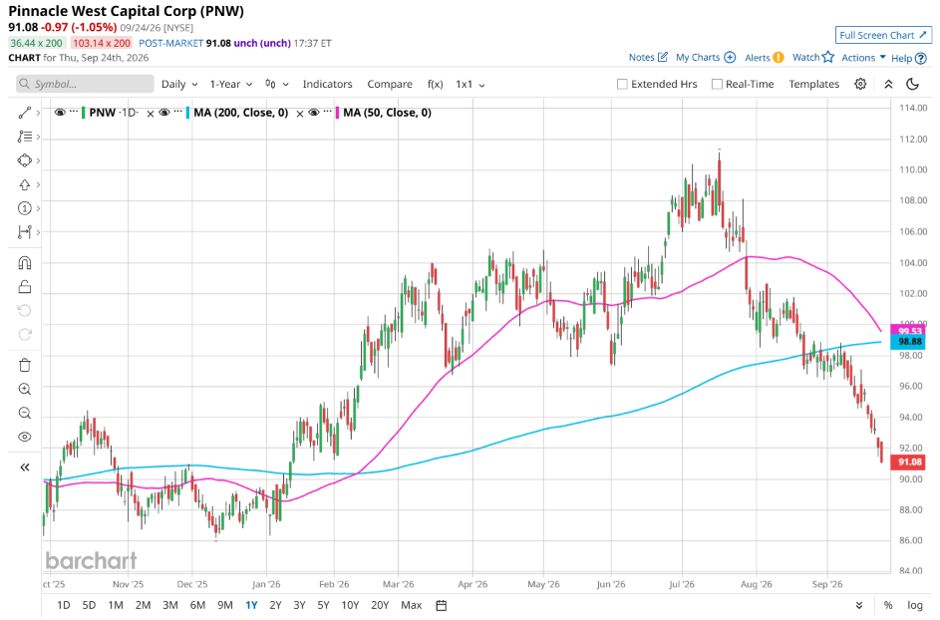
To confirm the bearish trend, PNW has been trading below its 200-day moving average since late August, with slight fluctuations. The stock is trading below its 50-day moving average since late July.
 www.barchart.com
PNW has demonstrated a mixed performance marked by solid overall stock appreciation alongside notable quarterly operational fluctuations. While the company benefited from strong long-term fundamentals, including robust customer growth, favorable weather-driven energy usage in early 2026, and consistent dividend payouts, its quarterly financial results proved choppy, weighed down by higher interest charges, increased depreciation, and elevated operational costs.
On Aug. 4, PNW shares closed up marginally after reporting its Q2 results. Its EPS of $1.43 did not meet Wall Street expectations of $1.49. The company’s revenue was $1.5 billion, beating Wall Street forecasts of $1.4 billion. PNW expects full-year EPS to be $4.55 to $4.75.
In the competitive arena of utilities - regulated electric, Evergy, Inc. (EVRG) has taken the lead over PNW, showing resilience with 5.4% gains over the past 52 weeks and 7.1% returns on a YTD basis.
Wall Street analysts are reasonably bullish on PNW’s prospects. The stock has a consensus “Moderate Buy” rating from the 17 analysts covering it, and the mean price target of $104.20 suggests a potential upside of 14.4% from current price levels.
On the date of publication, Neha Panjwani did not have (either directly or indirectly) positions in any of the securities mentioned in this article. All information and data in this article is solely for informational purposes. For more information please view the Barchart Disclosure Policy here.
More news from Barchart
Will Crude Oil Prices Remain Volatile for the Rest of 2026? Generac Rallies on Power Deal With Amazon. How to Play GNRC Stock Now. This High-Growth Energy Stock Continues to Plunge. Don’t Rush to Buy the Dip. A $200 Billion Reason to Buy GE Vernova Stock