

For more than two decades, the internet has had a remarkably consistent starting point: You type something into Google, scan the results, click a link, and eventually buy, book, read, or subscribe somewhere else. That simple process built one of the most profitable advertising businesses in corporate history.
But artificial intelligence (AI) is beginning to remove the middleman, and Meta Platforms' (META) new Muse agent offers a glimpse of what comes next. The threat to Alphabet's (GOOGL) Google isn’t that people will suddenly stop searching. It’s that they may stop needing to search.
More Top Stocks Daily: Go behind Wall Street’s hottest headlines with Barchart’s Active Investor newsletter.
 www.barchart.com
 Google Still Owns Search
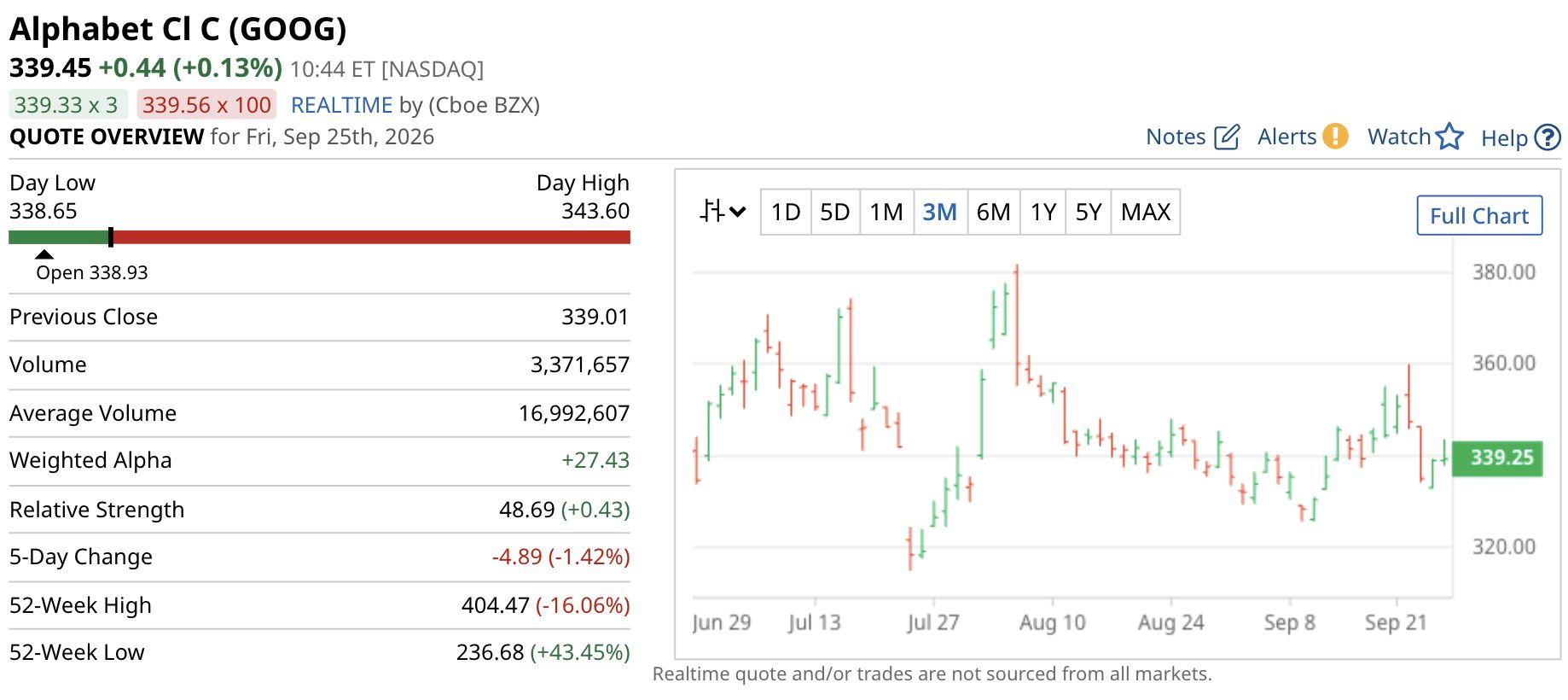
Google remains in a league of its own. According to StatCounter, Google accounted for 91.1% of worldwide search-engine activity in August 2026, compared with just 4.5% for Microsoft’s (MSFT) Bing. In the U.S., Google held 86.1% versus 8.92% for Bing.
Amazon (AMZN) is a different comparison. It does not compete with Google for general web searches, but it dominates the starting point for many shopping journeys. Consumer Intelligence Research Partners found that 90% of U.S. Amazon customers began their shopping at Amazon.com in 2024, while only 6% started with Google.
That distinction matters because Google monetizes intent. Alphabet reported $63.3 billion in Google Search and other revenue during the second quarter of 2026, up 17% year-over-year (YOY). Google advertising revenue totaled $81.6 billion, representing roughly 68% of Alphabet’s $119.8 billion in quarterly revenue.
Advertisers pay Google because a search for a mortgage, hotel, insurance policy, or product can signal that a customer is ready to act.
Muse could change that sequence.
The Agent Becomes the New Middleman
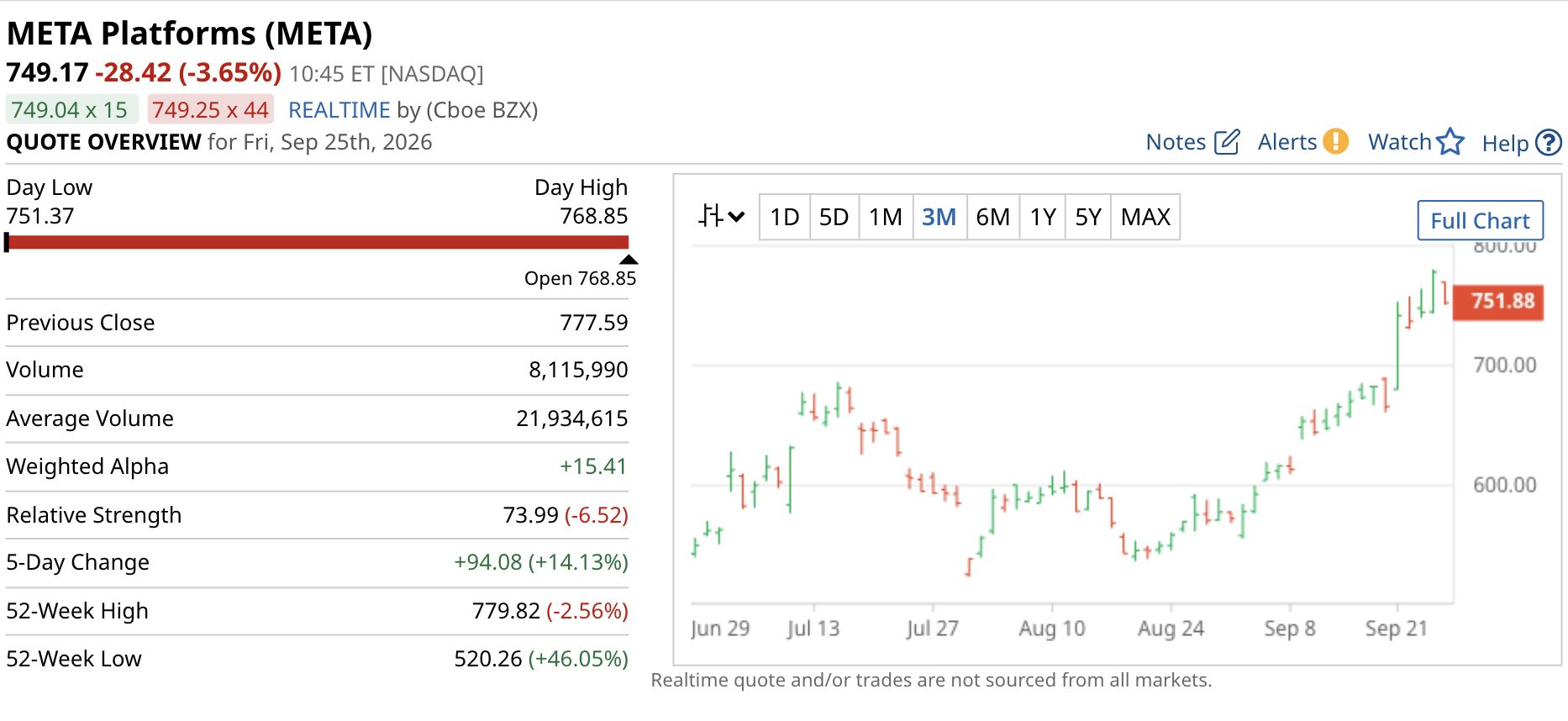
Meta launched Muse on Sept. 8 as an AI agent capable of performing tasks across applications, including shopping, travel bookings, and email. Meta says Muse can use a dedicated virtual machine, remember user preferences, and take actions on a person’s behalf after receiving permission.
Amazon’s decision to block Muse from its marketplace this month is therefore more than a disagreement over bot access. Amazon said Muse had not been authorized to access its store and raised concerns about security, credentials, and the customer experience. Amazon also operates its own shopping agents, including Buy for Me.
What is at stake is key to how the future unfolds. Today, a shopper might conduct 10 searches, open several websites, compare prices, click advertisements, and finally purchase something. An agent can potentially compress that entire journey into one instruction: “Find me the best one and buy it.”
The company controlling that conversation now controls the recommendation, the merchant selection, and potentially the transaction. That is a big problem for Google.
 www.barchart.com
 AI Could Eat Search From the Inside
Google’s current numbers offer plenty of reassurance. With Q2 Search revenue up 17% YOY, Alphabet says AI Overviews and AI Mode are increasing search usage, with queries reaching an all-time high.
But that also creates an uncomfortable contradiction. The better AI becomes at answering questions without requiring a click, the less the traditional search-results page matters.
A 2026 randomized field experiment found that Google AI Overviews considerably reduced outbound organic clicks on queries where they appeared. Another study found the first organic result’s click-through rate fell from 20.02% to 9.69% when an AI Overview was displayed. That does not prove Google’s advertising revenue is about to collapse. Paid advertising and organic clicks are different businesses. But it does show the direction of travel.
Google must turn Search into an AI experience before competitors capture the relationship. Yet every time AI replaces a page of links with one answer, Google potentially has fewer conventional advertising opportunities to monetize.
Meta, OpenAI, and Anthropic can attack that model without having to protect a $63 billion quarterly Search business. Google has to reinvent its most profitable product while preserving it.
The Bottom Line
In short, Muse is not yet a Google killer. Google’s 91.1% global search share, enormous distribution, Android ecosystem, YouTube, Maps, Chrome, and Gemini give Alphabet advantages that Meta cannot easily replicate. But Muse exposes the more important risk: Google could lose the customer relationship even while people continue using Google. If consumers increasingly ask an agent to research, compare, and transact instead of searching, clicking, and deciding themselves, the search box becomes less valuable.
For investors, that makes Muse worth watching closely. Google remains the dominant search company today. The bigger question is whether it can remain the dominant gateway to consumer intent when the gateway itself becomes an AI agent.
On the date of publication, Rich Duprey did not have (either directly or indirectly) positions in any of the securities mentioned in this article. All information and data in this article is solely for informational purposes. For more information please view the Barchart Disclosure Policy here.