


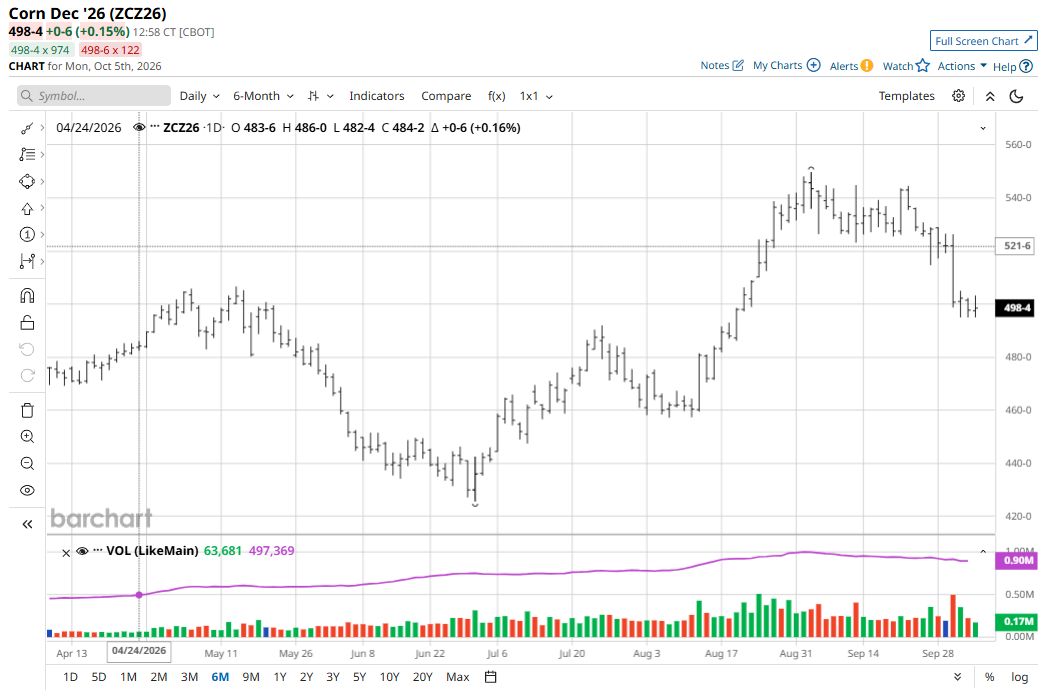
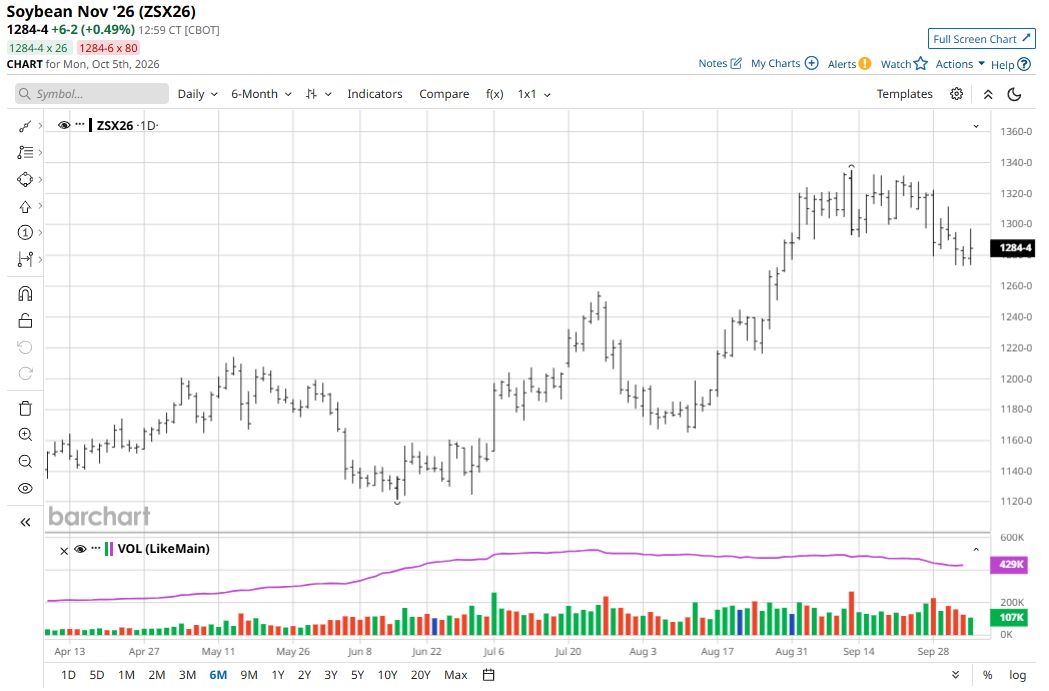
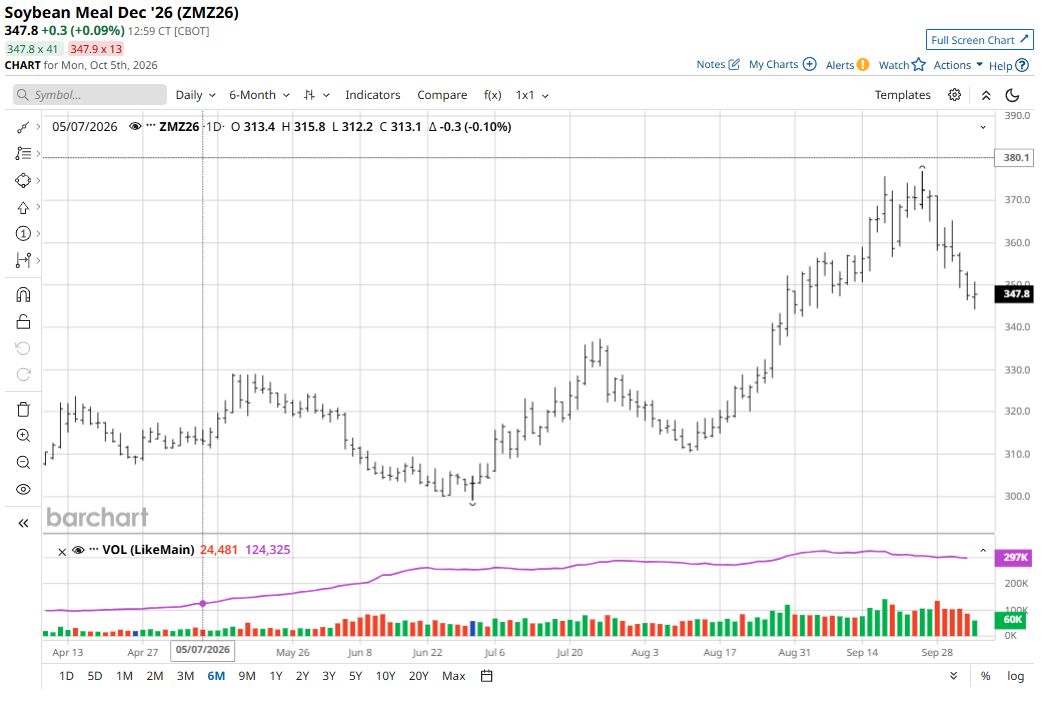
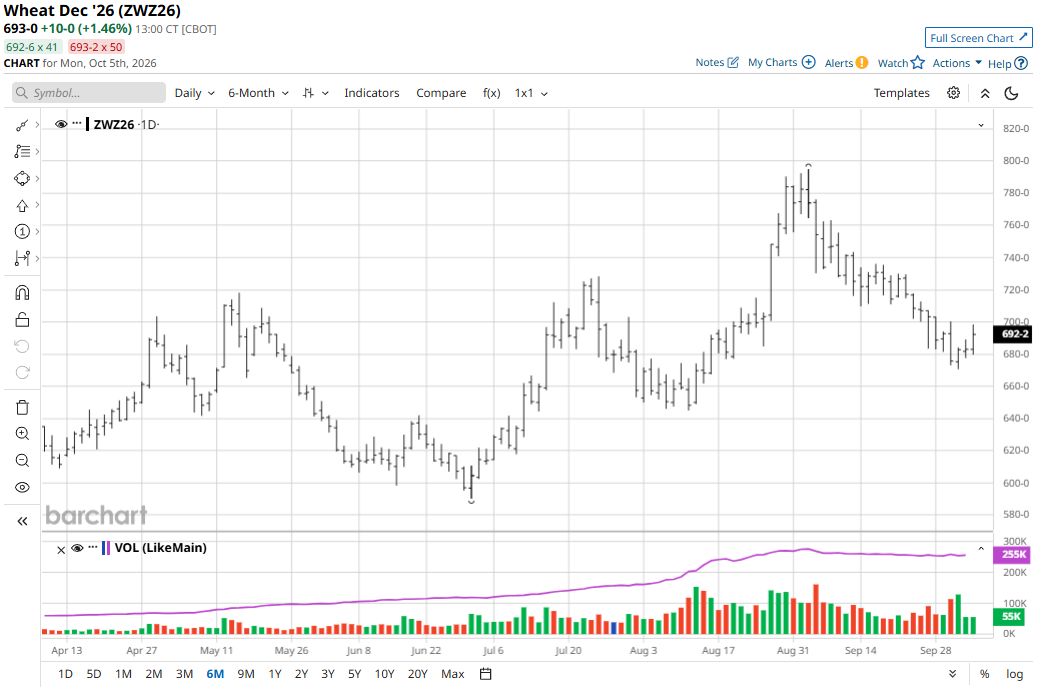
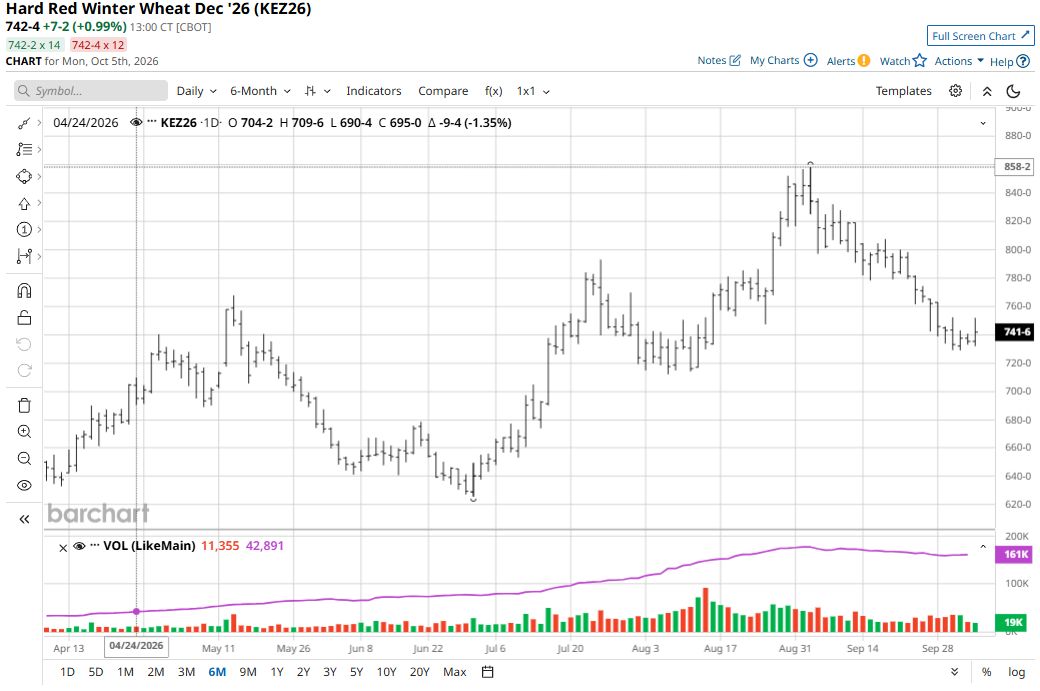
December corn (ZCZ26) futures on Friday fell 4 1/2 cents to $4.97 3/4 and for the week were down 30 1/2 cents. November soybeans (ZSX26) fell 5 3/4 cents to $12.78 1/4, hit a four-week low, and for the week were down 40 3/4 cents. December soybean meal (ZMZ26) futures on Friday lost $5.80 to $347.50, hit a four-week low, and for the week were down $23.50. December soft red winter (SRW) wheat futures (ZWZ26) rose 1/4 cent to $6.83 but for the week were down 20 1/4 cents. December hard red winter (HRW) wheat (KEZ26) futures on Friday fell 2 1/4 cents to $7.35 1/4 and for the week were down 26 3/4 cents.
Corn Leads the Pack Lower Following Surprisingly Bearish USDA Data
Corn futures last Wednesday careened to a nearly six-week low after the USDA that day reported Sept. 1 U.S. corn stocks sharply above market expectations, confirming abundant supplies left over from last year’s record harvest. The agency estimated U.S. corn stocks in all positions at the start of the month at 2.095 billion bushels, up a stunning 35% from the same date a year earlier and at a seven-year high. Grain analysts had expected a figure closer to 1.9 billion bushels, which would have been down just a few million bushels from the USDA’s current ending stocks figure.
Don’t Miss a Day: From crude oil to coffee, sign up free for Barchart’s best-in-class commodity analysis.
The corn futures market late last week extended the big downdraft on Wednesday, including Friday’s technically bearish weekly low close, that suggests some more chart-based selling in corn futures early this week.
Grain traders will continue to monitor the weekly USDA crop progress reports on Monday afternoon.
Weather forecasters say a much drier weather pattern will occur in the Midwest during the next two weeks. That means harvesting, which is getting a late start in the western Corn Belt, and the related commercial hedge pressure will ramp up in the coming weeks, which will add to selling pressure in corn and soybean futures.
The strong U.S. dollar on the foreign exchange market, which saw the U.S. dollar index ($DXY) hit a 1.5-year high last week, will also be a headwind for the grain futures markets. Most grain trade on the world market is conducted in U.S. dollars. When the greenback appreciates, that makes U.S. grain more expensive to purchase in non-U.S. currency.
 www.barchart.com
Soybeans, Meal See Weak-Handed Bulls Abandon Ship
The soybean and meal futures markets on Friday saw weak long liquidation and some technical selling from the speculators as the near-term chart postures for both markets have deteriorated over the past week. Friday’s technically bearish weekly low closes in November beans and December meal set the table for follow-through chart-based selling from the specs early this week.
Soybean market bulls are still feeling the sting of the late-September summit between China President Xi Jinping and President Donald Trump failing to see China ramp up its commitment to buy more U.S. soybeans. Traders will continue to monitor U.S.-China trade relations and any new developments that could impact China purchases of U.S. soybeans.
On the bright side, domestic demand for soybeans remains solid. The latest monthly oilseed crushings report from USDA showed 210 million bushels of beans were consumed in August, down 12 million bushels from last month, but up 12 million bushels from the previous year at this time. Local cash markets saw sharp movements in cash basis levels as the delayed harvest in the Midwest has kept soybean supplies abnormally tight for late September.
 www.barchart.com
 www.barchart.com
Wheat Bulls Also Need a Fresh, Bullish Fundamental Spark
The winter wheat futures markets saw a pause on Friday to end the trading week. Losses in corn and soybean futures markets limited buying interest in winter wheat futures.
Price-bearish for the winter wheat futures has been the old saying, “rain in the Plains makes grain.” Weather forecasters late last week said U.S. winter wheat planting, emergence, and establishment will improve greatly in the next 10 days due to recent rain and the anticipated sunnier and warmer weather in the next two weeks. Meantime, much of western Europe continues to struggle for wheat and barley planting moisture. However, some rains are likely next week in some regions that need moisture in western Europe.
The Black Sea grain-shipping situation, due to the ongoing Russia-Ukraine war, will remain a major wild card for the wheat futures markets in the months ahead. This has been a bullish element for the wheat futures markets, but the situation has gone on so long that traders have factored the grain-shipping woes into prices. Grain market bulls very likely need a fresh, new market fundamental to break winter wheat futures prices out of their near-term downtrends.
 www.barchart.com
 www.barchart.com
Let me know what you think. I enjoy hearing from my valued Barchart readers all around the globe. Email me at jim@jimwyckoff.com.
On the date of publication, Jim Wyckoff did not have (either directly or indirectly) positions in any of the securities mentioned in this article. All information and data in this article is solely for informational purposes. For more information please view the Barchart Disclosure Policy here.