


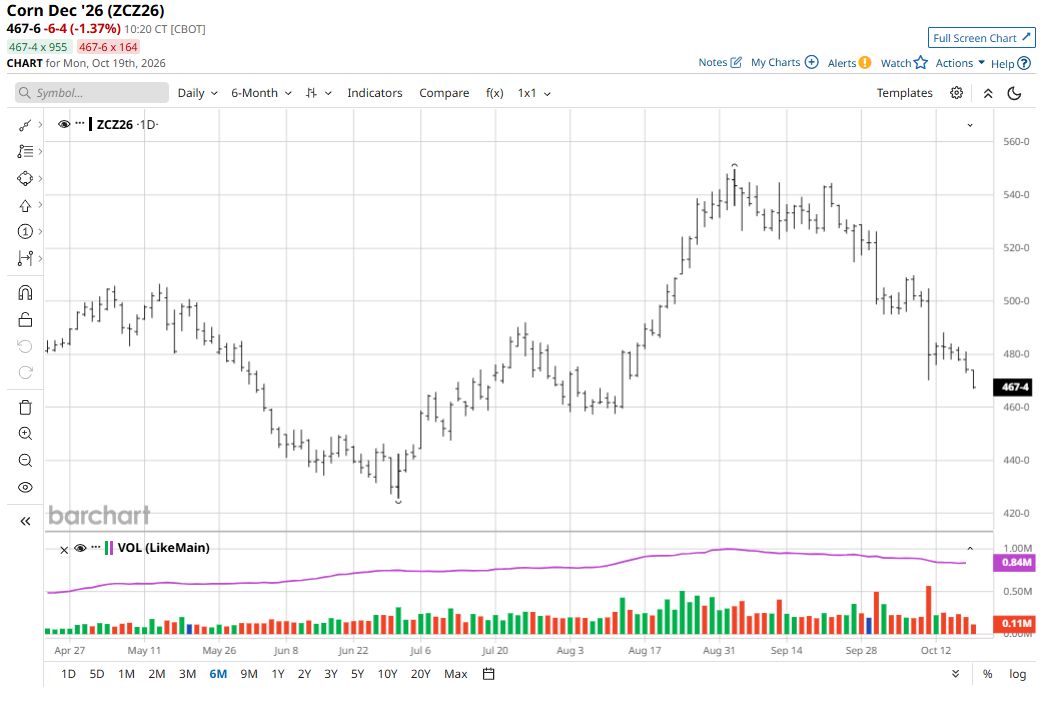
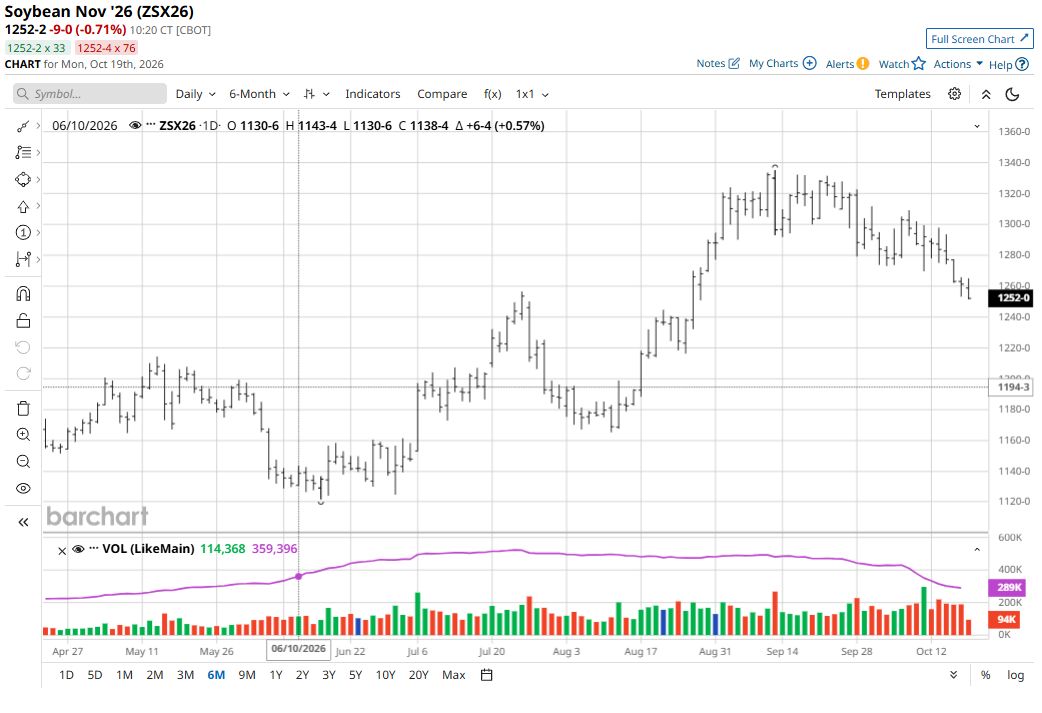
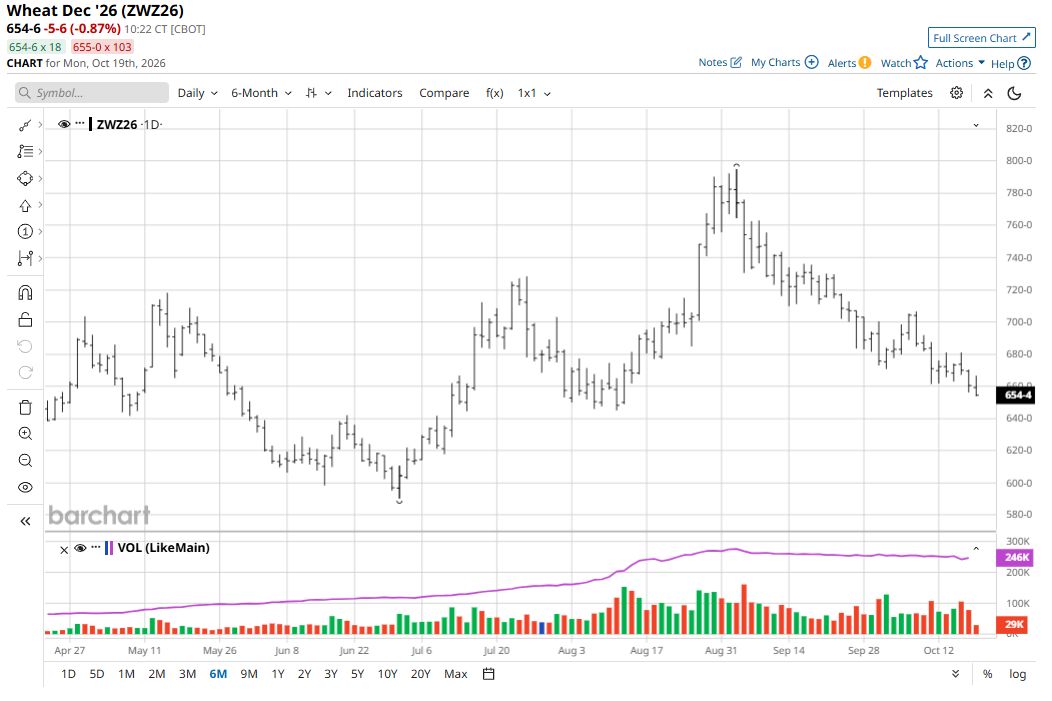
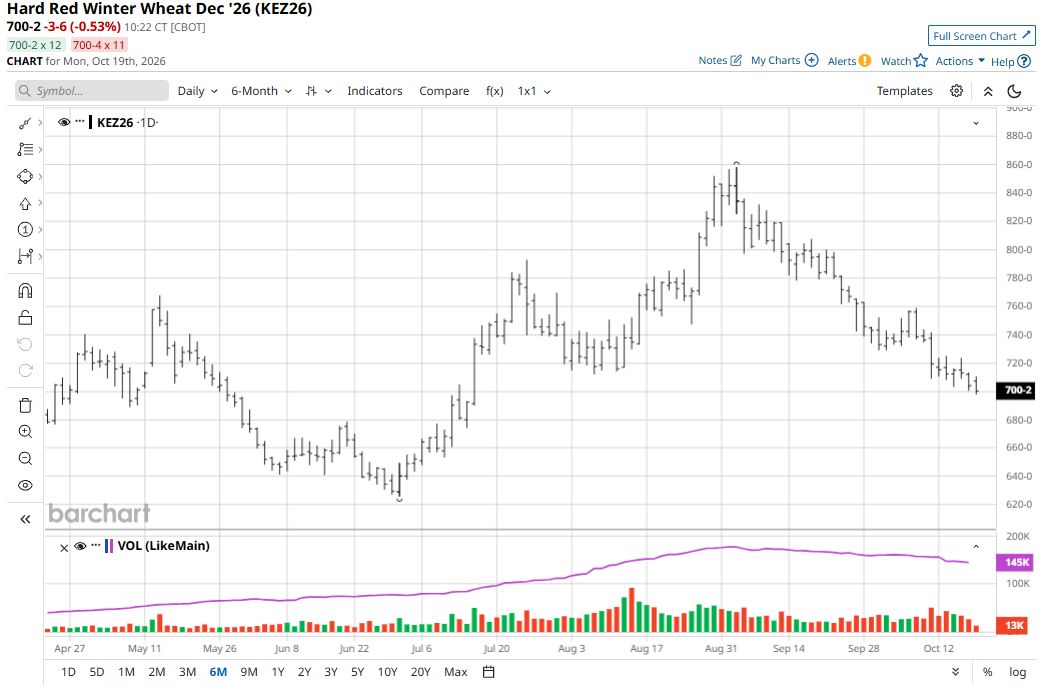
December corn (ZCZ26) futures last Friday fell 3 3/4 cents to $4.74 1/4, closed at a two-month low close, and for the week were down 5 1/2 cents. November soybeans (ZSX26) fell 1 3/4 cents to $12.61 1/4, hit a six-week low, and for the week were down 30 3/4 cents. December soft red winter (SRW) wheat (ZWZ26) futures on Friday fell 9 1/2 cents to $6.60 1/2, hit a two-month low, and for the week fell 10 1/2 cents. December hard red winter (HRW) wheat (KEZ26) futures lost 9 cents to $7.04, hit a three-month low, and for the week fell 15 1/4 cents.
Seasonal Commercial Hedge Selling Pressures Corn, Soybeans
The corn and soybean futures markets’ technically bearish weekly low closes again Friday suggest more chart-based selling early this week. A bearish pennant pattern has also formed on the daily chart for December corn.
Don’t Miss a Day: From crude oil to coffee, sign up free for Barchart’s best-in-class commodity analysis.
Corn and soybean harvesting got late starts in the western Corn Belt this year, so the related commercial hedge pressure in futures will continue for the next few weeks. Weather conditions look mostly dry and favorable for U.S. corn and soybean harvest over the next two weeks.
 www.barchart.com
 www.barchart.com
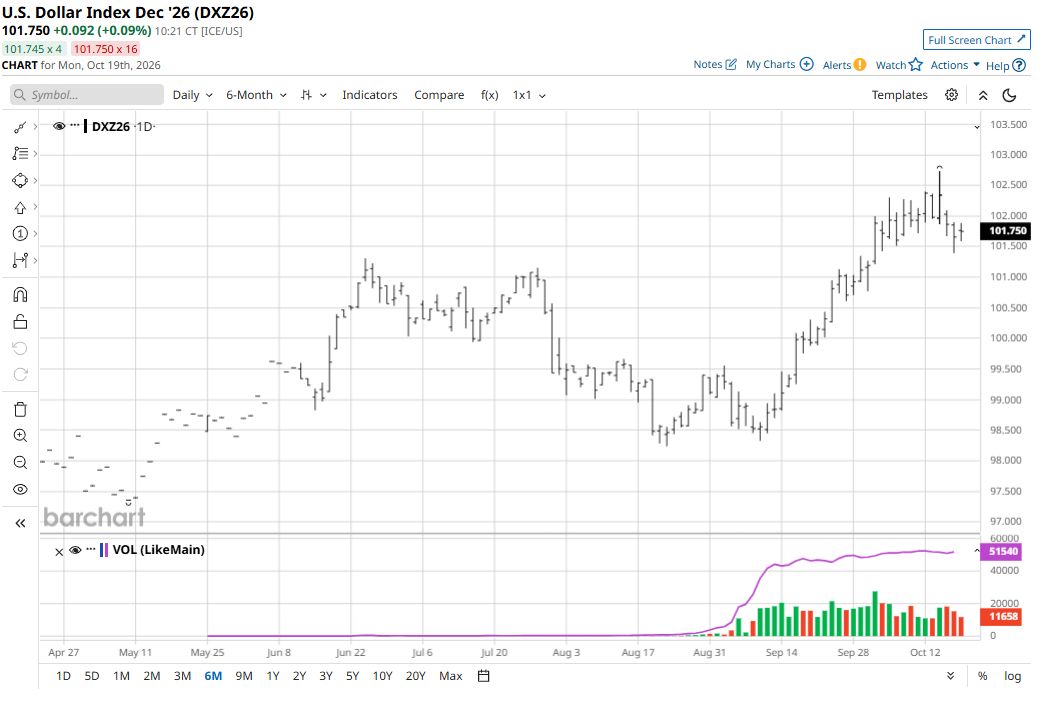
The strong U.S. dollar ($DXY) on the foreign exchange market will also be a headwind for the grain futures markets in the coming weeks. The USDX last week scored a 1.5-year high.
 www.barchart.com
Attention in the coming months will turn from abundant U.S. corn and soybean supply to potentially better export demand for U.S. corn and beans.
Monday afternoon brings the weekly USDA crop progress reports.
Soybean traders will continue to look for better U.S. soybean export sales to China. The USDA last Friday morning reported daily sales of 558,000 metric tons (MT) of U.S. soybeans to China along with 236,000 MT to unknown destinations during the 2026-27 marketing year. The USDA on Friday morning also reported that weekly U.S. soybean sales totaled 574,900 MT during the week ended Oct. 8, up 5% from the previous week but down 40% from the four-week average. Net weekly sales were near the low end of the pre-report range of estimates.
Soybean bulls were disappointed last week when futures prices failed to move higher despite 1.08 million metric tons of daily “flash” sales announced throughout the week, with China accounting for 800,000 MT of that total. In the coming months, soy complex traders will continue to monitor China’s demand for U.S. soybeans to see if that country abides by its previous commitments to buy U.S. beans.
Winter Wheat Futures Bears Keeping a Firm Grip
The winter wheat futures markets saw technical selling pressure to end the trading week on Friday as prices continue to trend down on the daily bar charts. Friday’s technically bearish weekly low closes in December SRW and HRW futures set the table for some follow-through, chart-based selling pressure this week.
 www.barchart.com
 www.barchart.com
The wheat market bulls need sales of U.S. wheat abroad to see better numbers. USDA on Friday reported weekly U.S. wheat export sales of 319,900 MT during the week ended Oct. 8, down 29% from the previous week and down 4% from the four-week average. Net sales were near the low end of analysts’ pre-report range of estimates.
Weather forecasters say that in U.S. HRW country, frost and freezes in wheat areas of the far west over the past few days ended the growing season for many crop areas, but there will be no harm done to any of the region’s wheat. Rising temperatures back to warm conditions this week will allow wheat emergence and establishment to continue.
Wheat futures in the coming months could find support from reports last week of potentially lower production from Canada, which could result in tighter global stocks. Expectations of food prices to rise in coming months as oil and fertilizer flows remain restricted may also support wheat futures in the coming months. Focus will remain in the amount of grain being shipped out of the Black Sea region and any progress on a ceasefire between warring Russia and Ukraine.
Let me know what you think! I enjoy hearing from my valued Barchart readers worldwide. And I will answer all your emails. Email me at jim@jimwyckoff.com.
On the date of publication, Jim Wyckoff did not have (either directly or indirectly) positions in any of the securities mentioned in this article. All information and data in this article is solely for informational purposes. For more information please view the Barchart Disclosure Policy here.
More news from Barchart
Harvest Pressure Is Squelching Corn, Soybean, and Wheat Prices A Big Soybean Crop Is Being Harvested and Is Sending Prices Lower Corn Prices Face a Bearish Storm of Fundamentals and Are Likely Headed Lower What to Watch Next After the USDA Gut-Punched Corn Prices Last Week