


Michael Saylor sounds more confident about bitcoin than his company’s latest purchases suggest. On Oct. 13, Strategy’s (MSTR) executive chairman said bitcoin has likely bottomed and that the company could step up its buying. But between Oct. 5 and Oct. 11, Strategy bought just 250 bitcoin for about $21.5 million, its smallest purchase this year. Over the same period, it spent about $192 million buying back its Strategy Variable Rate Series A Perpetual Stretch Preferred Stock (STRC) preferred stock, roughly nine times what it spent on bitcoin. Rival Strive (ASST) announced a $280 million purchase of 3,311 bitcoin on October 13, which Saylor publicly praised.
Strategy’s $100 Goal Is Getting Expensive
STRC is a stock that currently pays investors a 12% annual dividend. Strategy originally sold it at $100 a share, a level known as its par value. When STRC trades below $100, selling new shares raises less money, so Strategy is buying them back to push the price up. As I covered earlier, the goal is to get STRC back to $100 so Strategy can use it to raise money for bitcoin again. STRC fell as low as about $75 this summer. It has since climbed close to $100, but it hasn't ended a trading day at that level since May. The problem is how much this is costing Strategy. Saylor had said Strategy would buy back less STRC as it neared $100. Instead, the buybacks have grown larger. Strategy has also said it will keep paying the 12% dividend until STRC trades steadily near $100.
More Top Stocks Daily: Go behind Wall Street’s hottest headlines with Barchart’s Active Investor newsletter.
Meanwhile, Strive’s similar preferred stock pays 13% and has held near $100, letting it keep raising money for bitcoin. The room for Strategy to keep buying back STRC is shrinking fast, too. Its buyback program had about $621 million left at the end of September and roughly $355 million by Oct. 11. If STRC can’t hold near $100 once the buybacks slow, Strategy’s main way of funding bitcoin could stall again.
About Strategy Stock
Strategy operates as a Bitcoin treasury company. It offers investors varying degrees of economic exposure to Bitcoin by offering a range of securities, including equity and fixed-income instruments. The company also provides AI-powered enterprise analytics software. This includes Strategy One, which provides non-technical users with the ability to directly access novel and actionable insights for decision-making. In addition, the company also provides Strategy Mosaic, which helps companies organize and manage data from multiple sources. Founded in 1989, the company is headquartered in Tysons Corner, Virginia.
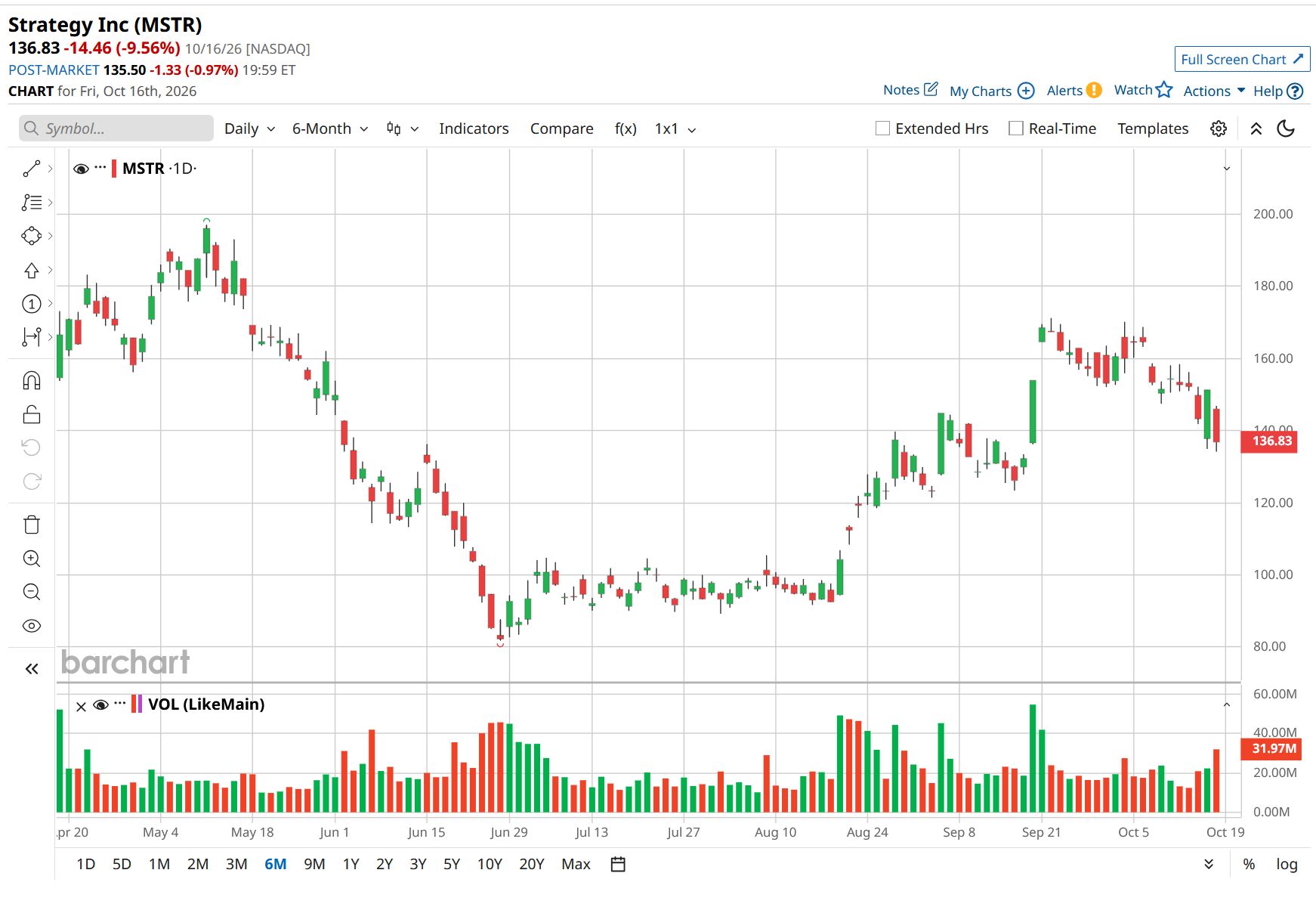
Over the past year, MSTR stock has declined 52%. Similarly, iShares Bitcoin Trust ETF (IBIT) also declined 23% during the same period. The trend has continued this year as well, with the stock down 13%, whereas the iShares Bitcoin Trust ETF has declined 9%. The stock has been fairly volatile, climbing from roughly $119 on April 2 to $195 by May 11, and then down to $82 within a month. Since then, the stock has been trading sideways before rallying sharply after August 18. The gain was primarily driven by the rise in Bitcoin prices, which benefited from improving sentiment toward cryptocurrencies following US policy developments.
 www.barchart.com
Strategy’s $42 Billion Bitcoin Strategy Aims for Bigger Returns, but Financing Risks Remain
Strategy reported its second-quarter fiscal 2026 earnings on July 29. The company posted revenue of $122.37 million, down 0.46% from the $122.93 million forecast. The loss per share came in at $24.45, missing the Wall Street consensus of $0.79. Strategy reported an operating loss of $8.3 million and a net loss of 8.6 billion, driven mainly by a non-cash bitcoin mark-to-market charge. Management said the company added 83,901 bitcoin during the quarter at an average price of about $75,500 a coin. That brought the company’s bitcoin holdings to 843,775 bitcoin, equal to roughly 4% of all bitcoin that will ever exist.
Looking forward, the company focused on its long-term strategy rather than giving a traditional business forecast. The company wants to increase the amount of Bitcoin it holds per share, grow its digital credit business, and maintain a healthy cash reserve in US dollars. Management also wants STRC, its main digital credit product, to trade between $99 and $100. To support its price, the company has authorized up to $1 billion in buybacks for STRC and another $1 billion for MSTR shares.
What Do Analysts Expect for MSTR Stock?
Cantor Fitzgerald raised the firm’s price target on MSTR stock from $185 to $208 and kept an Overweight rating on the shares. The firm said FinTech and digital asset companies have generally set realistic expectations for their third-quarter results. Similarly, Citi analyst Peter Christiansen reiterated a Buy rating with a price target of $240.
 barchart.com
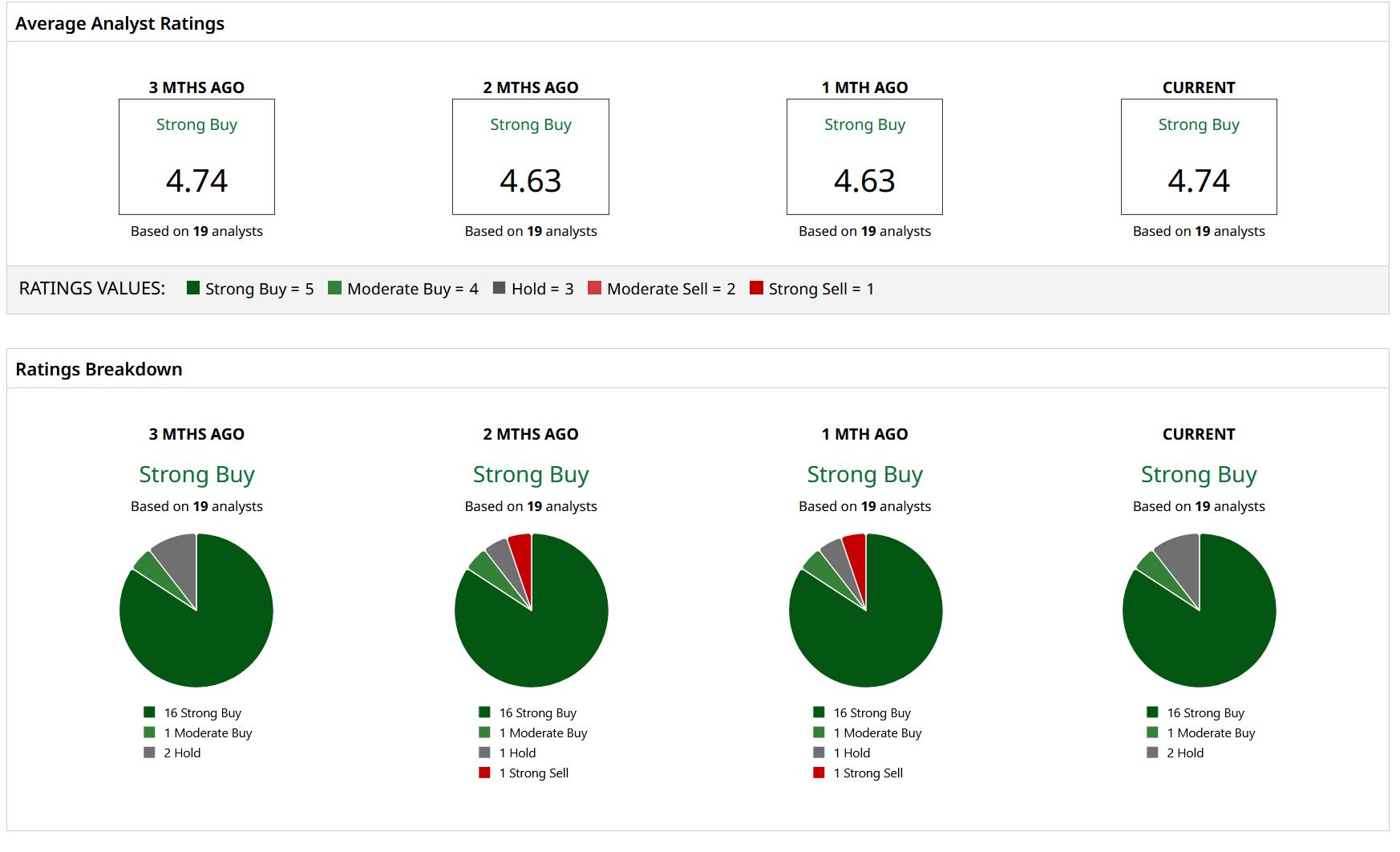
Based on 19 Wall Street analysts, MSTR stock holds a consensus “Strong Buy” rating. The stock has a mean price target of $233, which reflects 71% upside from current levels. The high price target of $435 is quite bullish and implies an impressive 220% upside from the current share price. This shows that analysts remain optimistic about the company’s long-term prospects of the company.
On the date of publication, Jabran Kundi did not have (either directly or indirectly) positions in any of the securities mentioned in this article. All information and data in this article is solely for informational purposes. For more information please view the Barchart Disclosure Policy here.
More news from Barchart
Michael Saylor Is Bullish on Bitcoin. Yet His Company's Money Is Going Somewhere Else. INTC Stock Alert: What to Know as JPMorgan Upgrades Intel Ahead of 3M Earnings, Here's What Barchart Data Says Comes Next for MMM Stock Why Bonds Matter for the First Time This Century (and How to Profit)