

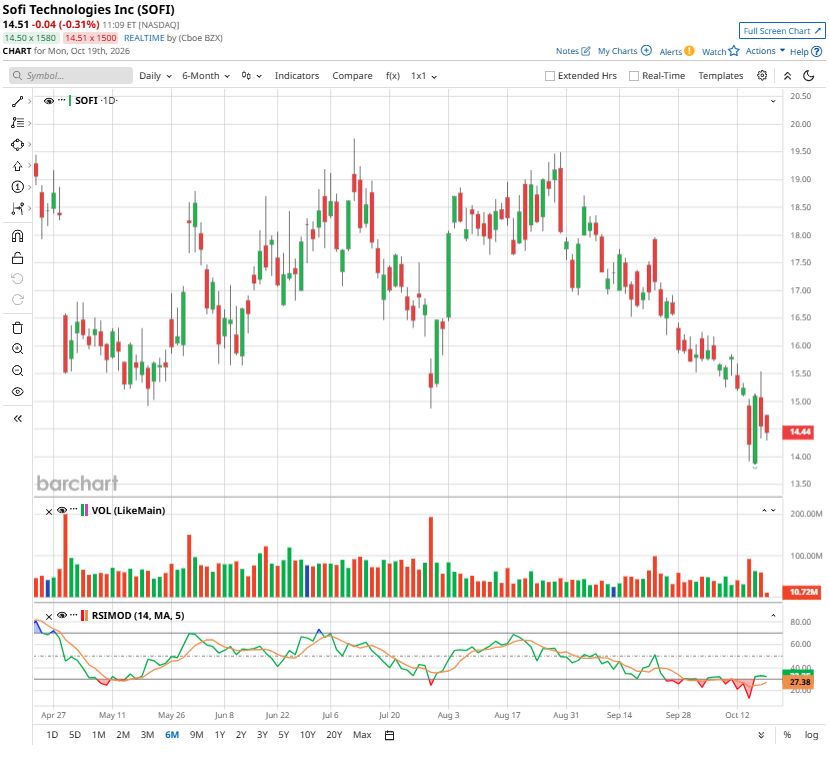
SoFi Technologies (SOFI) will report its Q3 earnings on October 27. Despite SoFi’s solid growth over the past several quarters, its stock has struggled this year, down about 45% year-to-date.
One factor weighing on investor sentiment is the growing contribution of SoFi’s lending business in its overall revenue mix. This trend is unlikely to reverse in the third quarter, potentially keeping concerns about the company’s reliance on lending in focus.
More Top Stocks Daily: Go behind Wall Street’s hottest headlines with Barchart’s Active Investor newsletter.
However, SoFi’s growth story extends beyond loans. Its non-lending businesses are also expected to make meaningful progress, offering a potential source of revenue diversification and longer-term growth.
Against this backdrop, here’s a closer look at the key factors that could shape the company’s Q3 results.
 www.barchart.com
SoFi to Deliver Strong Q3 Growth
SoFi is heading into its third-quarter earnings report with several growth drivers in place. A rapidly expanding member base, rising product adoption, and improving fee-based revenue momentum could support another strong quarter. More importantly, the company’s ability to deepen relationships with existing customers may help strengthen its long-term growth and profitability. However, the lending business could again be the key growth driver.
SoFi’s second-quarter results highlighted the strength of its customer acquisition strategy. The company added approximately 1.1 million members, up 35% year over year. Total products rose 42% to 24.4 million, up 2.2 million from the prior-year period.
SoFi’s product growth outpacing membership growth indicates that existing members are increasingly adopting additional financial services. This momentum will likely continue in Q3, enabling SoFi to generate more revenue from each customer while improving retention and lifetime value.
Cross-selling could again increase in Q3. SoFi’s existing members accounted for 51% of new products opened in the second quarter, compared with 43% in the first quarter and 35% a year earlier.
While lending could again remain a major contributor to SoFi’s business, the company is also working to expand its fee-based revenue streams. This shift matters because a more diversified revenue mix could reduce its dependence on lending-related income and create additional growth opportunities.
In the second quarter, SoFi reported record adjusted net revenue of $1.2 billion, up 40% year over year. The lending segment contributed $712 million, while the combined Financial Services and Technology Platform businesses generated $551 million.
Despite lending's strong contribution, fee-based revenue is gaining traction. SoFi generated $472 million in fee-based revenue in the second quarter, accounting for approximately 39% of total revenue and increasing 22% sequentially. Several business lines supported growth, including the Loan Platform Business (LPB), origination fees, interchange revenue, and brokerage-related income.
In Q3, continued expansion across these areas could help SoFi build a more balanced business model. LPB is an important catalyst for SoFi to diversify its top line toward less risky, fee-based revenue. Through this model, SoFi originates and facilitates loans that are ultimately funded or purchased by third-party investors and institutions.
This approach allows SoFi to generate fee income from its lending capabilities without necessarily retaining the loans on its own balance sheet. As a result, the company can expand loan origination activity while potentially limiting direct credit exposure and reducing the capital needed to support growth. In Q3, LPB's contribution is expected to increase, supporting growth.
SoFi’s management has also indicated that non-lending businesses will eventually account for more than half of total revenue, supporting a solid recovery in its share price.
Strong revenue growth and improving customer engagement could set the stage for a strong third-quarter earnings report. Analysts expect the company to report earnings of $0.17 per share, up 54.6% year over year.
Conclusion: Revenue Diversification Could Be Key to SoFi’s Recovery
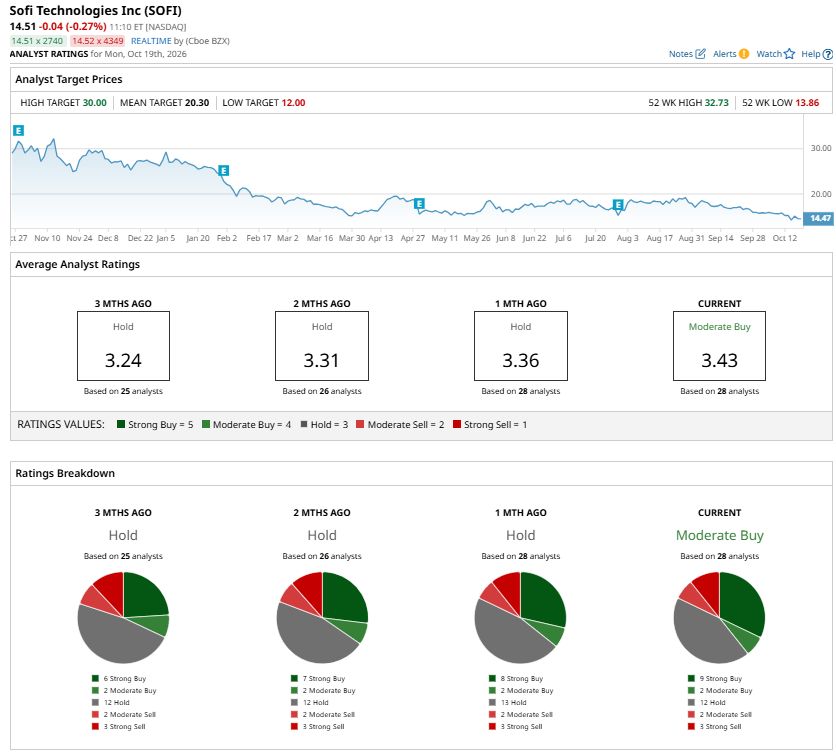
SoFi’s Q3 results are expected to show strong member growth, increased product adoption, and continued growth in fee-based revenue. However, lending will likely remain a major revenue source, which explains why analysts remain cautious and maintain a “Moderate Buy” rating on SoFi stock.
Growth in LPB and other non-lending segments could help SoFi diversify its revenue streams and reduce its reliance on lending. If these businesses continue to grow and improve profitability, they could help restore investor confidence and support a recovery in SoFi’s share.
 www.barchart.com
On the date of publication, Sneha Nahata did not have (either directly or indirectly) positions in any of the securities mentioned in this article. All information and data in this article is solely for informational purposes. For more information please view the Barchart Disclosure Policy here.
More news from Barchart
CoreWeave’s Debt Sparks AI Contagion Fears, But This Top Tech Investor Says Investors Are Missing Something Oracle Stock Is Falling as AI Spending Worries Mount. Most Analysts Think ORCL Could Rebound. What to Expect from SoFi’s Q3 Earnings Tesla’s Flying Car Isn’t the Game Changer Investors May Believe It Is