


Strategy (MSTR), formerly MicroStrategy, spent about nine times more buying back preferred shares than buying Bitcoin (BTCUSD) in the second week of October. It used about $192 million on STRC repurchases, compared with $21.5 million to buy 250 BTC, its smallest Bitcoin purchase of the year.
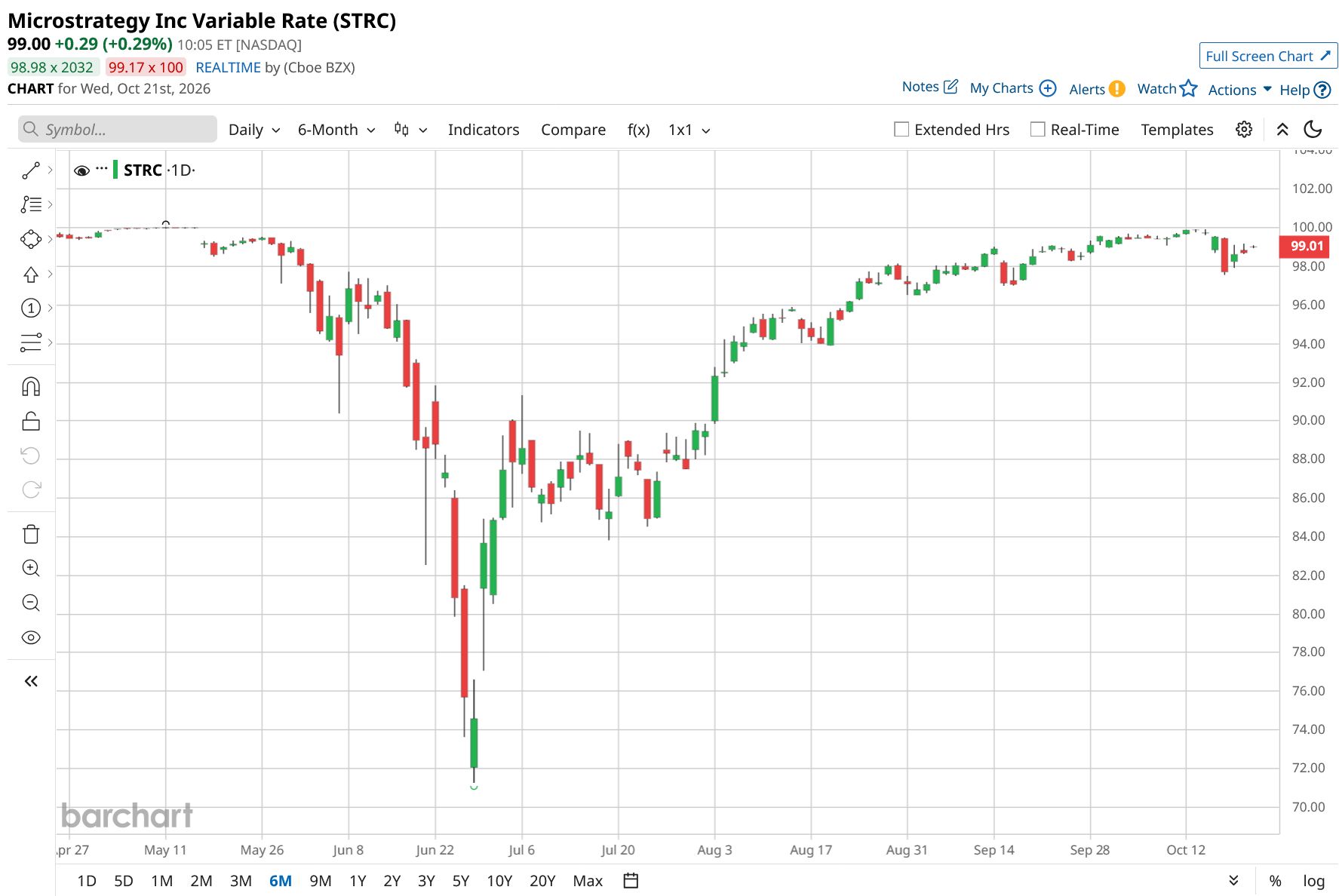
STRC, which sold at $100 per share, dropped as low as $75 this summer and has not closed back at par since May.
Join 200K+ Subscribers: Find out why the midday Barchart Brief newsletter is a must-read for thousands daily.
 www.barchart.com
That matters because Strategy needs STRC near par to raise more money through new preferred-share sales and put that capital toward Bitcoin purchases.
Strategy is now putting more money into resolving that problem. In its Oct. 19 disclosure, the company raised its preferred-stock repurchase authorization from $2 billion to $3 billion. It had just repurchased 1,938,780 STRC shares for $193.1 million in one week, leaving about $1.16 billion available under the larger program. The same update showed that Strategy bought another 267 BTC, taking its Bitcoin holdings to 848,517 coins at an average purchase price of $75,446 each.
So does a $3 billion buyback actually restart Strategy’s funding machine, or is the company simply spending more to stand still? Let’s find out.
Inside Strategy’s $3 Billion Buyback Decision
Strategy started its Digital Credit Securities Repurchase Program on June 29 with a $1 billion authorization. The program covers its four preferred securities, STRC, STRF, STRD, and STRK, with STRC as the first focus. Strategy later raised the authorization to $2 billion, then increased it to $3 billion on Oct. 19. Still, the $3 billion figure is a limit, not a promise that Strategy will spend every dollar.
The company has moved quickly so far, buying about $132.2 million of STRC in one week in August, followed by another $193.1 million in the week ended Oct. 18. With the earlier authorization falling from about $621 million at the end of September to roughly $355 million by Oct. 11, an increase was needed to keep the program running.
The goal is to help STRC move back toward its $100 par value. STRC pays a 12% dividend, so repurchasing shares below par can reduce future dividend payments while supporting the price of the security. Strategy has said it is targeting a price range of $99 to $100.
The company has mainly funded these buybacks by selling MSTR shares, including 3.46 million shares that raised $333.7 million in August. Its USD Reserve is not being used for the repurchases. Strategy has also said the preferred-stock program is separate from its common-stock buyback plan and does not change its software business or Bitcoin-buying strategy.
The Numbers Behind MSTR’s Investment Case
Strategy grew its software business in the second quarter, but Bitcoin-related losses still drove the bigger story. As its second-quarter results show, revenue rose nearly 7% year-over-year (YoY) to $122.4 million, while subscription-services revenue climbed 54% to $62.9 million.
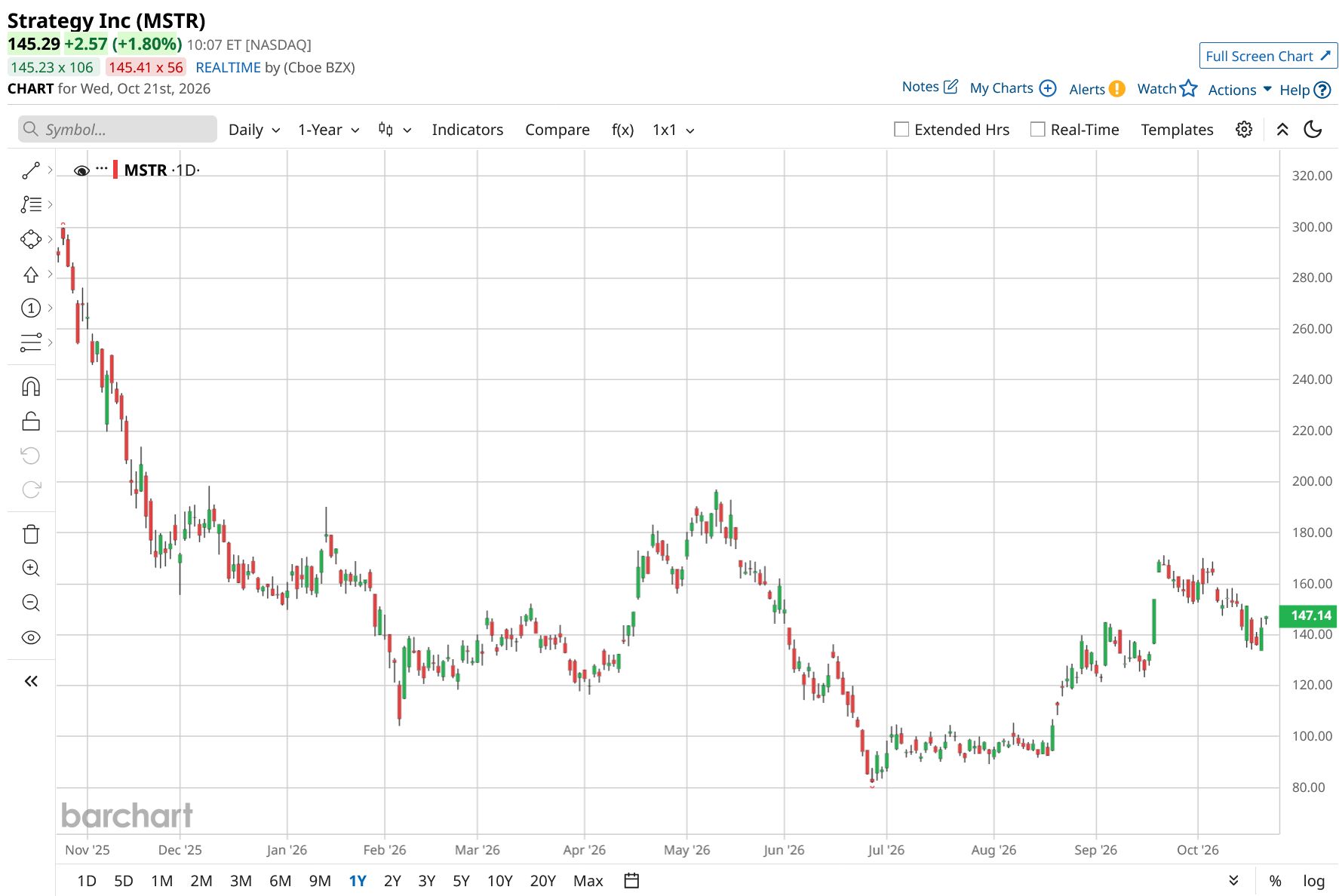
But the company also reported a GAAP loss of $24.45 per share, including an $8.32 billion unrealized loss on its digital assets under fair-value accounting. That volatility has weighed on MSTR, which is down 51% from its 52-week high and 4% so far this year.
 www.barchart.com
Strategy is trying to use that volatility to its advantage. Since late June, it has operated under a Digital Credit Capital Framework, which created a larger U.S. dollar reserve and set aside $1 billion each for common-stock and preferred-stock buybacks. The plan also allows the company to sell Bitcoin when needed. Management has said it wants Strategy to become “the JPMorgan of digital assets,” building financial products around Bitcoin and digital credit.
Wall Street’s Expectations for MSTR
Strategy is set to report third-quarter results after the market closes on Oct. 29. Analysts expect earnings of $21.50 per share for the September quarter, up from $8.42 a year ago, which would be 155.34% growth. The full-year outlook is less encouraging. Analysts still expect Strategy to report a $15.60-per-share loss for fiscal 2026, slightly wider than the $15.23 loss reported last year.
Even so, several analysts see room for MSTR to recover. On Oct. 9, Barclays analyst Nik Cremo maintained an “Overweight” rating and raised his 12-month price target to $175 from $160, when the stock was near $143. Barclays began coverage at $130 on July 8, lowered its target to $125 after the second-quarter report, and has raised it twice since. Its latest target is 40% above that $125 low. Citigroup has a $240 target, while B. Riley Financial sees $195.
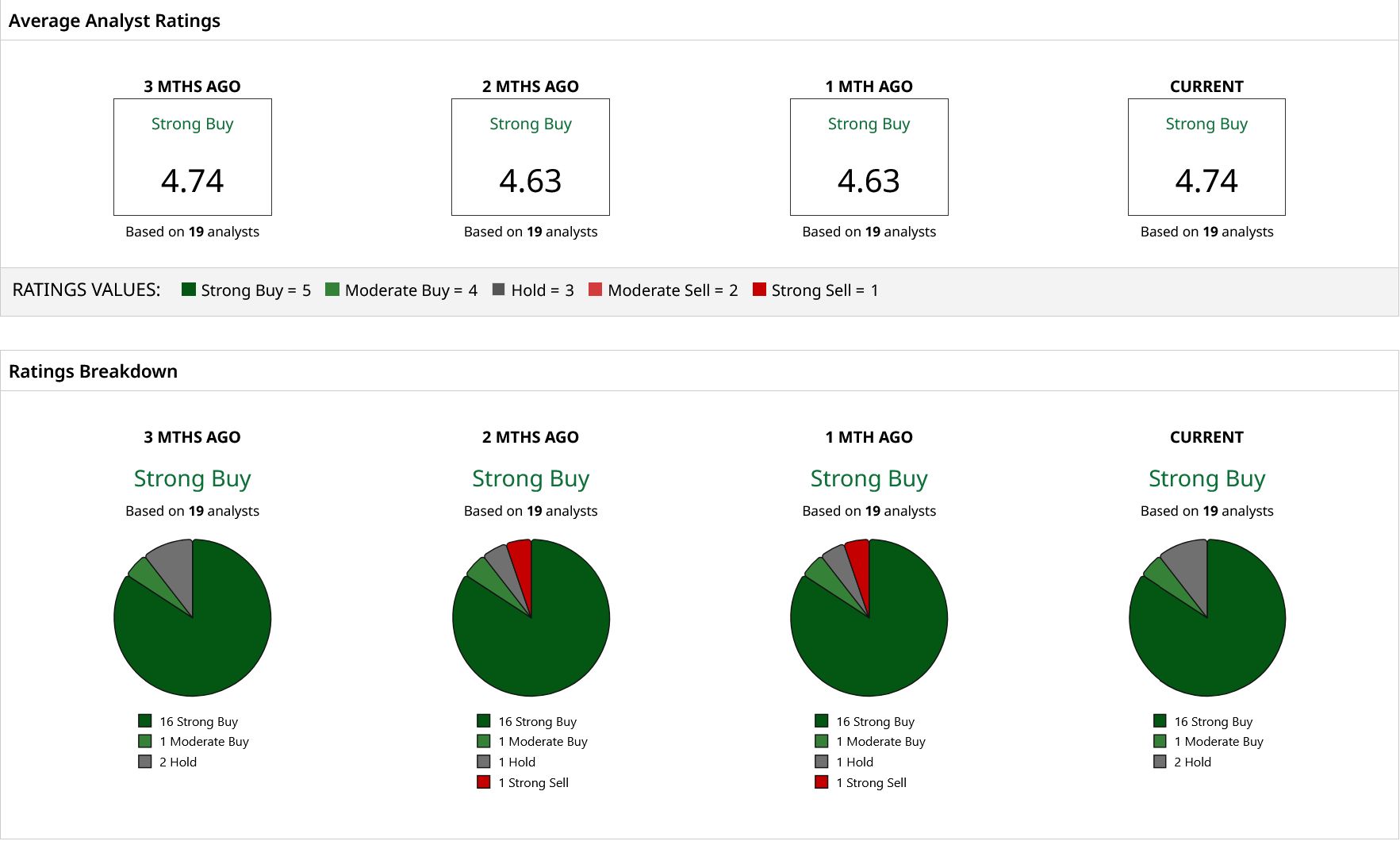
Overall, the 19 analysts covering MSTR rate it a “Strong Buy,” with an average target of $233.17. That points to about a 61% upside from the current share price.
 www.barchart.com
Conclusion
Strategy’s $3 billion authorization is more than a routine capital-return headline. It is a bid to restore STRC’s price, lower the burden of its preferred dividend obligations, and reopen a key channel for financing future Bitcoin purchases. That could support MSTR if the company can retire preferred shares below par without excessive common-stock dilution. Still, MSTR remains highly sensitive to Bitcoin’s price and its ability to keep raising capital on favorable terms. Near term, the shares are likely to remain volatile, but the buyback’s potential to improve funding flexibility gives the stock a more constructive direction if execution holds.
On the date of publication, Ebube Jones did not have (either directly or indirectly) positions in any of the securities mentioned in this article. All information and data in this article is solely for informational purposes. For more information please view the Barchart Disclosure Policy here.
More news from Barchart
Dell Stock Got Hit by a Downgrade. CoreWeave’s Debt Problem Could Matter More Than You Think. Strategy Increased Its Preferred Stock Buyback to $3 Billion and Shares Moved Higher. What This Means for MSTR Elon Musk Pledged a SpaceX Share to Every Kid in America Next Year. Don’t Fret the Dilution Risk. ‘Stop Paying The Mortgage Payment Right Now’: Suze Orman Gives Shocking Advice to a Laid-Off Teacher Who Owed $400,000 on a $200,000 House