

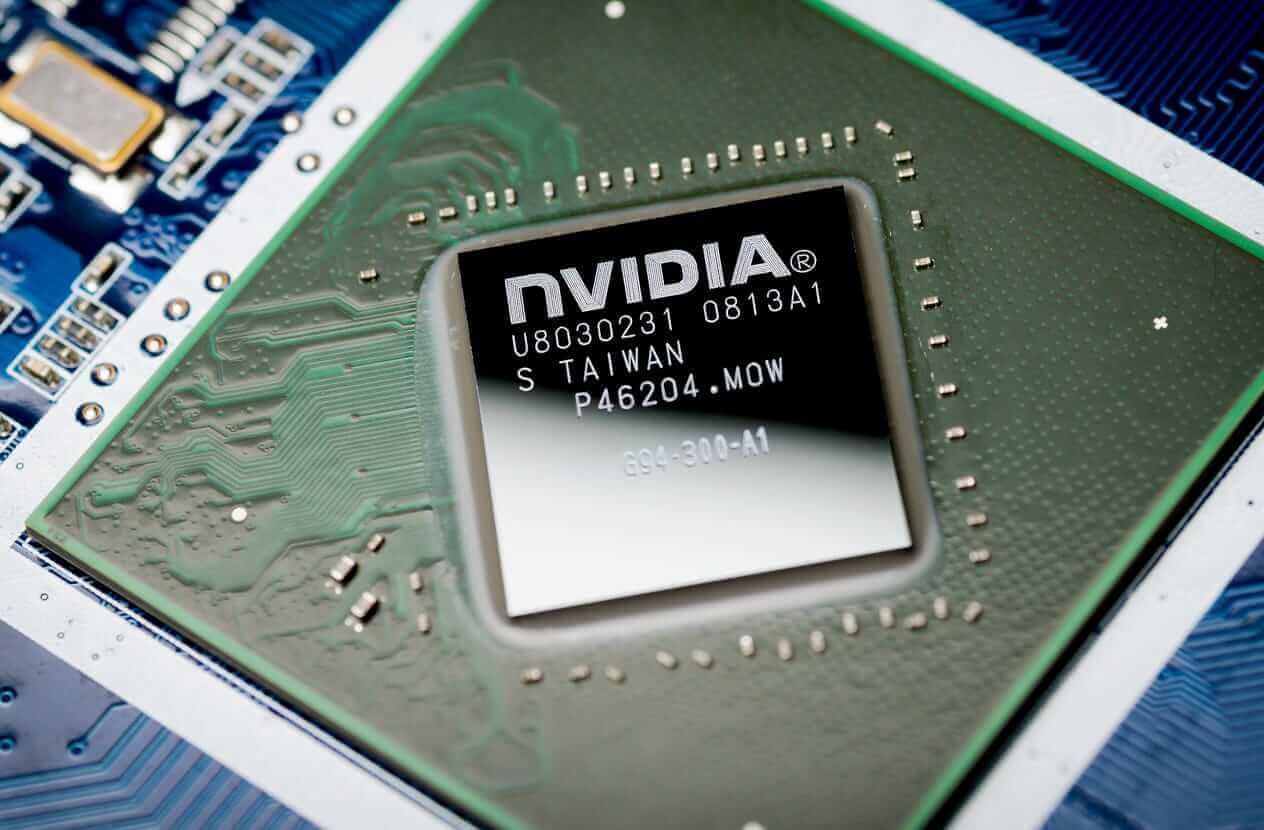
A single Nvidia (NVDA) system weighs about two tons, costs $8.5 million, and holds 2 million parts, CEO Jensen Huang told the Goldman Sachs Communacopia + Technology Conference on Sept. 10. “[Y]ou need airplanes to ship what we build,” he said.
Nvidia ships thousands of these systems, and each one depends on suppliers around the world.
More Top Stocks Daily: Go behind Wall Street’s hottest headlines with Barchart’s Active Investor newsletter.
 www.barchart.com
Why AI Demand Is Outrunning Nvidia's Supply
For 60 years, computers mostly pulled up answers that were recorded in advance, Huang said. AI writes a fresh answer for each question, so the world requires far more computing for these platforms.
There’s a second problem. The tiny switches on a chip, called transistors, no longer multiply as fast as they used to. Huang calls it the end of Moore’s Law.
He explained, “If you want twice as many transistors, you build twice as many chips. Nvidia links them together with its NVLink technology, so they work as one machine.”
Huang elaborated that packaging and memory chips are difficult to secure. So are connectors, voltage regulators, and wafers.
Goldman Sachs' Jim Schneider noted that Nvidia has cited unconstrained demand growth above 100%. Yet Huang claimed Nvidia can grow 70% year-over-year (YoY). He pointed to nearly three decades of working with suppliers. “When I make a prediction, they come through,” Huang said.
Six Suppliers Get a Piece of Nvidia's Capacity Plan
Nvidia is working with Amkor Technology (AMKR), IBIDEN (IBIDY), King Yuan Electronics (KYEC), Samsung Electro Mechanics, Siliconware Precision Industries (SPIL), and Unimicron Technology Corporation, according to a company statement.
The goal is more capacity across substrates, advanced packaging, testing, and optical engines. It also adds backup options to Nvidia's supply chain.
Huang called this “the largest infrastructure buildout in human history.” Then he referenced the biggest issue: “Capacity is the constraint.”
Nvidia plans to lift substrate capacity 2.5x over the next three years. Basically, for every 10 substrates available today, it wants room for 25.
Here is what each partner will do, according to the statement:
IBIDEN, Japan: Nvidia is giving a multibillion-dollar capacity reservation advance, an upfront payment to secure output. The Ono Plant aims for 3x current capacity, with more ramping in the first quarter of 2028. Samsung Electro Mechanics, South Korea: It joins Nvidia's substrate chain with immediate capacity. New factories are planned in Sejong and Busan. By 2028, a significant portion of its package substrate output is projected to go to Nvidia. Unimicron, Taiwan: Nvidia is backing its KF substrate expansion. Capacity starts rising in the second quarter of 2027 and reaches full strength by the middle of 2028. Amkor, South Korea: Interposer wafer capacity targets a jump of more than 300% by the end of 2028, which means more than four times today's level. SPIL, Taiwan: Optical engine capacity for co-packaged optics targets 15x by the middle of 2027. Another doubling is the aim by the end of 2028. KYEC, Taiwan: Building out its U.S. testing facilities and backed financially by Nvidia.Testing Doubles as the U.S. Gets a Bigger Role
Nvidia expects total semiconductor testing capacity to double from 2026 to 2027, and buildouts span the U.S., Taiwan, and Singapore.
KYEC anchors the U.S. part of that testing buildout. Nvidia is giving it a $1.1 billion capacity reservation advance to support new U.S. testing facilities and equipment, while high-volume production is targeted for April 2027.
Singapore will be up and running sooner, with expanded testing operations expected to hit high-volume production in February 2027, ahead of the U.S. site’s April target.
Minerva Keeps AI Factories Productive
Building capacity is only the start. Big AI factories can also stall in quiet ways. In a system with vast numbers of GPUs, one weak component can slow an entire process.
Nvidia also launched Minerva, an AIOps platform meant to identify problems earlier. An AI factory links vast numbers of GPUs, the chips that train AI models, across high-speed networks. If one component starts to fail, it can slow down an entire training job.
Minerva pulls data from GPUs, networking, storage, and workloads, then analyzes billions of data points per hour. It can bundle a flood of alerts into one focused incident with a likely root cause.
It offers “one view across the network, the GPUs and the jobs running on them,” said IREN Chief Technology Officer Denis Skrinnikoff. Aolani, Bitdeer AI, IBM (IBM), Jio, Lambda, Quake AI, and Tesla (TSLA) plan to deploy it, while Dell Technologies (DELL), Lenovo (LNVGY), and Supermicro (SMCI) will offer it.
What NVDA Stock Investors Should Watch Next
Singapore testing starts in February 2027, and KYEC's U.S. site follows in April 2027. Unimicron begins adding capacity in the second quarter of 2027, and IBIDEN's next ramp starts in the first quarter of 2028.
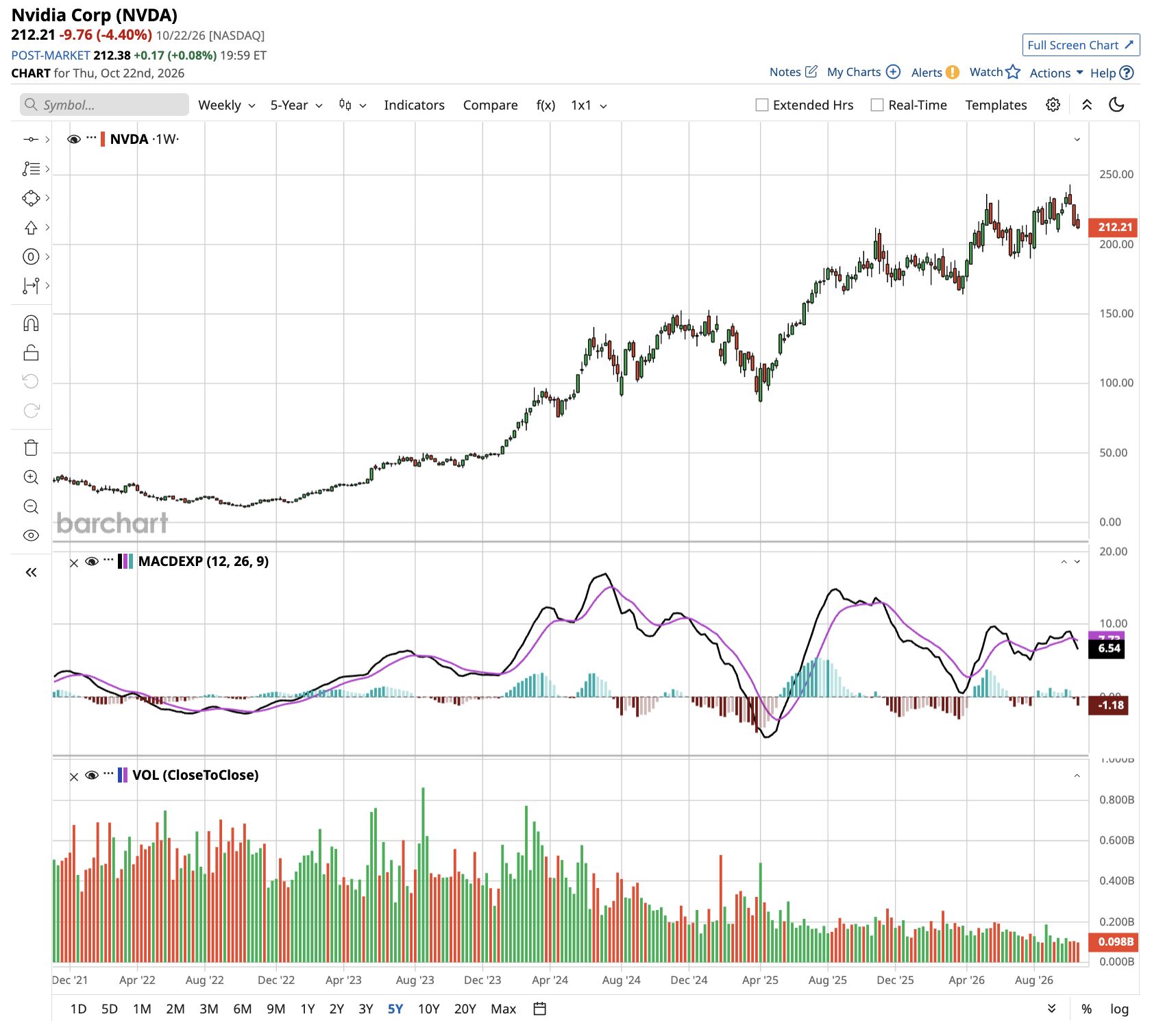
Huang also made a pitch for the stock itself. “I’m here to sell some NVIDIA stock,” he told the Goldman Sachs conference, calling NVDA “the world’s first and only growth value stock.”
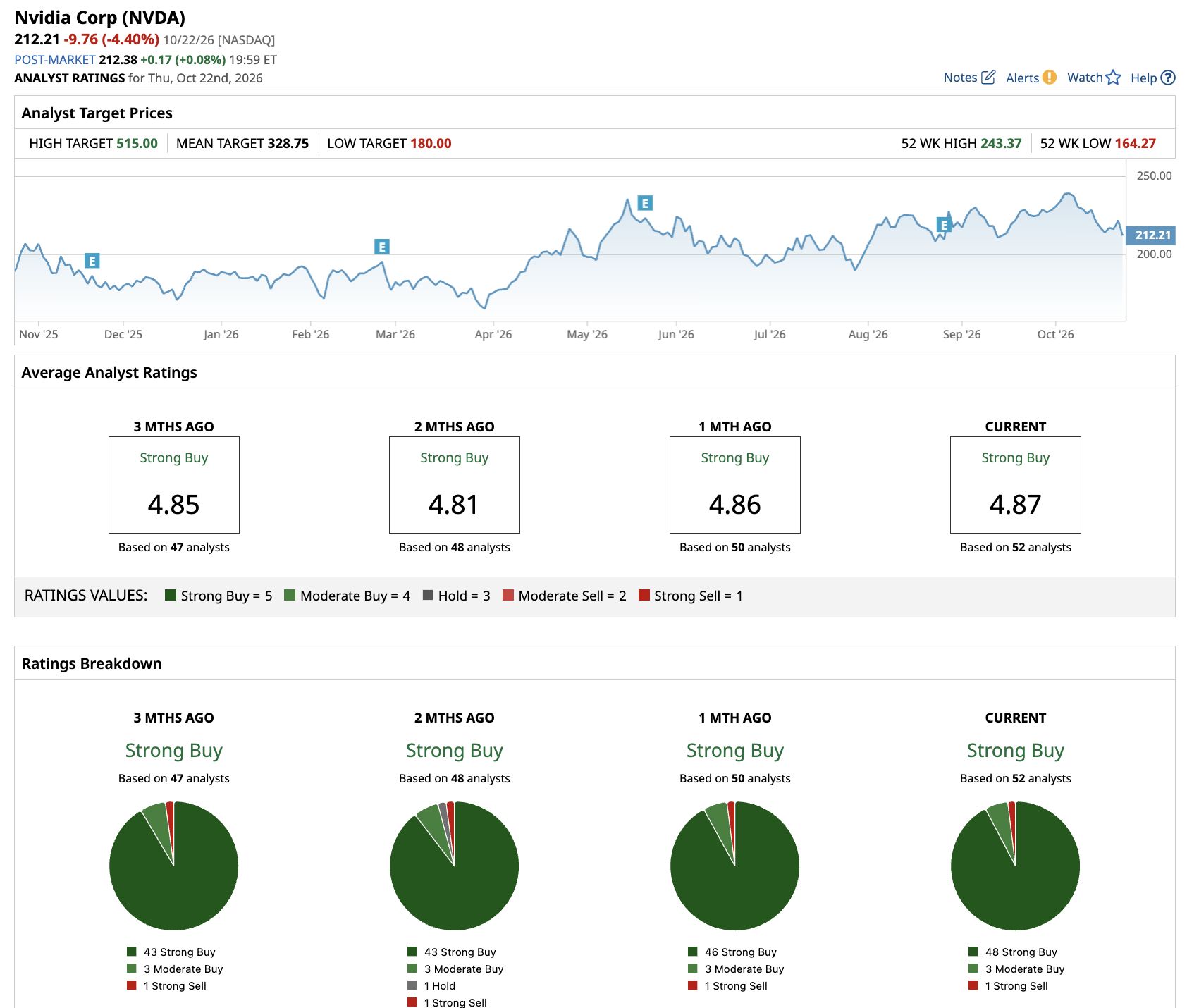
Out of the 52 analysts covering NVDA stock, 48 recommend “Strong Buy,” three recommend “Moderate Buy,” and one recommends “Strong Sell.” The average NVDA stock price target is $328.75, above the current price of about $212.
The takeaway is simple. To get the parts it needs, Nvidia is backing its suppliers with advance payments, from IBIDEN in Japan to KYEC in the U.S.
 www.barchart.com
On the date of publication, Aditya Raghunath did not have (either directly or indirectly) positions in any of the securities mentioned in this article. All information and data in this article is solely for informational purposes. For more information please view the Barchart Disclosure Policy here.
More news from Barchart
Comcast Q3 Results Show Peacock and Wireless Gains Amid Widening Broadband Losses Nvidia Teams Up With 6 Supply Chain Partners to Expand Its Global AI Manufacturing Capacity Morgan Stanley Sees Amazon Stock Surging 100% with AWS Hitting $1 Trillion in Revenue Sooner Than People Think Big Tech Earnings, Fed Decision and Other Key Things to Watch this Week