


Wall Street is a buzzword-driven community. At its best, it labels investments and investor behavior in ways that help people self-identify, and perhaps avoid big mistakes. Have too much “FOMO”? Better check that asset allocation, buddy.
Those buzzwords can also cause people to be too complacent – and sometimes, overconfident.
Join 200K+ Subscribers: Find out why the midday Barchart Brief newsletter is a must-read for thousands daily.
For instance, remember how the “Magnificent Seven” stocks were all the rage not long ago? As shown here, since about this time last year (10/31/25-10/21/26), an ETF that tracks that group has only recently snuck above the total return of T-bills (BIL).
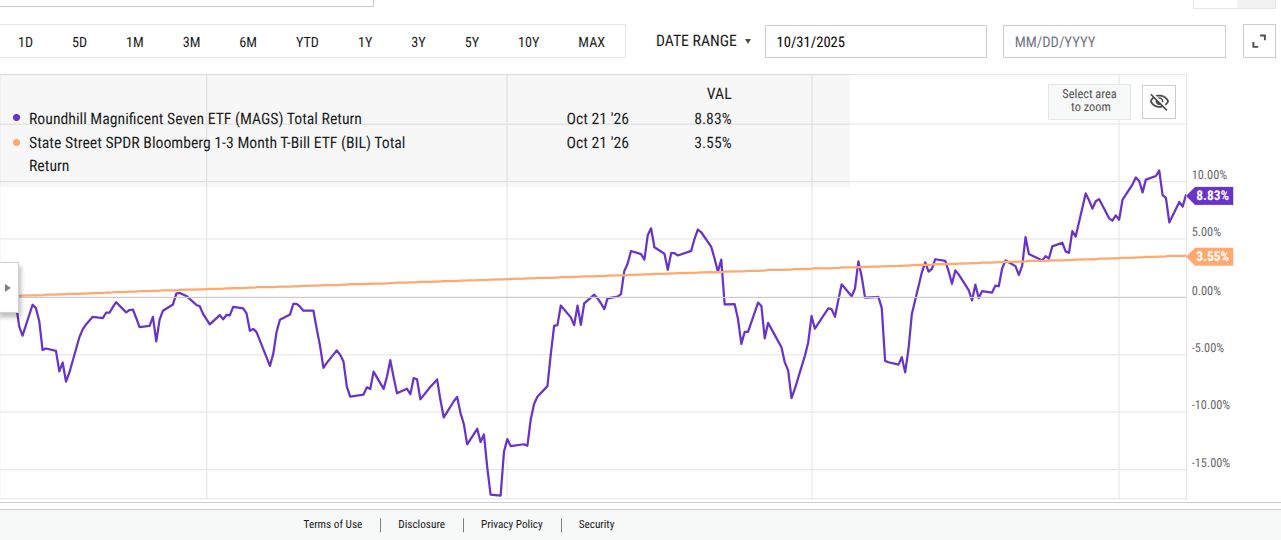 Chart screenshot courtesy of Rob Isbitts
Those buzz words can sting like a bee. Or worse yet, a wasp. In fact, I think I’ll create a positive buzzword on the fly (insect pun not intended).
WASP: Wildly Aggressive Stock Portfolio. Do You Have One?
The best time to find out is not after your one-time big winner has given it all back and more. Back when I was an investment advisor, I would always discuss with clients the importance of truly thinking through what the industry buzzwords call “risk tolerance.”
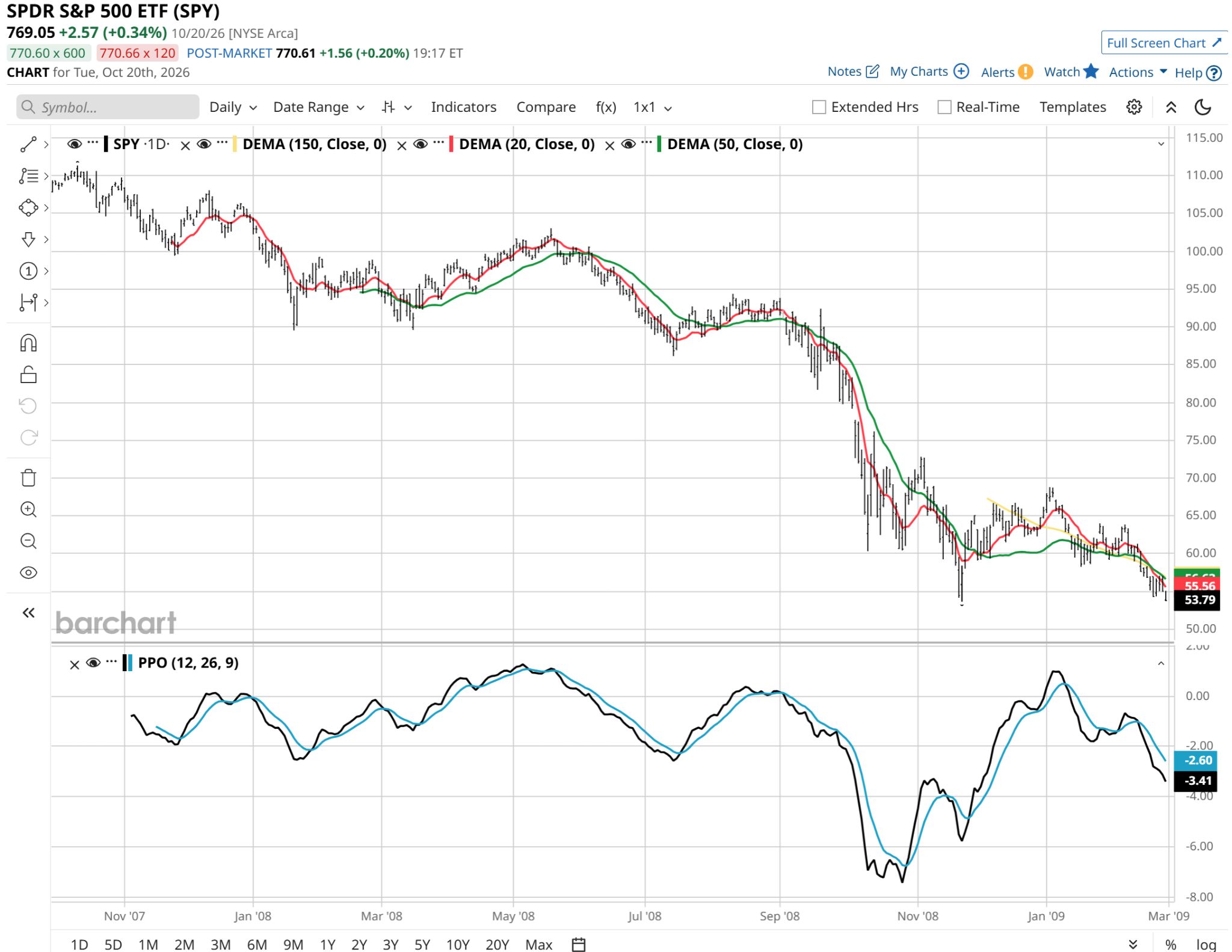
That’s a nice phrase, isn’t it? As I recall, in late 2007, “everyone” was a 7 out of 10 on that good old risk scale. That’s where 10 is a high risk taker, and 1 was a CD/T-bills-only type of investor.
Then, the financial crisis happened. And boy, did a lot of people suddenly realize they were really maybe a 3 or 4, not a 7. Too late, said the markets!
The problem, particularly in the wealth advisor world (my former industry), is that “risk tolerance” is defined very simply in a way that tends to please compliance departments, but not help clients and advisors.
 www.barchart.com
De-Risking: Another Useless Buzzword?
With the stock market leaders starting to look extremely vulnerable, and less than two weeks until the U.S. midterm elections, there’s another buzzword being bandied about. “De-risking.” Every time I hear that on financial TV I think, “why shouldn’t we be thinking about managing risk all the time?”
I prefer less “risking” as a long-term policy. That is, I truly believe that in other than an easy-money-policy era like we just travelled through, better long-term returns DO NOT come from taking more risk. They come from not losing one-third to one-half of your portfolio’s value every market cycle.
Welcome to the reality of the Wildly Aggressive Stock Portfolio (WASP).
The Anatomy of a WASP
A WASP isn’t having a growth stock or two in your portfolio. It happens when investors, particularly those approaching or already navigating retirement, build an equity-heavy, high-beta portfolio that takes extreme risks without them even realizing it.
Most investors running a WASP don’t think they’re reckless. They believe they are simply “investing for growth.” They hold the S&P 500 Index ($SPX), the Invesco QQQ ETF (QQQ), a semiconductor fund, and a handful of mega-cap tech favorites. They tell themselves that because these companies are massive, profitable, and ubiquitous, the risk is managed.
It isn’t. When a portfolio is dominated by high-multiple, momentum-driven equities, it is priced for absolute perfection. When market sentiment shifts, enterprise spending slows, or interest rates refuse to drop, these positions don’t pull back gently. They suffer fast, double-digit drops.
If you are 28 years old with a 30-year runway of career earnings ahead of you, running a Wildly Aggressive Stock Portfolio makes sense. If your portfolio drops 20% or 30%, you don’t sell. You keep funding your 401(k) every two weeks, buying more shares at lower prices. Time is your asset.
But if you are 58, 62, or 70 years old, running a WASP is an unforced error.
When you are drawing income from your portfolio to fund your retirement lifestyle, a 15% or 20% drawdown is catastrophic. You no longer have decades to wait for a rebound, nor do you have fresh salary contributions coming in to buy the dip. Selling equities during a market drop to fund everyday living expenses locks in permanent capital destruction.
This is why I continue to believe that bond rates near 5% are a strong consideration for many portfolios. Increasingly, I’m not confident that the S&P 500 will even match that return in the next 5-10 years.
Even if it does, it would have to exceed that 5% by at least a few percentage points annually to compensate investors for the risk they are taking. That is, given valuations at these levels, and the binary bet that AI stock investing seems to be turning into.
This article is simply a reminder. Don’t just use risk management as a buzzword. Learn to practice it, actively. In other words, keep the WASP from stinging you.
Rob Isbitts is a semi-retired CIO, former fiduciary investment advisor, Barchart columnist, and straight-talker. Download his new free e-book on hedged bond investing for retirement at ETFYourself.com. His research and model portfolios are at ROAR.PiTrade.com.
On the date of publication, Rob Isbitts did not have (either directly or indirectly) positions in any of the securities mentioned in this article. All information and data in this article is solely for informational purposes. For more information please view the Barchart Disclosure Policy here.
More news from Barchart
Here’s the 1 Indicator I’m Watching to See if the S&P 500 Is About to Enter a Correction… or Come Crashing Down Wedbush Sees Server CPU Demand as Key Earnings Growth Driver. What That Means for AMD Stock Ahead of November 3. Why Retirement Investors Should Prioritize 5% Returns on Bonds, Not Wildly Aggressive Stock Picks Blackmail, Self-Preservation, and Politics: 3 Unusual Risks That Cloud Anthropic’s IPO