


DoorDash (DASH) just made the biggest move in its history. The delivery giant recently agreed to buy Instacart (CART) for $17 billion. That is a massive bet on groceries. It is also a bet that DoorDash can finally crack a category that has frustrated it for years.
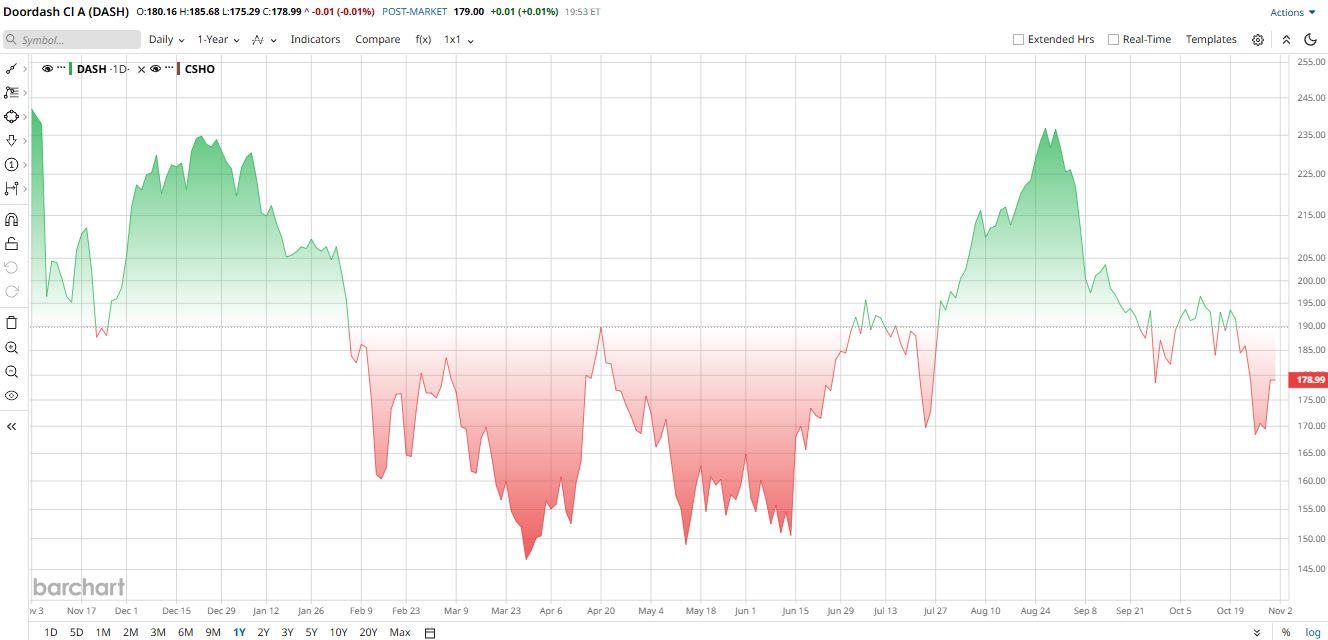
The market is not celebrating, though. DASH stock is down roughly 17% year-to-date (YTD) and down about 26% over the past 12 months. Shares currently sit near $190, far below the 52-week high of $258 per share. Investors are nervous about the price tag of the deal, the regulatory review, and the long wait before the proposed acquisition would actually close.
More Top Stocks Daily: Go behind Wall Street’s hottest headlines with Barchart’s Active Investor newsletter.
 www.barchart.com
The Grocery Bet: Smart or Desperate?
The logic behind buying Instacart is simple. DoorDash owns restaurant delivery. Instacart owns online grocery. Put them together, and DoorDash can become a one-stop shop for local commerce.
CEO Tony Xu framed the deal as a way to help small grocers fight back against giants. “What you see is the largest companies are only eating more and more of the pie,” Xu said. “DoorDash and Instacart can give every retailer a fighting chance at competing in the modern-day era.”
There is real value here. DoorDash expects $500 million in annual synergies, while DashPass and Instacart+ subscribers could save about $100 million a year by paying one fee instead of two. Instacart also brings deep relationships with grocery chains that DoorDash has struggled to sign.
But the risks are just as real. DoorDash is paying a premium at $65 per share. Additionally, at least 75% of the deal will be cash, which means billions of dollars will leave the balance sheet. The timeline is long as well; the companies expect the deal to close at the end of 2027 or early 2028.
Rosenblatt analyst Scott Devitt called it a “long regulatory path.” The Federal Trade Commission (FTC) is likely to look at the deal closely, and a $650 million termination fee from Instacart shows both sides know the risk.
DoorDash's Q3 Blowout Got Ignored
The rumble of the Instacart deal has cast a shadow over an otherwise spectacular quarter for DoorDash. Revenue for the third quarter soared 34% year-over-year (YOY) to $4.62 billion. Marketplace gross order value (GOV) jumped 36% YOY to $33.94 billion, while total orders increased 28% to 993 million orders.
Net income rose almost twofold to $466 million. Adjusted EBITDA also grew 41% YOY to $1.06 billion. Free cash flow was $787 million compared with $723 million a year ago. DoorDash ended the quarter with $4.38 billion in cash.
Looking forward, for Q4, management guided marketplace GOV to between $35.4 billion and $36.4 billion and adjusted EBITDA of $900 million to $1.1 billion.
With 34% YOY revenue growth and nearly $800 million in free cash flow each quarter, DoorDash is far from a broken company.
What Do Analysts Think of DASH Stock?
Bank of America recently lowered its price target for DoorDash stock from $275 to $257. However, the firm maintained a “Buy” rating, calling the quarter favorable.
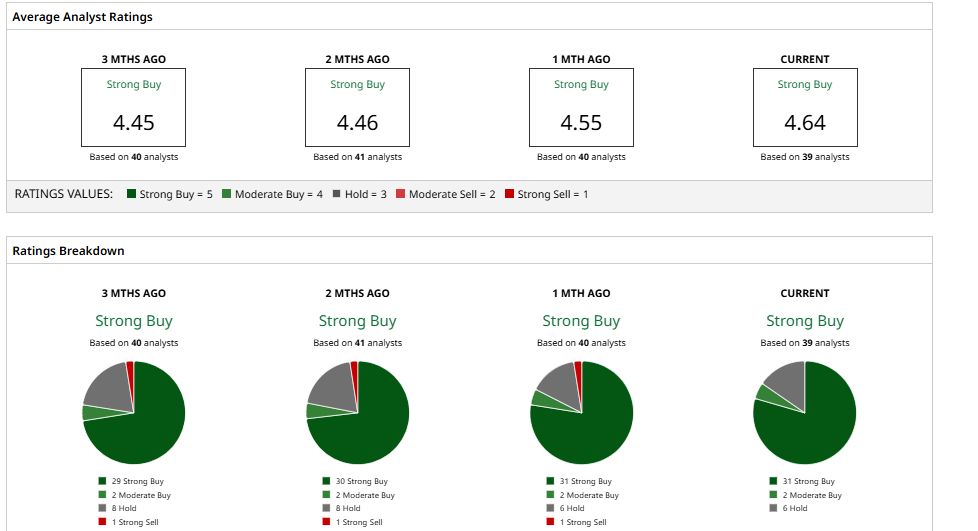
The majority of analysts are positive on DASH stock. Overall, analysts have a consensus "Strong Buy” rating on Wall Street. The average price estimate of $254.21 suggests potential upside of roughly 34% from current levels.
In my opinion, the bull case is pretty simple. The grocery delivery service has sold out at a time when its own valuation ratio is narrowing, and the company is still growing rapidly. However, the bear case is also fairly clear. The Instacart deal carries regulatory risks, integration risks, and a significant cash expense.
Still, if the deal actually does go through and synergies are realized, there is a reasonable case to make to investors to purchase shares here. There's also good reason for potential investors who foresee a long, messy regulatory battle to wait instead. Patient investors may find the risk-reward ratio attractive, while more risk-adverse investors may be better off just watching the process work itself out.
 www.barchart.com
On the date of publication, Nauman Khan did not directly have a position in any of the securities mentioned in this article. All information and data in this article is solely for informational purposes. For more information please view the Barchart Disclosure Policy here.
More news from Barchart
Rivian Just Scored a New Bullish Rating. Here's Why. A $17 Billion Reason to Buy DoorDash Stock Now Despite the Selloff, Intel Stock Still Lacks a Strong Buy Case LITE Stock Alert: What to Know About Marvell's $115 Billion Deal to Buy Lumentum