

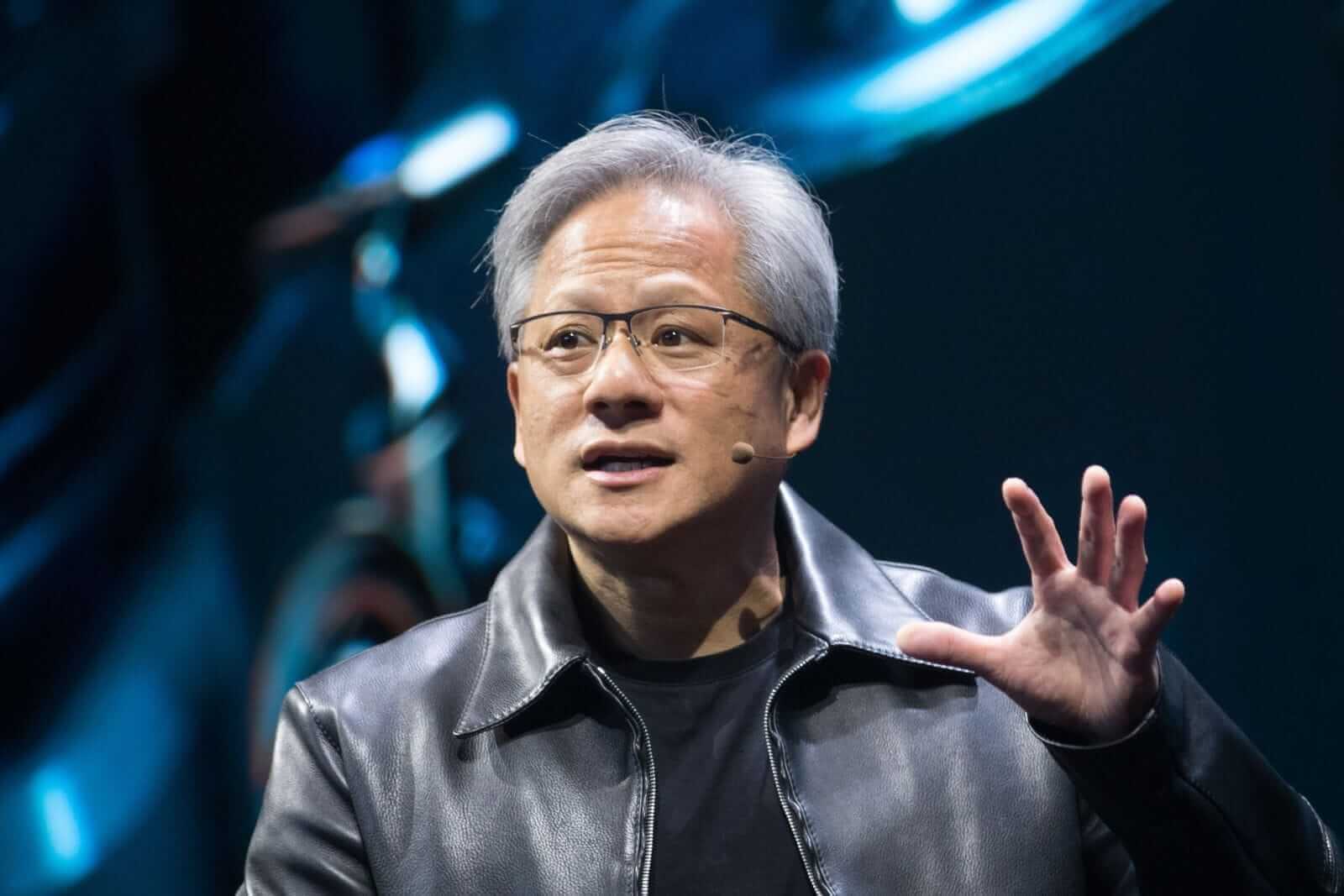
Nvidia (NVDA) shares have plunged more than 7% in after-hours trading late Wednesday after a New York Times report alleged that CEO Jensen Huang had a second extramarital relationship, this time with senior Nvidia executive Kimberly Powell, including an account of the two being affectionate at a hotel during a company conference in March. Powell, notably, is one of the roughly 60 direct reports under Huang at Nvidia, per NYT sources.
The selloff threatens to erase Wednesday's relief rally of roughly 3%, which had followed a two-session rout that cut about 9.5% from the stock and wiped more than $400 billion from its market value.
More Top Stocks Daily: Go behind Wall Street’s hottest headlines with Barchart’s Active Investor newsletter.
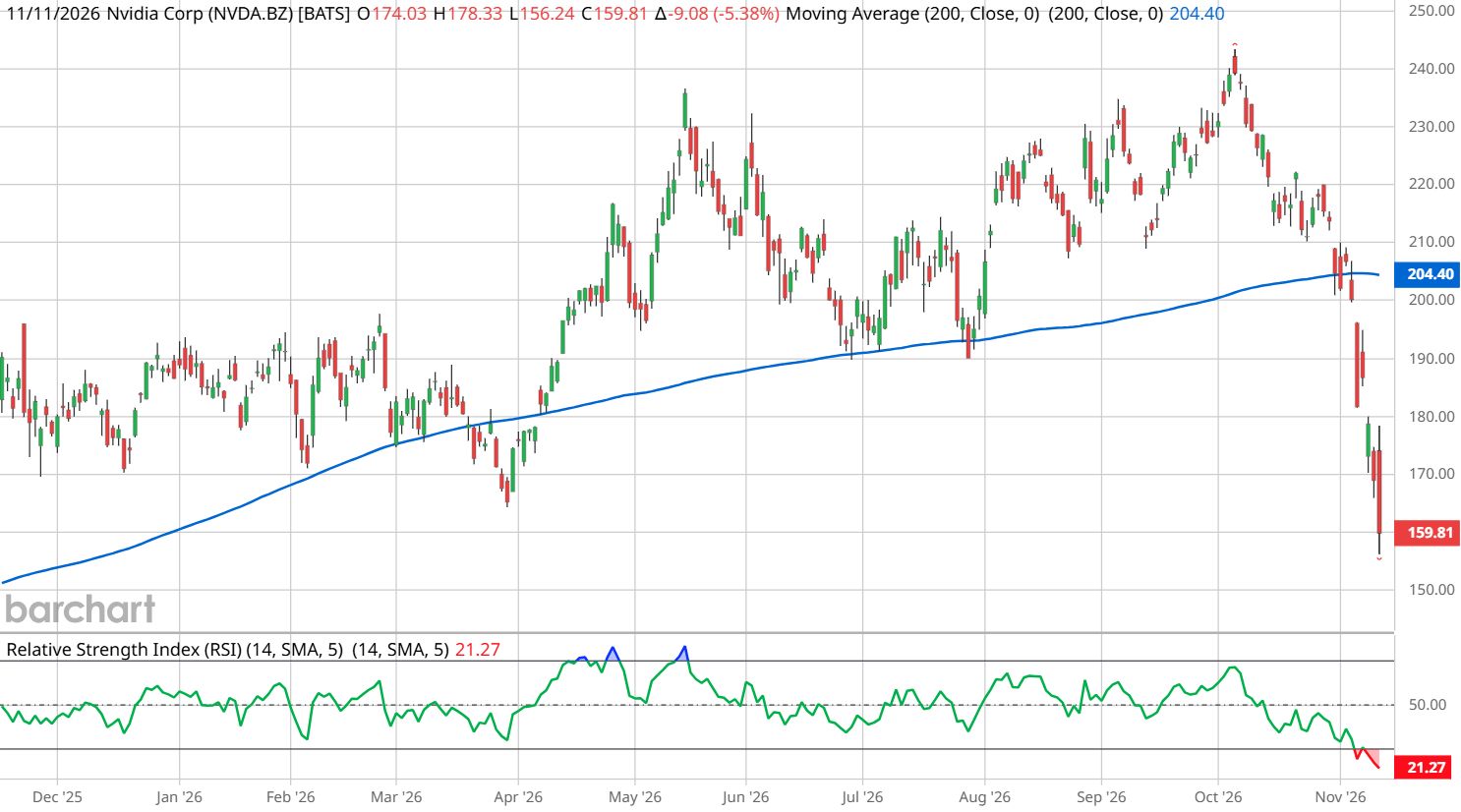 NVDA with 200-day moving average and RSI.
Why the Second Report Changes Everything
The timing is notably damaging because the market had begun treating the first scandal, involving Huang’s affair with reported Chinese spy Alice Huang, as contained, with investors pricing the odds of Huang's removal at roughly 15% before the new report surfaced.
The board had also expressed confidence in Huang while its independent probe proceeds, but that stance becomes far harder to defend now that the second allegation involves a company executive.
That shift moves the issue from personal conduct and counterintelligence exposure into workplace governance, conflict-of-interest policy and board oversight, areas where directors have far less latitude to stand by a CEO.
In fact, the Wall Street Journal now reports the Nvidia board plans to meet as soon as today regarding Huang's possible ouster.
The 30% Succession Problem
The financial stakes of succession are now front and center, with prominent tech bull Dan Ives estimating that Huang's departure would cut about 30% from Nvidia's value, a hit roughly triple the two-session rout.
Compounding that risk, Nvidia has no designated successor, and its flat organizational structure routes everything through Huang, leaving the board without an obvious internal handoff if it were forced to act.
Wall Street Reacts to NVDA's Leadership Overhang
Baird has already downgraded the shares to “Neutral” and slashed its price target from $500 to $200, a 60% reduction that signals how quickly the leadership question has overtaken the growth narrative.
Morgan Stanley took a more measured step, removing Nvidia from its “Top Picks” while keeping its $300 target, which sits 50% above Baird's new $200 mark.
Fundamentals Haven't Gone Anywhere
However, the underlying business remains a powerful counterweight, with revenue recently surging 106% to $96.2 billion and guidance pointing to roughly $108 billion, which implies sequential growth of about 12%.
The stock also trades at just 11 to 14 times forward earnings, a strikingly modest multiple for a company that more than doubled its revenue year over year.
The after-hours move appears to reflect a rising probability of forced leadership change rather than any impairment to demand – meaning Nvidia’s problem sits squarely in the corner office rather than in the order book.
Can the Board Hold the Line?
That means a cheap valuation offers limited protection if the board concludes that standing by Huang is untenable, since the estimated 30% succession hit would quickly overwhelm any multiple support. It’s a clear counterpoint to the bullish case for Nvidia right now.
Until directors clarify Huang's status, volatility is likely to stay elevated, with every new headline capable of swinging a stock that already shed more than $400 billion in two sessions.
The Next Catalysts to Watch
An announcement on Huang's fate now seems imminent, potentially before the next two decisive near-term catalysts – the November 17 earnings call and the November 18 congressional briefing, back-to-back events that could either steady the shares or further deepen the spiraling governance crisis.
Investors will watch the earnings call to see whether management can keep the focus on the roughly $108 billion guidance rather than on the boardroom.
The congressional briefing a day later carries its own risk, given that the first scandal had already raised counterintelligence exposure concerns that extend well beyond ordinary questions of personal conduct.
For now, Nvidia finds itself facing an unusually expensive growing pain: it is expanding revenue at triple-digit rates; and its biggest risk is no longer demand, but whether its chief executive gets to keep his job.
This article was created with the support of automated content tools from our partners at Sigma.AI. Together, our financial data and AI solutions help us to deliver more informed market headline analysis to readers faster than ever.
On the date of publication, Sarah Holzmann did not directly have a position in any of the securities mentioned in this article. All information and data in this article is solely for informational purposes. For more information please view the Barchart Disclosure Policy here.
More news from Barchart
Nvidia Stock Plunges After Hours as Reports of a Second Jensen Huang Relationship Could Force the CEO Out Chip Stocks Rebound After a 12% Crash, But Not All Semiconductor Picks Have Staying Power Anthropic’s Pre-IPO Valuation Has Dropped 30%. Why That’s a Warning for Investors Wanting to Buy ANT Stock After the IPO. Anthropic Is Reserving 20% of Its IPO for Retail Investors. Here’s What Claude Thinks.