


On Oct. 13, during JPMorgan's (JPM) third-quarter earnings call, Jamie Dimon said the bank won't let outside AI agents log into customer accounts or act on a customer's behalf. “We're not going to allow just any outside agent to come inside the company,” he said, mainly because it is too risky for clients and for JPMorgan. His concern was that one rogue agent making the same bad call across thousands of accounts at once would be far riskier than a single employee making a mistake. As I covered earlier, Dimon also used that call to warn about five market risks building under the surface. This shows that the CEO is staying cautious in more ways than one. That said, customers can still share basic data like balances through approved connectors, and JPMorgan is building its own tools as well.
The restriction becomes a problem for Meta (META). On Sept. 8, the company launched Muse, an app that uses AI agents to do things for users, like shopping, booking, and sending emails. It became one of only 12 apps to reach 10 million U.S. downloads in its first 40 days. For perspective, ChatGPT managed roughly 3.7 million in the same window. So Meta's Muse has quickly found success, which is also why its access to other companies' platforms matters so much. I've mentioned before that within two weeks of launch, Amazon (AMZN) blocked Muse from shopping on its site too. Then, on Nov. 11, United Airlines (UAL) also followed, barring unauthorized third-party AI agents from booking flights, with the CEO saying he doesn't want “another middleman.”
More Top Stocks Daily: Go behind Wall Street’s hottest headlines with Barchart’s Active Investor newsletter.
About Meta Stock
Meta Platforms owns some of the world's most-used apps, including Facebook, Instagram, WhatsApp, Messenger, and Threads, and makes most of its money from ads on them. It is now pushing deeper into AI with Muse, its personal agent, and smart glasses made with Ray-Ban. Founded in 2004, Meta is headquartered in Menlo Park, California, and is led by co-founder and CEO Mark Zuckerberg.
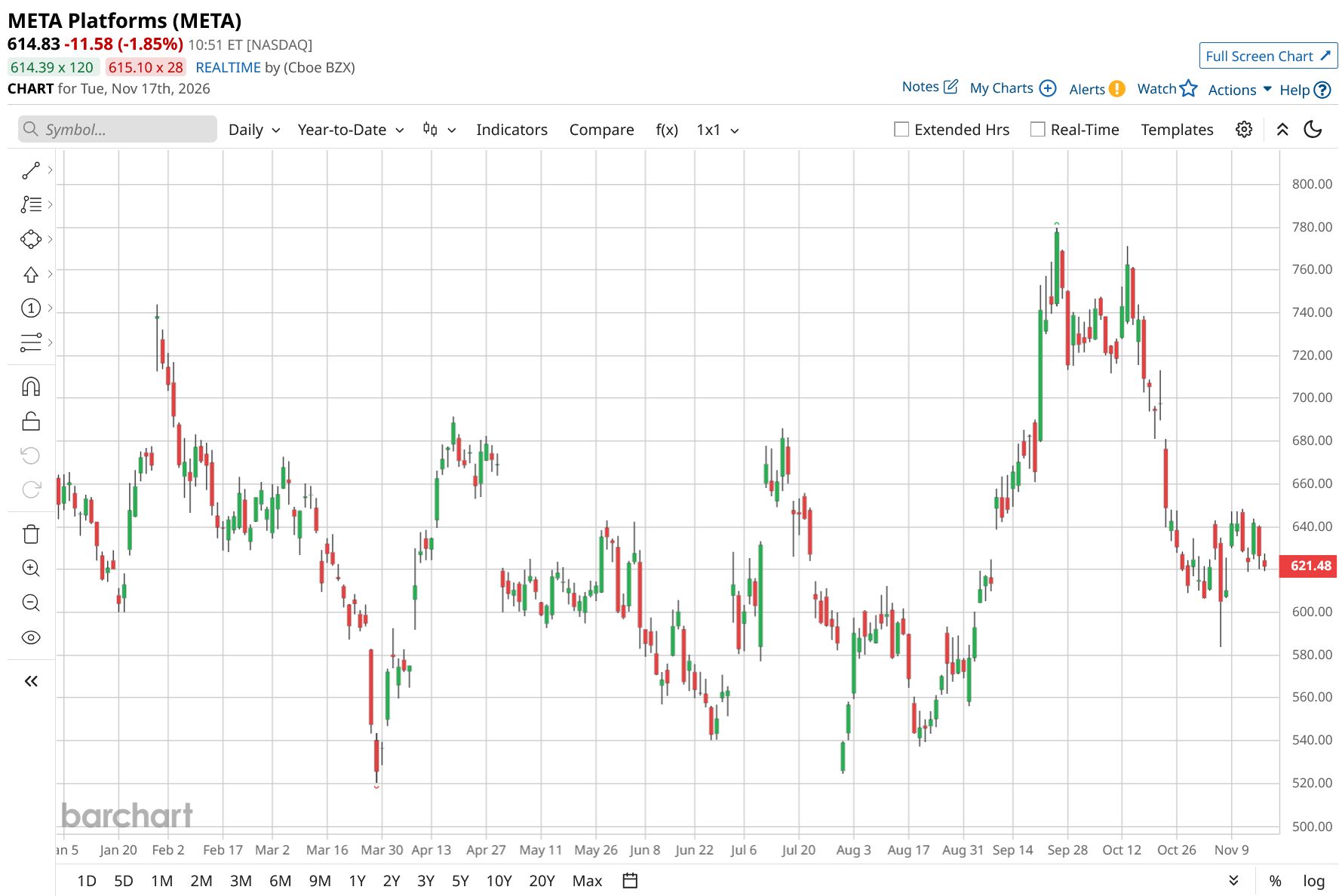
META stock has had a rocky year so far, with a drop of around 5% year-to-date (YTD), underperforming the S&P 500's ($SPX) 8% gain. The stock surged to its 52-week high of $779.82 in September after the Muse launch and Meta's Connect event. But since then, it has fallen about 20% from that peak, mainly after a poorly received third-quarter report. Free cash flow turned negative as Meta raised its AI spending plans, and S&P later revised its credit outlook to negative.
 www.barchart.com
For a company expected to grow earnings by around 20% in the next two fiscal years, Meta's valuation looks reasonable to me. The forward non-GAAP price-to-earnings (P/E) of 21.86x sits almost exactly in line with its five-year average of 21.98x, while the forward price-to-sales (P/S) ratio of 6.39x is marginally below its 6.59x average. Analysts expect EPS to dip about 1% this year, mainly due to Meta's heavy AI spending, before rebounding next year. The balance sheet is solid too. Meta has a net debt of $32.4 billion, easily manageable for a company worth roughly $1.64 trillion. With Muse still not making money, the stock isn't pricing in much from its agent push right now. I think that leaves room for upside if Meta can turn Muse into a real business through more partnerships like the one with Shopify (SHOP).
Why Companies Are Putting Up Walls
If an AI agent does your banking and shopping, it sits between you and the company. I think the biggest issue for banks and airlines is losing a direct relationship with customers, along with their data, which could also mean losing the chance to sell them other products. That's why putting up a wall protects JPMorgan's relationships with customers. For Meta, the path forward is still open, and Muse's growth shows how strong its demand is. Its aforementioned deal with Shopify goes in the other direction from JPMorgan and Amazon, as it allows Muse users to shop and pay across Shopify-affiliated stores through its Shop Pay checkout.
What Do Analysts Expect for META Stock?
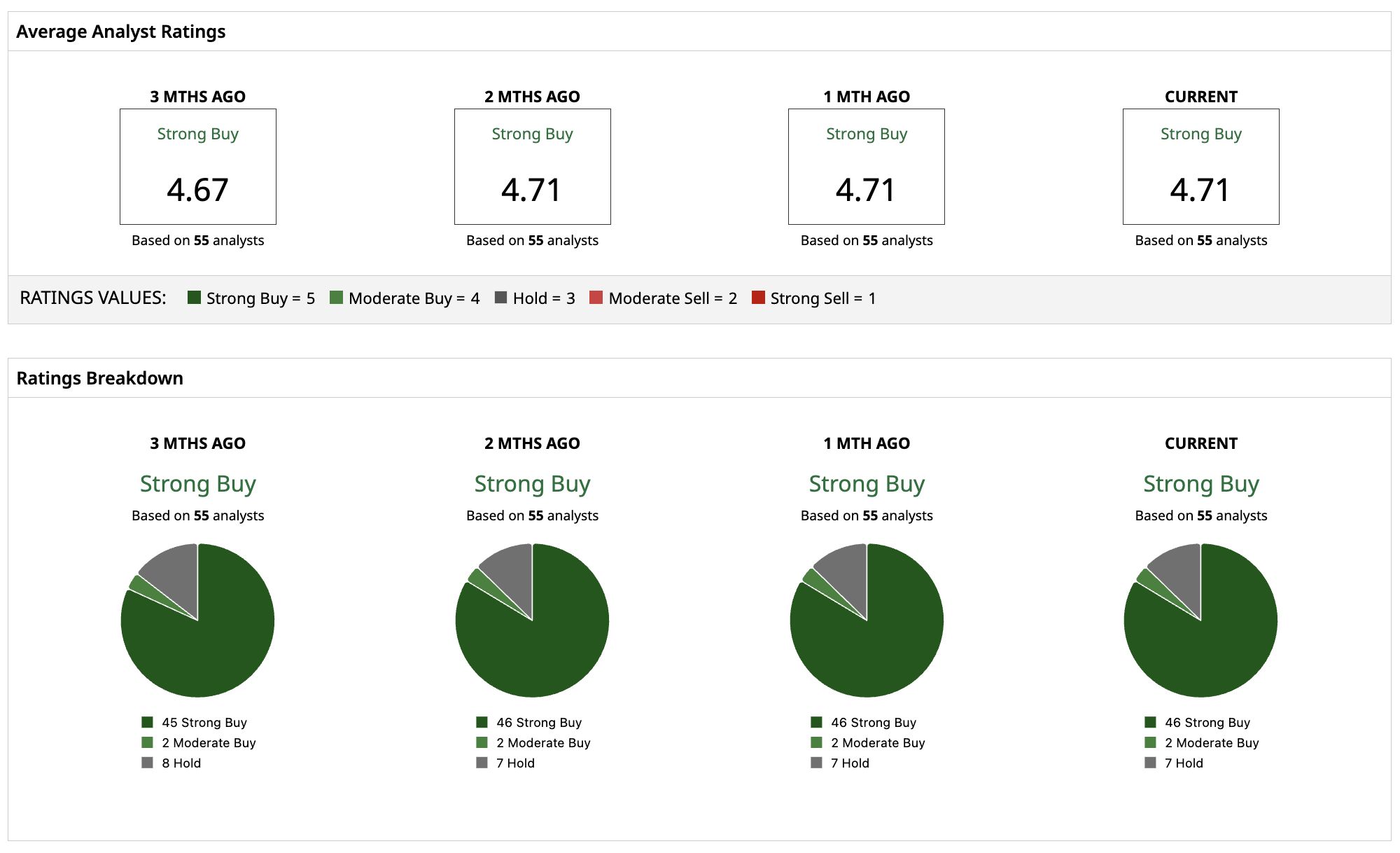
Based on 55 Wall Street analysts, META holds a “Strong Buy” rating with a mean price target of $857.47, indicating 38% upside. None of the analysts suggest selling the stock right now, and even the lowest price target of $650 sits a bit above the current share price. This indicates that the market is largely bullish on META stock.
 barchart.com
On the date of publication, Jabran Kundi did not directly have a position in any of the securities mentioned in this article. All information and data in this article is solely for informational purposes. For more information please view the Barchart Disclosure Policy here.
More news from Barchart
‘You Don’t Want Rogue Agents’: Jamie Dimon Shuts Meta’s Muse AI Agent Out of JPMorgan. What It Means for META Stock. Why Dan Ives Believes the Anthropic IPO Will Be an 'Important Step' for AI Investment -- And What It Means for a Future OpenAI IPO ‘We’re Still Slightly Bigger’: Palo Alto CEO Jabs CrowdStrike. Here’s How to Play PANW and CRWD Stock Before Earnings. Dear Nvidia Stock Fans, Mark Your Calendars for December 3