


When I was a college freshman in 1982, I sat in my introductory accounting class and will never forget the very first thing the professor said: “Look to your left, then look to your right. After the first test in this class, one of you won’t be here.” He was no prophet, but he was darn right.
It appears to me that millions of self-directed investors are positioned right now to make at least one of three costly mistakes. To apply this from my accounting class four decades ago to today’s investing environment, think of it this way: nearly everyone is going to make one of those mistakes. Many will make two, and some will make three. Thus, it makes sense to identify them now.
Join 200K+ Subscribers: Find out why the midday Barchart Brief newsletter is a must-read for thousands daily.
The stock market rarely punishes investors for what they don’t know. It punishes them for clinging to habits that only worked in a previous era.
For 15 years, zero-interest-rate policy (ZIRP) and endless central bank liquidity trained everyday investors to follow a simple script: load up on stocks, ignore bonds, and buy every dip. That era is over, but I’m getting a strong sense that few realize it.
Here are the first three mistakes that are on full display currently to help you determine if you are in the bear market’s line of sight.
1. Carrying a Recklessly High Equity Allocation
Years of smooth market gains have bred dangerous complacency. Today, many investors in their 60s and 70s are sitting on 70% to 90% stock allocations. For a while, they likely didn’t realize they were concentrated in the exact same mega-cap tech stocks through S&P 500 ($SPX) and Nasdaq 100 ($IUXX) index funds.
That leads to situations where an investor may own three or more exchange-traded funds (ETFs) that sound different and may act differently at times. But when the chips are down, figuratively and literally, they all act the same way. They fall in unison.
I’d say in sympathy, but if you don’t know what you own, you are not the first candidate for sympathy from the stock market. It truly doesn’t care what we think.
At this stage of life and this stage of the cycle, the goal isn't squeezing out every last drop of stock market upside. It is defining the maximum dollar loss you can tolerate before trouble hits, and refusing to let an unhedged index dictate your retirement lifestyle.
2. Not Understanding How Bonds Actually Work
Ask the average stock investor about fixed income, and you will usually get one of two flawed reactions: either they dismiss bonds entirely as boring relics, or they tap a button on their phone to buy an off-the-shelf bond index ETF like the Vanguard Total Bond Market ETF (BND) or the iShares 20+ Year Treasury Bond ETF (TLT) and assume their principal is safe. Both approaches miss the mark.
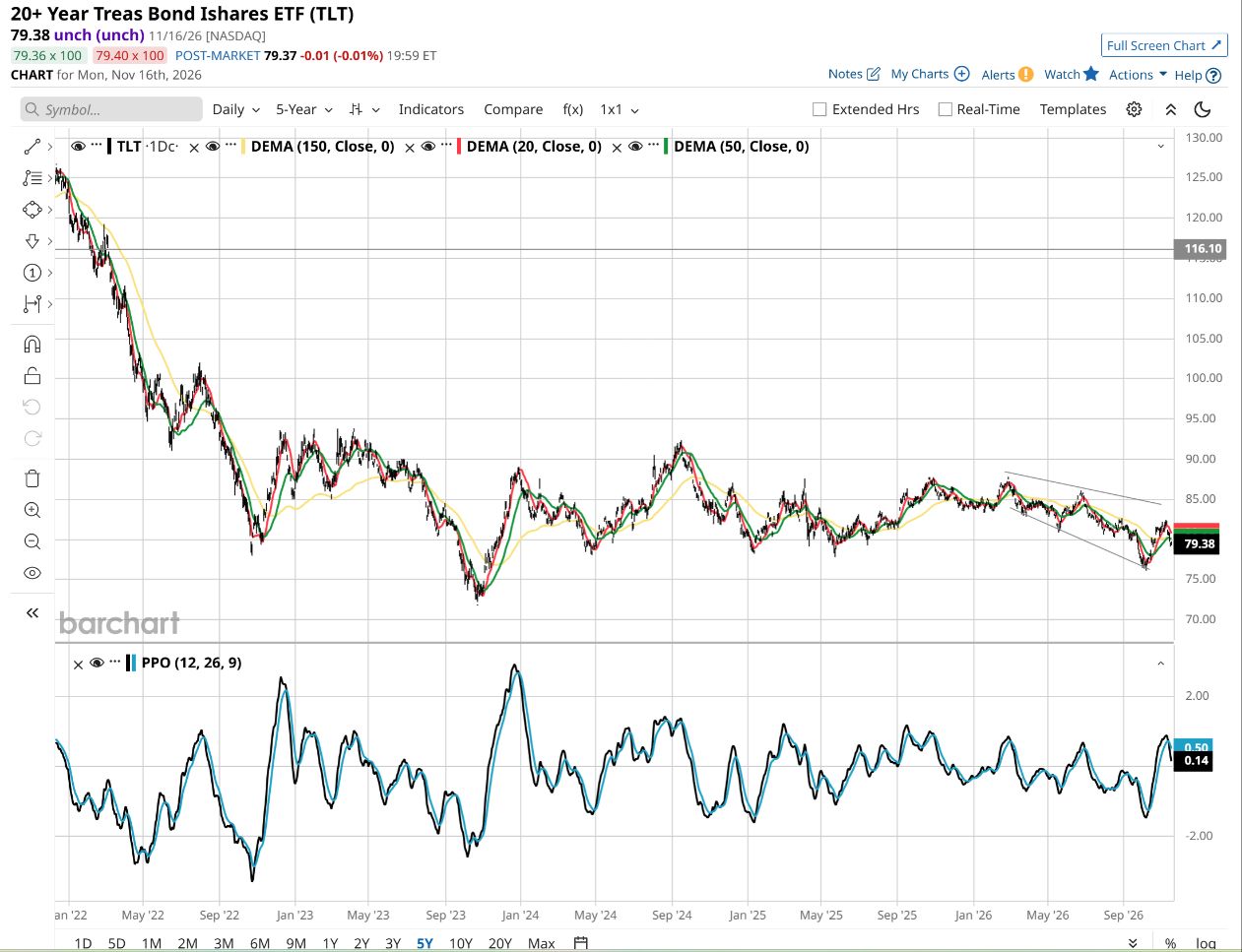
Broad bond index funds do not hold bonds to maturity; they perpetually roll over debt contracts, leaving your money wide open to interest rate spikes. That is why TLT cratered by more than 36% when rates surged earlier this decade. And it is working on a five-year chart that looks like this. Oops.
 www.barchart.com
At the same time, ignoring fixed income when U.S. Treasury yields from five years out to 30 years sit above 5% is an unforced error. When used properly, combining defined-maturity Treasury ladders with tactical rate hedges, bonds don't just protect your downside. They start you off with a reliable 5% income floor that lets you sleep at night while equities gyrate.
3. Expecting Small Caps to Come Back and Save the Day
Every time mega-cap tech wobbles, Wall Street pundits trot out the "market broadening" narrative. They point to the iShares Russell 2000 ETF (IWM), declare that small-cap stocks are historically cheap, and tell retail investors to rotate in for a massive catch-up rally.
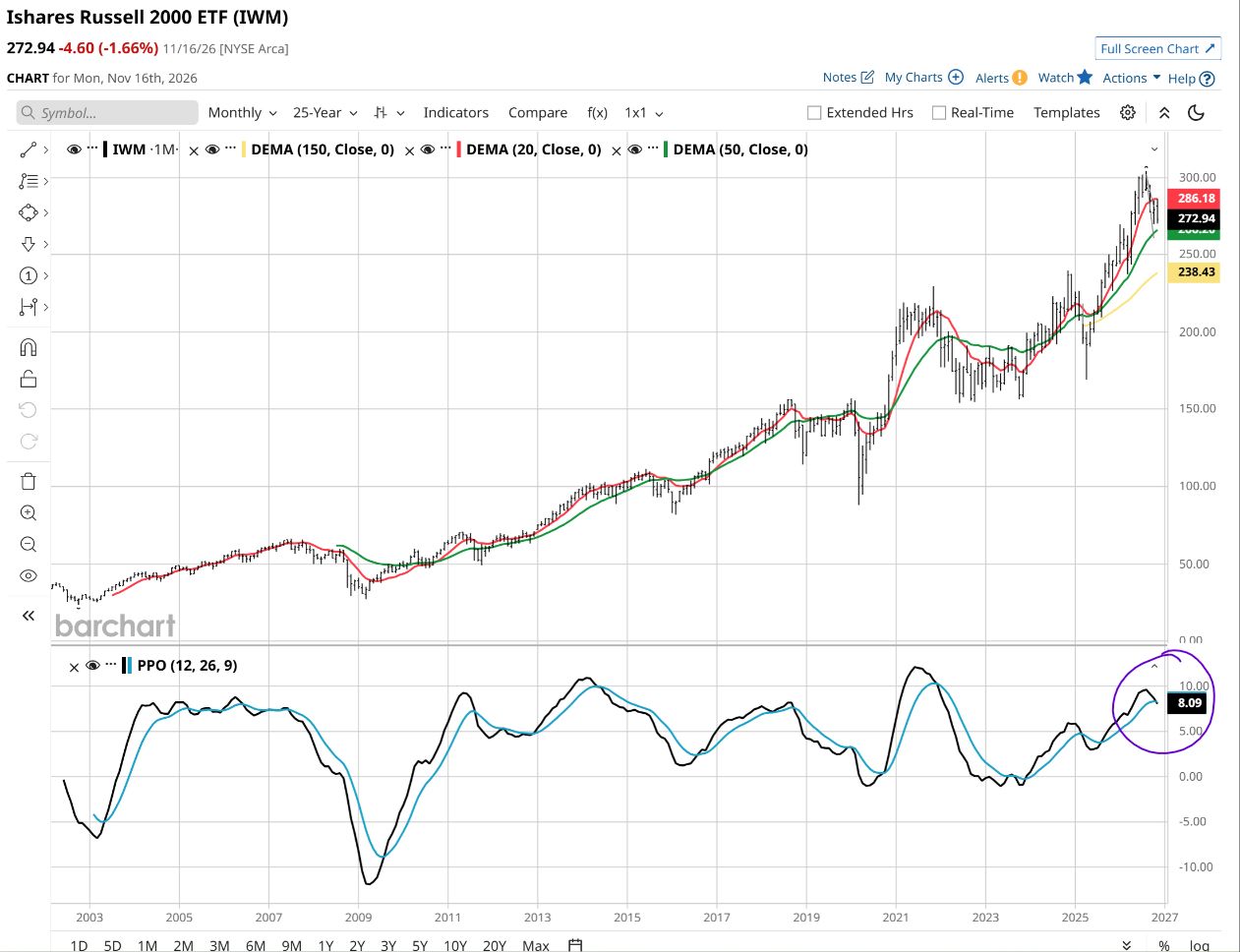
Small caps are cheap for a reason. Roughly 40% of the companies inside the Russell 2000 generate zero operating profits. And with a chart like this, with the monthly PPO hinting at rolling over, there’s no telling how bad this can get.
 www.barchart.com
With the usual caveat that anything can happen (longshots win at the track every day, upsets happen in team sports), convincing yourself you are OK because you are “diversified” among stock market segments is very twentieth-century at this point.
In an environment in which interest rates are elevated, and corporate debt is rolling over at much higher borrowing costs, unprofitable, debt-heavy small businesses face an ongoing financial squeeze. Buying a basket of weak balance sheets just because they lagged behind mega-cap tech isn't value investing. It is just another side of the same bubble.
What to Do Before the Tape Forces Your Hand
One of the great things about the array of talented writers here at Barchart is the ability to get a wide range of opinions and insights. You might not find value in all of them, but you don’t have to.
If it simply reminds you to take account of what you own and why you own it, you’re a big step ahead of the masses. And if you can explain to yourself what would prompt you to make changes, both at the security and the portfolio level, consider yourself two steps ahead of the crowd.
Rob Isbitts created the ROAR Score, based on his 40+ years of technical analysis experience. ROAR helps DIY investors manage risk and create their own portfolios. For Rob's written research, check out ETFYourself.com.
On the date of publication, Rob Isbitts did not directly have a position in any of the securities mentioned in this article. All information and data in this article is solely for informational purposes. For more information please view the Barchart Disclosure Policy here.
More news from Barchart
3 Costly Investing Mistakes That Could Be Putting Your Portfolio at Risk in Today's Market Higher Volatility Just Took the Fun Out of Buying Options. It Might Be Time to Shift to Leveraged ETFs The Dow Tests Its 200-Day Moving Average Ahead of Nvidia Earnings. 5 More Levels to Watch for the Blue-Chip Benchmark. How to Invest Like a Cockroach in the Stock Market’s AI Era