


Investors typically gravitate toward several market strategies, including income, growth, or value.
Each style caters to different investor profiles. Income investors seek passive income from dividend payouts or other income-generating assets, growth investors seek market-beating gains from companies expected to grow at an above-average rate, and value investors look for discounted market opportunities.
Let’s take a closer look at each strategy.
Income Investing
Income investing focuses on generating income. Those who follow this style typically invest in dividend-paying stocks, bonds, real estate investment trusts (REITs), and other securities that offer regular income.
Concerning individual stocks, the elite group of Dividend Aristocrats has long been a favorite among income-focused investors. To join the elite Dividend Aristocrats group, companies must be part of the S&P 500 and increase their dividend payments for at least 25 consecutive years.
A 25-year streak of increased payouts is no easy feat, reflecting these companies’ ability to operate reliably across many economic environments over the years. A few famous examples of Dividend Aristocrats include Johnson & Johnson, Exxon Mobil, and AbbVie.
Growth Investing
Growth investing focuses on companies expected to grow earnings and revenue at an above-average rate. It often translates into share outperformance.
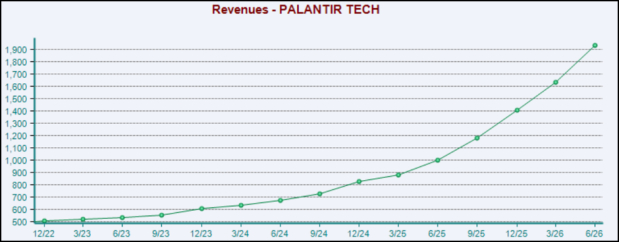
These companies commonly, especially in their early days, reinvest their earnings back into the business for expansion. Many are at the forefront of innovation, developing new technologies or disrupting traditional industries with new business models. A great example is Palantir PLTR, whose sales growth has remained red-hot in recent years.
Image Source: Zacks Investment Research
It’s worth noting that these high-growth companies generally trade at rich valuation multiples, with investors having to pay a premium to obtain exposure. The strategy can also easily be more volatile than others, as the long-term picture can change rapidly and is always evolving.
Value Investing
Value investing centers on buying stocks trading at a discount, with the idea that the market will eventually ‘catch up’ and recognize their true value, which can lead to serious gains. After all, we all enjoy a good deal.
These stocks are typically priced lower than their peers in terms of valuation ratios like price-to-earnings (P/E), price-to-book (P/B), and price-to-sales (P/S), among others. In addition, many value stocks are associated with companies with strong fundamentals, such as steady revenue streams, solid balance sheets, and consistent cash flows.
Still, the strategy requires a long-term investment horizon, as it may take a significant amount of time until investors ‘catch up’ and realize the stock’s intrinsic value. The strategy requires patience and a contrarian mindset, as value investors often buy when others are selling.
Bottom Line
Many investing styles exist, with some of the most common being income, growth, or value-oriented. Income investors seek steady payouts, growth investors seek companies expected to grow at an above-average pace, and value investors seek deals hidden in plain sight.
Beyond Nvidia: AI's Second Wave Is Here
The AI revolution has already minted millionaires. But the stocks everyone knows about aren't likely to keep delivering the biggest profits. AI’s second wave is moving from infrastructure to implementation and these companies are at the forefront of this transition, positioned to become what Amazon and Google were to the internet era.
See Stocks Now >>Want the latest recommendations from Zacks Investment Research? Today, you can download 7 Best Stocks for the Next 30 Days. Click to get this free report
Palantir Technologies Inc. (PLTR): Free Stock Analysis Report
This article originally published on Zacks Investment Research (zacks.com).