

UnitedHealth Group Incorporated UNH heads into third-quarter earnings on Oct. 13 with a different test than it faced earlier this year. The focus is no longer simply on whether results are improving. Investors now want to know whether the second-quarter rebound can hold.
Medical Costs: Is the Improvement Sustainable?
UnitedHealthcare’s MCR improved to 86.7% in the second quarter from 89.4% a year earlier. Operating earnings rose to $3.9 billion from $2.1 billion, while operating margin climbed to 4.6% from 2.4%. Still, the quarter included $860 million of favorable medical reserve development, which helped the reported improvement.
That leaves investors looking for cleaner evidence in the third quarter. Key areas include underlying medical costs, Medicare inpatient and outpatient utilization, commercial cost trends, specialty-drug inflation and provider coding intensity. Management’s 88.1% full-year MCR outlook will also be closely watched.
Can MA Margins Improve Without More Member Losses?
The second major question is whether UnitedHealthcare can repair Medicare Advantage profitability without giving up too much enrollment.
MA membership stood at 7.565 million at June 30, down 785,000 from a year earlier. Including certain complex populations, senior enrollment had fallen by about 965,000 since 2025-end. Management expects the full-year MA decline to reach roughly 1.1 million members.
Some of that pressure is intentional. UNH has been adjusting benefits, pricing, networks and market exposure to improve returns. Management still expects Medicare margins to finish 2026 above 3%.
The third quarter will show whether the trade-off is working. Investors will be watching enrollment, retention, benefit changes for 2027 and any update to the attrition forecast. A smaller, healthier Medicare book could support earnings, but deeper membership losses would raise fresh concerns about growth. The strongest outcome would pair steadier medical costs with improving Medicare economics and member retention.
How are Peers Placed?
Peers like Humana Inc. HUM and Elevance Health, Inc. ELV are also fighting rising medical cost trends. Neither Humana nor Elevance Health showed year-over-year cost-ratio improvement in the last reported quarter. Humana’s Insurance benefit ratio rose to 91.2% from 89.9%, up 130 basis points, despite some inpatient favorability. Elevance’s benefit expense ratio increased to 89.7% from 88.9%, up 80 basis points, mainly reflecting elevated medical costs in its Government businesses, partly offset by better ACA performance.
UnitedHealth’s Price Performance, Valuation and Estimates
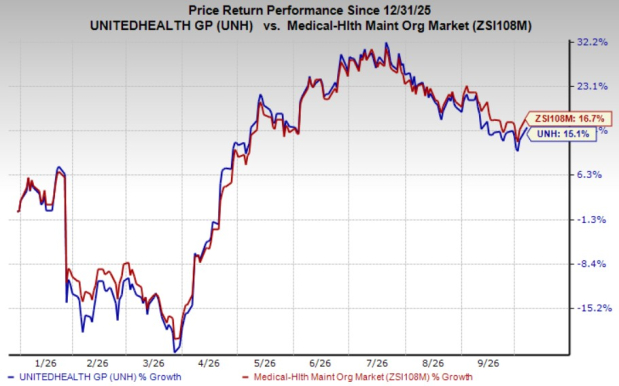
Shares of UNH have gained 15.1% in the year-to-date period compared with the industry’s growth of 16.7%.
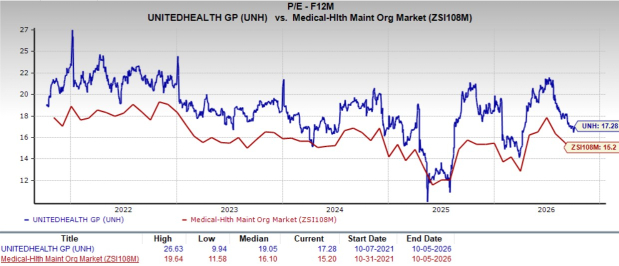
From a valuation standpoint, UnitedHealth trades at a forward price-to-earnings ratio of 17.28, up from the industry average of 15.20. UNH carries a Value Score of A.
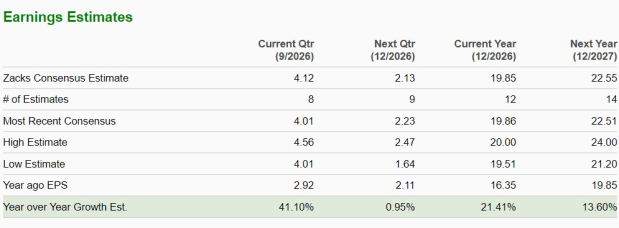
The Zacks Consensus Estimate for UnitedHealth’s 2026 earnings is pegged at $19.85 per share, implying a 21.4% improvement from the year-ago period.
The stock currently carries a Zacks Rank #2 (Buy). You can see the complete list of today’s Zacks #1 Rank (Strong Buy) stocks here.
7 Best Stocks for the Next 30 Days
Just released: Experts distill 7 elite stocks from the current list of 220 Zacks Rank #1 Strong Buys. They deem these tickers "Most Likely for Early Price Pops."
Since 1988, the full list has beaten the market more than 2X over with an average gain of +23.9% per year. So be sure to give these hand picked 7 your immediate attention.
See them now >>Want the latest recommendations from Zacks Investment Research? Today, you can download 7 Best Stocks for the Next 30 Days. Click to get this free report
UnitedHealth Group Incorporated (UNH): Free Stock Analysis Report
Humana Inc. (HUM): Free Stock Analysis Report
Elevance Health, Inc. (ELV): Free Stock Analysis Report
This article originally published on Zacks Investment Research (zacks.com).