

Broadcom stock is up 25% year to date, and many on Wall Street are saying that there’s more to come. Option traders who want to capitalize on the stock’s performance are likely buying calls or selling puts - both perfectly valid strategies during a bullish run.
However, long calls can be expensive when volatility is high, and short puts leave you on the hook to buy 100 shares of the stock if the trade doesn’t go your way. That’s $43,000+ for each contract - and not everyone has buying power like that.
Can’t Get Enough Options?: Join the list for Barchart’s daily unusual options report, delivered free.
So, how can traders with smaller accounts play Broadcom’s bull run?
Well, they can use the bull put. Let me show you how.
What is a bull put spread?
A bull put or a put credit spread is an options trading strategy that traders use to earn premium when the stock stays above a certain level. As such, the strategy is usually used during moderately bullish or neutral markets.
It involves selling a put option and simultaneously buying another put option with a lower strike price on the same underlying asset, with the same expiration date. The strategy starts with a net credit.
If the stock trades above the short put's strike price at expiration, the contract expires worthless, and the trader is free from further obligation.
If the stock trades between the strike prices, the trade ends at a partial loss or profit, depending on how close it is to the breakeven price.
However, if the stock trades below the long strike at expiration, the trade ends in its maximum-loss condition.
Accessing bull put trades on Barchart
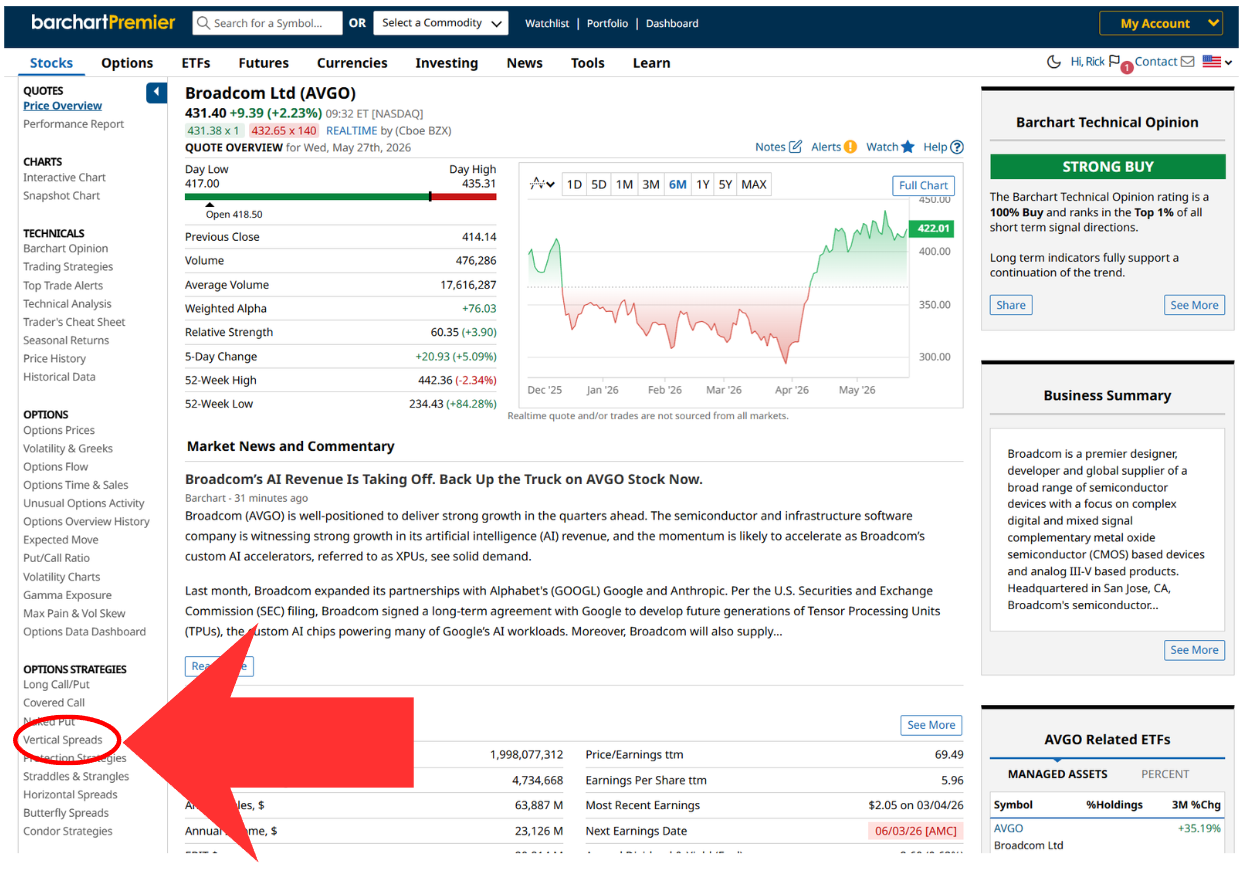
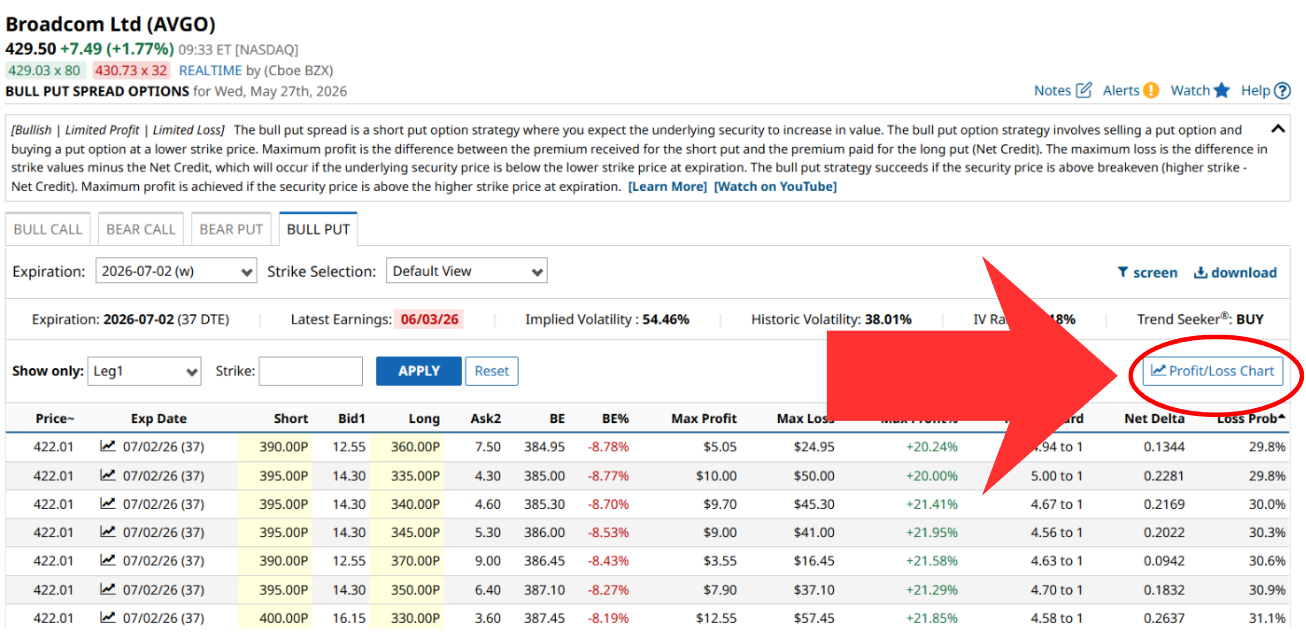
To get potential bull put trades, go to Broadcom’s stock profile page, then click Vertical Spreads here:
Once there, click the Bull Put tab.
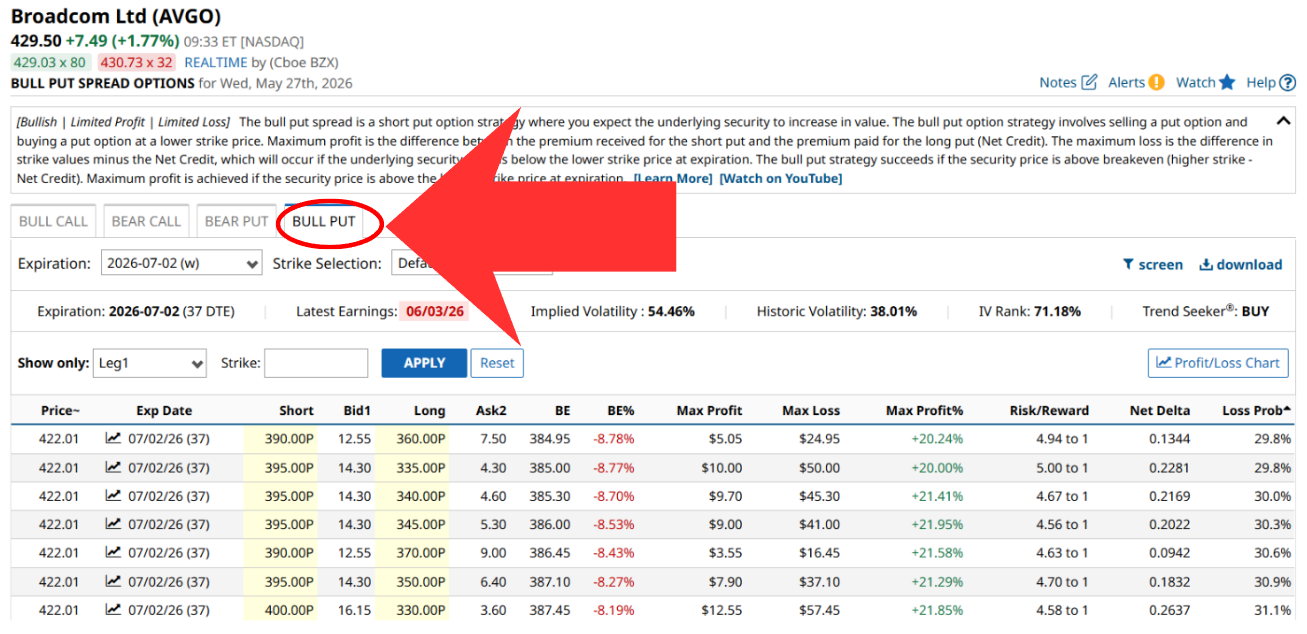
After that, I usually change the expiration date to between 30 and 45 days to maximize time value while balancing risk. So let’s say July 2, 2026.
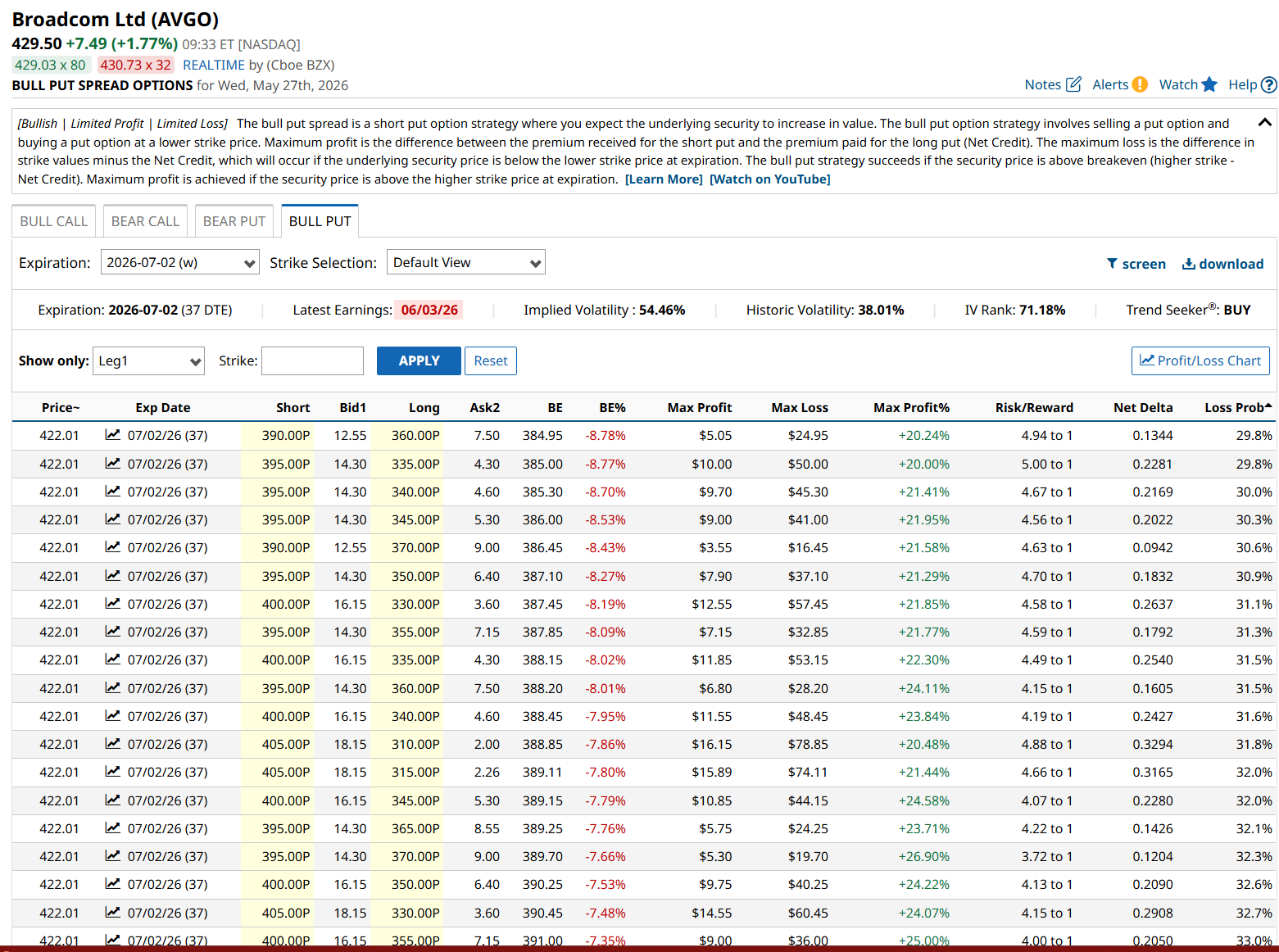
Here are suggested trades for that date, arranged from lowest to highest loss probability:
Picking strike prices
Now, like with any options trade, strike price selection is important. Thankfully, Barchart gives you several ways to help you find the best one.
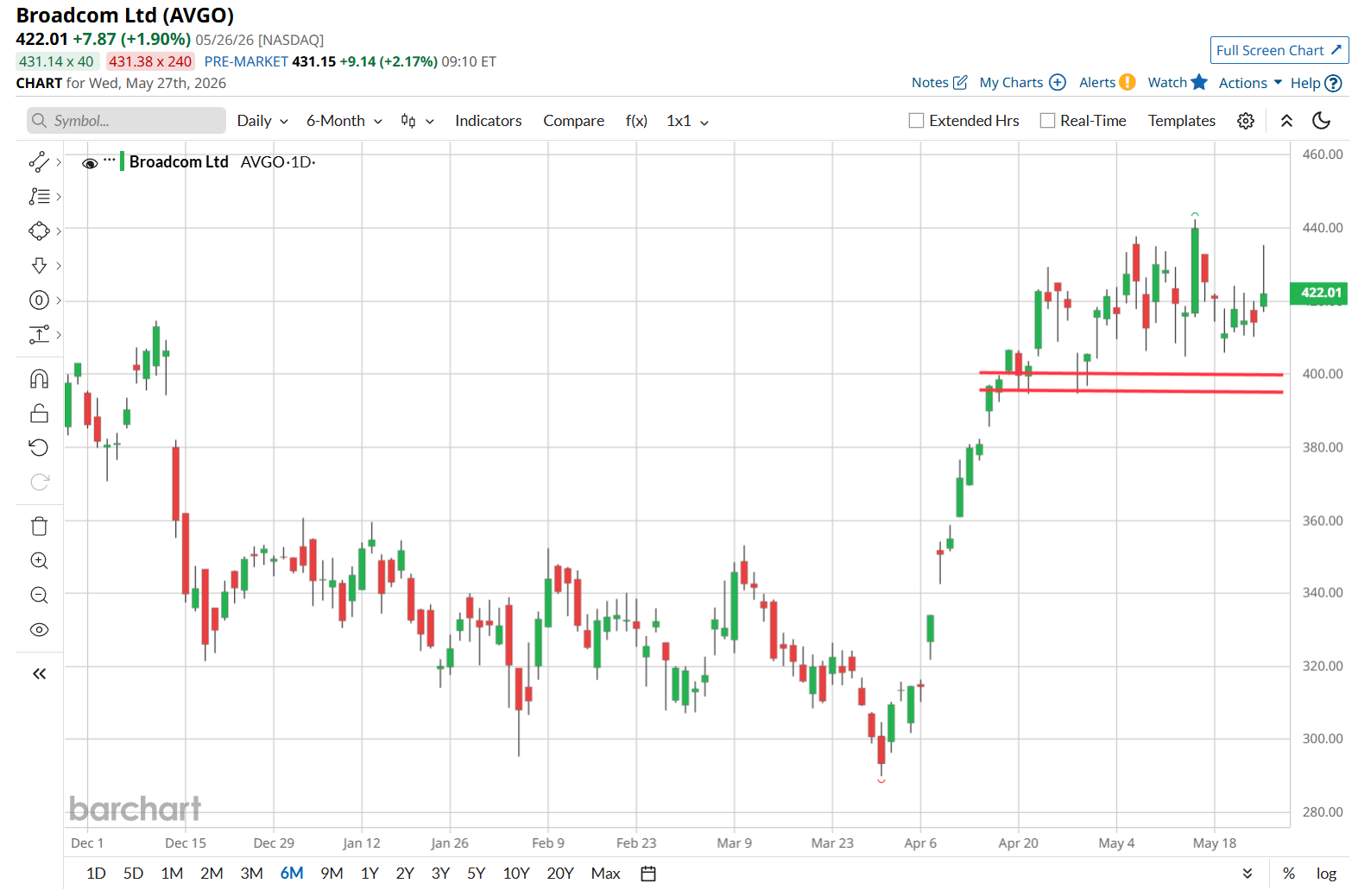
For example, a quick look at the interactive chart, and we can see that Broadcom’s short-term support level is between $395 and $400.
Another way I like to check for potential strike prices is from the Expected Move tab, accessed through the P&L charting tool here:
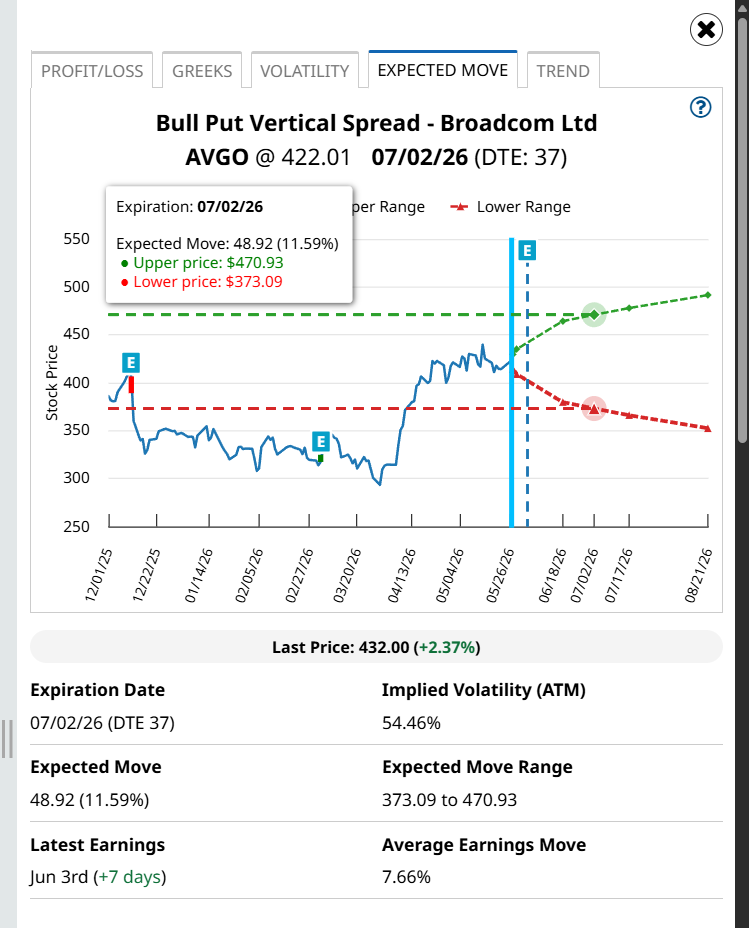
From there, I see that Broadcom is expected to trade between $373 and $471 by July 2, based on today's option prices. You can also see when the next earnings release is, which, in this case, is June 3, or 7 days away.
This is the likely cause of Broadcom’s elevated volatility.
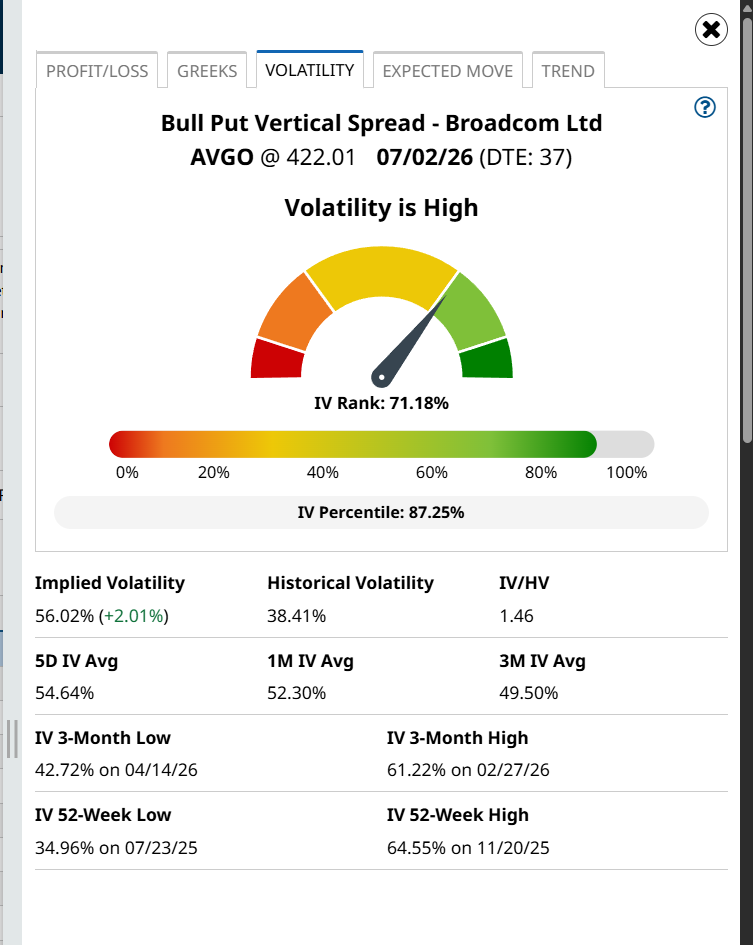
So, premiums are higher, but so can the risks. What makes a bull put a good strategy for these situations is its defined-risk structure, giving traders exposure to upside movement while limiting their downside.
Now, given those pieces of information, let’s say you select the first trade here:
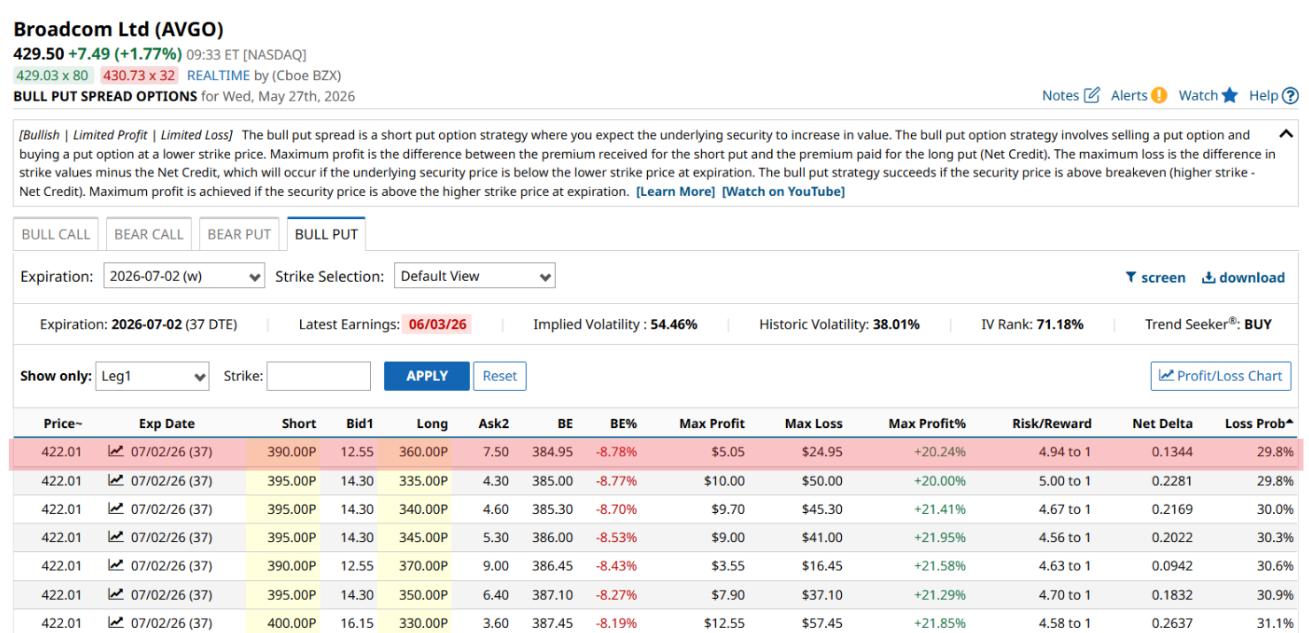
The short strike is below the short-term support level, while the long strike is below the lower range of the expected move. So let’s see how this trade works.
Trade breakdown
According to the screener, you can sell a 390-strike short put and get $12.55, then buy a 360-strike put and pay $7.50, both on AVGO stock with the same July 2 expiry (37 days away), and you receive a net credit of $5.05 per share, for a total of $505 per contract. The trade has a 30% probability of loss and a 5-to-1 risk-reward ratio, which is decent for the premium you receive.
If Broadcom trades above $390 by July 2, the options expire worthless, and there's no further obligation.
The breakeven price is $384.95. At that price point, your P&L, excluding trading fees, is zero.
However, if Broadcom trades below $360 by expiration, the trade enters its maximum loss condition. The maximum loss is $24.95 per share or $2,495 total - but the chances of that happening are rather low.
Overall, this looks like a reasonable bullish income trade if you believe Broadcom will remain above $390 by the July 2 expiration. And with how the company’s been performing recently, it might just work in your favor.
Conclusion
For traders who are bullish on Broadcom but don’t want to commit tens of thousands of dollars to a cash-secured put or pay hefty premiums for long calls, the bull put spread offers a relatively attractive middle ground. It generates income upfront, defines risk from the start, and requires significantly less capital than owning 100 shares of stock or getting assigned on a short put.
Of course, no options strategy is risk-free. A sharp decline in Broadcom’s share price can still result in losses, especially around earnings or major market events. That’s why it’s important to choose strike prices that align with your outlook, risk tolerance, and the stock’s technical and implied-volatility levels.
On the date of publication, Rick Orford did not have (either directly or indirectly) positions in any of the securities mentioned in this article. All information and data in this article is solely for informational purposes. For more information please view the Barchart Disclosure Policy here.
More news from Barchart
How Traders Can Play Broadcom Stock’s Bull Run With Less Upfront Money Why Micron Stock Might Have a Math Problem Why Traders Are Watching Bull Call Spreads on GOOGL Institutional Investors Love Ford Stock - Buying Huge, Unusual Volume of Long-Term Call Options