


Solana developers are facing a new compatibility warning as blockchain infrastructure team Anza prepares to introduce a major runtime improvement that could change how applications interact with network memory.
The development comes just days after Solana officially exited beta , marking a new chapter for the blockchain’s infrastructure and development roadmap.
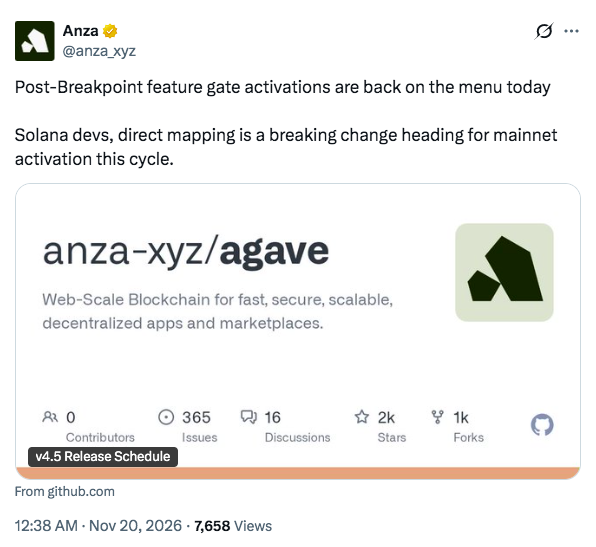
On November 19, Anza announced that mainnet feature activations were resuming following the Breakpoint conference, while warning that an upcoming change known as account data direct mapping could disrupt programs relying on certain memory-access behaviors.
Although the upgrade promises more efficient transaction execution, developers may need to review existing smart contracts before the changes are fully activated.
Solana Developers Receive Warning Over Direct Mapping
According to the Solana Foundation’s official technical documentation , direct mapping will change how validators handle account data during smart contract execution.
Currently, Solana’s runtime copies account information into a program’s virtual machine before execution and copies it back afterward.
Additional transfers can occur when programs interact through cross-program invocations, commonly known as CPIs.
The new system aims to eliminate these unnecessary copying operations by allowing programs to access account data directly.
Under the existing approach, certain instructions can involve up to four data-copy operations. Direct mapping is designed to reduce that number to zero.
However, achieving this efficiency requires stricter rules governing memory access.
Programs that previously relied on unsupported shortcuts may encounter errors once the relevant restrictions are activated.
Which Solana Applications Could Be Affected?
The warning does not mean that every Solana application is at risk.
According to the Solana Foundation, most programs should continue functioning normally. However, developers using particular memory-management techniques may need to update their code.
Potential problems include reading beyond an account’s allocated memory, modifying read-only data, accessing multiple memory regions in a single operation, or relying on outdated account-resizing methods.
Applications built using older versions of Anchor may also encounter compatibility issues involving account ownership during cross-program interactions.
The Foundation recommends that affected developers upgrade to Anchor version 1.2.2 and rebuild their programs.
Another concern involves changes to stack memory. Unlike ordinary instruction failures, certain stack-related problems could alter application behavior without immediately generating an error.
This makes comprehensive testing particularly important.
Anza has encouraged developers to test their applications using Solana’s development networks before the changes reach mainnet.
Why Solana Is Making These Changes
The proposed upgrade reflects Solana’s continuing effort to improve execution efficiency while supporting increasingly complex decentralized applications.
By removing repeated account-data copying, validators could reduce unnecessary processing work during certain transactions.
The benefits may be particularly relevant for applications handling large accounts or executing multiple cross-program interactions.
The development follows Solana’s recent Alpenglow upgrade , which introduced a redesigned consensus system targeting transaction finality of approximately 150 milliseconds.
However, the two upgrades address different aspects of blockchain performance.
Alpenglow focuses on how quickly validators finalize transactions, while direct mapping targets the efficiency of executing programs.
Together, these developments illustrate how Solana is improving different components of its infrastructure.
When Will Direct Mapping Reach Mainnet?
Although Anza has indicated that direct mapping is approaching mainnet activation, the Solana Foundation has not confirmed an activation date.
The rollout involves two separate feature gates.
The first, virtual_address_space_adjustments , introduces stricter memory-access rules. The second, account_data_direct_mapping , eliminates the copying operations.
Both have already undergone activation on Solana’s development and testing networks.
However, published sources have shown differences in the reported mainnet status of the first gate, making further confirmation important.
The actual direct-mapping feature remains pending.
What This Means For SOL And The Wider Ecosystem
The upgrade arrives as Solana continues expanding its infrastructure to accommodate more demanding blockchain applications.
For developers, the immediate priority is ensuring that existing programs comply with the new memory restrictions.
For investors, the development highlights both the opportunities and challenges associated with upgrading a high-performance blockchain.
More efficient execution could improve Solana’s long-term capacity to support decentralized finance, payments, and other applications.
However, successful implementation will depend on compatibility testing and a carefully managed activation process.
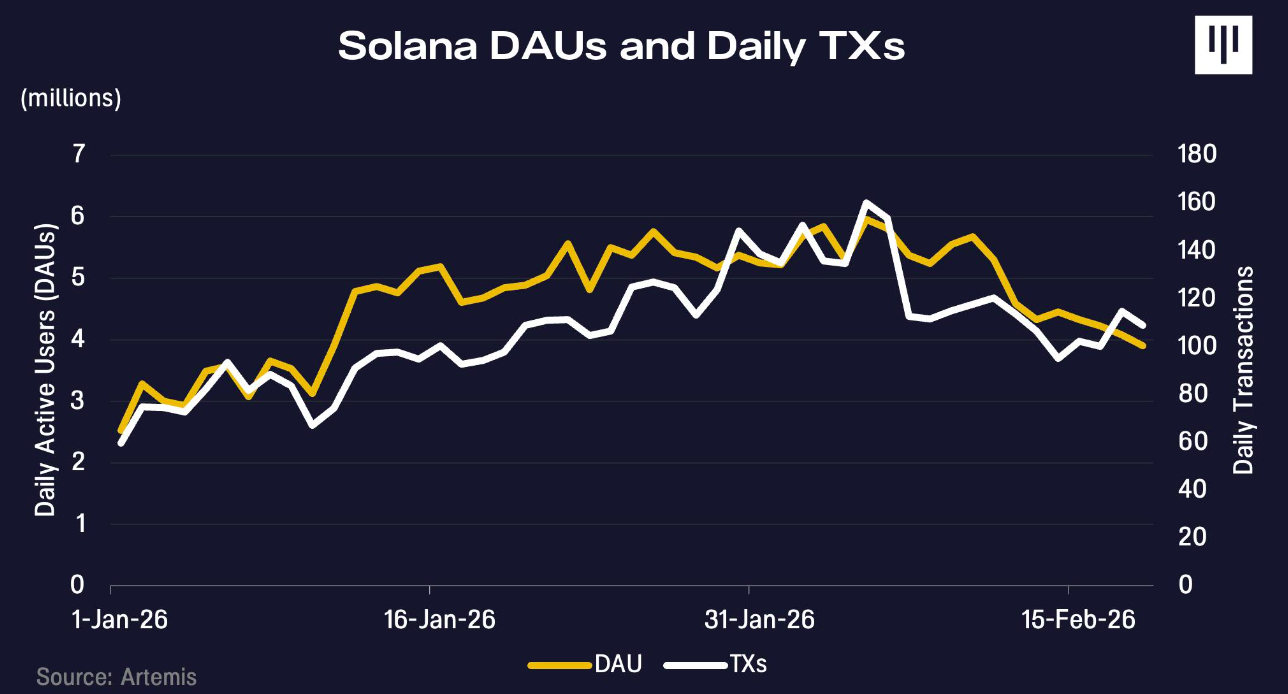
The announcement alone does not establish a direct impact on SOL’s market price.
As the network continues evolving, developers and investors will be watching how Anza manages the transition.
Ultimately, Solana’s next performance improvement could make its infrastructure more efficient, but ensuring existing applications remain reliable will be just as important as the speed gains themselves.