

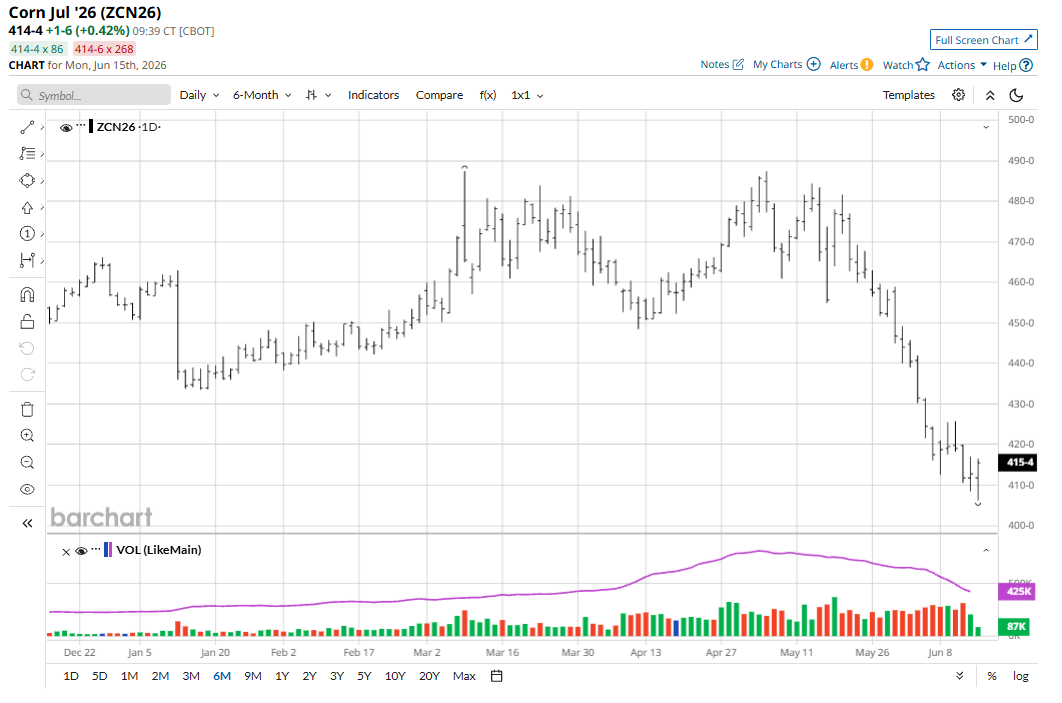
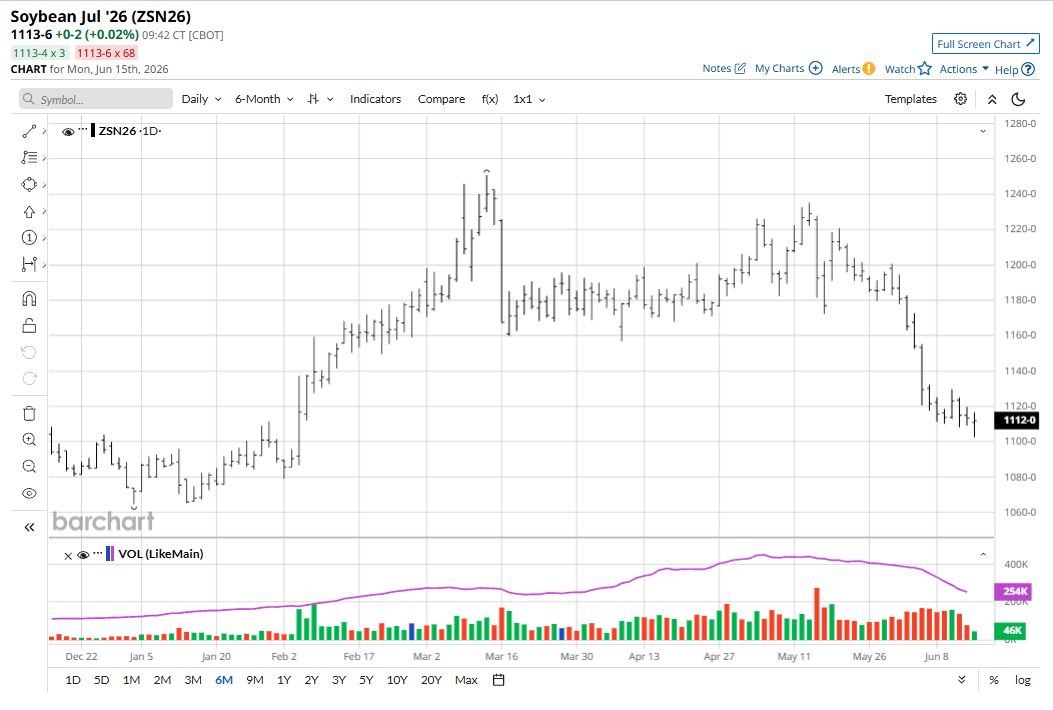
July corn (ZCN26) futures on Friday rose 1 cent to $4.12 3/4 and hit a contract low early on. For the week, July corn was down 4 3/4 cents.July soybeans (ZSN26) fell 1 1/2 cents to $11.13 1/2 and for the week were down 8 cents. July soft red winter (SRW) (ZWN26) futures fell 2 1/4 cents to $5.84 1/2 and for the week were up 4 1/2 cents. July hard red winter (HRW) (KEN26) wheat futures lost 1/4 cent to $6.34 1/2 but for the week were up 13 3/4 cents.
Extended Weather Forecasts Looking Price-Bearish for Corn, Beans
Corn and soybean market bears are peering over the horizon, weather-wise, and seeing extended forecasts for the Corn Belt that are reaching out into early July with no significant weather perils seen for the U.S. crops. Timely rains in much of the Midwest have soil-moisture profiles looking overall good at present.
Don’t Miss a Day: From crude oil to coffee, sign up free for Barchart’s best-in-class commodity analysis.
 www.barchart.com
 www.barchart.com
In just one month’s time, the grain markets have pivoted from firmly bullish to firmly bearish. However, such is a reminder that grain market prices could again pivot just as quickly, from bearish to bullish, as the most critical growing month of the season for U.S. corn is July, at which time Corn Belt weather generally turns hotter and drier. August is arguably the most important growing month for the U.S. soybean crop. There is still time for a weather market to develop in corn and soybeans, and especially soybeans.
Grain traders will keep watching the weekly USDA crop progress reports on Monday afternoons.
The late-June USDA planted acreage updates are starting to draw trader attention and speculation on what the agency will report. There are growing notions U.S. planted corn acres won’t be reduced much.
The corn bulls do have some ammunition left in their belt. Domestic and export demand for corn is still robust, with U.S. export sales last week showing an increase from the week prior, to 1.04 million metric tons in sales. In the meantime, ethanol production remained flat from week-ago levels at 1.088 million barrels per day. Reuters last week reported Maersk, along with others, are eyeing ethanol as a source of fuel for commercial maritime vessels in the near future, citing lower costs and the ability to help the companies meet emission standards. These elements should at least keep a floor under corn futures prices in the coming weeks.
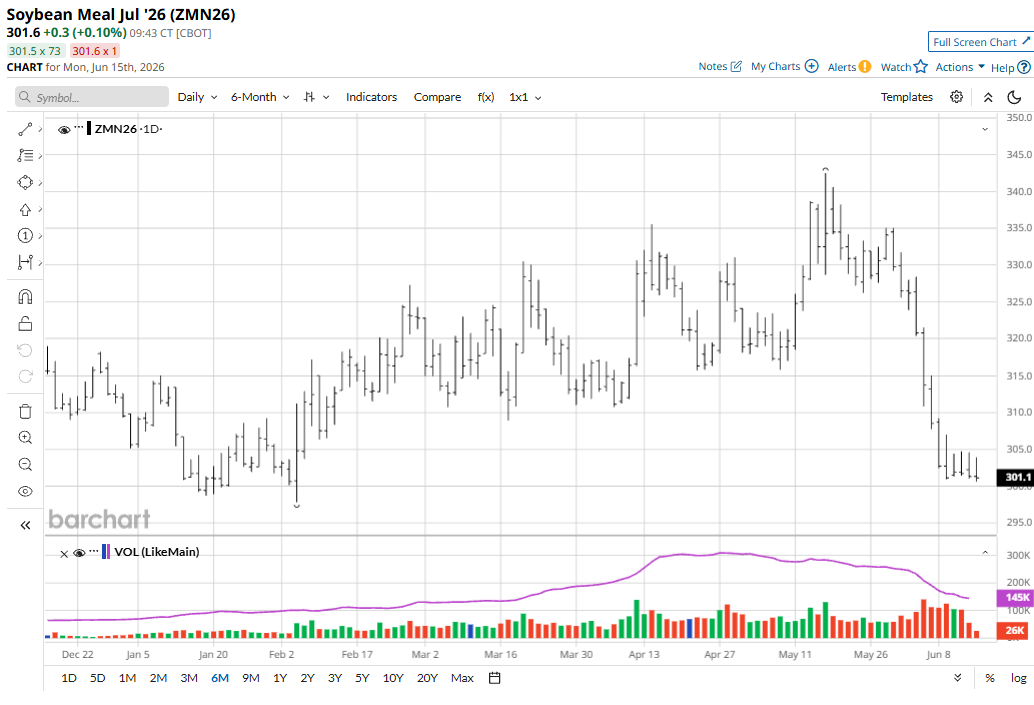
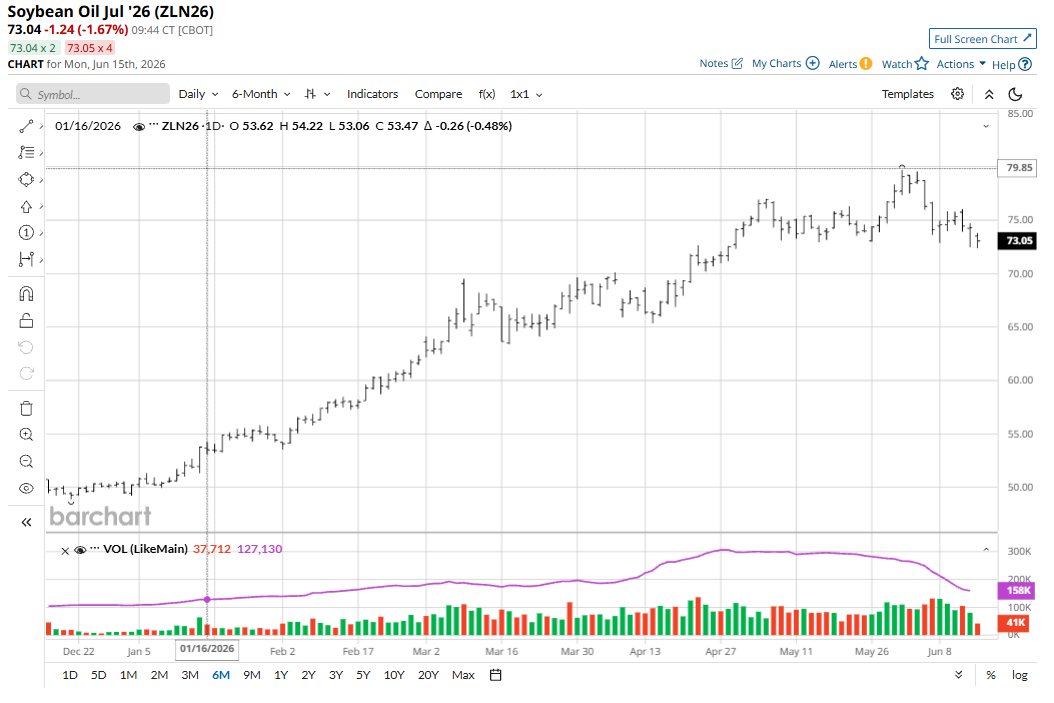
The soybean and meal markets, like corn, remain trapped in price downtrends on the daily bar charts, including a bearish pennant pattern that has formed in July meal. Soybean oil is holding its own at higher levels, even though the near-term price uptrend has been negated.
 www.barchart.com
 www.barchart.com
The U.S. soybean crush pace likely slowed for a third straight month in May as some processing plants were idled for seasonal maintenance and repairs despite historically large crush margins, according to analysts surveyed ahead of the monthly NOPA crush report due out today.
Grain traders will continue to monitor outside markets, with the U.S. dollar index ($DXY) presently showing firmness and crude oil prices selling off and hitting seven-week lows on Friday.
Wheat Bulls Work to Stabilize Prices
The winter wheat futures markets last past week saw price stability, which is a win for the bullish camp. However, the corn and soybean futures markets are still looking heavy. It’s likely the wheat markets will look to the daily price action in corn and soybeans in the near term, as U.S. growing weather is on the fundamental front burner for those two crops.
This afternoon’s weekly USDA crop progress reports and the U.S. winter wheat condition ratings will be closely scrutinized by wheat traders.
Winter wheat harvesting has just commenced across the U.S. Plains. Data from this week’s USDA crop production report showed no fireworks for SRW, with a 1 million-bushel cut to production failing to spur markets upward. USDA’s cut to U.S. HRW production offered some momentum, but expectations of rising global ending stocks limited buying interest. Rains in HRW country at harvest time could cause quality issues.
Tell me what you think. I read every one of your emails. My email address is jim@jimwyckoff.com.
On the date of publication, Jim Wyckoff did not have (either directly or indirectly) positions in any of the securities mentioned in this article. All information and data in this article is solely for informational purposes. For more information please view the Barchart Disclosure Policy here.