Indizes

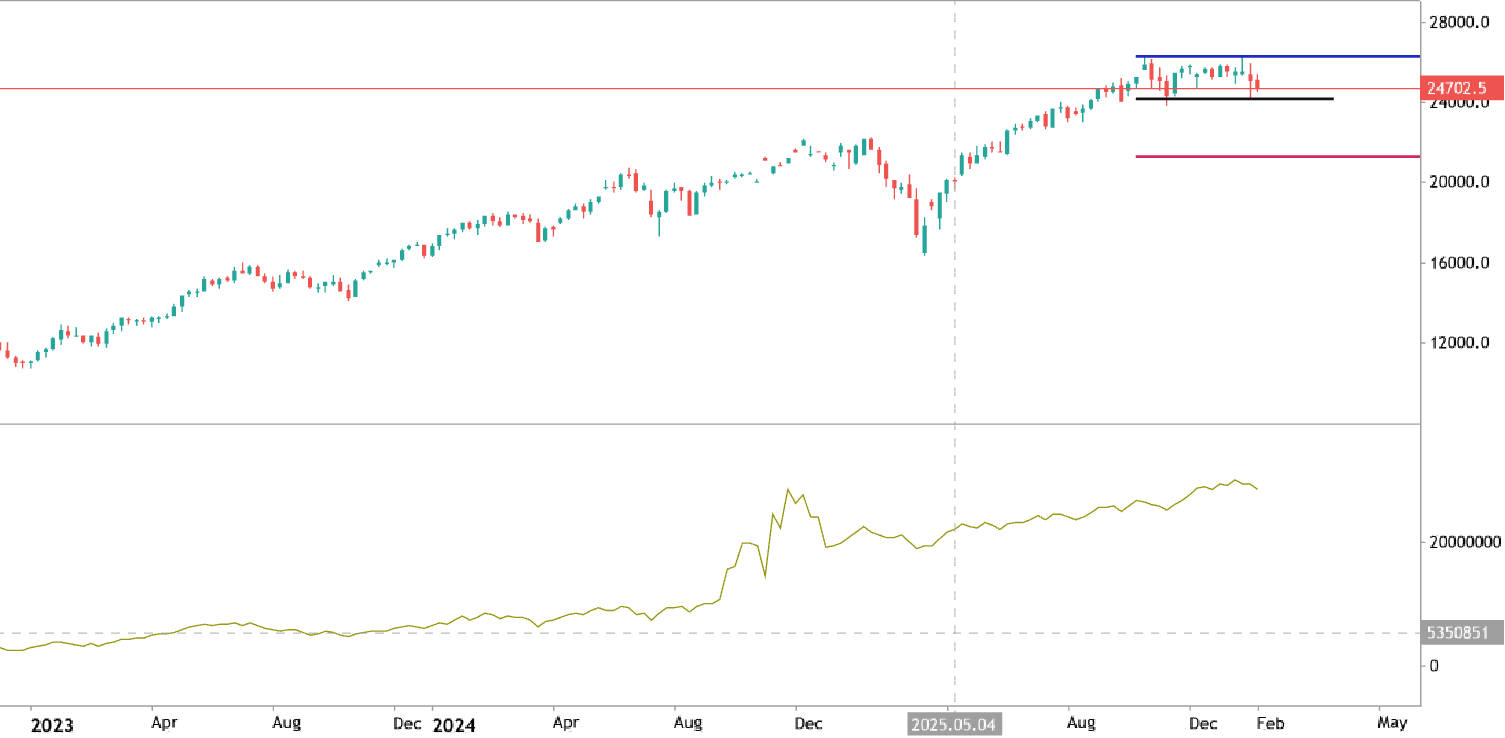
Accumulation/Distribution - traditional general approach
100
USTECH100M
Accumulation/Distribution - traditional general approach
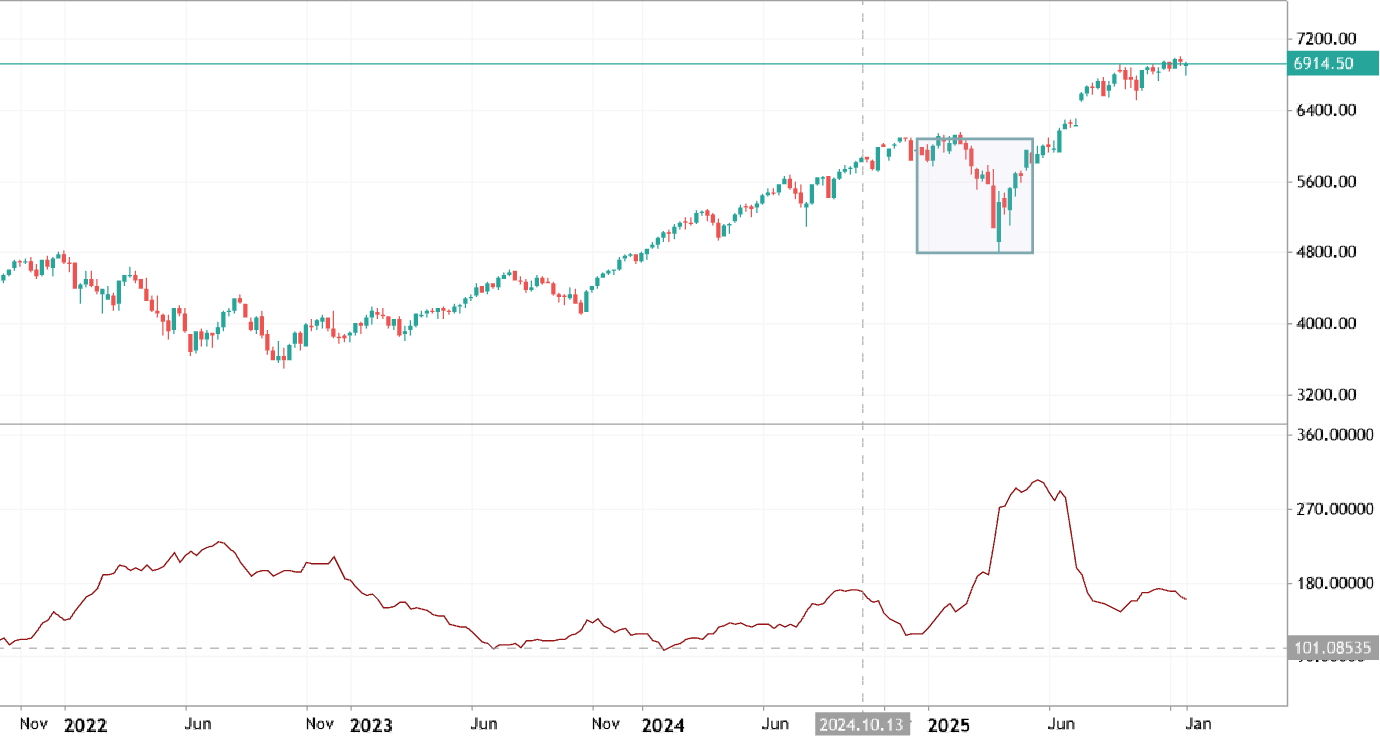
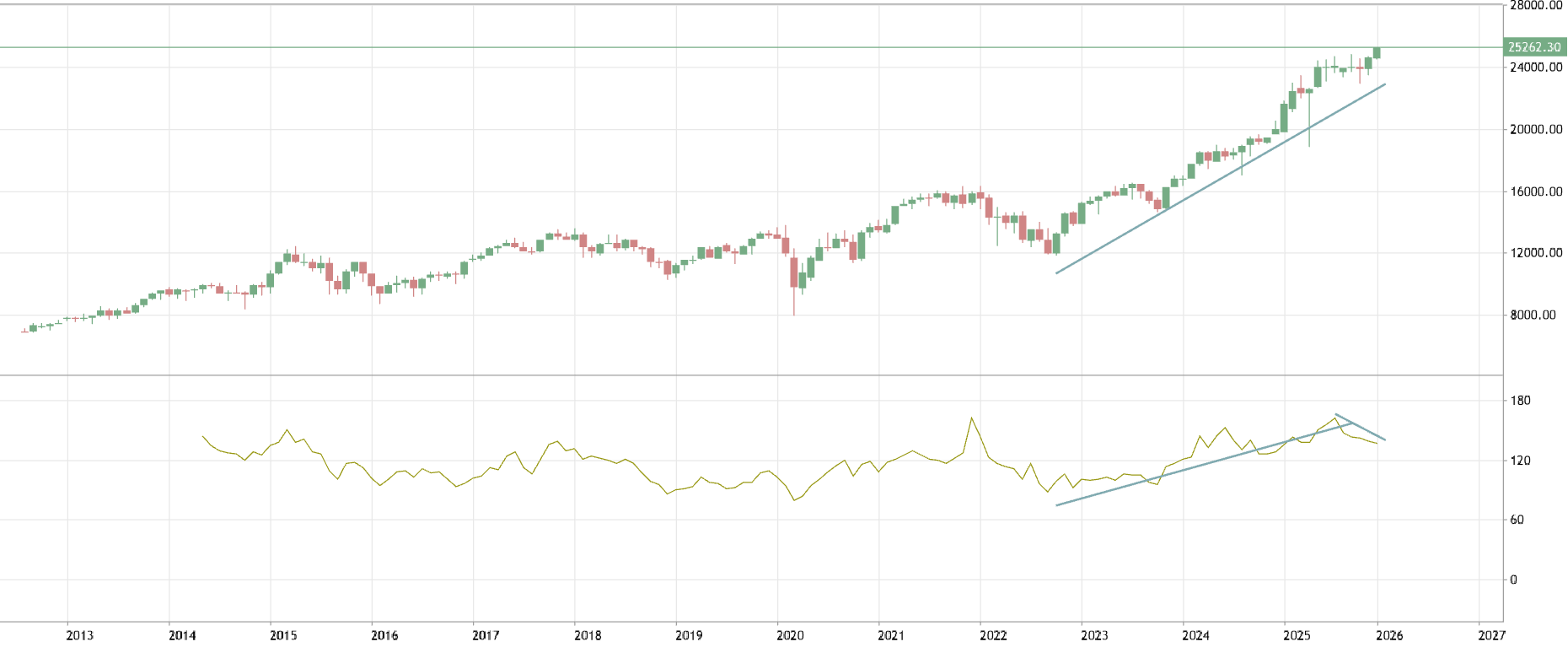
Accumulation Distribution uses volume to confirm price trends or warn of weak movements that could result in a price reversal. - Accumulation: Volume is considered to be accumulated when the day's close is higher than the previous day's closing price. Thus the term "accumulation day". - Distribution: Volume is distributed when the day's close is lower than the previous day's closing price. Many traders use the term "distribution day." The main use of the Accumulation Distribution Line is to detect divergences between the price movement and volume movement. Besides, Accumulation Distribution Line is a very effective tool to confirm price action and show warnings of potential price reversals. 0

newdigital Sergey Golubev 2026.02.14 07:53
Average True Range - traditional general approach
500
US500
Average True Range - traditional general approach
The Average True Range (ATR) indicator is a measure of volatility. The ATR indicator measures the range of price movement for a particular price period. The ATR is a directionless indicator and it does not indicate the direction of the trend. ATR measures volatility, and this allows traders to set stops based actual market behavior. Low ATR values indicated extended periods of sideways price movement, such as those found at market tops and consolidation periods. Low ATR values are typical for the periods of sideways movement of long duration which happen at the top of the market and during consolidation. High ATR values indicated market bottoms after a sell off. Besides, the higher the value of the ATR indicator, the higher the probability of a trend change, and the lower the indicator’s value, the weaker the trend movement. 0
newdigital Sergey Golubev 2026.01.24 15:03
Parabolic SAR - traditional general approach
40
FRA40
Parabolic SAR - traditional general approach
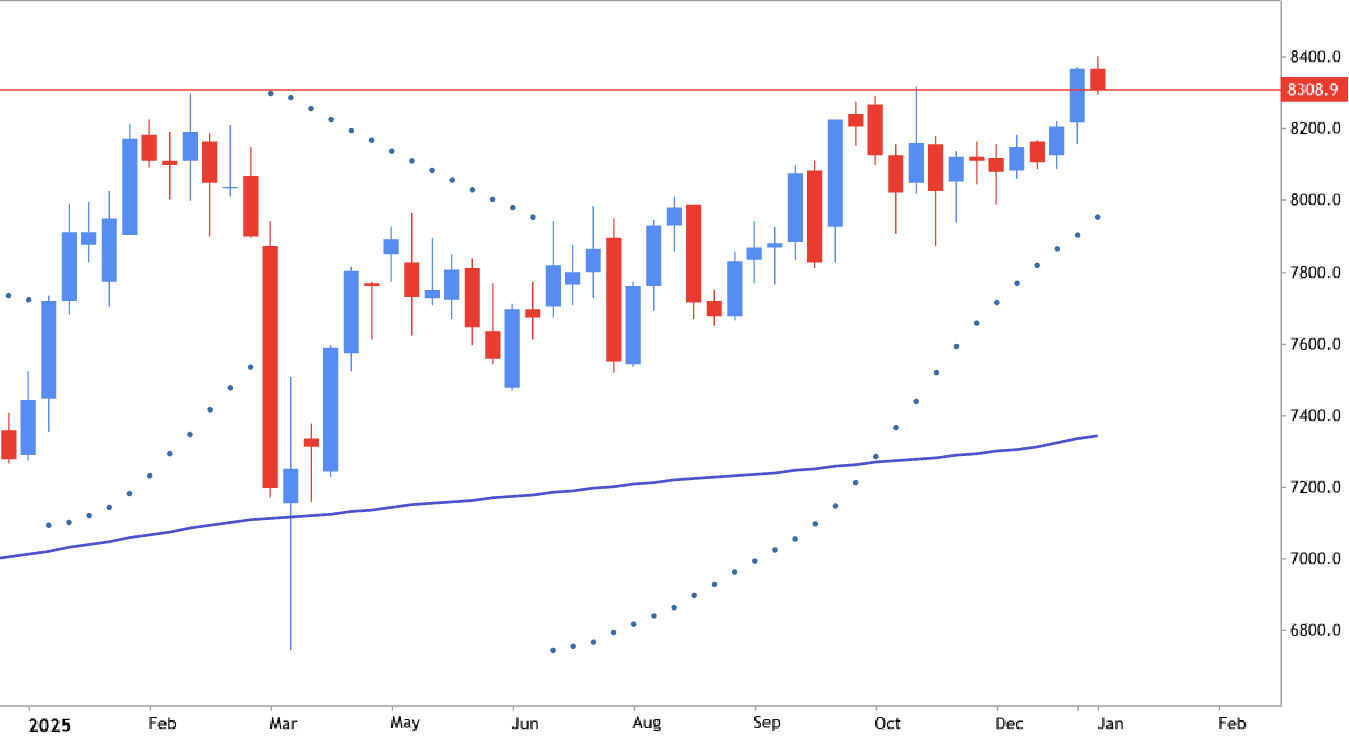
<p>Parabolic SAR is something as "stop and reversal system", and it is shown as the series of dots placed either above or below the price on a chart. If the dot is located below the price so it means the bullish trend, and if dot is above the price so it is the bearish trend in that moment. So, this indicator is providing some kind of direction of the trend, and, besides, it allows us to set stop loss and to define the reversal of the price movement. Many traders are using this indicator together with SMA indicators for example: 55 SMA in intra-day basis, 100 SMA and 200 SMA.</p> 0
newdigital Sergey Golubev 2026.01.15 17:11
DeMarker - traditional general approach
50
HK50
DeMarker - traditional general approach
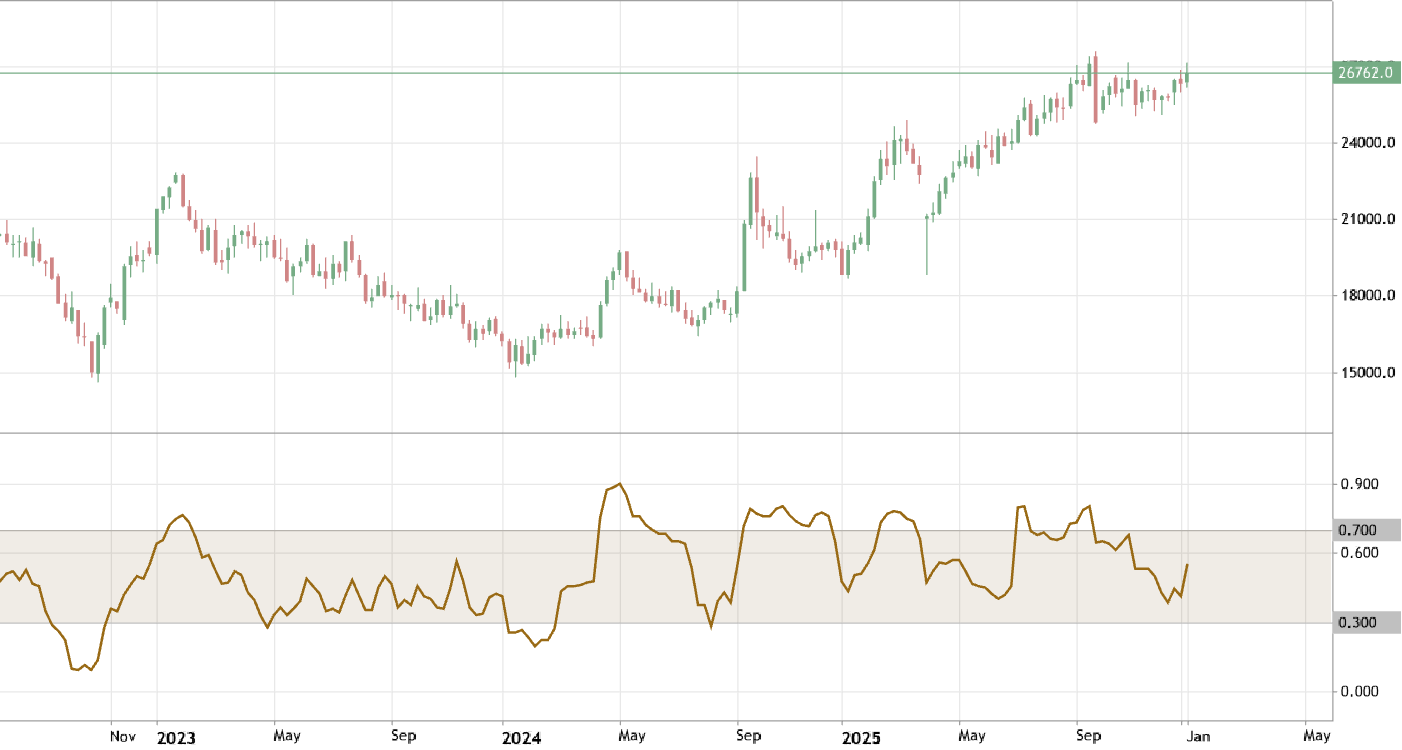
The DeMarker indicator named after Thomas DeMark is a momentum oscillator very similar in nature to the Relative Strength Index (RSI) developed by Welles Wilder. By comparing inter-period price maxima and minima the DeMarker indicator attempts to gather information about price movements to help determine the underlying trend strength and identify over-bought/sold trade conditions. The Default time span for the calculation of the DeMarker indicator is 14 periods. The overbought and oversold lines are typically drawn at 0.7 and 0.3, respectively. Traders should look to go long when the DeMarker falls below 0.3 and look to go short when the DeMarker rises above 0.7 and falls back below it. 0
newdigital Sergey Golubev 2026.01.13 07:35
Momentum Indicator - Overbought/Oversold Levels approach
500
US500
Momentum Indicator - Overbought/Oversold Levels approach
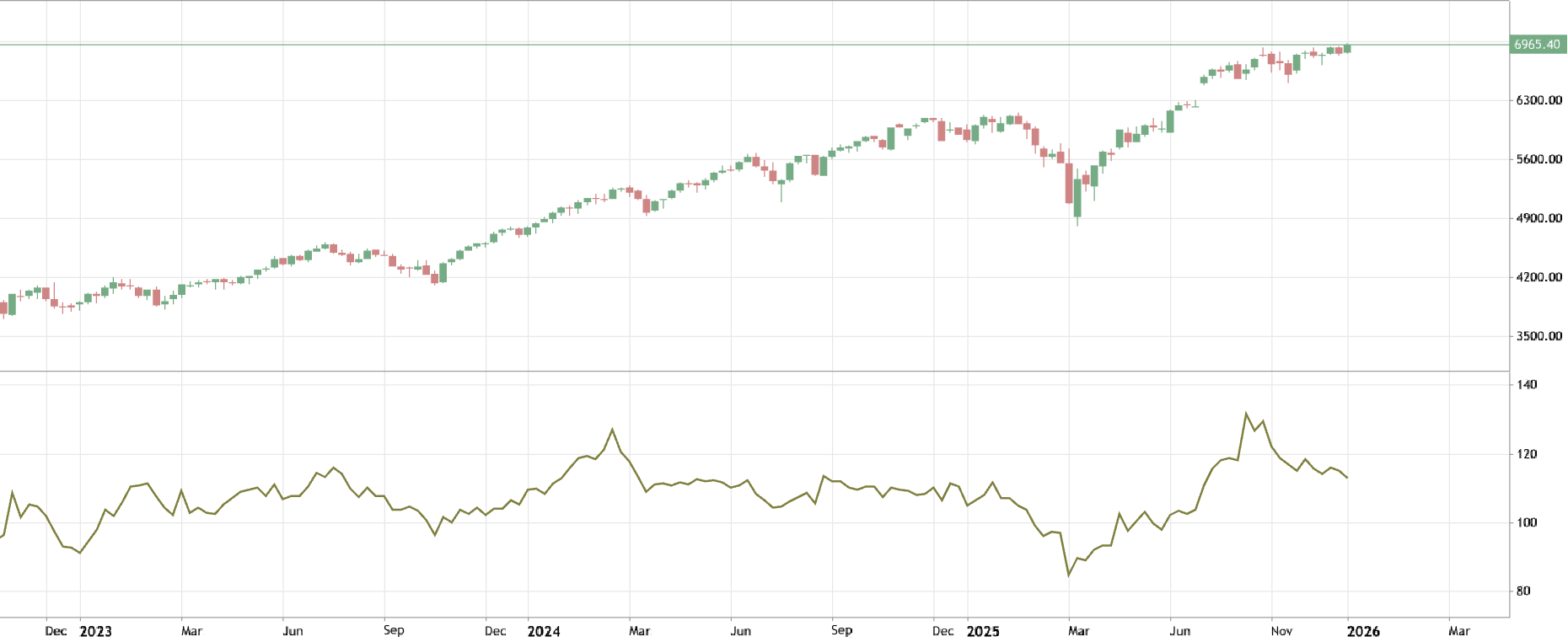
Momentum is used as an overbought/oversold indicator, to identify potential overbought and oversold levels based on previous indicator readings; The previous high or low of the momentum indicator is used to determine the overbought and oversold levels. Readings above the overbought level mean the currency pair is overbought and a price correction is pending. While readings below the oversold level the currency is oversold and a price rally is pending. 0
newdigital Sergey Golubev 2026.01.10 08:28
Momentum Indicator - Trend Line Breakouts approach
40
DE40
Momentum Indicator - Trend Line Breakouts approach
Trend lines can be drawn on the Momentum indicator connecting the peaks and troughs. Momentum is a leading indicator and it begins to turn before price thereby making it a leading indicator. Bullish reversal- Momentum indicator readings breaking above a downward trend line warns of a possible bullish reversal signal while. Bearish reversal- momentum readings breaking below an upward trend line warns of a possible bearish reversal signal. 0
newdigital Sergey Golubev 2026.01.10 08:22
200 SMA: the most easy way to estimate the trend - part #1 (primary trend)
40
DE40
200 SMA: the most easy way to estimate the trend - part #1 (primary trend)
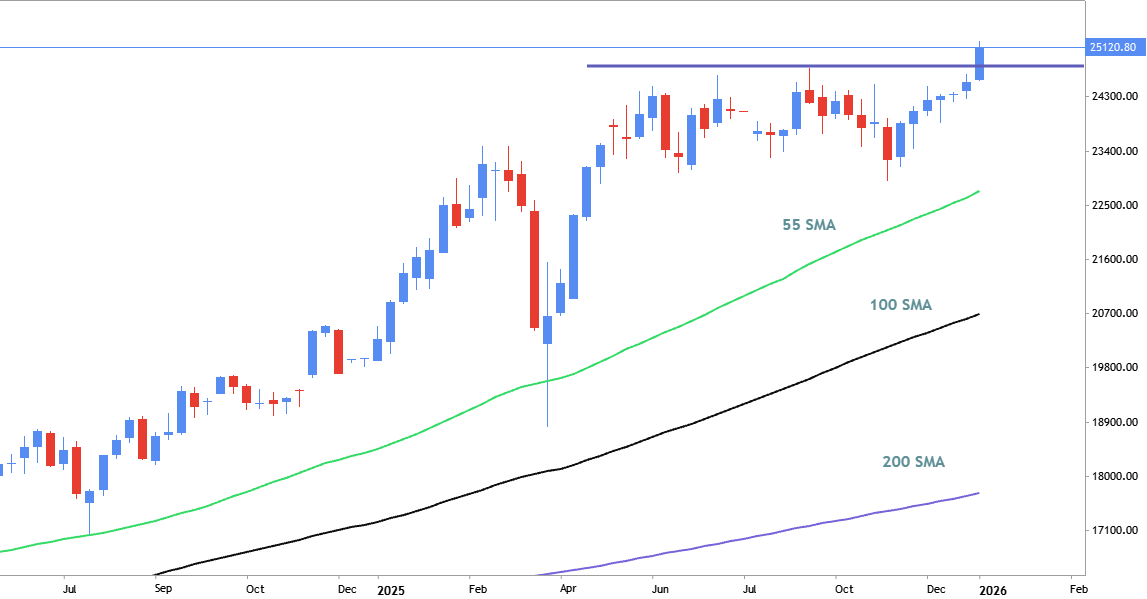
One of the most easy way to estimate the primary trend is 200 SMA. It means the following: if the price is located above 200 SMA so it means that the price is located in the bullish area of the chart; if the price is below 200 SMA so it should be considered as the primary bearish trend. For example, the DE40 weekly price is breaking resistance line at 24800 to above for the strong bullish trend to be continuing (with all SMA indicator's agreement with that). There are some particularities about how to estimate the secondary trend within the primary bearish/bullish which are related to the following: rising/declining 200 SMA line, and the combination of the other SMA indicators (100 SMA and 55 SMA) compare with the located of the price itself. But it may shortly be explained in the part #2. 0
newdigital Sergey Golubev 2026.01.08 15:30
Bollinger Bands - indicator with lot of information for traders
500
US500
Bollinger Bands - indicator with lot of information for traders
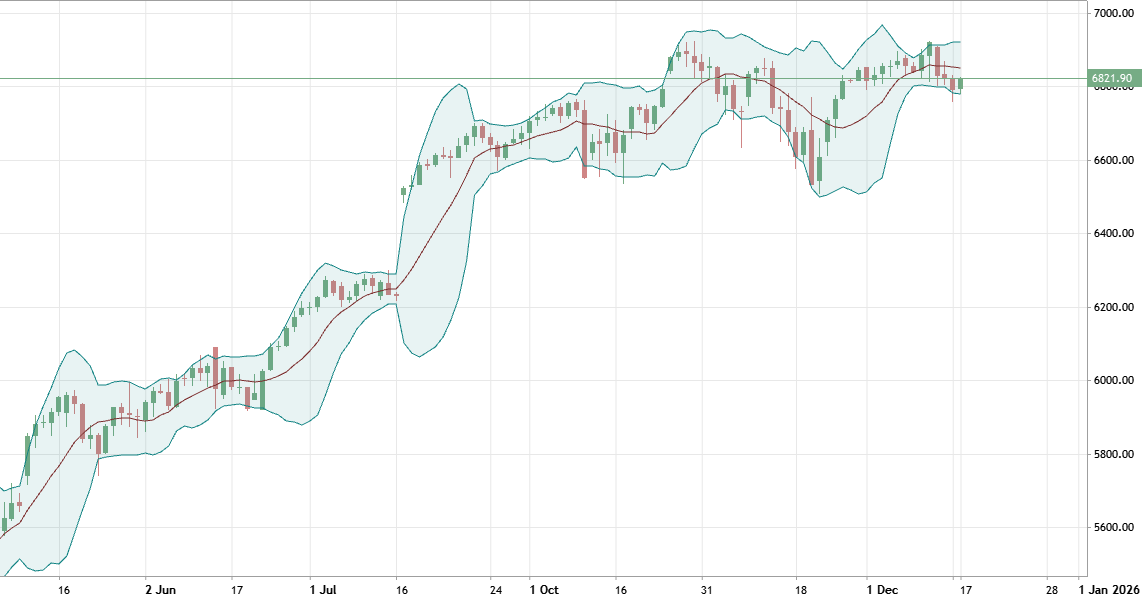
Bollinger Bands indicator was developed by John Bollinger, and this indicator is providing a lot of information, for example: about low volatility- consolidation phase, periods of high volatility- extended trends, support/resistance and buy/sell entry points. The middle line is a simple moving average, the upper line = middle line + standard deviation, lower line = middle line - standard Deviation. Narrowing of Bands is a sign of consolidation and is known as the Bollinger band squeeze, and when the Bollinger Bands display narrow standard deviation it is usually a time of consolidation. The widening of Bands is a sign of a breakout and is known as the Bulge. So, many traders are using this indicator to estimate the market condition on the current timeframe to decide about buy or sell position to be taken for their personal strategy for example. 0
newdigital Sergey Golubev 2025.12.17 11:01