

The June quarter earnings season for “Magnificent 7” stocks, except Nvidia (NVDA), is over. It has been a mixed season at best, but the post-earnings price action has been quite vociferous. We have Microsoft (MSFT), which surged over 15% and posted its best day since 2008, while Alphabet (GOOG) (GOOGL), seen as an artificial intelligence (AI) success story, plunged over 7% and posted its worst day in over a year.
Meta Platforms (META) had another post-earnings crash on July 30, while Amazon (AMZN) soared on Friday after markets gave a thumbs up to its Q2 earnings. Apple (AAPL) has also been tumbling following the confessional, but since the company is not a player in the strict sense in the AI buildout race, we’ll exclude it from our analysis for this article. All that said, let's take a look at what the Mag 7 earnings tell us about the current state of the AI trade.
More Top Stocks Daily: Go behind Wall Street’s hottest headlines with Barchart’s Active Investor newsletter.
Takeaway 1: Earnings Misses Are Getting Punished
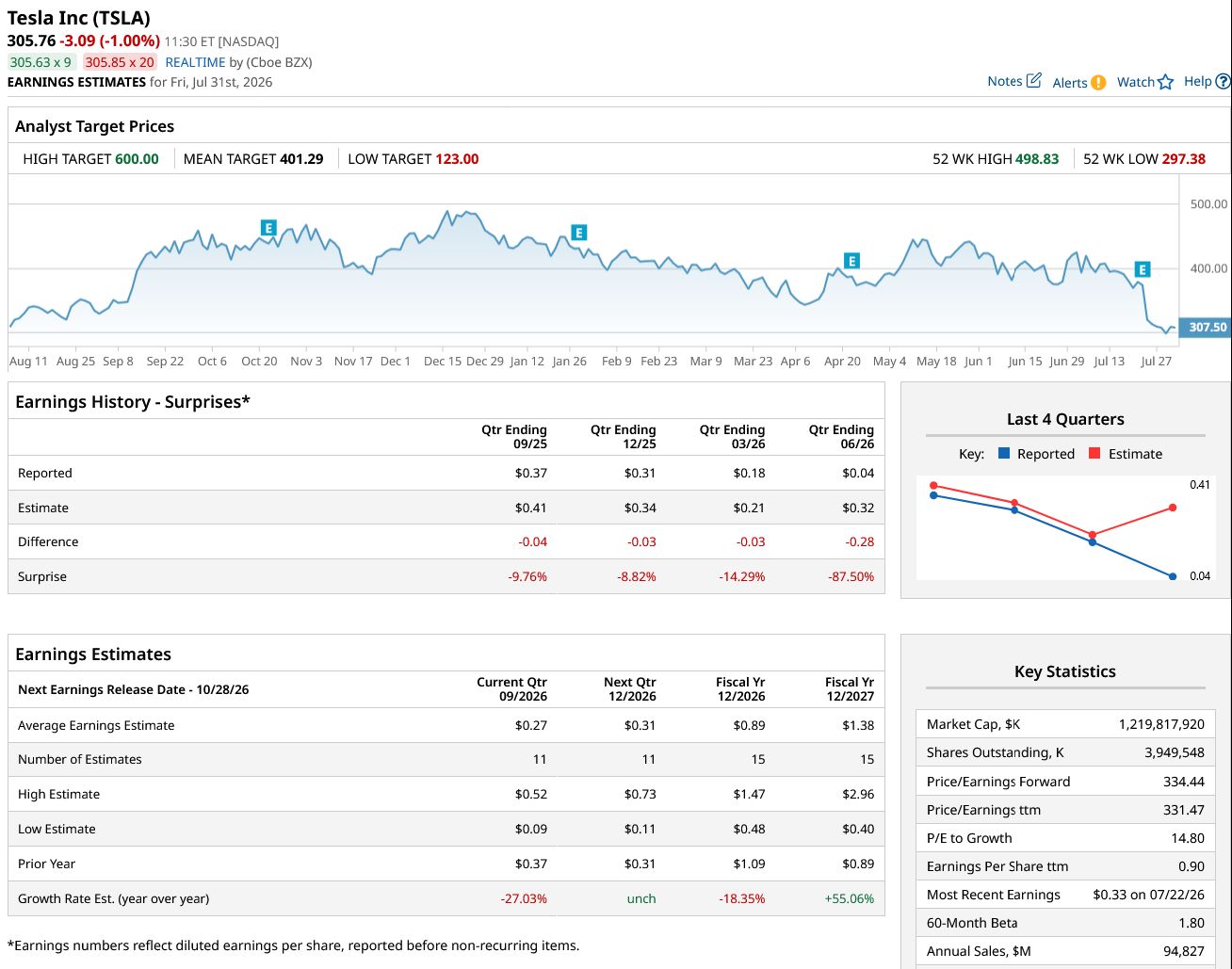
Markets are punishing stocks hard for earnings misses. While Tesla (TSLA), Alphabet, and Meta reported better-than-expected revenues, they missed on the bottom line. In contrast, Microsoft and Amazon beat on both the top line and the bottom line. On guidance too, Meta’s guidance trailed estimates, but Microsoft provided upbeat guidance that was well ahead of Street estimates. Amazon's revenue guidance did trail estimates, but that is partially because of the timing of Prime Day, which fell in Q2 for most countries this year, while last year it was entirely in Q3, leaving the company with tough comps this year.
 www.barchart.com
Takeaway 2: Markets Want to See Signs of AI Monetization
The days when mere mentions of “AI” were getting cherished are long over, which is not surprising as markets now expect to see clear signs of AI monetization amid the spending spree. Tesla does not have much to show in terms of monetization, as Optimus and robotaxis are long-term stories, and it would take quarters, if not years, for them to meaningfully contribute to the earnings. However, the company removed the term “volume production” for Megapack 3, Cybercab, and Tesla Semi from its Q2 earnings presentation, which dampened sentiments. For robotaxi, the car maker’s assertion about prioritizing safety over growth failed to cut ice with investors. After multiple missed deadlines, markets are now increasingly wary of the timelines that CEO Elon Musk sets for Tesla.
Alphabet did see 82% year-over-year (YoY) growth in cloud business, but the company’s commentary on margin erosion dampened sentiments. After last year’s outperformance versus Mag 7 peers, markets expected something extraordinary from the tech giant, and while its earnings were not that bad per se, they failed to clear the high bar.
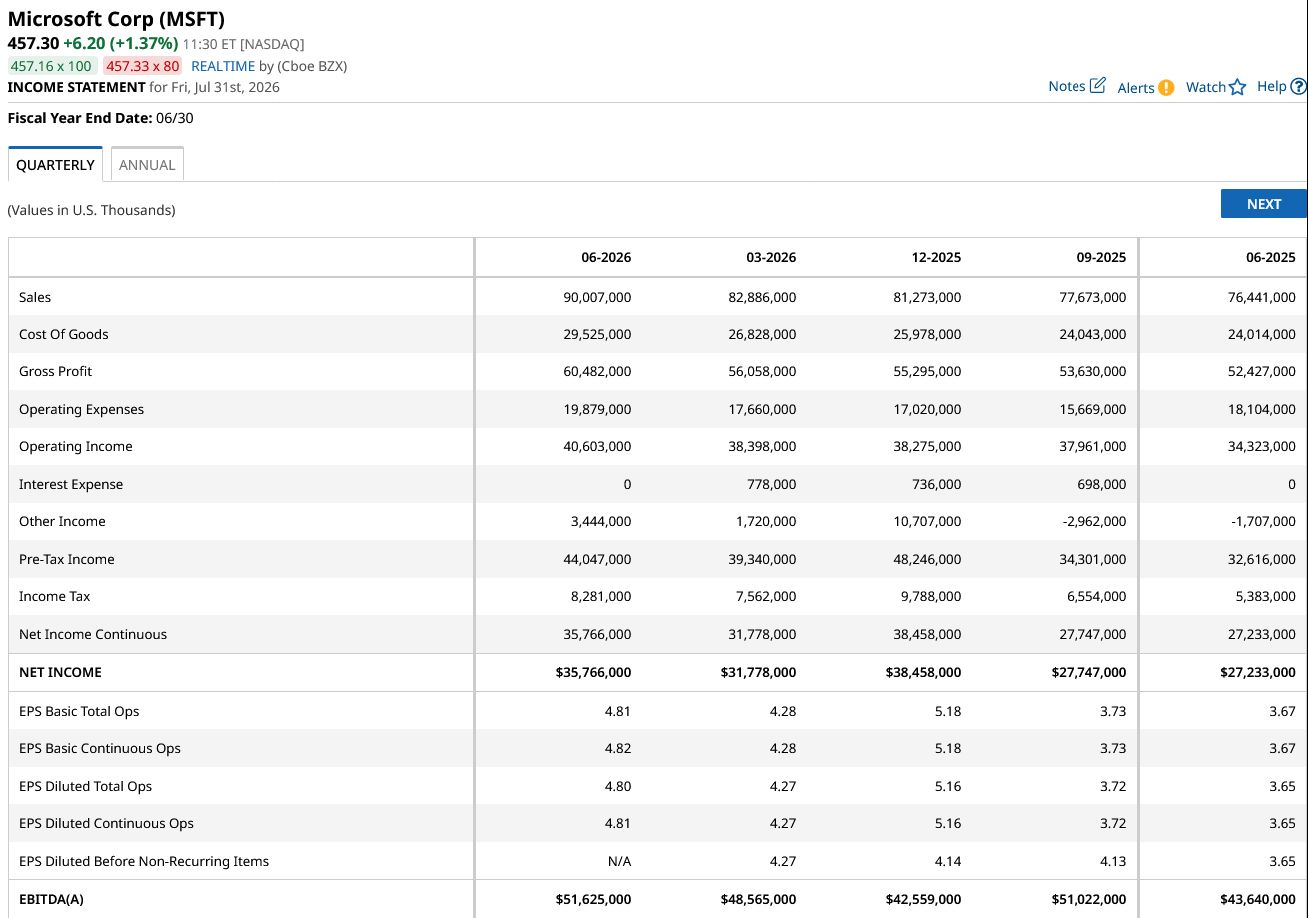
Microsoft, meanwhile, showed strong signs of monetization with Microsoft 365 Copilot paid users rising to 30 million, which was 10 million higher than the previous update in April. The company saw continued momentum in large customers with more than 50,000 seats, and that number increased 7x compared to last year. Azure revenues also beat estimates with a 43% growth. Moreover, Microsoft’s cloud remaining performance obligations (RPOs), which are a metric to gauge future demand for its cloud services, rose 8% versus fiscal Q3 to $678 billion, with the incremental increase coming from companies outside the hyperscaler space.
 www.barchart.com
Amazon Web Services (AWS) also shattered estimates with Q2 revenues rising 37% YoY versus the 31% that analysts were expecting. AWS is now running at an annualized revenue run rate of $169 billion, which would make it among the top 25 companies on the Fortune 500 list as a standalone company. Within AWS, the AI revenue rose triple digits in Q2 and is now at an annual run rate of $25 billion. The company’s chip business is also running at a similar run rate, and it too saw triple-digit growth in the quarter.
Meta has announced a flurry of initiatives to monetize its AI capex, and during the Q2 call, CEO Mark Zuckerberg once again touted the possibility of selling excess compute capacity and said the company is “getting a lot of offers for compute at a significant premium.” However, the details were scarce, and the company’s monetization timeline is quite hazy, unlike other hyperscalers whose cloud businesses are currently reaping the reward from AI capex. Markets seem to prefer hard growth numbers to gauge the efficiency of the AI capex.
Takeaway 3: Free Cash Flows Also Matter
Hyperscalers’ 2027 AI capex is expected to be higher than this year even though none has provided a watertight number; the language seems to suggest meaningful acceleration. Markets are willing to accommodate higher capex for companies that are showing visible and strong signs of monetization. At the same time, they haven’t taken their eyes off free cash flows. One of the reasons MSFT stock rallied following its June quarter earnings was because the company expects to post positive free cash flows next year despite a YoY increase in capex.
While it’s understandable that current capex won’t translate into immediate and commensurate earnings growth since it would start paying off over the long term, markets have started putting a premium on free cash flow generation, and going forward the metric would start getting even more scrutinized.
The June quarter earnings have reinforced the fact that the AI infrastructure buildout is far from over, which should be music to the ears of chip and memory companies. I would sum up with Microsoft, whose earnings I believe had nearly everything markets want to hear from tech giants. Its cloud revenue is growing at a brisk pace with the business getting diversified beyond the hyperscalers, and AI products, specifically Copilot, are seeing strong adoption. As for capex, the company did not raise its calendar year 2026 guidance, unlike other hyperscalers, which all raised their outlays. Finally, while Microsoft does expect an annual increase in next year's capex, it is optimistic about generating free cash flows. No wonder MSFT stock soared the most among its Magnificent 7 peers after its June quarter earnings release.
On the date of publication, Mohit Oberoi had a position in: AMZN , GOOG , META , MSFT , NVDA , TSLA . All information and data in this article is solely for informational purposes. For more information please view the Barchart Disclosure Policy here.
More news from Barchart
Here’s What Magnificent 7 Earnings Tell Us About the AI Trade in 2026 Option Volatility And Earnings Report For Aug 3 - 7 Stocks Set to Open Higher as Oil Sinks on U.S.-Iran Deal Hopes, Jobs Data and Earnings Awaited Wall Street Is Rewarding AI Results, Not Just AI Spending