

For most of this year, investors have treated memory stocks as one big trade. When SanDisk (SNDK) falls, Micron (MU) falls. When Western Digital (WDC) drops, Micron drops with it, often on days with no Micron news at all. The whole group has swung together, soaring through the first half of 2026 until peaking in June, and then selling off hard for most of July. Sandisk was cut in half from its peak, and Western Digital slid too. The question now is whether Micron is destined for the same fate, or whether the market is wrong to ship it with the rest.
The fear driving the sell-off is not anything new. Memory has always been cyclical, and prices crash once supply catches up with demand. That concern grew when SK Hynix (SKHY) signalled a big jump in spending, and China’s memory makers kept ramping up cheap supply. Investors, remembering the brutality of past memory downturns, started punishing memory stocks, including Micron.
More Top Stocks Daily: Go behind Wall Street’s hottest headlines with Barchart’s Active Investor newsletter.
Micron Stands Apart
But Micron may not deserve the same treatment. The company is much more diversified than a rival like SanDisk. Chinese competition news hurt SanDisk’s stock far worse than Micron. It’s because SanDisk makes only NAND flash, while Micron sells DRAM, NAND, and high-bandwidth memory, the specialized chips that sit next to Nvidia’s AI processors. That last piece is the key difference. High-bandwidth memory is the tightest, highest-margin corner of the market, and Micron’s supply is reportedly already sold out through 2027 on multi-year contracts. That gives it the visibility that pure NAND suppliers simply don’t have.
So for Micron, the SanDisk and Western Digital story can be interpreted in two ways. On one hand, it is a reminder that even record-breaking memory companies get punished when the market decides the cycle is peaking. On the other hand, Micron is the most diversified of the group, with the strongest hold on the part of the market AI actually depends on.
In the past year, the pattern for all these companies has largely been the same. But Micron’s broader mix suggests it shouldn’t be judged quite the same way.
About Micron Technology Stock
Micron Technology manufactures, develops, and sells memory and storage solutions. The company operates in the Core Data Center Business Unit, Cloud Memory Business Unit, Automotive and Embedded Business Unit, and Mobile and Client Business Unit segments. Its product portfolio includes NAND flash, DRAM, high-bandwidth memory (HBM), and SSD products. The company’s products are widely used in data centers, PCs, smartphones, networking, automotive, AI servers, industrial, and consumer devices.
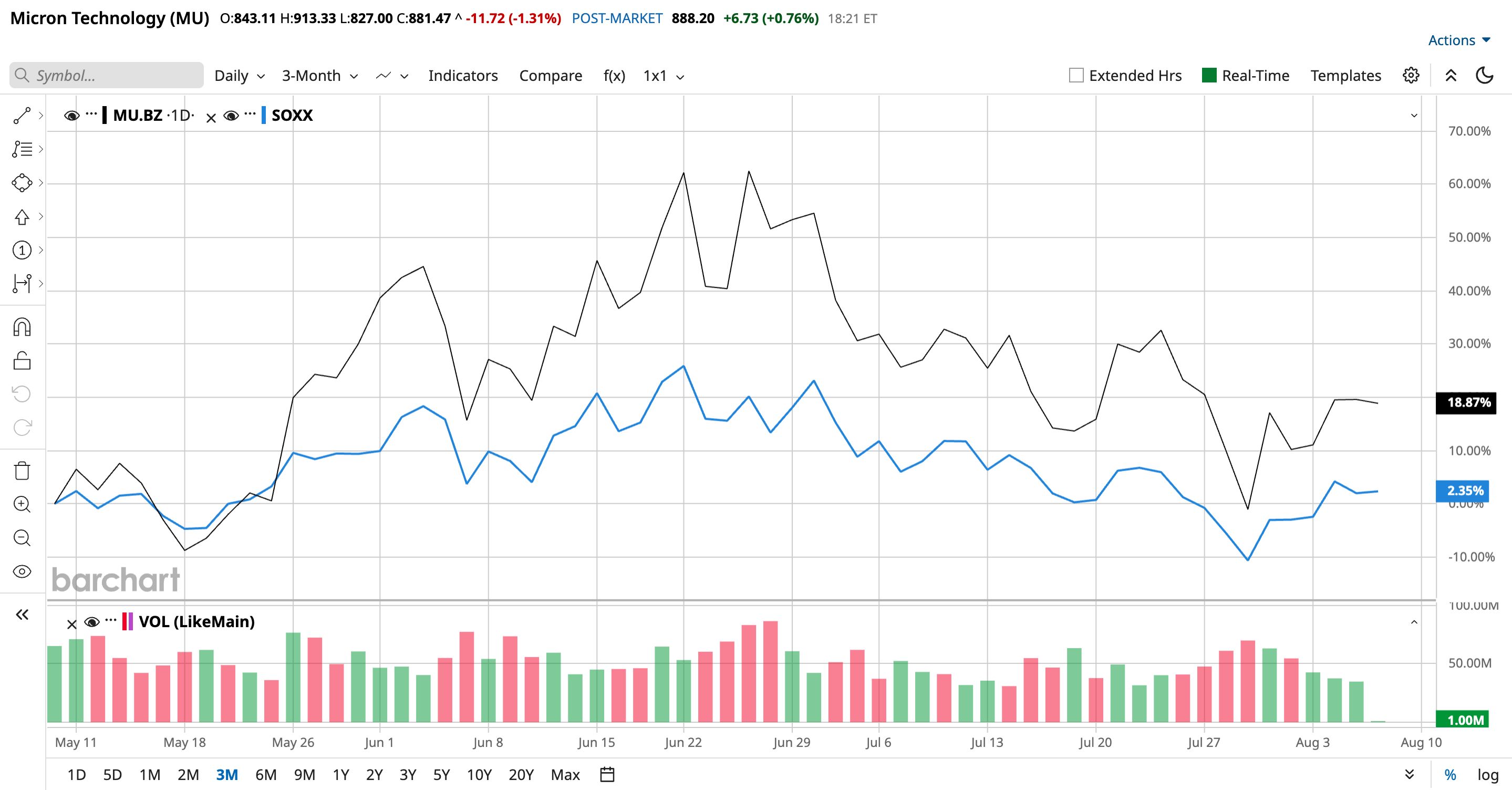
Micron Technology has been one of the biggest winners of the AI infrastructure boom. Over the past 12 months, the stock has climbed 710.32%, driven by strong demand for HBM and DRAM memory, combined with supply constraints and higher pricing. The stock has also comfortably outperformed the Semiconductor iShares ETF (SOXX), which gained 124.76% over the same period.
 www.barchart.com
Micron’s valuation looks attractive by most measures. The stock trades at a forward price-to-earnings ratio of around 7.5 times, compared to SNDK at around 15 times and WDC around 28 times. It is the cheapest of the three on sales too, at 7.77 times against SanDisk’s 10.66 times and WDC’s 14.69 times. So the market is pricing the most diversified name in the group at the steepest discount.
The near-term EPS outlook is strong. Analysts expect a growth of 786% in 2026 and 112% in 2027. Analysts expect modest growth of 8% in 2028 and then a 27% decline in 2029. The sharp fall is Wall Street factoring in the cyclical downturn the story in which it keeps circling back.
The balance sheet is clean. Micron holds $25 billion in cash against just $6.4 billion in debt, leaving it comfortably net cash positive. Overall, the valuation comes down to the cycle. In the near term, the multiples are low, the financials are strong, and the growth is enormous. For the long term, Wall Street expects the boom to fade, so the cheap price is only cheap if the demand holds past the estimated decline.
Micron Delivers Another Record Quarter
The company reported its third-quarter fiscal 2026 earnings on June 24, beating both revenue and earnings expectations. Revenue surged 345.8% year-over-year (YOY) to $41.46 billion, exceeding consensus estimates by $6.21 billion. It reported Non-GAAP earnings of $25.11 per share, surpassing expectations by $4.83. Micron’s DRAM business generated a record $31.3 billion in revenue, while NAND revenue also reached a record $9.9 billion. This reflects strong demand across its memory business.
For the fourth quarter, the company forecasts record revenue of $50 billion, with a possible variation of $1 billion. It also projects a gross margin of about 86% and record EPS of $31 per share, plus or minus $1. Looking ahead, Micron plans to increase R&D spending by approximately $1 billion in fiscal 2027 to support future memory and storage growth opportunities.
What Do Analysts Expect for Micron Technology Stock?
Analyst sentiment toward Micron has remained positive in recent weeks. On August 3, Citi analyst Atif Malik reiterated a “Buy” rating and maintained a $1,400 price target. Bank of America Securities also reaffirmed its “Buy” rating, although it did not provide a price target. Earlier, on July 14, KeyBanc raised its price target from $1,600 to $1,750 while maintaining a “Buy” rating.
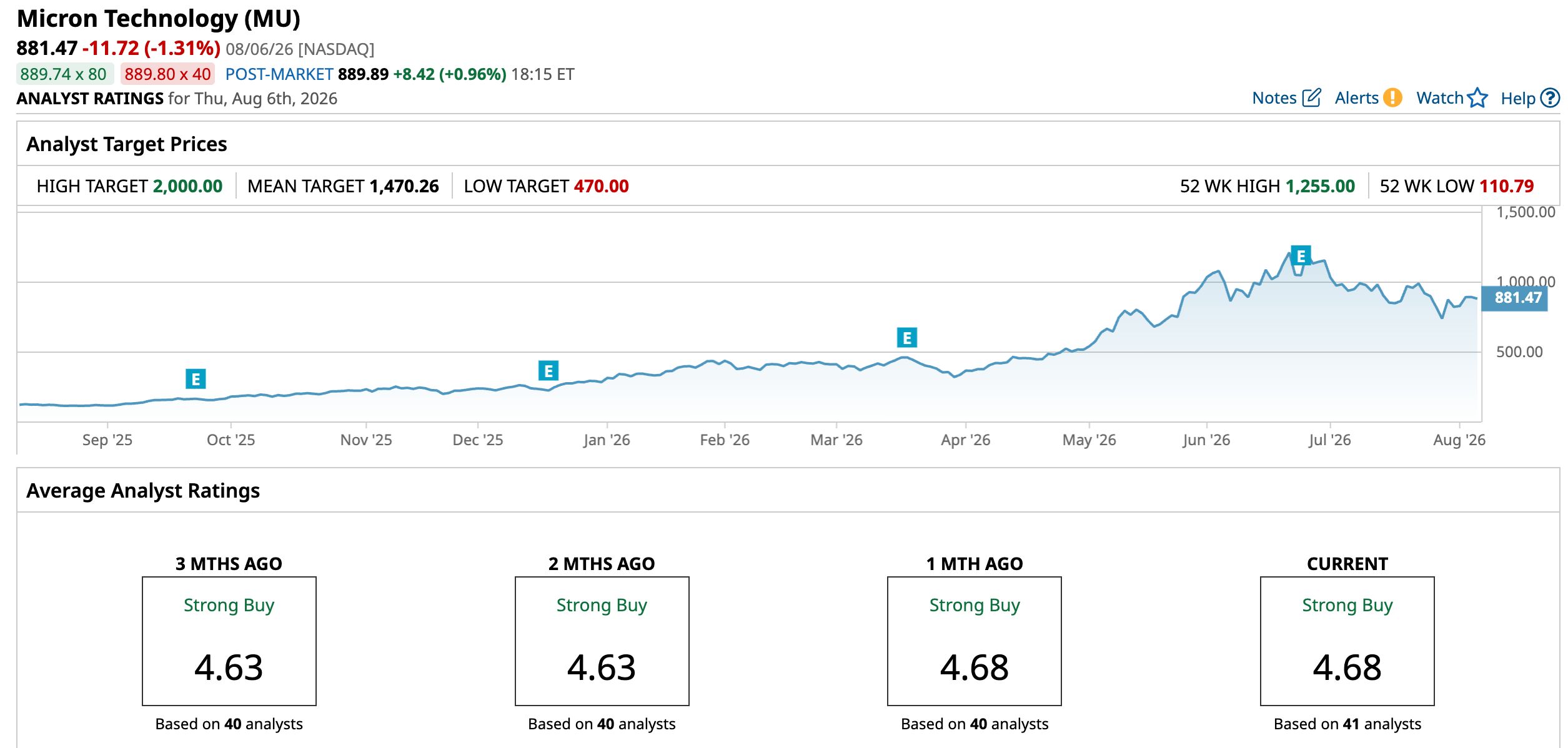
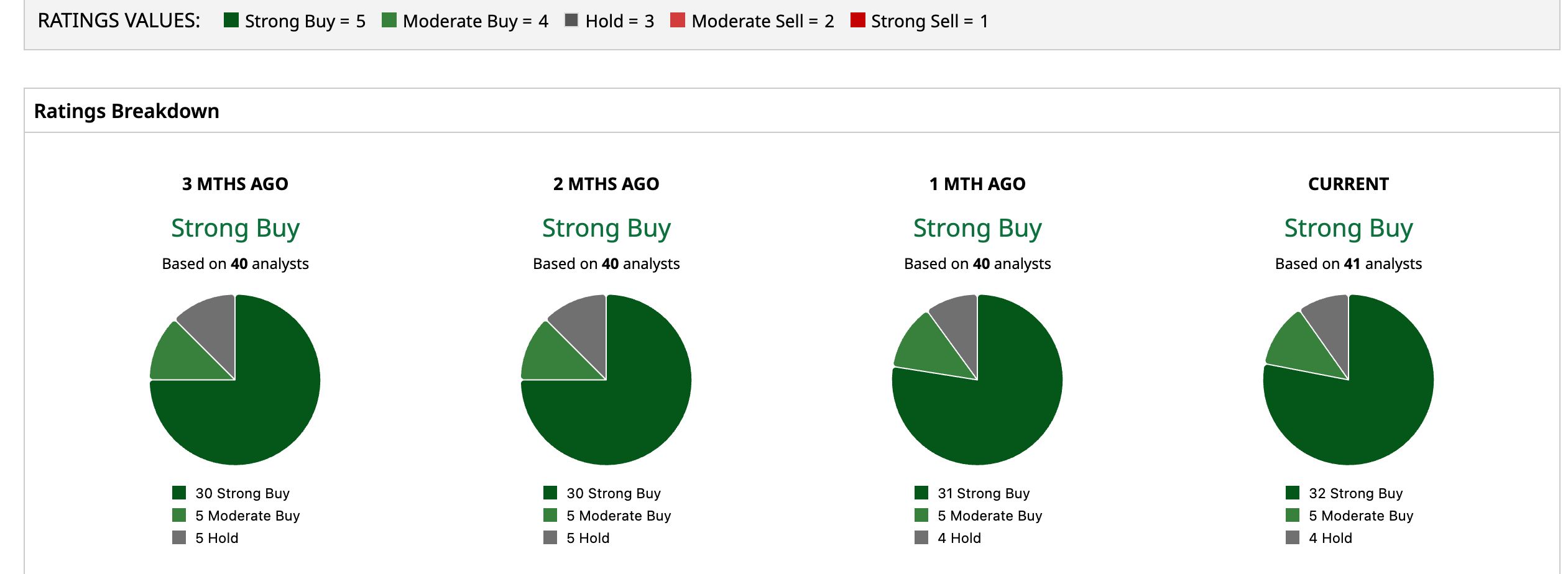
Overall, the stock carries a consensus “Strong Buy” rating among 41 Wall Street analysts covering it. Based on their estimates, it has a median price target of $1,470.26, implying a further 66.8% upside from current levels. Moreover, the highest price target of $2,000 suggests a compelling 126.9% upside from here.
 www.barchart.com
 www.barchart.com
 On the date of publication, Jabran Kundi did not have (either directly or indirectly) positions in any of the securities mentioned in this article. All information and data in this article is solely for informational purposes. For more information please view the Barchart Disclosure Policy here.
More news from Barchart
Don’t Assume Micron Will Share SanDisk’s Fate. Here's Why. The Potential of Space-Based Data Centers Is Huge. It's Not Enough to Make SpaceX Stock Appealing. Arm Stock Is Off 39% From Its High. Why This Could Be the Best Time to Buy. Wide-Moat Stocks Are the Sedative Your Tech-Dominated Portfolio Desperately Needs