

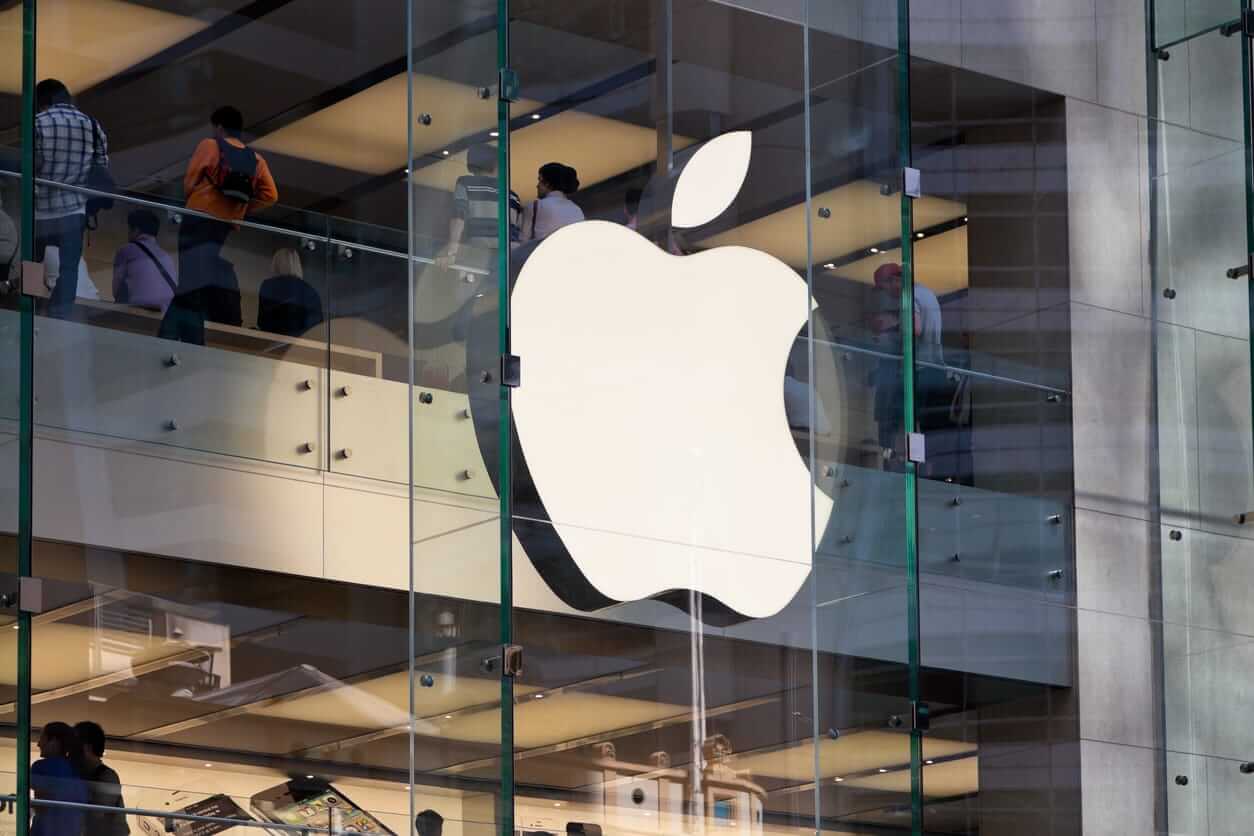
Picture walking up to your front door with both hands full of groceries. The lock senses your phone and clicks open. Inside, a screen on the kitchen counter recognizes your face and pulls up your evening schedule.
Apple (AAPL) has wanted to own this moment for more than a decade. Now, the company is trying again under a new CEO — and this time it has partnered with a well-known South Korean brand: LG. Let's take a closer look.
More Top Stocks Daily: Go behind Wall Street’s hottest headlines with Barchart’s Active Investor newsletter.
 www.barchart.com
 Why Apple Keeps Losing the Smart-Home Race
Apple first launched its HomeKit smart-home platform in 2014, but it has gained little traction compared to offerings from Amazon (AMZN) and Alphabet (GOOGL). The original HomePod struggled after its 2018 debut, and the cheaper HomePod mini did better while never becoming a major seller.
Siri was a big reason Apple fell behind. The company planned to launch a home display back in 2024. But its new and improved Siri wasn't ready, so Apple delayed the home devices, too. Now that Siri AI is finally rolling out, that roadblock may be clearing.
New CEO John Ternus took the reins on Sept. 1. Eight days later, at the most recent iPhone event, Apple executive Lilian Rincon said that users already make more than 2.5 billion Siri requests every day.
Apple is expected to unveil its smart-home push on Oct. 13. The centerpiece will reportedly be a hub with a roughly 6-inch square screen that recognizes who in the household is speaking. A new HomePod mini and Apple TV box are also on the launch horizon.
Apple and LG Team Up on Smart-Home Devices
Bloomberg recently reported that Apple has partnered with South Korea's LG as part of its smart-home push. Apple's new home ecosystem will include a doorbell, thermostat, and other accessories developed through an unusual partnership with LG Electronics. The products will carry the LG name, and LG will handle manufacturing and product support while Apple will handle product design and engineering.
Apple has used this playbook before, such as with Belkin and Logitech (LOGI). Put simply, through this strategy, Apple is able to get more devices into homes without building them or staffing support lines.
The release of the LG products will lag behind Apple's own devices and likely won't reach consumers until at least a few more months after Apple's hub and other devices, per Bloomberg. If the partnership works, the pair would be able to compete more directly with products like Amazon's Ring and Google's Nest.
Apple Continues to Grow at a Steady Pace
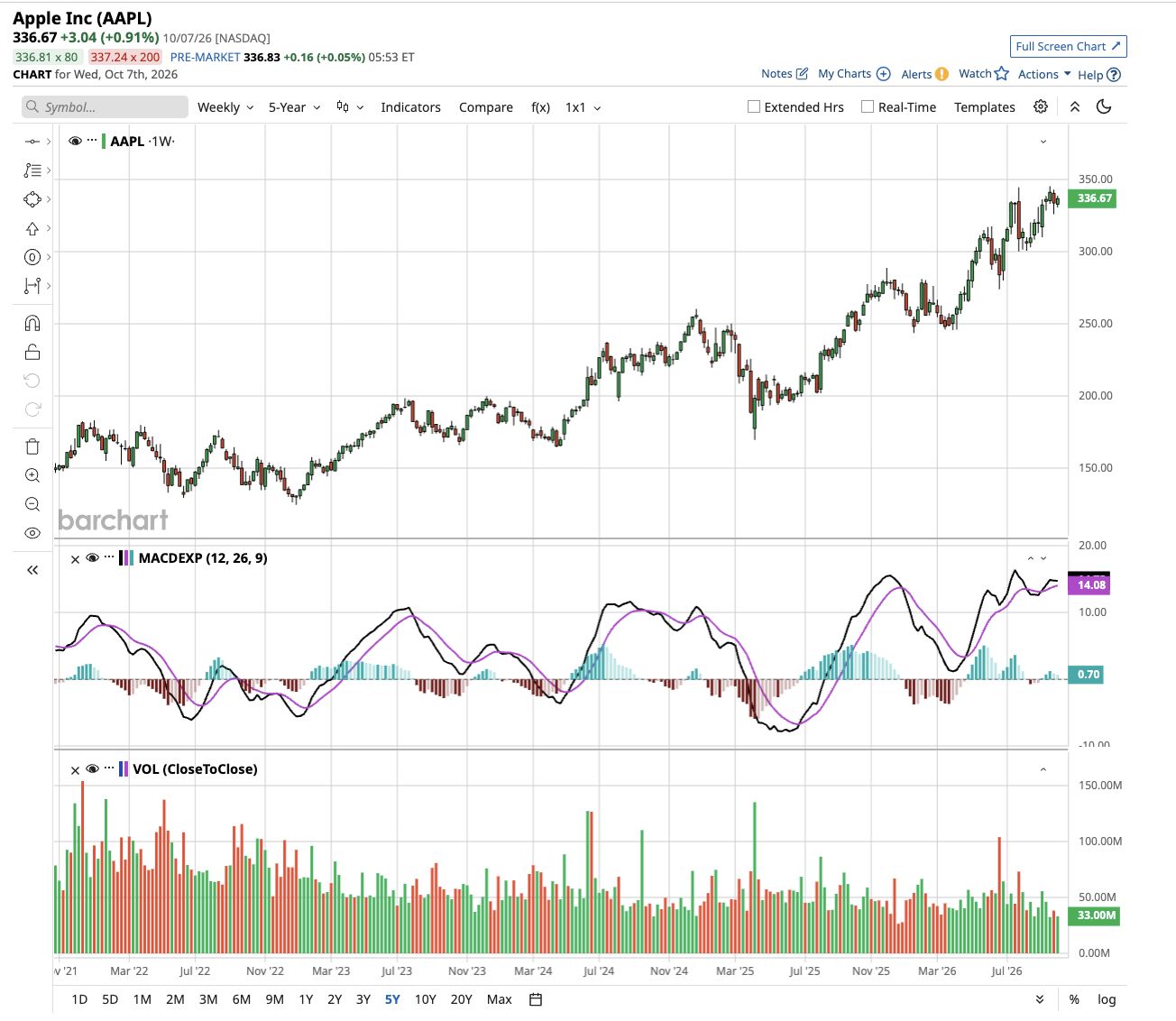
This latest push into the smart-home business arrives as Apple's core segments are booming.
In the third quarter of fiscal 2026, Apple reported revenue of $109.4 billion, up 16% year-over-year (YOY). Performance was strong across Apple's key segments; iPhone sales rose 22% YOY to $54.3 billion, Mac revenue climbed 29% YOY to $10.4 billion, Services revenue rose 12% YOY to $30.7 billion, and finally Wearables, Home and Accessories climbed 6% YOY to $7.9 billion.
The Wearables, Home and Accessories segment includes products such as the HomePod and Apple TV, and it accounted for roughly 7% of total sales in Q3. The segment was also the slowest-growing business in the quarter, so a fresh product lineup could be vital for the iPhone maker. Apple has more than 2.5 billion active devices worldwide, and each owner is a potential buyer for a home hub or an LG doorbell.
Management expects September-quarter revenue to grow by 10% at the midpoint of its guidance. On his final earnings call as chief executive of the company, now former CEO Tim Cook noted that iPhone and Mac sales came in far better than initial estimates. However, Cook also noted that the “supply chain just has less flexibility in it than normal” amid the artificial intelligence (AI) boom. “We've been pulling supply ahead. At some point, there's a limit to that,” he said.
Cook compared the surge in memory prices to a flood that comes once in 100 years. As a result, Apple "reluctantly raised prices" on some products. Management expects gross margin to be between 47% and 48% next quarter, down from 50.1% in Q3.
Is Apple Stock Still a Good Buy?
The deal with LG is unlikely to move the needle for Apple, even at a significant scale. The tech behemoth generates 50% of its sales from the iPhone, which is its flagship product. However, the LG partnership does suggest that Apple could unlock several other design collaborations with other manufacturing giants in the future.
At the Sept. 9 iPhone event, new CEO John Ternus called the iPhone an "intelligent personal hub." The home is the next room for that hub, with Siri AI tying it all together. "I think there are enormous opportunities for Apple moving forward in AI," Cook told analysts on the Q3 earnings call. For long-term investors, the case rests on iPhone strength, a huge installed base, and AI that keeps users inside Apple's ecosystem.
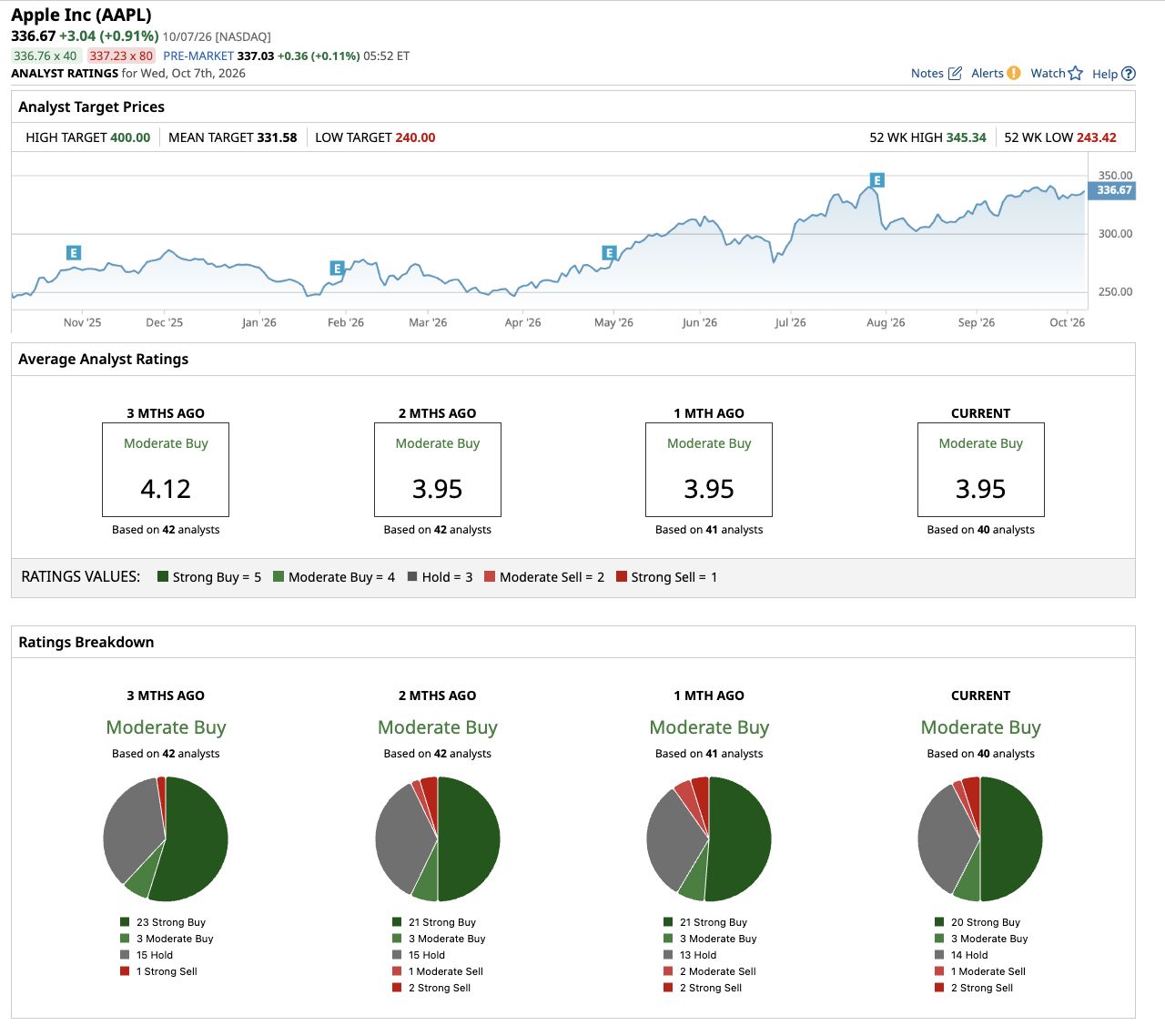
Out of the 40 analysts covering AAPL stock, 20 recommend a “Strong Buy” rating, three recommend a “Moderate Buy” rating, 14 recommend a “Hold” rating, one analyst recommends a “Moderate Sell,” and two recommend a “Strong Sell” rating. The average price target of $331.58 has already been surpassed by current levels, while the highest price target of $400 suggests potential upside of 19% from here.
 www.barchart.com
 On the date of publication, Aditya Raghunath did not have (either directly or indirectly) positions in any of the securities mentioned in this article. All information and data in this article is solely for informational purposes. For more information please view the Barchart Disclosure Policy here.