

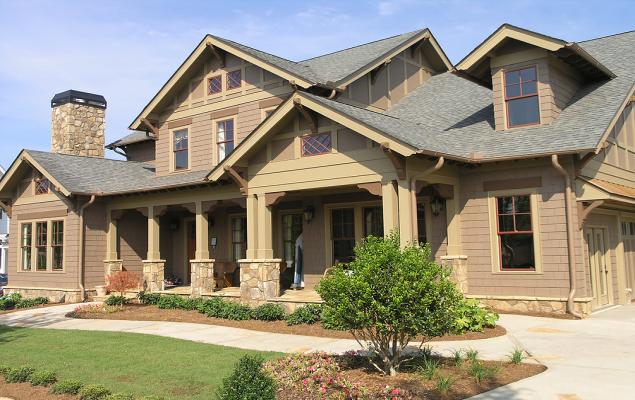
The first major federal housing affordability legislation in nearly 30 years has officially become law, concluding months of congressional negotiations and an unusual legislative process that saw President Donald Trump decline to sign the measure, as quoted on Yahoo Finance.
Although President Trump chose not to sign the legislation, he also did not veto it. Under a constitutional provision, if the president neither signs nor vetoes a bill within 10 days while Congress remains in session, the legislation automatically becomes law. As a result, the housing bill took effect without the president's signature.
The act is designed to improve housing affordability by encouraging new home construction, expanding financing options, and reducing barriers to housing development.
Key Measures to Boost Housing Supply
The legislation includes a broad range of initiatives aimed at increasing the nation's housing stock and lowering development costs. Key provisions include grants for local governments that ease restrictive zoning rules and promote housing construction.
Other measures include faster environmental review procedures for eligible housing projects, lower construction costs for manufactured homes, and restrictions on large institutional investors purchasing single-family homes.
Lawmakers hope these measures will help ease the nation's ongoing housing shortage and improve affordability.
Housing Industry Welcomes the Legislation
The new law has been widely welcomed across the housing sector. Note that the median U.S. home price recently reached an all-time high of $440,600. Sales of new single-family homes in the United States dropped 7.3% sequentially to a seasonally adjusted annualized rate of 580 thousand in May 2026, the lowest in four months.
New home sales declined for a second month in a row, as higher mortgage rates weighed on buyers. Meanwhile, housing supply rose to 496,000 units, equivalent to 10.3 months of supply at the last sales rate, the highest level since 2009, per Trading Economics.
Stocks & ETFs in Focus
D.R. Horton Inc. DHI, Meritage Homes Corporation MTH, Lennar Corporation LEN and Beazer Homes USA BZH should be well-positioned under the new law.
The housing industry also appears attractively valued. It trades at a forward price-to-earnings ratio of 14.75X versus 18.45X for the S&P 500. Its price-to-book ratio is equally attractive at 1.07X compared with 3.80X for the S&P 500.
Some government support was likely needed for housing companies, as the industry's earnings are projected to decline 14.66%, compared with the S&P 500's projected earnings growth of 10.05%.
The industry is also facing margin pressure, with a net margin of 6.09% compared with the S&P 500's net margin of 12.93%.
Against this backdrop, investors can consider ETFs such as the iShares U.S. Home Construction ETF ITB and the SPDR S&P Homebuilders ETF XHB.
Boost Your Portfolio with Our Top ETF Insights
Zacks' exclusive Fund Newsletter delivers actionable information, top news and analysis, as well as top-performing ETFs, straight to your inbox every week.
Don’t miss out on this valuable resource. It’s free!
Get it now >>Want the latest recommendations from Zacks Investment Research? Today, you can download 7 Best Stocks for the Next 30 Days. Click to get this free report
Lennar Corporation (LEN): Free Stock Analysis Report
D.R. Horton, Inc. (DHI): Free Stock Analysis Report
Meritage Homes Corporation (MTH): Free Stock Analysis Report
Beazer Homes USA, Inc. (BZH): Free Stock Analysis Report
State Street SPDR S&P Homebuilders ETF (XHB): ETF Research Reports
iShares U.S. Home Construction ETF (ITB): ETF Research Reports
This article originally published on Zacks Investment Research (zacks.com).