


Skyward Specialty Insurance Group, Inc. SKWD continues to grow its gross written premiums while retaining a smaller proportion of the business on its own books. In the third quarter of 2026, gross written premiums in the Skyward Specialty segment increased 10.2% year over year to $668.3 million. Net written premiums declined 8.4% to $403.9 million, while net earned premiums fell 6.2% to $330 million.
The decline reflects softer demand for dairy and livestock insurance and a new reinsurance arrangement for that business. By transferring more risk to reinsurers, Skyward can reduce its exposure to potential claims, although this also limits retained premium revenues. The challenge lies in maintaining underwriting earnings despite a smaller premium base.
So far, profitability has held up well. The Skyward Specialty segment reported a combined ratio of 88.3% in the third quarter, reflecting profitable underwriting. Group-level net operating income grew 32.2% year over year to $58.5 million, aided by Apollo's contributions. Net investment income surged 53.9% to $33.9 million, providing additional earnings support.
Skyward's ability to sustain earnings growth will depend on whether underwriting discipline and diversified income streams can offset slower retained premium growth in its core segment. While lower risk retention may protect profitability during unfavorable claims periods, continued pressure on net earned premiums could restrict underwriting income and future earnings upside. Maintaining strong margins without sacrificing growth will be crucial to supporting the stock's valuation.
How Are SKWD’s Peers Placed?
Among SKWD's peers, Kinsale Capital Group, Inc. KNSL and RLI Corp. RLI are also navigating changing premium trends while focusing on underwriting profitability.
Kinsale Capital is facing softer premium growth but continues to generate strong underwriting profits. In the third quarter of 2026, net written premiums declined 1.5%, while underwriting income rose 1.3%. KNSL’s 75.4% combined ratio reflects healthy underwriting margins despite competitive market pressures.
RLI continues to prioritize underwriting profitability amid modest premium growth. In the third quarter of 2026, gross written premiums increased 2%, while operating earnings rose 4.6%. RLI’s 86.2% combined ratio, compared with SKWD's core segment ratio of 88.3%, provides a useful benchmark for underwriting profitability.
SKWD’s Price Performance, Valuation and Estimates
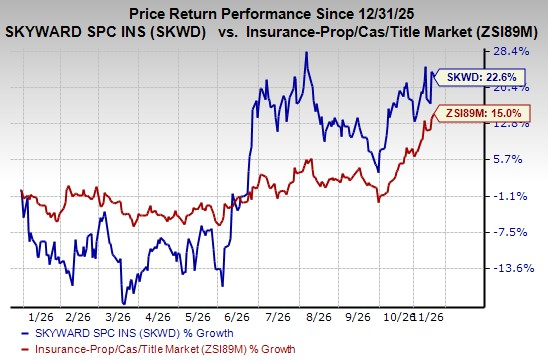
Shares of Skyward have gained 22.6% year to date, outperforming the broader industry’s 15% growth.
Image Source: Zacks Investment Research
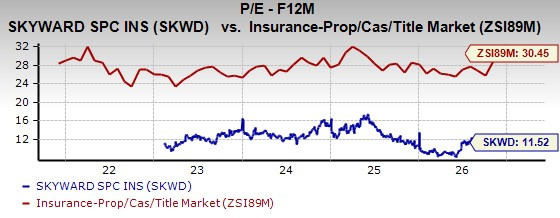
From a valuation standpoint, Skyward trades at a forward price-to-earnings ratio of 11.52, down from the industry average of 30.45. SKWD currently carries a Value Score of B.
Image Source: Zacks Investment Research
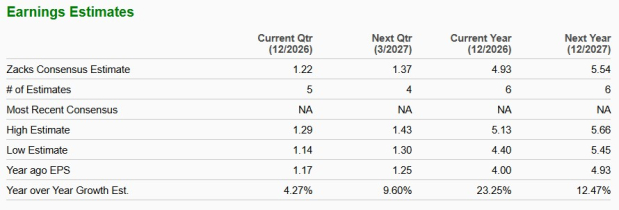
The Zacks Consensus Estimate for 2026 earnings implies a 23.3% rise year over year, followed by 12.5% growth next year.
Image Source: Zacks Investment Research
The stock currently carries a Zacks Rank #3 (Hold). You can see the complete list of today’s Zacks #1 Rank (Strong Buy) stocks here.
Zacks' Research Chief Names "Stock Most Likely to Double"
Our team of experts has just released the 5 stocks with the greatest probability of gaining +100% or more in the coming months. Of those 5, Director of Research Sheraz Mian highlights the one stock set to climb highest.
This innovative software-as-a-service firm upped its user base +22% year over year. That rate is increasing and margins are expanding as AI efficiencies take effect. Of course, all our elite picks aren't winners, but this one could far surpass earlier Zacks' Stocks Set to Double like D-Wave Quantum, which shot up +680.1%.
Free: See Our Top Stock And 4 Runners UpWant the latest recommendations from Zacks Investment Research? Today, you can download 7 Best Stocks for the Next 30 Days. Click to get this free report
Skyward Specialty Insurance Group, Inc. (SKWD): Free Stock Analysis Report
RLI Corp. (RLI): Free Stock Analysis Report
Kinsale Capital Group, Inc. (KNSL): Free Stock Analysis Report
This article originally published on Zacks Investment Research (zacks.com).