DAX — week of July 27 – 31, 2026: Long
40
DE40 Long Germany 40 Index
DAX — week of July 27 – 31, 2026: Long
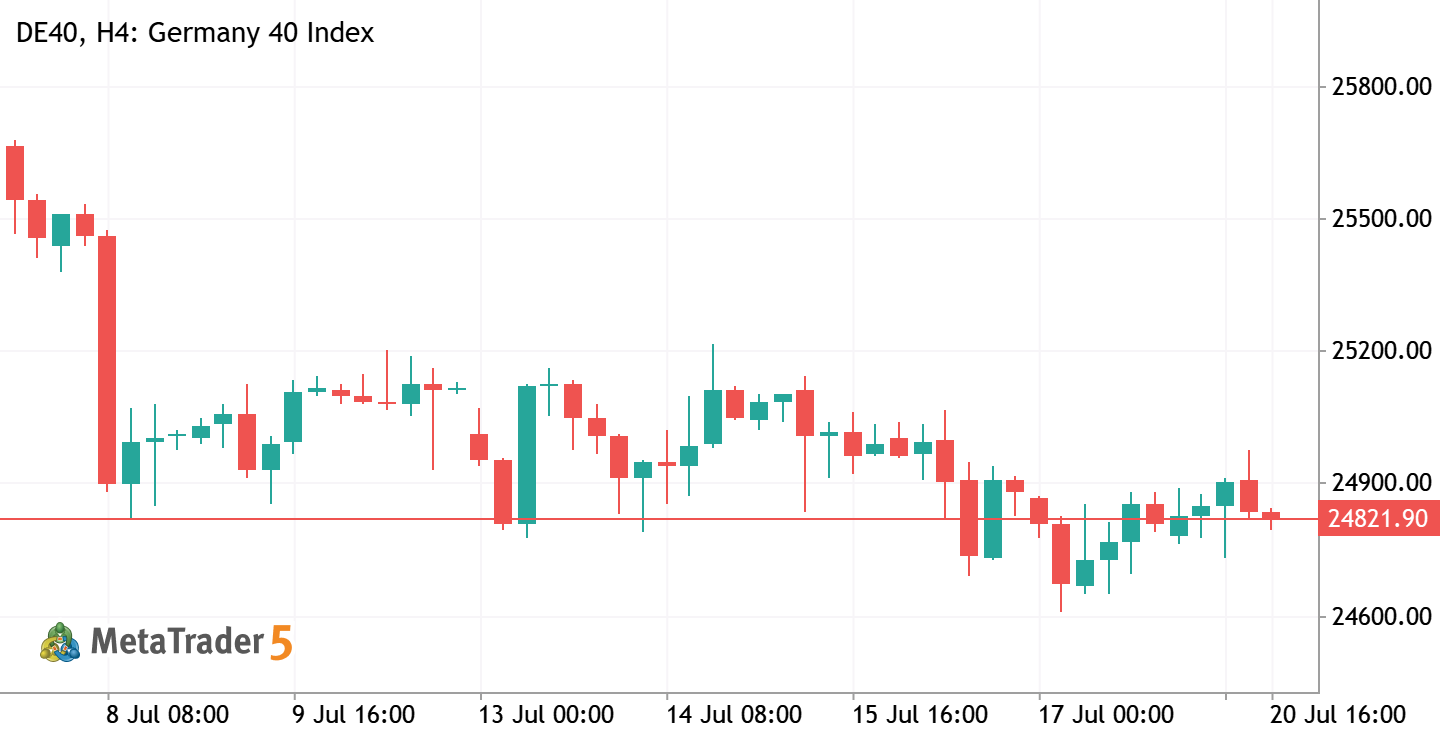
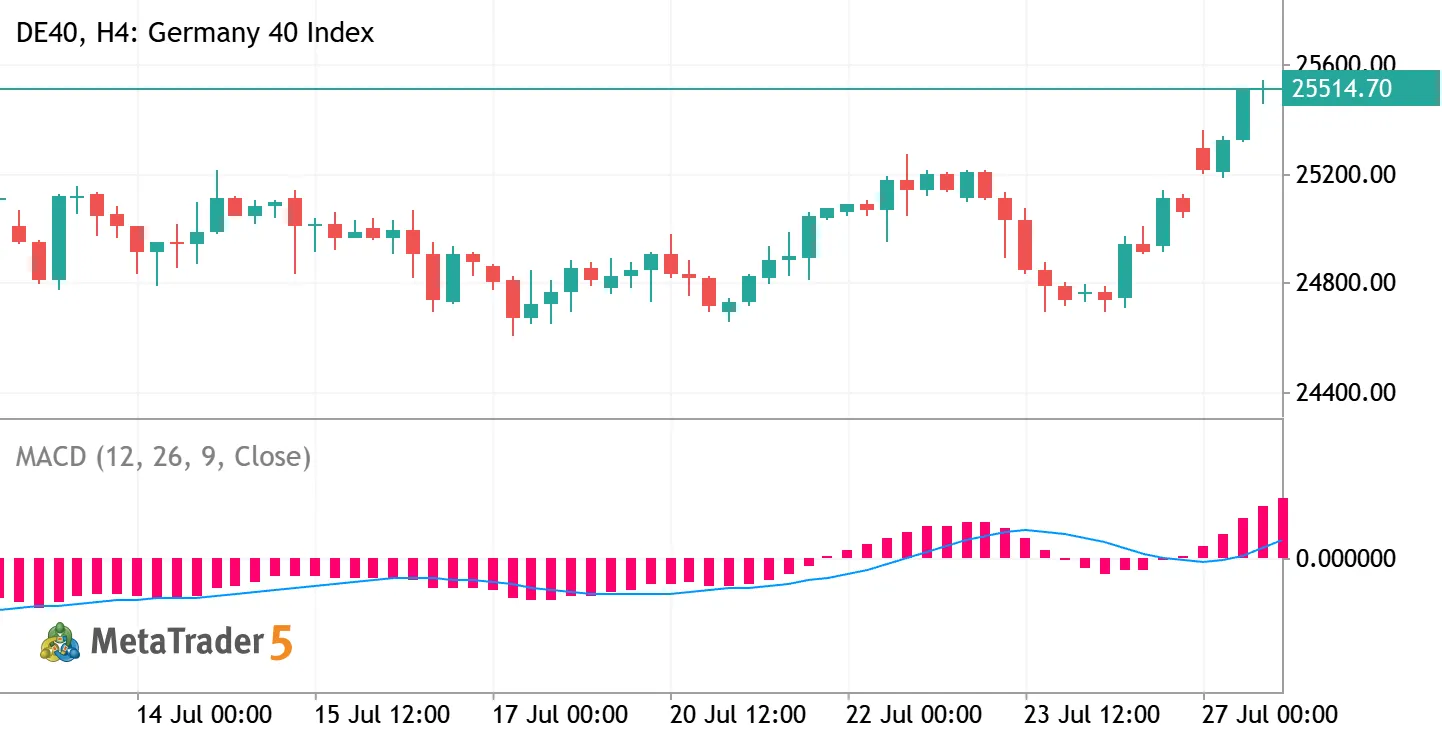
Long — Last week's map wanted 24,715 and the tape refused to pay it — the break off Wednesday's 25,370 died at 24,784, 69 points short, and Friday bought the whole thing back to a green 25,172 close. A market that won't do the easy thing is loading the hard one. This morning it gapped onto 25,370, last week's exact ceiling, held the retest 42 points above Friday's 25,228 high, and folded weekly R1 at 25,436 before lunch. Here is the mechanism behind the speed: resistance is inventory — prices where somebody owns something and defends it — and above 25,370 there is none. July 8 crossed the entire 25,000–25,660 corridor in one 703-point session on 34,226 lots, the heaviest day of the month, and in the thirteen sessions since, nothing above 25,370 has traded at all. That vacuum is why 300
0

stuki Istvan Balazsa 2026.07.27 13:20
DAX — week of July 20 – 24, 2026; SHORT
40
DE40 Short Germany 40 Index
DAX — week of July 20 – 24, 2026; SHORT
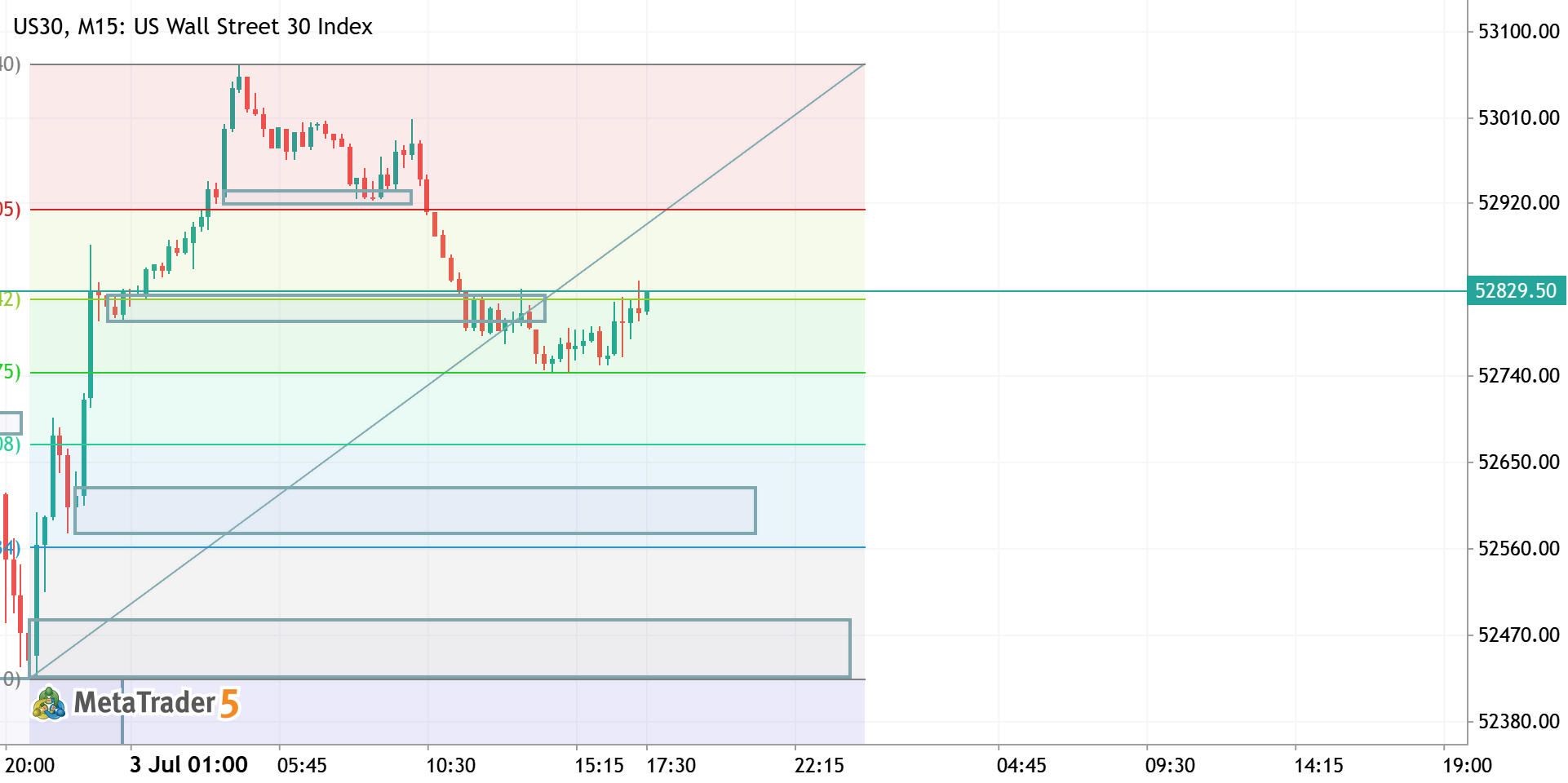
DAX — week of July 20 – 24, 2026 SHORT Two weeks ago the 26,064 'breakout' was a trap I called; last week the tape fade-and-flushed to 24,715 , exactly where I mapped it. Now it's coiled on the one number that matters, and almost nobody prints it: the weekly EMA ( 24,996 ), the weekly pivot ( 24,997 ), the 4H EMA ( 24,999 ) and the week's VWAP ( 24,950 ) are stacked inside a fifty-point knot at 24,950–25,000 . Price is sitting one tick above the whole cluster, bouncing a limp +0.3% off Friday's 24,715 low. That knot is the hinge — not the obvious 26,000 top, not the round 25,000 the tourists circle. Above it sits a tight ceiling: R1 at 25,279 tucked under last week's 25,343 high, a 64-point band where every bull trapped at 26,000 waits to average down. I'm a seller into 25,279–25,343 for
0
stuki Istvan Balazsa 2026.07.20 13:23
US100 – Potential Buy Opportunity After Liquidity Expansion
TEC
USTEC Long US Tech 100 Index
US100 – Potential Buy Opportunity After Liquidity Expansion
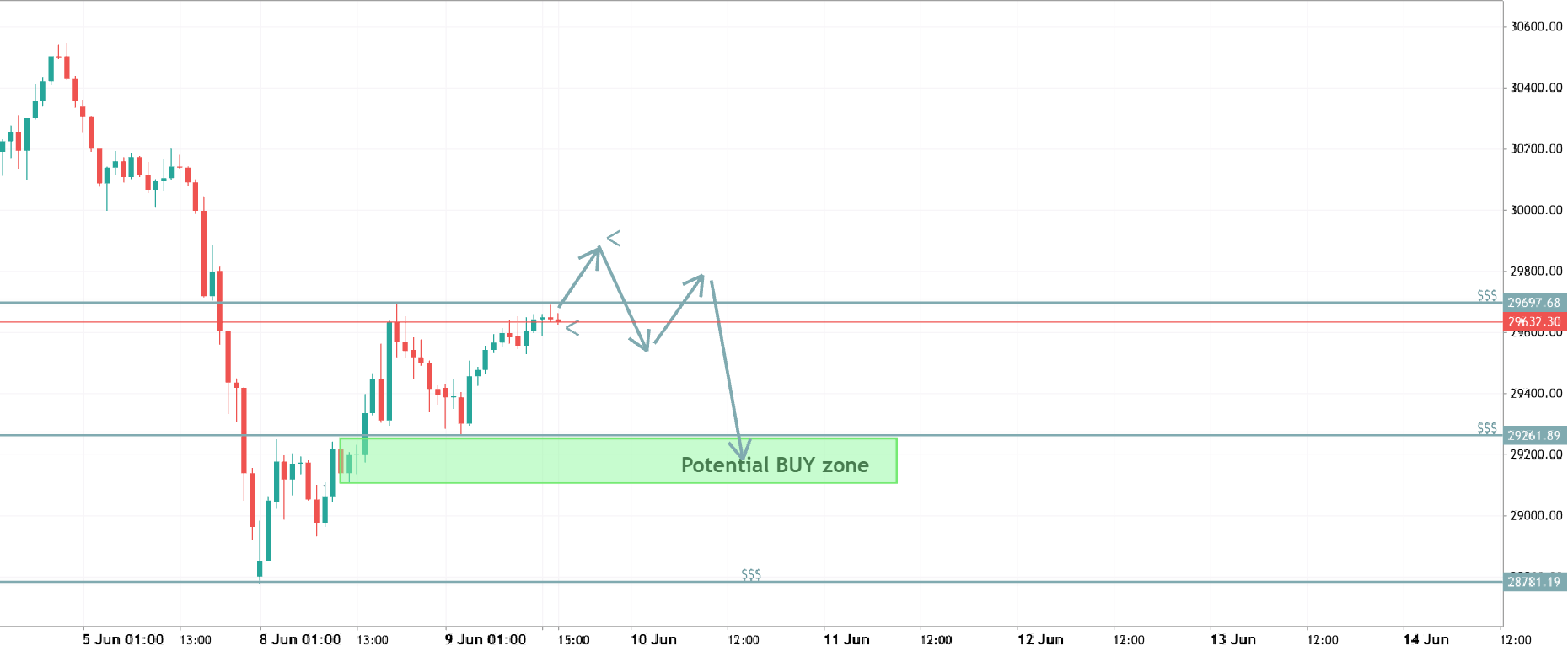
Market Context: The price action on US100 shows a strong bullish expansion followed by a corrective move into a key consolidation and high-volume area. After sweeping liquidity below the previous structure and reclaiming the range, price is now approaching a critical support zone aligned with volume accumulation. Key Observation: Liquidity sweep below previous lows Strong bullish impulse move upwards Pullback into high-volume consolidation area (value zone) Reaction expected around institutional buying interest level Trade Idea: I am expecting a potential continuation to the upside after a retracement into the highlighted buy zone. This area aligns with previous volume consolidation, making it a high-probability reaction zone. Scenario: Price may first retest the upper resistance area
0
hucaieduard Eduard-mihai Hucai 2026.06.09 12:24
Nasdaq 100 Linear Regression Channel Analysis
TEC
USTEC US Tech 100 Index
Nasdaq 100 Linear Regression Channel Analysis
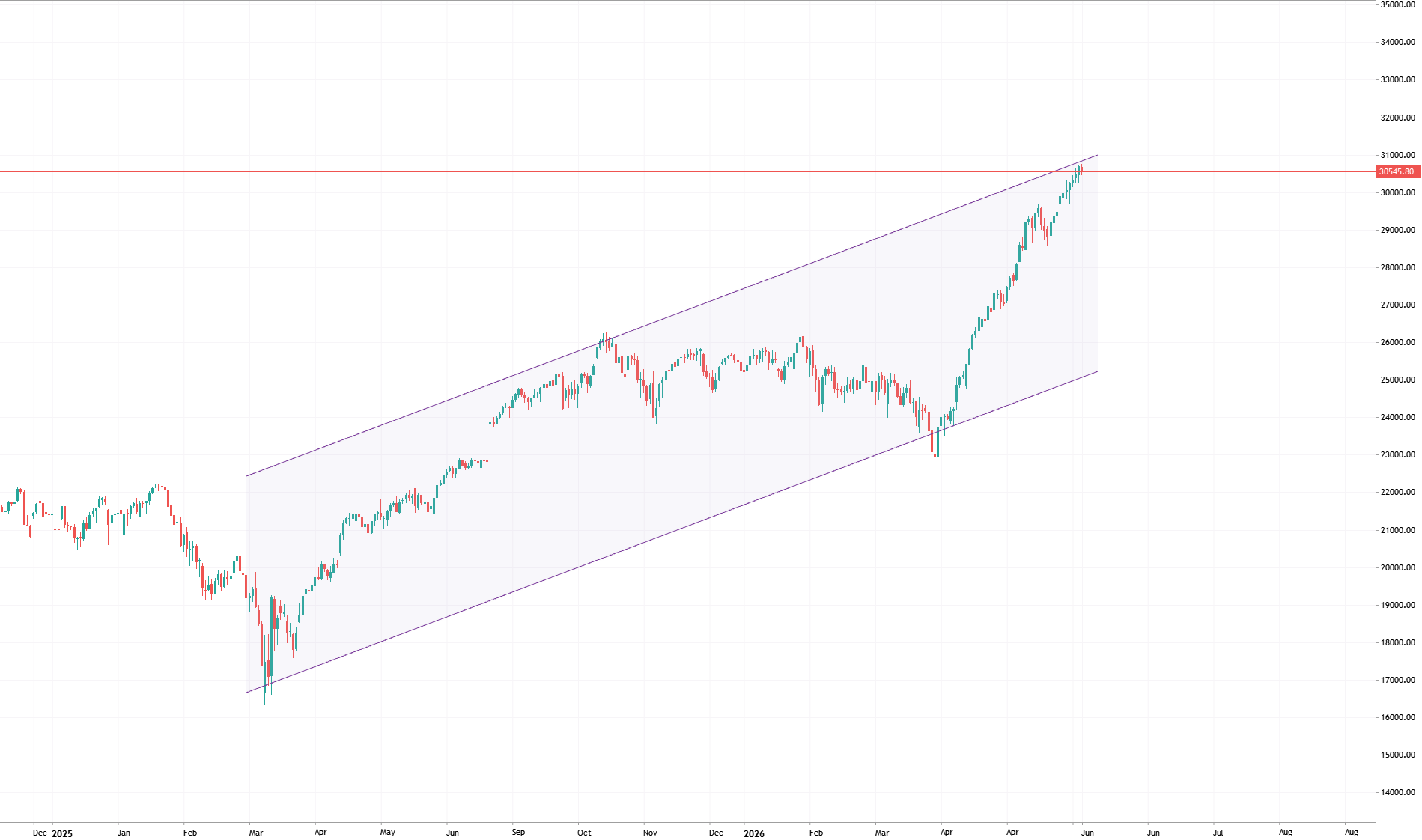
**[Nasdaq 100 Linear Regression Channel Analysis Summary]** --- ### 1. Review of the Late March Buy Signal * **Event:** Price broke below the lower channel boundary (-2SD) and then re-entered ➔ **BUY Signal Confirmed**. * **Result:** Mean reversion triggered at the statistical bottom, fueling a powerful 2-month uptrend. ### 2. Current Upper Breakout & Why No Signal Has Appeared * **Event:** Price is surging past the upper channel line (+2SD), yet no sell arrow has printed. * **Reason:** The system triggers a sell signal only when the price **breaks back down inside** the upper boundary, not simply when it touches or exceeds it. * **Interpretation:** The absence of a signal means the market is in a state of **extreme bullish momentum (trend extension)**, rising faster than the channel's
0
EricYosi Koo Hotbeom 2026.06.03 17:39
S&P 500 Drops 4.6% in Q1 — Can Markets Recover in Q2 Amid War and Rate Uncertainty?
500
US500 US SPX 500 Index
S&P 500 Drops 4.6% in Q1 — Can Markets Recover in Q2 Amid War and Rate Uncertainty?
📊 S&P 500 🔻4.6%, Nasdaq 🔻7.1%, Dow Jones 🔻3.6% January started on a strong and optimistic note. Economic growth was accelerating, the Federal Reserve appeared ready to continue cutting rates, and the AI boom still had plenty of runway. The mood across markets was genuinely positive. Then February 28 happened. The United States and Israel launched strikes on Iran — and just like that, sentiment collapsed. 📅 The Quarter That Wasn’t Q1 2026 turned into one of the most difficult quarters in recent years: S&P 500 fell 4.6% Nasdaq Composite dropped 7.1% Dow Jones Industrial Average declined 3.6% All three indexes recorded their worst quarterly performance in nearly four years. The Nasdaq officially entered correction territory on March 26, falling more than 10% from its recent peak — a level traders closely watch as confirmation that selling pressure is no longer temporary. The Dow followed a day later. Since the conflict began: Oil prices surged 63% Bond yields moved sharply higher The S&P 500 era
0
m Maxim Kruglov 2026.04.03 11:40