We describe an MQL5 framework that aligns entries with session rhythms and scheduled clock events. A script identifies the broker's time zone and DST by detecting NFP spikes on EURUSD and matching them to EU/US/AU transition dates, producing EA‑ready settings. Session-to-broker time conversion and 15-minute marks constrain execution. A multi‑timeframe AMA signal aggregates trends for strategy selection and optimization.
This article shows how to build a synthetic custom symbol in MQL5 by averaging OHLC data from multiple instruments into a single derived price series. It covers symbol collection and validation, custom symbol creation and configuration, timestamp alignment, historical reconstruction, and lightweight live updates. The result is a reusable method for creating synthetic instruments suitable for correlation analysis, index-style modeling, indicator development, and strategy testing.
Does better return conditioning buy strategy performance? We hold bar count fixed across time, tick, tick-imbalance, and tick-runs on 60.5 million EURUSD ticks, then meta-label RSI, Bollinger, and ADX/DI entries and score with purged cross-validation. No family delivers a consistent edge; efficacy varies narrowly and the best case fails a permutation test. Readers learn how to control overlap, leakage, and multiple testing in bar studies.
This article shows how to build an MQL5 Expert Advisor around the UT Bot Alerts indicator. The EA reads custom indicator signals via iCustom() and CopyBuffer(), evaluates entries only on new bars, using the last closed candle at index 1, and enforces a one-direction-at-a-time model by closing opposite positions before taking new entries. It also adds optional ATR-based stop-losses, reward-to-risk take-profits, dedicated buy/sell execution functions, magic-number tracking, and basic backtesting for repeatable evaluation.
Implementation of the N-BEATS architecture for Forex trading in MetaTrader 5 with quantile forecasting and adaptive risk management. The architecture is adapted through bilinear normalization and specialized loss functions for financial data. Backtesting on 2025 data shows inability to generate profits, confirming the gap between theoretical achievements and practical trading performance.
The article presents a production-oriented Order Block engine for MQL5 packaged as an include class, it validates zones via displacement and market structure break, maintains mitigation state only on closed bars, and avoids heavy copies by passing data by reference. A diagnostic indicator plots zones, and an EA gates logic to new bars for stable performance and reproducible tests.
We build an automated MQL5 program that trades Turtle Soup by fading false breakouts of the N-bar high and low. The article implements liquidity-sweep detection, confirmation closes back inside the level, sweep-depth and extreme-age filters, and an optional reversal-candle body check. It adds configurable dynamic or static stops, two take-profit modes, points-based trailing, and clear chart visuals, providing a ready baseline for backtesting and further customization.
This article will illustrate to the reader how to implement a mean-reverting strategy for the EURUSD pair. The strategy follows contrarian trading rules. Our strategy implements a weekly moving average channel, with one moving average on the high-price feed and the latter on the low-price feed. We enter short positions when the price falls beneath the low moving average and long positions when the price rises above the high moving average. Additionally, we will export daily market data to build a simple ONNX model of the market to provide an additional filter for our entries. This provides the reader with a reproducible template for strategy development and backtesting.
The article builds a reusable validation layer for Expert Advisors in MQL5. It implements lot-size rules and normalization, SL/TP and freeze-level guards, price digit normalization, margin sufficiency checks, unchanged-level filtering on modifications, account order-limit control, new-bar detection, symbol tradability checks, economic-calendar news windows, and session detectors. The result is cleaner code and fewer terminal errors in live trading.
We add a pinned-tools ribbon: a floating bar that exposes frequently used tools for one-click access without reopening the sidebar. The article implements the ordered pin set and its API, an anti-aliased pushpin control in the flyout, and the ribbon with offscreen clipping, user-resizable width, and horizontal scrolling. The result is faster activation of favorite tools from a draggable, resizable ribbon on the chart.
In this article, we introduce the Mamba4Cast framework and take a closer look at one of its key components: timestamp-based positional encoding. The article shows shows how time embedding is formed taking into account the calendar structure of the data.
The article discusses the adaptation and practical implementation of the ACEFormer framework using MQL5 in the context of algorithmic trading. It presents key architectural decisions, training features, and model testing results on real data.
This article implements a real-time monitoring dashboard for a self-healing MetaTrader 5 Expert Advisor. The dashboard displays the current EA state, virtual stop-loss and take-profit levels, breakeven and trailing status, recovery state, synchronization status, and heartbeat information directly on the chart. By exposing the internal recovery state visually, the Expert Advisor becomes easier to monitor, verify, and troubleshoot while managing active trades.
We build an MQL5 Expert Advisor that emails a structured daily trading report. The article shows how to configure SMTP in MetaTrader 5, collect and filter closed trades for the previous day, compute totals for profit, wins, losses, and trade count, and assemble account details into the subject and body. You also schedule one send per day and prevent duplicates using daily candle detection.
This article presents a complete Expert Advisor built around Stan Weinstein's Stage Analysis method. The EA classifies the market into one of four stages using the 30-week moving average slope and position and volume behavior, then trades only Stage 2 breakouts long and Stage 4 breakdowns short. It explains each stage, how to detect it programmatically, and why the method's discipline—trading only in the correct stage—is what produces the edge.
The article presents an innovative hybrid system for forecasting exchange rates that combines a linear autoregressive model with a U-Transformer architecture for residual analysis. The system automatically switches between signal sources depending on their quality and includes complete trading logic with averaging/pyramiding strategies. The key advantage of this approach is that the neural network is trained on the residuals of the linear model, which simplifies the task and reduces the risk of overfitting. The implementation is done entirely in MQL5 and is ready for use in real trading with automatic adaptation to changing market conditions.
We invite you to explore the ACEFormer architecture — a modern solution that combines the effectiveness of probabilistic attention with adaptive time series decomposition. This article will be useful for those seeking a balance between computational performance and forecast accuracy in financial markets.
In this article, we build an automated trading program in MQL5 that detects the Quasimodo reversal pattern from a zig-zag of confirmed swing pivots. We work through swing detection, pattern arming, retrace entries at the QM line, and structural stop placement with risk-based sizing. We also add trade management with breakeven, trailing, and partial closing to handle open positions.
This article introduces an MQL5 trade authorization framework built around CDisciplineLayer, CDisciplineGuardian, and CDisciplinePanel. The framework manages setup lifecycles, signal freshness, session restrictions, setup expiry, and global trading locks through a centralized authorization layer. It also provides automated enforcement of violations and a real-time dashboard, enabling consistent trade validation and monitoring before and after execution.
The article establishes a reproducible method to measure portfolio risk for multiple symbols using MQL5 matrices and OpenBLAS. It covers computing log returns, building a covariance matrix, and evaluating wᵀΣw instead of summing individual variances. A complete script prints naive versus true volatility and the cross‑term contribution, enabling you to detect when correlated instruments inflate exposure beyond single‑asset estimates.
This article adds trade-state reconciliation and Safe Mode recovery to a MetaTrader 5 Expert Advisor. The EA continuously validates recovery integrity by comparing the live broker position with the persisted SQLite state and the in-memory runtime state. Detected inconsistencies trigger an automatic transition to Safe Mode, suspending virtual protection, breakeven, and trailing management until the recovery state can be trusted again.
This article lays out 'CMoneyKDTreeESN' custom money management class usable with the MQL5 Wizard, that combines the KD-Tree algorithm and the Echo State Network. We use the KD-Tree on log returns and ATR to give us a risk score, while the ESN tracks recent flow to give us a bounded lot size multiplier. Our class is usable in a variety of Wizard assembled Expert Advisors as shown here with the Envelopes and RSI signals, with a broad objective of modulating exposure in high-volatility and tail-risk environments.
This article demonstrates how to build a reusable prop‑firm evaluation module for MQL5 Expert Advisors and export results to an HTML dashboard. The module monitors balance and equity during backtests, simulates single or rolling challenges, checks profit target, daily and overall drawdown, and minimum trading days, then outputs both a terminal summary and a browser‑readable report.
Building on Part 2, the implementation introduces restart-aware breakeven and trailing-stop systems for MetaTrader 5. The EA persists the state, such as breakeven activation, last trailing price, and virtual SL in SQLite, then restores them on startup. This preserves dynamic protection flow and prevents lost progress after terminal interruptions.
We add a tabbed settings window opened from the ribbon and bound to the selected object. The tabs — Style, Text, Coordinates, and Visibility — are built from the same descriptor system, with scrolling, per-level rows, and shared color/width/style popovers. The article covers layout, rendering, interaction, and inline price/time and numeric editing. You get one place to edit every property with live preview and commit-or-discard on close.
The article focuses on creating a trading system with a real quantum simulator instead of mathematical analogies. The system uses 3 virtual qubits, quantum gates and superposition principles to analyze markets. It is implemented as a trading EA for MetaTrader 5 in MQL5. The main achievement is the transition from simulation to real quantum principles of financial information processing.
This article presents 'CSignalUKFCapsNet', as a custom class coded in MQL5. This class is meant to be used with the MQL5 Wizard when assembling an Expert Advisor and when selected in the Wizard it defines the Expert Advisor's entry signals. In building this custom class, we brought together the algorithm Unscented Kalman Filter and the Capsule Neural Network. Our algorithm is showcased with four operation modes, and the coding of this as a custom class for the MQL5 Wizard, allows testing with various Trailing Stop methods and Money Management systems.
This article describes a live data export framework for MetaTrader 5 built around a decoupled, three‑layer design. The MQL5 component batches bar and tick records via a write buffer and rotates CSV files daily; a Python daemon tails the stream, renders a live dashboard, and flags anomaly thresholds. The demo indicator illustrates integration points, enabling real‑time monitoring and auditability during trading sessions.
This article implements an MQL5 Expert Advisor that connects to a weekend gap indicator via iCustom and CopyBuffer, reading six buffers for buy/sell signals and SL/TP. It validates broker stop-distance rules, handles closed-bar confirmation and duplicate-signal control, and executes orders with a configurable magic number. The EA also includes midpoint stop-loss management and a backtesting procedure so you can verify behavior and adapt parameters to your setup.
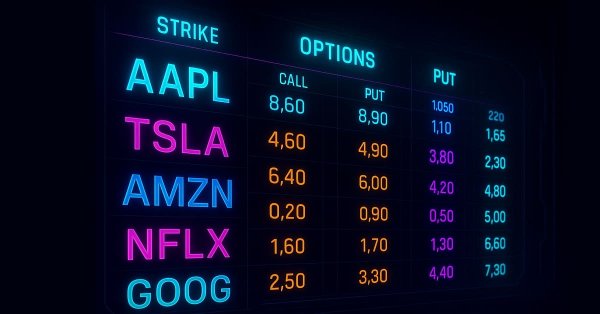
The article considers simple options strategies and their implementation in MQL5. We will develop a basic EA that will be modernized and become more complex.
We continue to implement the DA-CG-LSTM framework, which offers innovative methods for time series analysis and forecasting. The use of CG-LSTM and dual attention allows for more accurate detection of both long-term and short-term dependencies in data, which is particularly useful for working with financial markets.
We add a descriptor-driven property stack and a floating ribbon that binds to the current selection on the drawing layer. The article covers the descriptor list for each tool, the engine get/set API with snapshot-and-restore live preview, and widget renderers for color, opacity, line width, line style, fonts, and level visibility. You get in-place, real-time editing of object appearance via a compact, draggable panel.
This article introduces the DA-CG-LSTM algorithm, which offers new approaches to time series analysis and forecasting. It explains how innovative attention mechanisms and model flexibility can improve forecast accuracy.
In this article we consider a custom MQL5 Wizard class that processes Money Management. Our custom class is labelled ‘CMoneyWaveletLSTM’, and is developed by combining the Wavelet Thresholding algorithm with an LSTM network. As has been the case throughout these series, the developed model is testable with MQL5 Wizard-Assembled Expert Advisors that can be tuned with different trailing stops and entry Signals classes. We maintain our entry Signal, as in past articles as the built-in 'Envelopes' class and the RSI class.
The Actor–Director–Critic framework is an evolution of the classic agent learning architecture. The article presents practical experience of its implementation and adaptation to financial market conditions.
This article replaces binary swing validation with a volatility‑normalized pullback model. Retracement depth is measured as a ratio of the prior impulse and calibrated to a rolling ATR regime, while entries require a minimum quality score and confirmation by structure or liquidity signals. The five‑layer design integrates detection, validation, liquidity mapping, regime‑aware scoring, and execution, helping you filter weak corrections and size stops dynamically to current conditions.
We add eight shape tools and nine annotation tools to the canvas and implement a full in-place label-editing system. The article walks through geometry, AA rendering, shared word-wrap and supersampled text helpers, and the caret-driven state machine for typing, navigation, and selection. This yields a complete, consistent annotation toolkit with editable labels that plugs into the prior interaction pipeline.
Build a restart-aware virtual protection layer on top of the SQLite persistence from Part 1. The EA reconstructs hidden stop-loss and take-profit after restart, verifies current price against recovered exits, and closes or continues positions accordingly. The result is a consistent recovery path that detects managed positions and sustains safe runtime management.
A typed publish-subscribe event bus in MQL5 replaces global variables and direct cross-references. Using an abstract listener interface and an enum-indexed subscription table, a signal engine, order manager, and drawdown monitor communicate only through the bus, with no shared state. The article analyzes dispatch overhead, pointer validation, and recursive publish risks, helping you design decoupled, testable EAs.
We invite you to explore the Actor-Director-Critic framework, which combines hierarchical learning and a multi-component architecture for creating adaptive trading strategies. In this article, we take a detailed look at how using the Director to classify the Actor's actions helps to effectively optimize trading decisions and improve the robustness of models in financial market conditions.