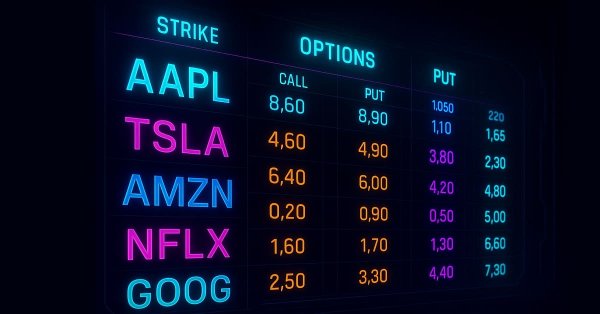
This article walks through creating an MT5 indicator that ingests option chains from native symbols or CSV, inverts prices to implied volatility via a hybrid Newton–Raphson/bisection method, and assembles a clean strike–expiry grid. It then renders a shaded, rotatable 3D surface with the platform's DirectX layer, enabling clear, in-terminal analysis of skew and term structure using live or file-based data.
This article turns the verified TDA pipeline into a live MQL5 indicator. It reduces each price window to two persistence-entropy lines (H0 and H1), computes a normalized loop-strength metric with an adaptive percentile band, and places fade marks only when loop strength is high and price hits a window extreme. You can attach the indicator, read six buffers from an Expert Advisor, and tune key window, ranking, and performance parameters.
The ProSpread seasonality index indicator with a Moving Average is a technical analysis tool that identifies seasonal patterns in price movements, analyzes price behavior during specific trading hours and is able to work with either a single instrument or a spread between two assets. It also visualizes the statistical probability of directional movements.
The article upgrades SuperTrend by integrating a divergence engine (MPO4 or RSI) the dynamically reduces the ATR multiplier during weakening momentum. It covers the shrinking formula, non-repainting state propagation with dedicated buffers, and a step-by-step MQL5 implementation on the price chart. You will learn how to interpret arrows and line flips, adjust inputs, and apply the indicator for disciplined trailing and earlier confirmations.
We build an automated MQL5 program that trades Turtle Soup by fading false breakouts of the N-bar high and low. The article implements liquidity-sweep detection, confirmation closes back inside the level, sweep-depth and extreme-age filters, and an optional reversal-candle body check. It adds configurable dynamic or static stops, two take-profit modes, points-based trailing, and clear chart visuals, providing a ready baseline for backtesting and further customization.
The article builds a reusable validation layer for Expert Advisors in MQL5. It implements lot-size rules and normalization, SL/TP and freeze-level guards, price digit normalization, margin sufficiency checks, unchanged-level filtering on modifications, account order-limit control, new-bar detection, symbol tradability checks, economic-calendar news windows, and session detectors. The result is cleaner code and fewer terminal errors in live trading.
We complete persistent homology for MQL5 by reducing the Vietoris–Rips boundary matrix to a persistence diagram. The article implements Z/2 column reduction (CTDAReduction), a diagram container with analytics (CTDADiagram), and a facade that runs the six-stage pipeline in one call (CTDA). Outputs are cross-checked against Ripser to numerical agreement, enabling reliable diagram-based metrics.
This article presents a complete Expert Advisor built around Stan Weinstein's Stage Analysis method. The EA classifies the market into one of four stages using the 30-week moving average slope and position and volume behavior, then trades only Stage 2 breakouts long and Stage 4 breakdowns short. It explains each stage, how to detect it programmatically, and why the method's discipline—trading only in the correct stage—is what produces the edge.
A population-based optimization algorithm inspired by a controversial and little-studied phenomenon - the mechanism of human dreams. Agent groups with different "memory", cosine-wave modulation of motion, and an unusual 99/1 phase distribution — learn how these features affect the optimization efficiency of your trading strategies.
What if your trading strategies could learn from each other, like real fighters? Duelist Algorithm is a new optimization method where trading system parameters literally duel for the right to be called the best.
In this article, we build an automated trading program in MQL5 that detects the Quasimodo reversal pattern from a zig-zag of confirmed swing pivots. We work through swing detection, pattern arming, retrace entries at the QM line, and structural stop placement with risk-based sizing. We also add trade management with breakeven, trailing, and partial closing to handle open positions.
We present a complete workflow for adaptive filtering in MQL5 using the CNlEq Levenberg–Marquardt–like solver. The EA fits a VAMAC model—two EWMAs with an ATR‑based scaling—by supplying residuals and a Jacobian through CNlEq's reverse‑communication loop, with optional numerical or analytical derivatives. Code, setup instructions, and GBPUSD H1 tests show how to replace static thresholds with on‑bar re‑estimation.
We turn a price-embedded point cloud into a Vietoris–Rips filtration and its boundary matrix. The article enumerates vertices, edges, and triangles with filtration values, sorts them in entry order, and builds O(1) vertex/edge lookups. You get MQL5 classes CTDARips and CTDABoundary and a sparse Z/2 boundary suitable for the next-step persistence reduction.
We resume the topic of optimization by the scientific community. CoSO should not be viewed as a ready-made solution, but as a promising research platform. With proper development, CoSO can find its niche in tasks where adaptability and resilience to change are important, and computation time is not critical.
This article extends the chart‑object detector into a modular monitoring and execution layer. It defines objective interaction rules (touch, cross, breakout) for trendlines, Fibonacci levels, channels, rectangles, and pitchforks, then routes events through an interaction detector, alert manager, and optional trade executor. Orders use object geometry for stop‑loss and take‑profit. The result is a reproducible pipeline that converts static drawings into actionable alerts and, if enabled, trades.
MetaTrader 5 is well suited for AI trading because it combines market data, MQL5 development, Python research, ONNX models, Strategy Tester, VPS, and the MQL5.community ecosystem into a single workflow. This article demonstrates a practical path from AI prompts to structured signals, working with code via the AI Assistant in MetaEditor, a quality model, a custom-created Expert Advisor, testing, and a controllable launch of a trading system.
The article considers simple options strategies and their implementation in MQL5. We will develop a basic EA that will be modernized and become more complex.
We introduce MPO4, a pressure-based oscillator that emphasizes the body and direction of candles in the context of current volatility. The article details its mathematics, normalization into a bounded range, and the EMA smoothing, then builds a pivot-driven divergence module designed not to repaint. You get complete MQL5 implementation and practical guidance for interpreting signals, including a comparison with RSI as an alternative source.
Secrets of effective optimization of trading strategies in metaheuristic approaches. Community of Scientists Optimization is a new population-based algorithm inspired by the mechanisms of the scientific community. Unlike traditional nature-inspired metaphors, CoSO models unique aspects of human scientific activity: publishing results in journals, competing for grants, and forming research teams.
The article presents a practical foundation for shape analysis of price series in MQL5. It implements Takens time‑delay embedding to build a phase‑space point cloud and computes the full pairwise distance matrix under selectable norms. The CTDAPointCloud and CTDADistance classes are provided with a demo script that embeds chart data and outputs results, preparing inputs for downstream topological tools.
This article shows how to build a hands-free trading workflow for MetaTrader 5 by translating webcam-tracked hand gestures into MQL5 trade commands. We cover the architecture (MediaPipe/OpenCV in Python plus an MQL5 EA), gesture-to-action mapping, and interprocess communication via Global Variables or HTTP polling. You will implement the EA, execute BUY/SELL/CLOSE actions, and validate latency and reliability under real‑time conditions.
The article presents the Competitive Learning Algorithm (CLA), a new metaheuristic optimization method based on simulating the educational process. The algorithm organizes the population of solutions into classes with students and teachers, where agents learn through three mechanisms: following the best in the class, using personal experience, and sharing knowledge between classes.
The article discusses the Extremal Optimization (EO) algorithm, an optimization method inspired by the Bak-Sneppen self-organized criticality model, where evolution occurs through the elimination of the worst-case components of the system. The modified population version of the algorithm demonstrates a shift away from theoretical principles in favor of practical efficiency, leading to the creation of powerful computational tools.
This article shows how to build a local stop-loss system in an MQL5 Expert Advisor that keeps stop levels on the terminal side. It walks through the execution logic, event handlers, inputs, and an OOP design using CTrade, CPositionInfo, CHashMap/CHashSet, and chart objects. You will implement multi-position tracking, draggable stops, visual spacers and labels, plus cleanup and disconnection behavior to create a practical risk-control utility.
This article presents CTradeJournal, a self-contained MQL5 class for live tracking of open positions at tick frequency. It maintains MAE, MFE, and initial risk in money, calculates the R-multiple when a position closes, and writes a complete CSV record. The text explains the design choices, provides the implementation, and shows simple EA integration so you can analyze entries, stop placement, and outcome distribution.
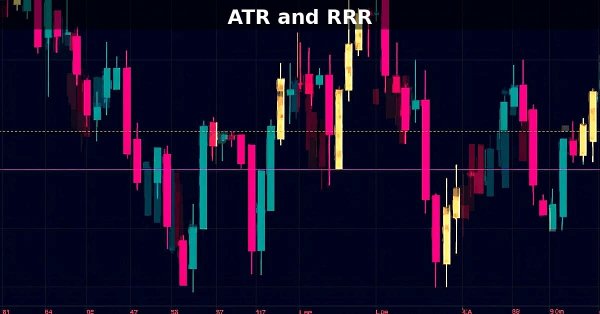
This article completes the implementation of ATR- and RRRR-based breakeven mechanisms in MQL5 and develops, from scratch, a class that makes it easy to switch breakeven modes without having to enter the parameters again. To evaluate the effectiveness of each breakeven type, several backtests are run, analyzing their advantages and disadvantages in the context of algorithmic trading.
The article describes an MQL5 EA that automates Wyckoff accumulation and distribution via a finite state machine. It confirms spring to SOS and upthrust to SOW before placing LPS or LPSY entries, using relative tick volume as the confirmation metric. Readers get the state model, detection criteria, code organization, and MetaTrader 5 testing procedure.
In this article, we take a closer look at the DEA algorithm, a metaheuristic optimization method inspired by dolphins' unique ability to find prey using echolocation. From mathematical foundations to practical implementation in MQL5, from analysis to comparison with classical algorithms, we will examine in detail why this relatively new method deserves a place in the arsenal of researchers facing optimization problems.
This article presents a compact MQL5 utility layer for routine trade operations. It includes position existence checkers, position counters, bulk close helpers, and functions to retrieve the most recent or oldest position by symbol, magic, or type. A simple SMA crossover Expert Advisor demonstrates integration. The result is cleaner EAs, fewer inconsistencies across projects, and faster maintenance.
Developing permutation-based tools in MQL5 provides a systematic way to analyze candlestick pattern combinations for trading strategies. This article introduces a permutation calculator and generator designed to compute and enumerate all possible ordered candlestick sequences from bullish and bearish sets, with or without repetition. By generating exhaustive pattern combinations, traders can perform data-driven analysis to identify high-probability market patterns and improve decision-making in automated trading systems.
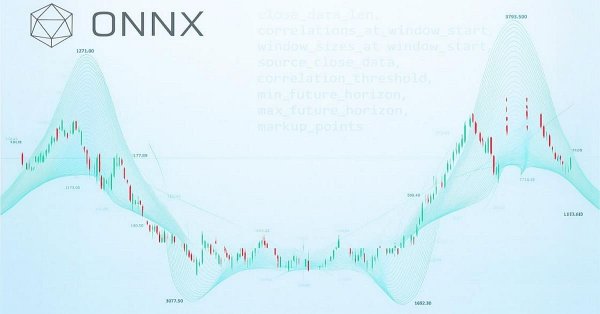
In this article, we will touch upon the intriguing topic of fractal analysis and market forecasting using machine learning. These are just the first steps towards exploring the diverse fractal structures that form on financial price charts. We will use the correlation to find patterns and the CatBoost algorithm to classify these patterns.
The article explores one of the most interesting non-gradient optimization algorithms, which learns to understand the geometry of the objective function. We will focus on the classical implementation of CMA-ES with a slight modification - replacing the normal distribution with the power one. We will thoroughly examine the math behind the algorithm, as well as practical implementation, and check where CMA-ES is unbeatable and where it should be avoided.
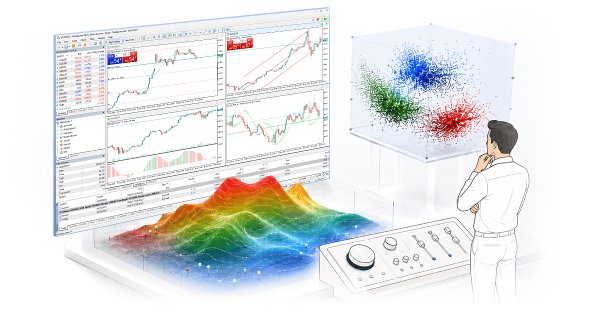
The article describes the practical application of DirectX 11 and built-in MQL5 tools for creating 3D visualizations and interactive interfaces in MetaTrader 5. The focus is on cognitive efficiency - the ability of 3D charts and guided scenes to help in understanding optimization data, liquidity clusters, and multi-dimensional trading scenarios. The basics of the DX pipeline, working with shaders, binding mouse and keyboard events, and objective technological limitations are discussed in detail. The article is intended for MQL5 developers and algorithmic traders who are ready to transform strategy metrics into understandable 3D analytical landscapes, where the visual layer accelerates decision-making.
The article examines the quality of a seasonal trading approach on a daily timeframe, both for individual symbols and for spreads. Particular attention is paid to identifying recurring monthly cycles and the possibilities of their application in trading within the current year.
In this article, we demonstrate how to use API of the MetaTrader 5 custom symbols to transform your terminal into a data constructor for generating timeless Renko, Range, and Equal-Volume charts and assembling synthetic instruments. We will analyze tick aggregation and history modification for stress tests (spread widening, stop level changes) taking into account platform limitations. Besides, you will get some practice of handling CiCustomSymbol and routing orders to a real symbol through the CustomOrder wrapper with ready-made code fragments.
In this article, we extend the Tools Palette with a precision crosshair for MQL5 charts: reticle tick marks, full-width and full-height lines with axis labels, and a circular magnifier that renders zoomed candles. A double-click measure mode adds anchor markers, a diagonal connector, and a floating label with bars, pips, and price difference. Implementation details include a crosshair manager, eleven canvas layers, Bresenham line drawing, and theme-aware behavior that hides near the sidebar and fly out.
Eagle Strategy is an algorithm that mimics the eagle's two-phase hunting strategy: global search via Levy flights using Mantegna method, alternating with intense local exploitation using the firefly algorithm, a mathematically sound approach to balancing exploration and exploitation, and a bioinspired concept that combines two natural phenomena into a single computational method.
This article examines a comprehensive approach to developing trading algorithms: from project setup and logic debugging to protecting the finished product. We will explore MetaEditor's built-in tools, including step-by-step debugging using real ticks, performance profiling, and direct integration with C++ DLLs to speed up calculations. The article also explains how to protect intellectual property using MQL5 Cloud Protector. The application of the described techniques will transform Expert Advisor development from a chaotic search for solutions into a systematic process, significantly reducing the time required to develop a strategy.
We turn the MQL5 AI trading assistant into a dispatch-driven system that routes seven trading actions through a single central dispatcher. A line-based key-value protocol constrains AI output, while each action maps to market or pending orders and instrument-aware stop levels. A canvas-based UI with a custom prompt editor and pixel-accurate text fitting makes signals consistent, auditable, and ready to render on the chart
This article presents CPyramidEngine, a reusable MQL5 class that adds disciplined pyramiding to any Expert Advisor with about six lines of integration. The engine enforces three constraints: strictly decreasing lot sizes, a single unified stop that advances after each add-on, and broker-level validation of every modification. It explains common failure modes in naive implementations and shows how to keep total account risk quantifiable and controlled as positions are added.