In this article, we will examine how two slightly different approaches can significantly affect the overall implementation strategy, both in performance and in disk I/O design, while helping to prevent compatibility issues between applications.
We implement an interactive, anchored multi-timeframe volume profile in MQL5 for MetaTrader 5. The indicator draws the current-timeframe profile on the main chart and a higher timeframe profile in a subwindow, both aligned by a draggable anchor and the visible range. You will learn keyboard-driven bin editing (E/S double-click), robust timeframe validation, viewport-aware updates, and object restoration to build a reliable, synchronized volume workflow.
In today's article, we will explore random access to file contents for the first time. This applies to both writing and reading information stored in a file. However, since the topic is too broad to cover in a single article, we will limit ourselves here to an introduction to random access.
Does better return conditioning buy strategy performance? We hold bar count fixed across time, tick, tick-imbalance, and tick-runs on 60.5 million EURUSD ticks, then meta-label RSI, Bollinger, and ADX/DI entries and score with purged cross-validation. No family delivers a consistent edge; efficacy varies narrowly and the best case fails a permutation test. Readers learn how to control overlap, leakage, and multiple testing in bar studies.
In today’s article, we will look at several ways to work with the FileSave and FileLoad library functions. Although many people consider them of limited use because of certain limitations or difficulties they create in specific scenarios, properly understanding how these two functions work can save us a great deal of effort at certain points. They are also an excellent way to work with log files.
We extend the stateful supply and demand framework for MetaTrader 5 with a quantitative admission model and a dedicated interaction engine. Candidate zones are scored by structural symmetry, volume participation, and ATR‑normalized displacement, then classified into objective tiers. Admitted zones follow a deterministic lifecycle that tracks first touch, validates bounces, or confirms breakouts, with full telemetry for analysis and reproducibility.
In Part 2, we introduce a reusable CCovarianceMatrix class that computes and stores a covariance matrix from raw return series using MQL5's native Cov() method. We verify symmetry, print a labeled matrix grid, and call Eig() to obtain eigenvalues and eigenvectors. Readers see how symbols co-move and which factors drive variance, enabling clearer portfolio diagnostics and reuse in scripts or EAs.
Do you know what a sandbox is? Do you know how to work with it? If the answer to either of these questions is “no”, read this article to understand the basic operating principle of a sandbox. You will also understand why MetaTrader 5 uses a sandbox to protect the integrity of some of its internal data. The material presented here is purely instructional. Under no circumstances should you treat the application as a final product whose purpose is anything other than studying the concepts presented.
In this article, we will complete what was started in the previous one: a fully interactive way to resize objects directly on the chart. Although many people imagine that creating something like this would require much deeper knowledge of MQL5, you will see that, using simple concepts and basic knowledge, we can implement a way to work with objects directly on the chart. This leads to a very interesting and quite compelling result.
This article will illustrate to the reader how to implement a mean-reverting strategy for the EURUSD pair. The strategy follows contrarian trading rules. Our strategy implements a weekly moving average channel, with one moving average on the high-price feed and the latter on the low-price feed. We enter short positions when the price falls beneath the low moving average and long positions when the price rises above the high moving average. Additionally, we will export daily market data to build a simple ONNX model of the market to provide an additional filter for our entries. This provides the reader with a reproducible template for strategy development and backtesting.
This is perhaps the most entertaining article so far. The reason is that here we will modify an object already available in MetaTrader 5 in order to create another one that is not originally present on the platform. Of course, what we are going to look at here may seem a little crazy, but it works and serves a very interesting purpose.
This article demonstrates a working prototype integrating Brain-Computer Interface technology with MetaTrader 5, proving thought-based trading is feasible at the software level. A Python Flask server simulates neural command generation, communicating with an MQL5 Expert Advisor via JSON-over-HTTP. The complete pipeline—from signal generation to trade execution—is validated through WebRequest and CTrade. While BCI hardware remains clinically restricted, this simulation establishes a reference architecture for future accessibility options, enabling direct intention-based trading that expands how traders can interact with financial markets.
In this article, we will prepare the foundation for what will be covered in the next publication. We will also look at how to make an OBJ_LABEL object fully interactive for editing and moving. In other words, we can change both the text and the position of the OBJ_LABEL object without opening the Object Properties dialog.
We build a Support and Resistance Volume Profile indicator that adapts to the current viewport in MetaTrader 5. You will learn viewport detection, dynamic SnR identification, zoom‑driven bin sizing, min‑max volume scaling, and fast on‑chart rendering controlled by OnChartEvent. This approach expresses the relative strength of SnR levels with volume, keeping the chart focused on actionable reaction zones.
The article delivers MQL5 implementations of FIGARCH and HARCH and updates the volatility library for long‑memory processes. It provides code for Hurst and GPH testing, parameter setup (truncation and horizons), and scripts for fitting, forecasting, and simulations. Readers learn how to apply and compare the models on market data to select an appropriate specification.
This article finalizes the Forward Simulation Engine for MetaTrader 5 by calibrating synthetic candles to recent market volatility instead of using slope-only sizing. It samples average body, upper wick, and lower wick from closed bars, applies a sine-envelope with decay, proportional wicks, gaps between candles, and periodic counter-trend injections. The result is a live projection that advances one bar ahead, with code you can reuse for calibrated, anchor-based forward rendering and automatic cleanup.
This article discusses the transition to MQL5 Algo Forge as a modern and convenient format for publishing program code and article attachments. Using repositories instead of traditional ZIP archives and source code allows you to keep projects up-to-date, make edits quickly, and professionally interact with your readers. Recommendations are provided for quickly migrating developments to the cloud environment via the MetaEditor interface.
The article establishes a reproducible method to measure portfolio risk for multiple symbols using MQL5 matrices and OpenBLAS. It covers computing log returns, building a covariance matrix, and evaluating wᵀΣw instead of summing individual variances. A complete script prints naive versus true volatility and the cross‑term contribution, enabling you to detect when correlated instruments inflate exposure beyond single‑asset estimates.
This article builds a self-contained MQL5 Expert Advisor that completes the Wyckoff cycle: it detects accumulation/distribution with a finite state machine, enters at the last point of support/supply, and calculates exit point-and-figure counts under Wyckoff's Cause and Effect. We detail the box size from range ATR, a 1-box reversal, target validation, and a 2R fallback. Readers get runnable code without external dependencies.
This article demonstrates how to build a reusable prop‑firm evaluation module for MQL5 Expert Advisors and export results to an HTML dashboard. The module monitors balance and equity during backtests, simulates single or rolling challenges, checks profit target, daily and overall drawdown, and minimum trading days, then outputs both a terminal summary and a browser‑readable report.
The article discusses the application of Grey models to forecasting financial time series. We will consider the operating principles of Grey models and the specifics of their application to financial series. We will also discuss the advantages and limitations of using these models in trading.
We present a complete workflow for adaptive filtering in MQL5 using the CNlEq Levenberg–Marquardt–like solver. The EA fits a VAMAC model—two EWMAs with an ATR‑based scaling—by supplying residuals and a Jacobian through CNlEq's reverse‑communication loop, with optional numerical or analytical derivatives. Code, setup instructions, and GBPUSD H1 tests show how to replace static thresholds with on‑bar re‑estimation.
This article advances the stateful supply and demand zone framework for MetaTrader 5 by replacing polling with an event-driven model based on OnChartEvent(). We split synchronization into dedicated handlers for creation, modification, and deletion, and separate market logic in OnTick() from user interactions in OnChartEvent(). A persistent, append-only CSV logger records all lifecycle events, improving responsiveness, state consistency, and recoverable history for downstream analysis.
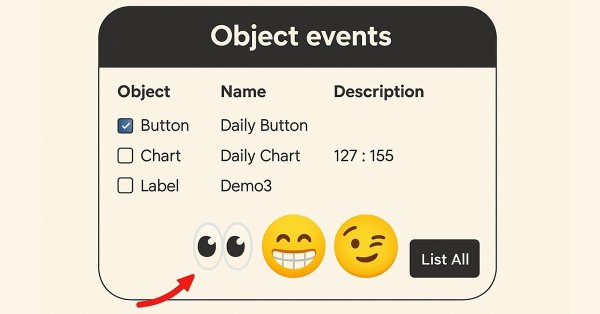
In this article, we will look at how the last three types of events generated by an object work. Understanding this will be very interesting, because in the end we will do something that may seem crazy to many people, but it is entirely possible and produces a very surprising result.
This article extends the chart‑object detector into a modular monitoring and execution layer. It defines objective interaction rules (touch, cross, breakout) for trendlines, Fibonacci levels, channels, rectangles, and pitchforks, then routes events through an interaction detector, alert manager, and optional trade executor. Orders use object geometry for stop‑loss and take‑profit. The result is a reproducible pipeline that converts static drawings into actionable alerts and, if enabled, trades.
In this article, we will look at three of the six events that MetaTrader 5 can generate when some change occurs to an object on the chart. These events are very useful from the standpoint of user interaction. This is because, without understanding these events, we would have to put in much more effort to maintain a specific chart configuration when trying to manage objects for particular purposes.
In today's article, we will look at how to implement a very attractive and interesting interaction system, especially for those who are just beginning to practice programming in MQL5. There is nothing fundamentally new here. Thanks to my approach to the topic, it will be much easier to understand everything, because we will see in practice how to develop a program using a structured approach with a practical and engaging goal.
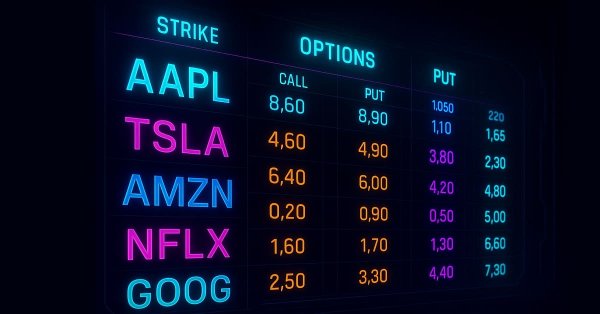
The article considers simple options strategies and their implementation in MQL5. We will develop a basic EA that will be modernized and become more complex.
This article belongs to the category of materials where simply looking through and studying the code is definitely not enough to understand the processes involved. In fact, you need to create an executable application and run it on any chart. This is done so that you can understand small details that would otherwise be extremely difficult to grasp, such as using the keyboard and mouse together to create certain elements.
This article shows how to build a hands-free trading workflow for MetaTrader 5 by translating webcam-tracked hand gestures into MQL5 trade commands. We cover the architecture (MediaPipe/OpenCV in Python plus an MQL5 EA), gesture-to-action mapping, and interprocess communication via Global Variables or HTTP polling. You will implement the EA, execute BUY/SELL/CLOSE actions, and validate latency and reliability under real‑time conditions.
The article presents an MQL5 Expert Advisor that adapts the Ford–Fulkerson max-flow method into a liquidity-capacity filter. Market structures—Swing Highs/Lows, Fair Value Gaps, Order Blocks, and Liquidity Pools—form a directed graph with edge capacities from volume, price reaction, distance, and structure quality. Maximum flow qualifies ICT setups, filters weak paths, and drives dynamic position sizing for a consistent, two-stage decision process.
This article replaces binary swing validation with a volatility‑normalized pullback model. Retracement depth is measured as a ratio of the prior impulse and calibrated to a rolling ATR regime, while entries require a minimum quality score and confirmation by structure or liquidity signals. The five‑layer design integrates detection, validation, liquidity mapping, regime‑aware scoring, and execution, helping you filter weak corrections and size stops dynamically to current conditions.
This article shows how to build a local stop-loss system in an MQL5 Expert Advisor that keeps stop levels on the terminal side. It walks through the execution logic, event handlers, inputs, and an OOP design using CTrade, CPositionInfo, CHashMap/CHashSet, and chart objects. You will implement multi-position tracking, draggable stops, visual spacers and labels, plus cleanup and disconnection behavior to create a practical risk-control utility.
Manually drawn analytical object tools like Fibonacci tools, and Andrews Pitchforks are invisible to automated trading logic. This article extends a base detector to extract anchor points, level arrays, and geometric offsets from complex objects. You will implement a reusable collector that normalizes the raw chart data into structured memory arrays, ready for strategy decisions.
When running multiple strategies in parallel, you may want to periodically close all open positions and start the strategies over again. The existing code only allows this behavior to be implemented through manual intervention. Let's try to automate this part.
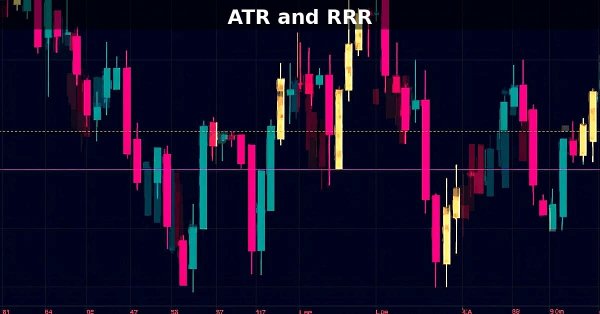
This article completes the implementation of ATR- and RRRR-based breakeven mechanisms in MQL5 and develops, from scratch, a class that makes it easy to switch breakeven modes without having to enter the parameters again. To evaluate the effectiveness of each breakeven type, several backtests are run, analyzing their advantages and disadvantages in the context of algorithmic trading.
Replace static drawings with automated, stateful zones controlled by a CZone wrapper. The system synchronizes user rectangles, sizes zones by ATR, validates breakouts using consecutive closes, applies ghost/deactivation rules, merges nearby structures by a 1.5×ATR threshold, and projects edges forward. Traders gain durable levels that update themselves and reduce repetitive chart management.
In today's article, we will look at how to control some object properties in a simple way using code. We will also see how a custom application can place more than one object on the same chart. In addition, we will begin to understand the importance of assigning a short name to any indicator we plan to implement.
You have probably already heard about pointers when it comes to programming. But did you know that we can use this kind of data here in MQL5? Of course, this must be done in a way that keeps us in control and avoids strange program behavior during execution. Still, because this is a feature with a very specific purpose and aimed at particular kinds of tasks, it is rare to hear anyone discuss what a pointer is and how to use it in MQL5.
In this article, we will begin looking at how to work with objects directly on the chart. This is done using code specially developed for demonstration purposes. Working with objects is very interesting and can be a lot of fun. Since this will be our first contact with the topic, we will start with something very simple.