This article presents a custom MetaTrader 5 indicator that computes a rolling annualized Sharpe ratio and plots configurable z-score significance bands based on Lo's asymptotic standard error. It uses a circular return buffer with incremental variance to keep O(1) updates. We explain the n^(-1/2) uncertainty scaling, the inflation of intervals at high Sharpe values, and how to set per-instrument annualization for correct deployment.
Fixed-weight moving averages introduce regime-insensitive lag. This work presents an adaptive scalar Kalman filter indicator in native MQL5 that estimates process noise Q from rolling return variance and measurement noise R from rolling price variance, with floor clamps for stability, and recomputes the Kalman Gain on every bar. The chart-overlay output is benchmarked against a 20-period EMA using MAE, RMSE, lag, and smoothness metrics to quantify tracking and noise suppression.
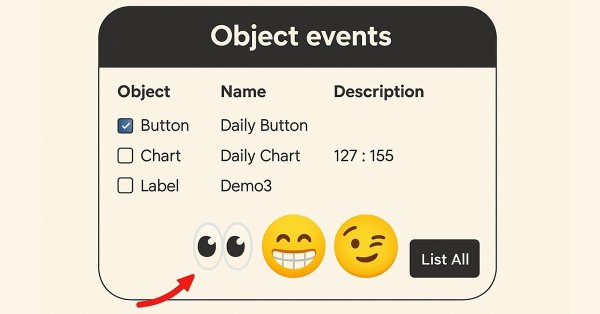
In this article, we will look at three of the six events that MetaTrader 5 can generate when some change occurs to an object on the chart. These events are very useful from the standpoint of user interaction. This is because, without understanding these events, we would have to put in much more effort to maintain a specific chart configuration when trying to manage objects for particular purposes.
In today's article, we will look at how to implement a very attractive and interesting interaction system, especially for those who are just beginning to practice programming in MQL5. There is nothing fundamentally new here. Thanks to my approach to the topic, it will be much easier to understand everything, because we will see in practice how to develop a program using a structured approach with a practical and engaging goal.
The article presents an innovative quantum neural network architecture for algorithmic trading that combines the principles of quantum mechanics with modern machine learning methods. The system includes quantum effects (resonance, interference, decoherence), multi-level memory of different time scales, Markov chains with the ALGLIB library, and adaptive parameter control. The full implementation is done in MQL5 using the built-in matrix/vector types, which removes implementation barriers in MetaTrader 5.
MetaTrader 5 is well suited for AI trading because it combines market data, MQL5 development, Python research, ONNX models, Strategy Tester, VPS, and the MQL5.community ecosystem into a single workflow. This article demonstrates a practical path from AI prompts to structured signals, working with code via the AI Assistant in MetaEditor, a quality model, a custom-created Expert Advisor, testing, and a controllable launch of a trading system.
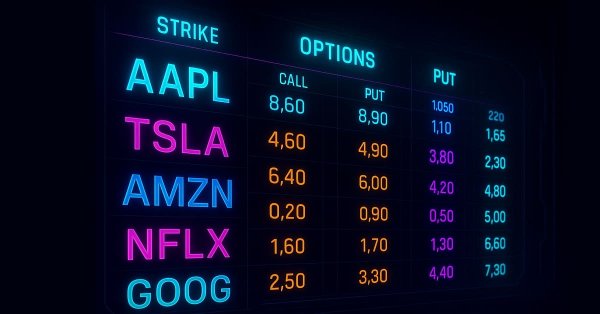
The article considers simple options strategies and their implementation in MQL5. We will develop a basic EA that will be modernized and become more complex.
For this article we look at a custom MQL5 Wizard class for Trailing Stops. Our implemented custom class ‘CTrailingConvexHullGRU’, is built from merging the Convex Hull algorithm with a GRU network. As always we seek to develop a model that is testable with MQL5 Wizard-Assembled Expert Advisors and can be tuned with various Money Management and entry Signals classes. Our testing is with the 'Envelopes' and the RSI classes for Signal.
AlternativeBarsViewer is a subwindow indicator that renders all ten alternative bar types as color‑coded candles using the same CBarConstructor hierarchy as BarBuilderEA, ensuring identical bars. It supports three data sources (real ticks, synthetic OHLC ticks, or the EA's CSV) and two render modes (TIME and INDEX) toggleable at runtime. Degenerate bars are highlighted and summarized on a compact panel, enabling live calibration without leaving the terminal.
We introduce MPO4, a pressure-based oscillator that emphasizes the body and direction of candles in the context of current volatility. The article details its mathematics, normalization into a bounded range, and the EMA smoothing, then builds a pivot-driven divergence module designed not to repaint. You get complete MQL5 implementation and practical guidance for interpreting signals, including a comparison with RSI as an alternative source.
Cross-cutting concerns like logging, timing, and threshold filtering should not live inside indicator classes. We show how to apply the decorator pattern in MQL5 with a shared IIndicator interface, an owning CBaseDecorator, and concrete CLoggingDecorator, CTimingDecorator, and CThresholdFilterDecorator layers. You can stack behaviors per EA, keep computation code closed to modification, and get deterministic cleanup by deleting only the outermost decorator.
We continue to implement the DA-CG-LSTM framework, which offers innovative methods for time series analysis and forecasting. The use of CG-LSTM and dual attention allows for more accurate detection of both long-term and short-term dependencies in data, which is particularly useful for working with financial markets.
Many people tend to underestimate SQL, or even not use it at all, because they do not fully understand how it actually works. When running queries against an SQL database, we are not always looking for a universal answer; in some cases, we need a very specific and practical answer. If a database is created with a proper structure and data model, almost any type of information can be integrated into it.
This article belongs to the category of materials where simply looking through and studying the code is definitely not enough to understand the processes involved. In fact, you need to create an executable application and run it on any chart. This is done so that you can understand small details that would otherwise be extremely difficult to grasp, such as using the keyboard and mouse together to create certain elements.
Secrets of effective optimization of trading strategies in metaheuristic approaches. Community of Scientists Optimization is a new population-based algorithm inspired by the mechanisms of the scientific community. Unlike traditional nature-inspired metaphors, CoSO models unique aspects of human scientific activity: publishing results in journals, competing for grants, and forming research teams.
The article presents a practical foundation for shape analysis of price series in MQL5. It implements Takens time‑delay embedding to build a phase‑space point cloud and computes the full pairwise distance matrix under selectable norms. The CTDAPointCloud and CTDADistance classes are provided with a demo script that embeds chart data and outputs results, preparing inputs for downstream topological tools.
We add a descriptor-driven property stack and a floating ribbon that binds to the current selection on the drawing layer. The article covers the descriptor list for each tool, the engine get/set API with snapshot-and-restore live preview, and widget renderers for color, opacity, line width, line style, fonts, and level visibility. You get in-place, real-time editing of object appearance via a compact, draggable panel.
We extend the weekend gap toolkit with an indicator that turns gap structure into tradeable signals. When price confirms back into the gap, the indicator issues buy/sell arrows, sets TP at the opposite edge, and places SL using current-week extremes. It maintains non-repainting behavior, reconstructs historical signals, updates live, and provides EA-ready buffers for entry markers and TP/SL to support automation.
This article implements the NLMS-based Self-Adaptive Moving Average as a working MQL5 indicator. It provides the complete source code and explains the key design choices, including inline execution, uniform weight seeding, closed‑bar updates, and stability bounds, along with installation, usage, and limitations. The result is a compiled, chart‑ready SAMA_NLMS indicator and a clear basis for subsequent EA benchmarking.
This article shows how to build a hands-free trading workflow for MetaTrader 5 by translating webcam-tracked hand gestures into MQL5 trade commands. We cover the architecture (MediaPipe/OpenCV in Python plus an MQL5 EA), gesture-to-action mapping, and interprocess communication via Global Variables or HTTP polling. You will implement the EA, execute BUY/SELL/CLOSE actions, and validate latency and reliability under real‑time conditions.
The article introduces CMicrostructureFeatures, an MQL5 class for bar‑level microstructure features: Roll spread/impact, Corwin‑Schultz spread and sigma, Kyle's Lambda, Amihud's ILLIQ, and Hasbrouck's Lambda. Calculations rely solely on OHLCV using rolling windows. It clarifies the implications of MT5 tick volume for lambda estimators and keeps spread estimators volume‑independent. A validation script asserts sizing and basic bounds on outputs.
This article introduces the DA-CG-LSTM algorithm, which offers new approaches to time series analysis and forecasting. It explains how innovative attention mechanisms and model flexibility can improve forecast accuracy.
An EA-ready weekend gap-fill tool for MetaTrader 5 that detects gaps, confirms complete fills, and posts deterministic buy/sell values to indicator buffers. It reconstructs historical events, monitors live markets without repainting, and visualizes gap structure directly on the chart. Configurable alerts and clear object graphics support both manual review and automated execution.
The article presents an MQL5 Expert Advisor that adapts the Ford–Fulkerson max-flow method into a liquidity-capacity filter. Market structures—Swing Highs/Lows, Fair Value Gaps, Order Blocks, and Liquidity Pools—form a directed graph with edge capacities from volume, price reaction, distance, and structure quality. Maximum flow qualifies ICT setups, filters weak paths, and drives dynamic position sizing for a consistent, two-stage decision process.
In this article we consider a custom MQL5 Wizard class that processes Money Management. Our custom class is labelled ‘CMoneyWaveletLSTM’, and is developed by combining the Wavelet Thresholding algorithm with an LSTM network. As has been the case throughout these series, the developed model is testable with MQL5 Wizard-Assembled Expert Advisors that can be tuned with different trailing stops and entry Signals classes. We maintain our entry Signal, as in past articles as the built-in 'Envelopes' class and the RSI class.
Direct calls to the MQL5 History API inside analytics components create hidden terminal dependencies that make isolated testing structurally impossible. This article constructs an ITradeRepository abstraction layer with CLiveTradeRepository and CMockTradeRepository implementations, enabling the same analytics engine and equity curve panel to operate identically against live account data or a deterministic in-memory dataset. Repository injection eliminates direct API coupling, supports offline validation, and confines data source changes to a single implementation class.
The article presents the Competitive Learning Algorithm (CLA), a new metaheuristic optimization method based on simulating the educational process. The algorithm organizes the population of solutions into classes with students and teachers, where agents learn through three mechanisms: following the best in the class, using personal experience, and sharing knowledge between classes.
The article considers the classification model of Gaussian processes. We will start by studying its theoretical principles moving on to the practical development of the GP library in MQL5.
The Actor–Director–Critic framework is an evolution of the classic agent learning architecture. The article presents practical experience of its implementation and adaptation to financial market conditions.
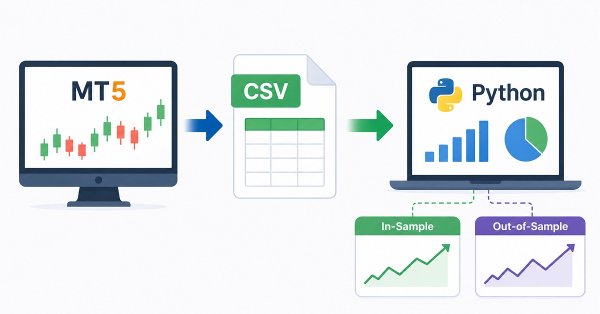
The article presents a reproducible MetaTrader 5 to Python pipeline for large-scale indicator research. An MQL5 export schema captures fixed columns, including custom lag and whipsaw counters. A baseline module performs parameter-matched comparisons across symbols and timeframes, while a walk-forward module locks the InSample optimum and evaluates it on unseen data. Readers gain unbiased robustness measurements and automation that removes manual selection bias.
This article replaces binary swing validation with a volatility‑normalized pullback model. Retracement depth is measured as a ratio of the prior impulse and calibrated to a rolling ATR regime, while entries require a minimum quality score and confirmation by structure or liquidity signals. The five‑layer design integrates detection, validation, liquidity mapping, regime‑aware scoring, and execution, helping you filter weak corrections and size stops dynamically to current conditions.
This article introduces the Self-Adaptive Moving Average (SAMA), an adaptive filter leveraging the Normalized Least Mean Squares (NLMS) algorithm. It explores why fixed-period averages fail, how NLMS adapts bar by bar, and the engineering protections required for production. This conceptual and mathematical foundation prepares you for the MQL5 code implementation in Part 2.
We add eight shape tools and nine annotation tools to the canvas and implement a full in-place label-editing system. The article walks through geometry, AA rendering, shared word-wrap and supersampled text helpers, and the caret-driven state machine for typing, navigation, and selection. This yields a complete, consistent annotation toolkit with editable labels that plugs into the prior interaction pipeline.
High-frequency MQL5 indicators that instantiate objects on every tick accumulate allocation overhead and timing jitter in OnCalculate(). This article constructs a generic templated object pool using a free-list index array, delivering O(1) Acquire() and Release() operations. The design includes double-release protection, strict separation of payload state from pool metadata in Reset(), and a fixed-capacity free list with no heap fallback. A dual-path custom indicator benchmark measures per-tick overhead difference using GetMicrosecondCount().
The article extends MicroStructure_Foundation.mqh with a MicrostructureAnalysis struct and five functions that decompose M1 price variation into a quoted spread proxy, Roll-implied spread, OHLC-based noise ratio, order imbalance, and an adverse selection component. A wrapper populates these fields and links them to the volatility suite from Part 4. Empirical thresholds come from 602 NQ E-mini NY sessions (Jan 2024–Jun 2026), helping you gate volatility signals, size risk, and recognize spread-driven frictions.
MetaTrader 5 provides rich performance data but limited structural analysis. This article shows how to export results to CSV from MQL5 and build five Python visualizations that expose cross-asset parameter consistency, the lag‑versus‑noise trade-off, walk‑forward decay, drawdown depth and duration, and intraday hour‑by‑day clusters. A unified automation module runs the full pipeline on any new export to deliver repeatable diagnostics.
For this article we switch to a custom MQL5 Wizard class that examines entry Signals. Our custom class is ‘CSignalDSUDBN’ this time around, and is coded by combining the Disjoint Set Union algorithm with a Deep Belief network. As has been the case throughout these series, our model is testable with MQL5 Wizard-Assembled Expert Advisors that can be tuned with different trailing stops and money management classes.
Manual population of MqlTradeRequest leaves cross-field rules unchecked, creating silent misconfigurations at execution time. A fluent COrderBuilder for MQL5 adds pointer-based method chaining, per-field validation, and directional SL/TP checks against broker stop‑level constraints. Its Send() method runs a four-stage gate—flag completeness, cross-field consistency, OrderCheck(), then OrderSend()—so configuration errors are caught early and order code stays clear and reusable.
Build a restart-aware virtual protection layer on top of the SQLite persistence from Part 1. The EA reconstructs hidden stop-loss and take-profit after restart, verifies current price against recovered exits, and closes or continues positions accordingly. The result is a consistent recovery path that detects managed positions and sustains safe runtime management.
A typed publish-subscribe event bus in MQL5 replaces global variables and direct cross-references. Using an abstract listener interface and an enum-indexed subscription table, a signal engine, order manager, and drawdown monitor communicate only through the bus, with no shared state. The article analyzes dispatch overhead, pointer validation, and recursive publish risks, helping you design decoupled, testable EAs.