The article explains how to develop a tool for analyzing recurring price patterns in financial markets — by day of the month (1-31), day of the week (Monday-Sunday), or hour of the day (0-23). The indicator analyzes historical data, calculates the average return for each period, and displays the results as a histogram with a forecast. It includes customizable parameters: seasonality type, number of bars analyzed, display as percentages or absolute values, chart colors.
What if an optimization algorithm could remember its past journeys and use that memory to find better solutions? BSA does just that – balancing exploration with revisiting the tried and true. In this article, we reveal the secrets of the algorithm. A simple idea, minimum parameters and a stable result.
Before you give up and decide to abandon learning SQL, allow me to remind you, dear readers, that here we are still using only the most basic elements. We have not yet looked at some of SQL's capabilities. Once you understand them, you will see that SQL is far more practical than it seems. Although, most likely, we will eventually change the direction of what we are building, because the creation process is dynamic. We will show a little more about creating different things in SQL, because this is truly important and useful for you. Simply thinking that you are more capable than an entire community of programmers and developers will only lead to wasted time and opportunities. Do not worry, because what comes next will be even more interesting.
In this article, we will begin looking at how to work with objects directly on the chart. This is done using code specially developed for demonstration purposes. Working with objects is very interesting and can be a lot of fun. Since this will be our first contact with the topic, we will start with something very simple.
Time gap analysis helps traders identify potential market reversal points. The article discusses what a time gap is, how to interpret it, and how it can be used to detect large volume influxes into the market.
In this article, we take a closer look at the DEA algorithm, a metaheuristic optimization method inspired by dolphins' unique ability to find prey using echolocation. From mathematical foundations to practical implementation in MQL5, from analysis to comparison with classical algorithms, we will examine in detail why this relatively new method deserves a place in the arsenal of researchers facing optimization problems.
Many of you may have far more experience working with databases than I do, and therefore may have a different opinion. Since it was necessary to explain why databases are designed the way they are, and why SQL has the form it does—especially why primary and foreign keys emerged—some things had to remain somewhat abstract.
In this article, we will look at how to handle user requests to change the chart plotting mode. This is necessary so that an indicator designed for the current chart plotting mode does not look strange or differ from what a MetaTrader 5 user expects.
We implement an EquiVolume indicator in MQL5 that converts standard candlesticks into volume-weighted boxes. The workflow includes selecting volume type, detecting the maximum volume within a lookback range, normalizing all values against it, and mapping them into proportional box widths. The result is a chart-based structure that visualizes trading activity intensity alongside price movement in MetaTrader 5.
This article presents a multi-symbol execution filter that scores real-time market quality before any trade is allowed. It measures spread behavior, tick velocity, quote gaps, micro-volatility, and a slippage estimate, then classifies the state to block degraded conditions. Once noise settles, a liquidity sweep continuation model evaluates structure shifts so entries occur only when execution is mechanically stable.
We build a compact profiler that records calls, min/max/average times, and slow-call counts to CSV, and a simple test runner that writes deterministic pass/fail reports. The article explains where to place measurements in an EA, how to sample ticks, and how to keep pure calculations testable. Running the script first and the profiling EA second provides repeatable evidence for regression analysis.
We introduce CPyramidBridge, a thin MQL5 layer that maps bet-sizing results to CPyramidEngine. The bridge applies probability to initial lot sizing, enforces a capacity-aware entry gate, promotes add-ons from dynamic divergence, adapts the trailing stop to reserve estimates, and syncs signals on close, allowing an Expert Advisor to convert model confidence and concurrency into a structured, decreasing-risk pyramid.
In this article we present yet another custom MQL5 Signal Class that we are labelling ‘CSignalBTreeBayesian’. We are marrying the algorithm of a balanced tree with a neural network that is built on Bayesian principles to formulate yet another custom signal testable independently or with other signals thanks to the MQL5 Wizard.
This article presents a compact MQL5 utility layer for routine trade operations. It includes position existence checkers, position counters, bulk close helpers, and functions to retrieve the most recent or oldest position by symbol, magic, or type. A simple SMA crossover Expert Advisor demonstrates integration. The result is cleaner EAs, fewer inconsistencies across projects, and faster maintenance.
This article develops an object-oriented framework for MQL5 indicators by evolving a primitive example into reusable modules. It formalizes partial buffer recalculation in OnCalculate, moves logic into header-based classes (CAppliedPrice, CSma), and introduces CSubIndiBase, CIndicatorBase, and a registry to centralize requirements. You get portable components, isolated inputs, and clean buffers with minimal boilerplate, making new indicators faster to assemble and easier to maintain.
Developing permutation-based tools in MQL5 provides a systematic way to analyze candlestick pattern combinations for trading strategies. This article introduces a permutation calculator and generator designed to compute and enumerate all possible ordered candlestick sequences from bullish and bearish sets, with or without repetition. By generating exhaustive pattern combinations, traders can perform data-driven analysis to identify high-probability market patterns and improve decision-making in automated trading systems.
In this article, we shift from Python research to native MQL5 engineering. We build the first module of the MMAR library: a shared constants header, an SVD-based OLS regression class, a Generalized Hurst Exponent estimator, and the partition analysis engine that computes the partition function, extracts tau(q), estimates H via zero-crossing interpolation, and scores multifractality through three diagnostic tests. Tested on 500,000 bars of EURUSD M10, the engine correctly classifies the data as multifractal in under four seconds. Part 4 of an eight-part series. Part 5 fits the tau(q) curve to four candidate distributions via the Legendre transform.
An SLSQP optimizer is implemented in MQL5 to resolve parameter discrepancies between a volatility library and Python's ARCH module. The article details constraint handling, gradient options, configuration, and convergence controls and shows how to integrate the solver into existing code. Practical examples and comparisons demonstrate matched log‑likelihoods and parameters on shared datasets.
We extend the Part 9 setup wizard to build a canvas-based, in-chart documentation system for MetaTrader 5. The panel is tabbed and scrollable, supports inline styling, images, and interactive controls, and renders with supersampled anti-aliasing. The result is a reusable engine that any MQL5 program can embed to deliver self-contained documentation directly on the chart.
We implement tick-, volume-, and dollar-runs bars in Python and MQL5 and align them with the existing bar‑building framework. The article details the dual‑accumulator update, offline calibration with per‑side seeds, state persistence for EAs, and parity verification to match Python and MQL5 outputs. Runs bars expose one‑sided bursts that net imbalance can hide, improving coverage during quiet sessions and for mean‑reversion models.
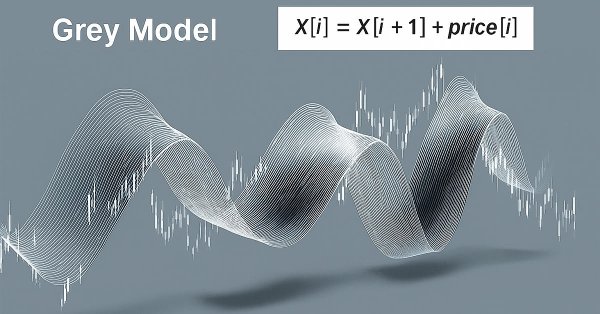
This article explores the grey model, a promising tool that can expand trader's capabilities. We will look at some options for applying this model to technical analysis and building trading strategies.
This article provides a structured MQL5 framework for serializing an Expert Advisor's internal state into local binary files. It prevents data resets during platform restarts by safely storing volatile tracking metrics, such as trade counts and multipliers, directly to disk. This architecture offers a more robust state continuity alternative to terminal Global Variables.
In this article, we will touch upon the intriguing topic of fractal analysis and market forecasting using machine learning. These are just the first steps towards exploring the diverse fractal structures that form on financial price charts. We will use the correlation to find patterns and the CatBoost algorithm to classify these patterns.
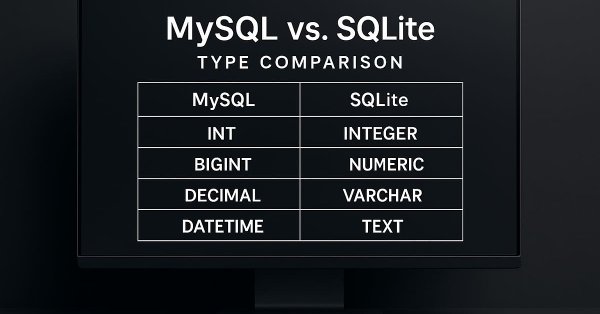
This article demonstrates how to build the persistence foundation of a self-healing Expert Advisor in MQL5 using SQLite. Readers will learn how to create a permanent trade-state storage layer capable of surviving terminal restarts, shutdowns, and unexpected interruptions. The article covers SQLite integration in MetaTrader 5, database lifecycle management, persistent trade-state structures, and runtime state recovery using practical MQL5 implementations.
We extend the RQA library for MetaTrader 5 with JRQA, which detects when two series simultaneously revisit their own past states. The article covers the joint recurrence matrix, twelve JRQA metrics (including TREND and COMPLEXITY), dual-epsilon configuration, and a rolling-window engine with OpenCL acceleration and automatic CPU fallback. A practical indicator plots JRR, JDET, JLAM, JENTR, and JTREND for any symbol pair with timestamp alignment and normalization.
RSI accumulates losses in trending conditions by firing at every threshold crossing regardless of market regime. A Random Forest secondary classifier trained on 12 contextual features — RSI momentum slope, EMA50 trend velocity, ATR-normalised trend stretch, and nine others — filters raw signals and scales position size by classifier confidence on EURUSD H1. Results compare plain RSI, meta-filtered RSI, and bet-sized RSI across a 16-month out-of-sample period with per-trade metrics and drawdown diagnostics.
The article explores one of the most interesting non-gradient optimization algorithms, which learns to understand the geometry of the objective function. We will focus on the classical implementation of CMA-ES with a slight modification - replacing the normal distribution with the power one. We will thoroughly examine the math behind the algorithm, as well as practical implementation, and check where CMA-ES is unbeatable and where it should be avoided.
The article delivers a dynamic MetaTrader 5 indicator that detects liquidity sweeps via swing‑point logic, wick‑ratio thresholds, and engulfing confirmation. It recognizes single‑wick and dual‑candle patterns without a fixed window, updates buy‑/sell‑side targets as price evolves, and invalidates broken levels to maintain a reliable liquidity map.
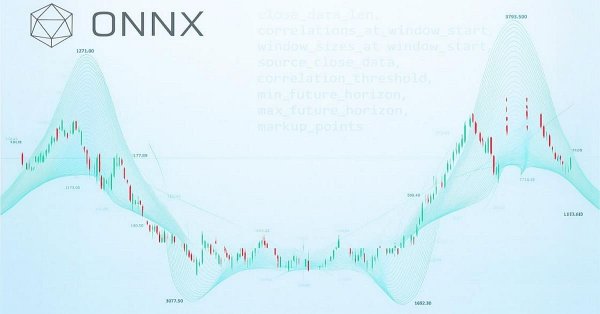
This guide integrates a trained XGBoost model (ONNX) into an SMC EA to evaluate trade setups before execution. The Python pipeline labels historical XAUUSD events and produces a 12-feature representation aligned with the EA. The result is a reproducible method to train, export, and embed the model so the EA can filter OB, FVG, and BOS signals programmatically.
This article presents a self-contained news filter module for MetaTrader 5 built on the platform's economic calendar API. It implements symbol-to-currency mapping, pre- and post-event trading pauses, and optional position size reduction on high-impact days, with a CSV-based fallback for the Strategy Tester. A demo EA and live chart dashboard show integration and verification in both live and backtest environments.
This article builds a Market Structure Sentinel indicator in MQL5 that detects and visualizes Smart Money Concepts (SMC) events, including Break of Structure (BOS) and Change of Character (CHOCH), in real time. It explains swing detection, structural validation, and trend classification, and adds a compact dashboard to track bullish, bearish, or ranging states for faster on‑chart interpretation.
This article addresses the interpretative gap between visual chart objects and algorithmic execution. You will build a systematic detector that iterates over all chart objects, identifies analytical types, and normalises their geometric data (time and price coordinates) into a structured SChartObjectInfo array. The implementation uses raw MQL5 functions, a filter‑extract‑store pipeline, and a timer‑driven test EA, resulting in a reusable framework for rule‑based trading inputs.
Build a megaphone pattern indicator in MQL5 that detects expanding structures on the chart. The article walks through swing identification and refinement, trend line validation, breakout confirmation, and SL/TP projection, with chart objects for lines, labels, and signals. As a result, you get a rule-based implementation that automates pattern detection and produces actionable levels directly in MetaTrader 5.
A GPH‑based estimator for d, the key ARFIMA parameter, is added to MicroStructure_Foundation.mqh. GPHEstimator() computes d via log‑periodogram regression, while PopulateARFIMAAnalysis() stores d with an R² confidence score and validates the theoretical relationship H = d + 0.5. An empirical study on 72 US100 M1 sessions confirms pooled d = −0.006, consistent with the random walk boundary established in Part 2.
The article attempts to examine financial time series from the perspective of self-similar fractal structures. Since we have too many analogies that confirm the possibility of considering market quotes as self-similar fractals, this allows us to think about the forecasting horizons of such structures.
In this article, we replace the embedded CSV snapshot with a SQLite layer that persists calendar events and triggered trade IDs across restarts. The database lives in the common terminal folder and is shared by live charts and the strategy tester, so both modes read the same data without recompiling. An on-demand downloader with a canvas progress bar fetches history from the calendar API and stores it for offline reuse.
The article defines a buffer-based signal architecture for flag breakouts and an EA that consumes it. Breakout arrows and pole height are written to dedicated buffers only after confirmation, preventing repainting and ambiguity. The EA polls buffers with CopyBuffer(), validates signals using configurable filters, and executes trades with fixed or dynamic SL/TP.
The article provides a step-by-step guide on how to migrate code from a published project into a fully-fledged MQL5 Algo Forge project. You will set up the environment and authentication in MetaEditor, create a project in Shared Projects, select the type, arrange the files, add README.md, check the encoding and build, commit the changes to Git, and open the repository publicly. The article helps to build a working structure and preserve version history for the convenience of readers.
For our next Exploration on notions that are testable with the MQL5 Wizard we examine if Skip Lists and the Hopfield Network can give us a profit-guarding trailing strategy. Trailing Stop Management, as already argued, can be overlooked in most trading systems at the expense of Entry Signals or even Money Management. Trailing stops can make all the difference in certain situations such as trending markets, and thus we test this out with GBP USD.
Learn a practical way to execute MetaTrader 5 trades from Telegram voice notes using a Python middleware and an MQL5 EA acting as an HTTP client. The article covers architecture, WebRequest polling, in-memory queuing, JSON parsing with null-terminator stripping, and a constrained command grammar with a 0.001-lot default. You will configure the environment and validate round‑trip latency suitable for mobile data connections.