The article diagnoses two defects that neutralize sequential bootstrap during cross‑validation: type erasure of SequentiallyBootstrappedBaggingClassifier and a fold‑level shape mismatch from cloning full samples info sets. It retains the classifier's identity, adds find seq bagging to re‑inject fold‑sliced t1 in CalibratorCV.fit, and resets state per split. A new bootstrap_comparison module reports OOF and OOB metrics and memory, letting you verify that sequential sampling is applied correctly and quantify its impact.
This article shows how to implement a session vwap in MQL5 as a reusable include class with a strict daily reset at broker midnight. The engine computes VWAP and volume‑weighted deviation bands only on closed bars and anchors accumulation with MqlDateTime to avoid distortions from missing candles. A companion indicator plots the baseline and bands, while an Expert Advisor reads signals once per bar for consistent, CPU‑efficient execution and reliable testing.
The article provides production-ready entropy estimators (Shannon, plug-in, Lempel–Ziv, Kontoyiannis) operating on tick-rule–encoded sequences. It resolves three correctness and performance issues in the original code, verifies outputs against chapter references, and extends encoding with quantile and sigma options. Users gain reproducible results and markedly improved computation speed for large bar sets.
The DI crossover often triggers in ranges where +DI and -DI oscillate without persistence. We build a two-layer hybrid: Optuna's TPE optimizes a regime gate over ADXR threshold, DI lookback, and minimum DI separation to maximize signal precision on a held-out window, then a Random Forest uses eleven ADX-derived features to accept or scale entries via afml.bet_sizing. The result filters ranging-market bursts and calibrates position size on EURUSD H1.
Nested if-else logic inside OnTick() creates implicit states that are hard to isolate, debug, and extend without regressions. A formal finite state machine in MQL5 uses an IState interface, a CStrategyContext mediator, and four concrete states to separate detection from behavior. A three-file include structure resolves circular dependencies and keeps declarations, definitions, and instantiation clean, making changes safer and debugging faster.
We add a tabbed settings window opened from the ribbon and bound to the selected object. The tabs — Style, Text, Coordinates, and Visibility — are built from the same descriptor system, with scrolling, per-level rows, and shared color/width/style popovers. The article covers layout, rendering, interaction, and inline price/time and numeric editing. You get one place to edit every property with live preview and commit-or-discard on close.
The article describes implementation of the A3 algorithm - a metaheuristic optimization method inspired by chemical processes - in MQL5. Only two adjustable parameters, compactness and a small population, ensure high operating speed with sufficient quality of solutions.
This article presents 'CSignalUKFCapsNet', as a custom class coded in MQL5. This class is meant to be used with the MQL5 Wizard when assembling an Expert Advisor and when selected in the Wizard it defines the Expert Advisor's entry signals. In building this custom class, we brought together the algorithm Unscented Kalman Filter and the Capsule Neural Network. Our algorithm is showcased with four operation modes, and the coding of this as a custom class for the MQL5 Wizard, allows testing with various Trailing Stop methods and Money Management systems.
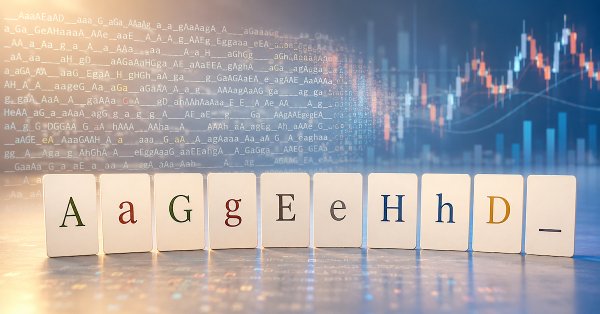
This article introduces a frequency-analysis framework for encoded candlestick patterns in MQL5. By transforming candlesticks into alphabetic symbols, historical price action can be analyzed as a statistical sequence rather than a visual chart. Using GBPUSD and Gold across multiple timeframes, the study examines the occurrence frequency of individual candlestick types, identifies dominant market structures, and reveals the symmetry between bullish and bearish price movements. The results establish a quantitative foundation for pattern discovery and prepare the way for analyzing multi-candlestick sequences and their predictive potential in algorithmic trading systems.
This article implements the MMAR Simulation Engine that turns fitted parameters (H, distribution, coefficients, sample volatility) into synthetic price paths. It builds multifractal trading time via a multiplicative cascade, synthesizes fractional Brownian motion with Davies–Harte or Cholesky, scales it to target volatility, and composes the process by time deformation. Readers get a reusable MQL5 class, method choices by path length, and validation steps for scenario testing and Monte Carlo use in the next part.
This article implements an MQL5 Expert Advisor that connects to a weekend gap indicator via iCustom and CopyBuffer, reading six buffers for buy/sell signals and SL/TP. It validates broker stop-distance rules, handles closed-bar confirmation and duplicate-signal control, and executes orders with a configurable magic number. The EA also includes midpoint stop-loss management and a backtesting procedure so you can verify behavior and adapt parameters to your setup.
MetaTrader 5 is well suited for AI trading because it combines market data, MQL5 development, Python research, ONNX models, Strategy Tester, VPS, and the MQL5.community ecosystem into a single workflow. This article demonstrates a practical path from AI prompts to structured signals, working with code via the AI Assistant in MetaEditor, a quality model, a custom-created Expert Advisor, testing, and a controllable launch of a trading system.
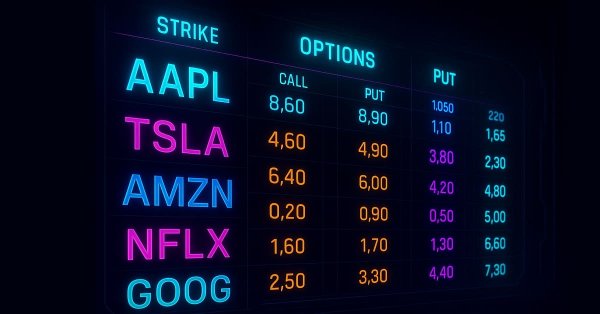
The article considers simple options strategies and their implementation in MQL5. We will develop a basic EA that will be modernized and become more complex.
For this article we look at a custom MQL5 Wizard class for Trailing Stops. Our implemented custom class ‘CTrailingConvexHullGRU’, is built from merging the Convex Hull algorithm with a GRU network. As always we seek to develop a model that is testable with MQL5 Wizard-Assembled Expert Advisors and can be tuned with various Money Management and entry Signals classes. Our testing is with the 'Envelopes' and the RSI classes for Signal.
AlternativeBarsViewer is a subwindow indicator that renders all ten alternative bar types as color‑coded candles using the same CBarConstructor hierarchy as BarBuilderEA, ensuring identical bars. It supports three data sources (real ticks, synthetic OHLC ticks, or the EA's CSV) and two render modes (TIME and INDEX) toggleable at runtime. Degenerate bars are highlighted and summarized on a compact panel, enabling live calibration without leaving the terminal.
Cross-cutting concerns like logging, timing, and threshold filtering should not live inside indicator classes. We show how to apply the decorator pattern in MQL5 with a shared IIndicator interface, an owning CBaseDecorator, and concrete CLoggingDecorator, CTimingDecorator, and CThresholdFilterDecorator layers. You can stack behaviors per EA, keep computation code closed to modification, and get deterministic cleanup by deleting only the outermost decorator.
We continue to implement the DA-CG-LSTM framework, which offers innovative methods for time series analysis and forecasting. The use of CG-LSTM and dual attention allows for more accurate detection of both long-term and short-term dependencies in data, which is particularly useful for working with financial markets.
Many people tend to underestimate SQL, or even not use it at all, because they do not fully understand how it actually works. When running queries against an SQL database, we are not always looking for a universal answer; in some cases, we need a very specific and practical answer. If a database is created with a proper structure and data model, almost any type of information can be integrated into it.
We add a descriptor-driven property stack and a floating ribbon that binds to the current selection on the drawing layer. The article covers the descriptor list for each tool, the engine get/set API with snapshot-and-restore live preview, and widget renderers for color, opacity, line width, line style, fonts, and level visibility. You get in-place, real-time editing of object appearance via a compact, draggable panel.
The article introduces CMicrostructureFeatures, an MQL5 class for bar‑level microstructure features: Roll spread/impact, Corwin‑Schultz spread and sigma, Kyle's Lambda, Amihud's ILLIQ, and Hasbrouck's Lambda. Calculations rely solely on OHLCV using rolling windows. It clarifies the implications of MT5 tick volume for lambda estimators and keeps spread estimators volume‑independent. A validation script asserts sizing and basic bounds on outputs.
This article introduces the DA-CG-LSTM algorithm, which offers new approaches to time series analysis and forecasting. It explains how innovative attention mechanisms and model flexibility can improve forecast accuracy.
The article presents an MQL5 Expert Advisor that adapts the Ford–Fulkerson max-flow method into a liquidity-capacity filter. Market structures—Swing Highs/Lows, Fair Value Gaps, Order Blocks, and Liquidity Pools—form a directed graph with edge capacities from volume, price reaction, distance, and structure quality. Maximum flow qualifies ICT setups, filters weak paths, and drives dynamic position sizing for a consistent, two-stage decision process.
In this article we consider a custom MQL5 Wizard class that processes Money Management. Our custom class is labelled ‘CMoneyWaveletLSTM’, and is developed by combining the Wavelet Thresholding algorithm with an LSTM network. As has been the case throughout these series, the developed model is testable with MQL5 Wizard-Assembled Expert Advisors that can be tuned with different trailing stops and entry Signals classes. We maintain our entry Signal, as in past articles as the built-in 'Envelopes' class and the RSI class.
The Actor–Director–Critic framework is an evolution of the classic agent learning architecture. The article presents practical experience of its implementation and adaptation to financial market conditions.
This article replaces binary swing validation with a volatility‑normalized pullback model. Retracement depth is measured as a ratio of the prior impulse and calibrated to a rolling ATR regime, while entries require a minimum quality score and confirmation by structure or liquidity signals. The five‑layer design integrates detection, validation, liquidity mapping, regime‑aware scoring, and execution, helping you filter weak corrections and size stops dynamically to current conditions.
We add eight shape tools and nine annotation tools to the canvas and implement a full in-place label-editing system. The article walks through geometry, AA rendering, shared word-wrap and supersampled text helpers, and the caret-driven state machine for typing, navigation, and selection. This yields a complete, consistent annotation toolkit with editable labels that plugs into the prior interaction pipeline.
High-frequency MQL5 indicators that instantiate objects on every tick accumulate allocation overhead and timing jitter in OnCalculate(). This article constructs a generic templated object pool using a free-list index array, delivering O(1) Acquire() and Release() operations. The design includes double-release protection, strict separation of payload state from pool metadata in Reset(), and a fixed-capacity free list with no heap fallback. A dual-path custom indicator benchmark measures per-tick overhead difference using GetMicrosecondCount().
For this article we switch to a custom MQL5 Wizard class that examines entry Signals. Our custom class is ‘CSignalDSUDBN’ this time around, and is coded by combining the Disjoint Set Union algorithm with a Deep Belief network. As has been the case throughout these series, our model is testable with MQL5 Wizard-Assembled Expert Advisors that can be tuned with different trailing stops and money management classes.
Manual population of MqlTradeRequest leaves cross-field rules unchecked, creating silent misconfigurations at execution time. A fluent COrderBuilder for MQL5 adds pointer-based method chaining, per-field validation, and directional SL/TP checks against broker stop‑level constraints. Its Send() method runs a four-stage gate—flag completeness, cross-field consistency, OrderCheck(), then OrderSend()—so configuration errors are caught early and order code stays clear and reusable.
The article discusses the Extremal Optimization (EO) algorithm, an optimization method inspired by the Bak-Sneppen self-organized criticality model, where evolution occurs through the elimination of the worst-case components of the system. The modified population version of the algorithm demonstrates a shift away from theoretical principles in favor of practical efficiency, leading to the creation of powerful computational tools.
We invite you to explore the Actor-Director-Critic framework, which combines hierarchical learning and a multi-component architecture for creating adaptive trading strategies. In this article, we take a detailed look at how using the Director to classify the Actor's actions helps to effectively optimize trading decisions and improve the robustness of models in financial market conditions.
This article develops a class for managing partial position closing in MQL5 and then integrates it into an Order Blocks Expert Advisor. It also presents test results comparing the strategy with and without partial position closing, and analyzes the conditions under which this approach can help provide and maximize profit. In conclusion, partial position closing can be highly beneficial in trading strategies, especially those focused on wider price movements.
The article discusses the practical implementation of the HiSSD framework in algorithmic trading tasks. It explains how the skill hierarchy and adaptive architecture can be used to build sustainable trading strategies.
For this article we rotate to a custom MQL5 Wizard class implementation that explores Trailing Stops. Our custom class is ‘CTrailingReservoirLinReg’ that we derive by combining the Reservoir Sampling algorithm with a Linear Regression network. As has been the case throughout these series, this formulation is testable with MQL5 Wizard Assembled Expert Advisors that can be tuned with various entry signals and money management classes.
This article presents CTradeJournal, a self-contained MQL5 class for live tracking of open positions at tick frequency. It maintains MAE, MFE, and initial risk in money, calculates the R-multiple when a position closes, and writes a complete CSV record. The text explains the design choices, provides the implementation, and shows simple EA integration so you can analyze entries, stop placement, and outcome distribution.
We extend the canvas drawing layer from the previous part with seven new categories of multi-anchor analytical drawing tools, covering three channel variants, three pitchfork variants, three Gann tools, and the six Fibonacci tools. We work through how each tool encodes its geometry on the canvas, how derived handles let users reshape compound shapes coherently, and how shared helpers handle ray clipping, scanline filling, and anti-aliased arc rendering. By the end, we will have a full set of analytical drawing tools that live on the same interactive canvas alongside the basic line tools from the previous part.
This article implements the Chapter 19 microstructure suite in afml.features.microstructure and explains a two-layer design for OHLCV-only and tick-augmented workflows. We cover Roll and Corwin–Schultz spread/volatility, Kyle's, Amihud's, and Hasbrouck's lambdas, VPIN, and bar‑level imbalance features, all in Numba‑accelerated kernels. A single np.searchsorted pass resolves bar boundaries, enabling prange parallelization and producing a bar‑indexed feature matrix ready for downstream ML models.
Automated trading systems often focus heavily on signal generation while neglecting the mechanisms required to protect capital during periods of stress. This article presents an Equity Governance Framework in MQL5 that monitors drawdown conditions, evaluates equity pressure, and dynamically controls trading activity through a state-driven risk management model. By combining drawdown analysis, cooldown logic, trade authorization, and execution restrictions, the framework demonstrates how trading discipline can be engineered directly into code using a modular and extensible architecture.
In this article, we explore the HiSSD framework, which combines hierarchical learning and multi-agent approaches to create adaptive systems. We examine in detail how this innovative methodology helps uncover hidden patterns in financial markets and optimize trading strategies in decentralized environments.
This article builds the Spectrum Fitter: from tau(q) we compute f(alpha) with a discrete Legendre transform, then fit Normal, Binomial, Poisson, and Gamma spectra under box constraints using BLEIC. The best model by SSE is selected, and its parameters (eg, alpha min, alpha max or alpha_0, gamma) become the cascade inputs for multifractal simulation.