Most retail traders ignore overnight swap rates, but for long-term positions, these interest payments can make or break your strategy. This article shows you how to build a dynamic MQL5 module that retrieves real-time swap data and converts it into actual profit or loss in your account currency. You will learn how to program an Expert Advisor that automatically calculates if a trade is worth holding based on carry income and adjusts your position size to account for expected interest. It is a practical guide to turning a hidden cost into a mathematical advantage for your trading systems.
The article presents a detailed analysis of the Exchange Market Algorithm (EMA) inspired by the behavior of stock market traders. The algorithm simulates stock trading, where market participants with varying levels of success employ different strategies to maximize profits.
For this article we switch to a custom MQL5 Wizard class implementation that explores Money Management. We are labelling our custom class ‘CMoneySuffixAE’ that we derive by combining the Suffix Automaton algorithm with an Autoencoder neural network. As always, this formulation is testable with MQL5 Wizard Assembled Expert Advisors that can be tuned with various entry signals and trailing stop approaches.
The article delivers an object-based MQL5 implementation that detects weekend gaps from time discontinuities and renders them directly on the chart. It manages graphical objects, tracks state transitions (fresh, partial, reaction, filled), and preserves completed gaps as historical zones. The result is a reproducible framework for monitoring how price revisits and fills weekend gap structures.
This article shows how to implement a production Z-Score engine in MQL5 using an object-oriented include file, the library computes a rolling mean and population standard deviation, exposes a shift parameter for historical queries, and avoids redundant tick work by running on bar close. An Expert Advisor executes rule-based entries at positive/negative sigma thresholds and closes on mean reversion; a custom indicator provides visual verification.
We continue to work on implementing the CATCH framework, which combines the Fourier transform and frequency patching mechanisms, ensuring accurate detection of market anomalies. In this article, we complete the implementation of our own vision of the proposed approaches and test the new models on real historical data.
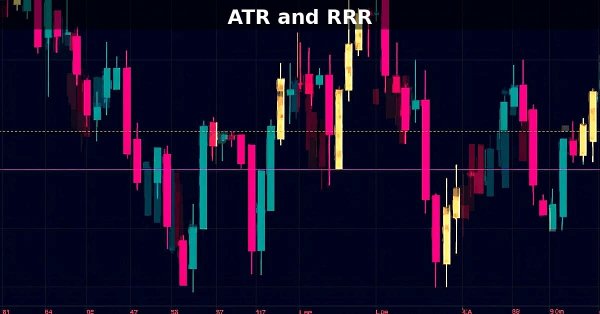
This article completes the implementation of ATR- and RRRR-based breakeven mechanisms in MQL5 and develops, from scratch, a class that makes it easy to switch breakeven modes without having to enter the parameters again. To evaluate the effectiveness of each breakeven type, several backtests are run, analyzing their advantages and disadvantages in the context of algorithmic trading.
The article describes and codes MR Swing in MQL5, a mean‑reversion swing approach that combines a 200‑day hysteresis channel with Value Charts, DVO, and SVAPO. We document entry/exit rules for bull and bear regimes and show five‑year backtests on six high‑liquidity Nasdaq stocks. The complete EA code and backtest configurations are provided for reproducibility.
We replace native MetaTrader chart objects with a canvas-based drawing engine that renders tools pixel-by-pixel on a full-chart bitmap layer. The article implements persistent object storage with per-tool style memory, precise hit testing, selection, whole-object dragging, and handle manipulation. It also adds new line tools, a reorganized category system with a one-click delete action, and a rubber-band preview for multi-click placement.
The article describes an MQL5 EA that automates Wyckoff accumulation and distribution via a finite state machine. It confirms spring to SOS and upthrust to SOW before placing LPS or LPSY entries, using relative tick volume as the confirmation metric. Readers get the state model, detection criteria, code organization, and MetaTrader 5 testing procedure.
The article explains how to develop a tool for analyzing recurring price patterns in financial markets — by day of the month (1-31), day of the week (Monday-Sunday), or hour of the day (0-23). The indicator analyzes historical data, calculates the average return for each period, and displays the results as a histogram with a forecast. It includes customizable parameters: seasonality type, number of bars analyzed, display as percentages or absolute values, chart colors.
What if an optimization algorithm could remember its past journeys and use that memory to find better solutions? BSA does just that – balancing exploration with revisiting the tried and true. In this article, we reveal the secrets of the algorithm. A simple idea, minimum parameters and a stable result.
Time gap analysis helps traders identify potential market reversal points. The article discusses what a time gap is, how to interpret it, and how it can be used to detect large volume influxes into the market.
This article presents a multi-symbol execution filter that scores real-time market quality before any trade is allowed. It measures spread behavior, tick velocity, quote gaps, micro-volatility, and a slippage estimate, then classifies the state to block degraded conditions. Once noise settles, a liquidity sweep continuation model evaluates structure shifts so entries occur only when execution is mechanically stable.
We introduce CPyramidBridge, a thin MQL5 layer that maps bet-sizing results to CPyramidEngine. The bridge applies probability to initial lot sizing, enforces a capacity-aware entry gate, promotes add-ons from dynamic divergence, adapts the trailing stop to reserve estimates, and syncs signals on close, allowing an Expert Advisor to convert model confidence and concurrency into a structured, decreasing-risk pyramid.
In this article we present yet another custom MQL5 Signal Class that we are labelling ‘CSignalBTreeBayesian’. We are marrying the algorithm of a balanced tree with a neural network that is built on Bayesian principles to formulate yet another custom signal testable independently or with other signals thanks to the MQL5 Wizard.
This article presents a compact MQL5 utility layer for routine trade operations. It includes position existence checkers, position counters, bulk close helpers, and functions to retrieve the most recent or oldest position by symbol, magic, or type. A simple SMA crossover Expert Advisor demonstrates integration. The result is cleaner EAs, fewer inconsistencies across projects, and faster maintenance.
Developing permutation-based tools in MQL5 provides a systematic way to analyze candlestick pattern combinations for trading strategies. This article introduces a permutation calculator and generator designed to compute and enumerate all possible ordered candlestick sequences from bullish and bearish sets, with or without repetition. By generating exhaustive pattern combinations, traders can perform data-driven analysis to identify high-probability market patterns and improve decision-making in automated trading systems.
In this article, we shift from Python research to native MQL5 engineering. We build the first module of the MMAR library: a shared constants header, an SVD-based OLS regression class, a Generalized Hurst Exponent estimator, and the partition analysis engine that computes the partition function, extracts tau(q), estimates H via zero-crossing interpolation, and scores multifractality through three diagnostic tests. Tested on 500,000 bars of EURUSD M10, the engine correctly classifies the data as multifractal in under four seconds. Part 4 of an eight-part series. Part 5 fits the tau(q) curve to four candidate distributions via the Legendre transform.
We extend the Part 9 setup wizard to build a canvas-based, in-chart documentation system for MetaTrader 5. The panel is tabbed and scrollable, supports inline styling, images, and interactive controls, and renders with supersampled anti-aliasing. The result is a reusable engine that any MQL5 program can embed to deliver self-contained documentation directly on the chart.
We implement tick-, volume-, and dollar-runs bars in Python and MQL5 and align them with the existing bar‑building framework. The article details the dual‑accumulator update, offline calibration with per‑side seeds, state persistence for EAs, and parity verification to match Python and MQL5 outputs. Runs bars expose one‑sided bursts that net imbalance can hide, improving coverage during quiet sessions and for mean‑reversion models.
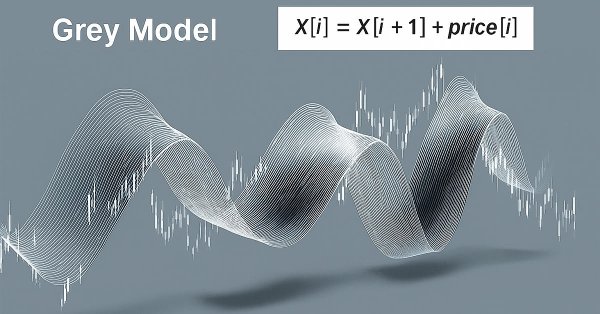
This article explores the grey model, a promising tool that can expand trader's capabilities. We will look at some options for applying this model to technical analysis and building trading strategies.
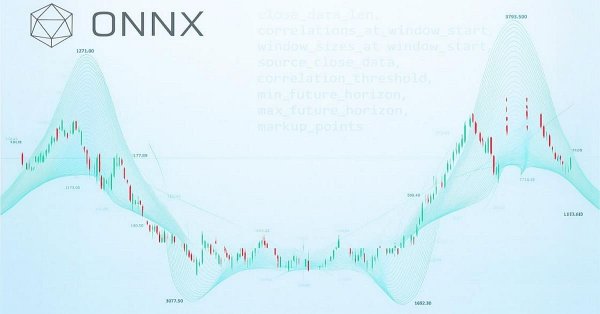
In this article, we will touch upon the intriguing topic of fractal analysis and market forecasting using machine learning. These are just the first steps towards exploring the diverse fractal structures that form on financial price charts. We will use the correlation to find patterns and the CatBoost algorithm to classify these patterns.
This guide integrates a trained XGBoost model (ONNX) into an SMC EA to evaluate trade setups before execution. The Python pipeline labels historical XAUUSD events and produces a 12-feature representation aligned with the EA. The result is a reproducible method to train, export, and embed the model so the EA can filter OB, FVG, and BOS signals programmatically.
This article presents a self-contained news filter module for MetaTrader 5 built on the platform's economic calendar API. It implements symbol-to-currency mapping, pre- and post-event trading pauses, and optional position size reduction on high-impact days, with a CSV-based fallback for the Strategy Tester. A demo EA and live chart dashboard show integration and verification in both live and backtest environments.
The article attempts to examine financial time series from the perspective of self-similar fractal structures. Since we have too many analogies that confirm the possibility of considering market quotes as self-similar fractals, this allows us to think about the forecasting horizons of such structures.
In this article, we replace the embedded CSV snapshot with a SQLite layer that persists calendar events and triggered trade IDs across restarts. The database lives in the common terminal folder and is shared by live charts and the strategy tester, so both modes read the same data without recompiling. An on-demand downloader with a canvas progress bar fetches history from the calendar API and stores it for offline reuse.
The article defines a buffer-based signal architecture for flag breakouts and an EA that consumes it. Breakout arrows and pole height are written to dedicated buffers only after confirmation, preventing repainting and ambiguity. The EA polls buffers with CopyBuffer(), validates signals using configurable filters, and executes trades with fixed or dynamic SL/TP.
For our next Exploration on notions that are testable with the MQL5 Wizard we examine if Skip Lists and the Hopfield Network can give us a profit-guarding trailing strategy. Trailing Stop Management, as already argued, can be overlooked in most trading systems at the expense of Entry Signals or even Money Management. Trailing stops can make all the difference in certain situations such as trending markets, and thus we test this out with GBP USD.
We rebuild the MQL5 Economic Calendar dashboard from a monolithic object-based panel into a modular canvas-based system split across four files. The update adds a dual light and dark theme, collapsible day groups, a resizable layout with pixel-based scrolling, revised value markers, and a live countdown with toast notifications. A candidate event cache and a fast-path timer that repaints only changed cells improve responsiveness and make the codebase easier to extend.
Applying Python session boundaries to MQL5 broker timestamps misclassifies session membership by two to three hours on any non-UTC broker, corrupting session flags across the full backtest history. We implement CTimeFeatures.mqh, containing CRingBuffer and CTimeFeatures, with three EA-facing methods: Initialize (UTC offset capture and frequency gate configuration), Update (log return push to session-conditional ring buffers), and Calculate (cyclical encoding, session flags, and session volatility). The output is a flat double array drop-compatible with Python's get_time_features for sub-hourly, hourly, and daily timeframes.
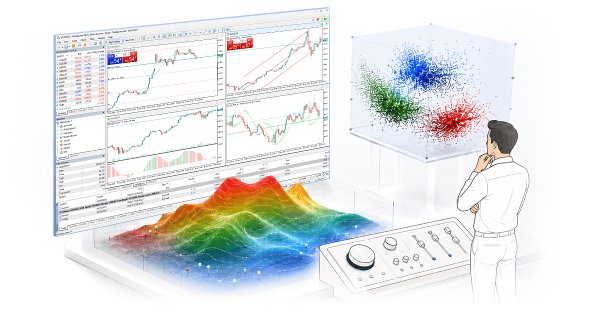
The article describes the practical application of DirectX 11 and built-in MQL5 tools for creating 3D visualizations and interactive interfaces in MetaTrader 5. The focus is on cognitive efficiency - the ability of 3D charts and guided scenes to help in understanding optimization data, liquidity clusters, and multi-dimensional trading scenarios. The basics of the DX pipeline, working with shaders, binding mouse and keyboard events, and objective technological limitations are discussed in detail. The article is intended for MQL5 developers and algorithmic traders who are ready to transform strategy metrics into understandable 3D analytical landscapes, where the visual layer accelerates decision-making.
This article extends the existing Flask backend to compute performance analytics from stored MetaTrader 5 closed trades and deliver them as both JSON and a simple web view. It calculates total trades, total profit, win rate, average profit, and trade duration metrics, returning JSON at /api/v1/analytics/summary and rendering a dashboard at /api/v1. The result provides a quick, consistent way to review trading performance from persisted SQLite records.
The article examines the quality of a seasonal trading approach on a daily timeframe, both for individual symbols and for spreads. Particular attention is paid to identifying recurring monthly cycles and the possibilities of their application in trading within the current year.
In this article, we extend the Tools Palette with a precision crosshair for MQL5 charts: reticle tick marks, full-width and full-height lines with axis labels, and a circular magnifier that renders zoomed candles. A double-click measure mode adds anchor markers, a diagonal connector, and a floating label with bars, pips, and price difference. Implementation details include a crosshair manager, eleven canvas layers, Bresenham line drawing, and theme-aware behavior that hides near the sidebar and fly out.
The article implements CMultiTimeframeMatrix, a reusable dashboard that maps symbols vs. timeframes and displays a numeric, colour‑coded score. The score combines trend, momentum, and volatility, updates by timer, and respects performance constraints. You will learn how to build the UI with CAppDialog/CLabel, compute metrics via CMatrixDouble, and embed the component into a thin EA for a consistent, real-time overview.
With the multifractal parameters from Part 2 in hand, this article builds the full MMAR process. We construct the multiplicative cascade for trading time, generate Fractional Brownian Motion via Davies-Harte FFT, and combine both into X(t) = B_H[theta(t)]. A 100-path Monte Carlo simulation produces the volatility forecast, which we then pit against GARCH on the same EURUSD M5 data. Does Mandelbrot's fractal architecture outforecast Engle's conditional variance framework? Part 3 of a eight-part series leading to a native MQL5 library and Expert Advisor.
This article implements a Fenwick Tree (Binary Indexed Tree) for volume-aware money management inside an MQL5 Wizard Expert Advisor. We structure cumulative volume in O(log n) and apply four scaling modes—linear, conservative, aggressive, and mean-reversion—optionally gated by a lightweight 1D CNN. Practical tests compare the algorithm alone versus the CNN‑filtered approach to illustrate adaptive lot sizing and risk control under varying volume topologies.
Building on the partition function analysis from Part 1, this article deepens the theoretical foundation before completing the analytical pipeline. We first give a full treatment of the Hurst exponent: what it measures, what it implies about market memory, and why it matters for the MMAR. This is followed by an intuitive exploration of multifractal spectra and what f(α) reveals about volatility heterogeneity. We then move to implementation: extracting the scaling function τ(q), estimating H via R/S analysis, and fitting the multifractal spectrum across four candidate distributions. By the end, we have the complete parameter set needed to construct the MMAR process in Part 3. Part 2 of an eight-part series.
Many MetaTrader 5 setups run several EAs on one account, so risk gets fragmented and correlated exposure slips through. The article introduces RiskGate, a centralized Service that evaluates EA intents account‑wide: EAs send a JSON signal, the Service returns approved, lot and reason. You will see the client/server wiring, example rules (daily loss, exposure and correlation caps), unit‑tested handler design, and an EA example. The result is consistent portfolio‑level risk with simpler EAs.